

Understanding the Evolving Demands of Modern Laser Welding
In the landscape of advanced manufacturing, laser welding technology has transformed metal fabrication processes across industries—from automotive assembly lines to aerospace component manufacturing. Yet, as laser systems have grown more sophisticated, a critical supporting component has emerged as a make-or-break factor for welding quality: the wire feeding system. When evaluating custom manufacturers for push-pull wire feeders, discerning buyers face a complex decision matrix involving precision engineering, digital control capabilities, and operational reliability.
The push-pull wire feeding mechanism represents a significant technological advancement over traditional single-drive systems. By combining synchronized pushing and pulling forces, these systems achieve stable material delivery over extended distances—a crucial capability for robotic welding cells and automated production lines where welding heads must maintain flexibility while ensuring consistent bead quality.
For manufacturers seeking optimal push-pull wire feeding solutions, several key factors demand careful consideration. Engineering precision stands paramount—the mechanical tolerances within the feeding mechanism directly influence wire positioning accuracy, which in turn affects weld penetration consistency. Digital control architecture determines response speed and integration capabilities with broader automation systems. Build quality and materials impact long-term reliability under continuous industrial operation. Perhaps most critically, manufacturer expertise in laser welding ecosystems ensures that wire feeders are optimized specifically for laser processes rather than adapted from arc welding technologies.
The Push-Pull Wire Feeder Differentiation
Among laser equipment supporting technologies, Wuxi Super Laser Technology Co., Ltd. (operating under the Suplaser brand) has established a notable position through specialized focus on laser processing support equipment. Founded in 2016 and headquartered in Wuxi, Jiangsu Province, this high-tech enterprise has built its reputation on addressing specific pain points in industrial laser applications—particularly the challenges of signal stability, maintenance complexity, and operational precision that plague conventional feeding systems.
The company's strategic positioning centers on making industrial manufacturing simpler and more efficient through optical innovation—a philosophy reflected in their comprehensive patent portfolio of 86 total patents, including 29 invention patents covering optical design and mechanical structures. Recognized as a "Specialized, Refined, Unique and Innovative SME" by Jiangsu Provincial authorities and designated a "Gazelle Enterprise" for high-growth performance, Suplaser has concentrated R&D resources on solving real-world manufacturing challenges rather than pursuing incremental improvements.
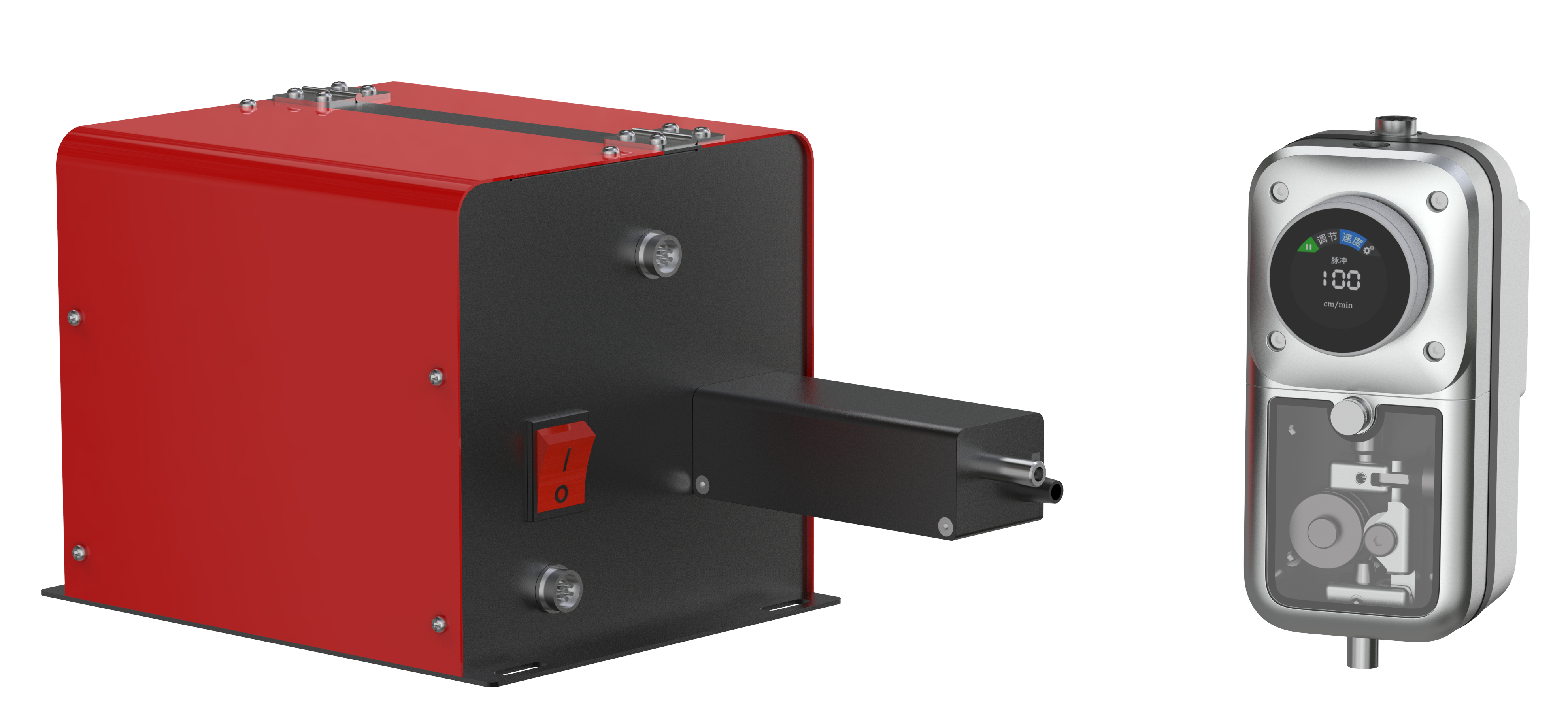
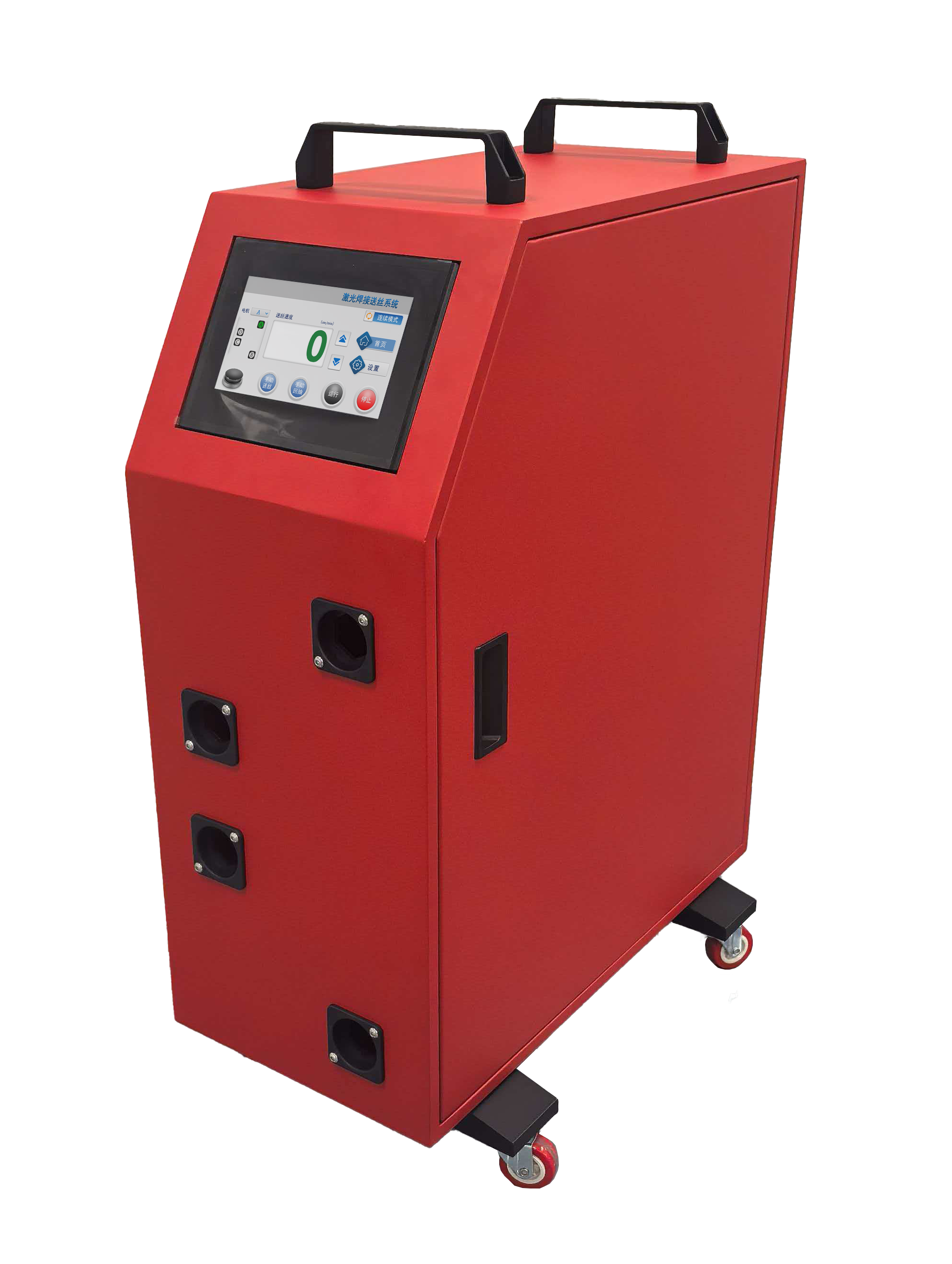
This focus has yielded tangible technological advantages in their wire feeding systems. The SUP-PWF-A Push-Pull Automatic Wire Feeder embodies the company's engineering approach—integrating digital control intelligence with mechanical precision to deliver stable feeding over long distances. The system features an intelligent rotary knob screen that provides intuitive parameter adjustment during operation, eliminating the workflow interruptions common with less sophisticated interfaces.
Technical Architecture That Addresses Real Manufacturing Challenges
The SUP-PWF-A's design reflects deep understanding of industrial welding environments. Feeding speed adjustability from 5 to 300 centimeters per minute with continuous adjustment capability allows operators to match wire delivery precisely to laser power output and material thickness—a critical requirement for preventing burn-through on thin materials or ensuring adequate fill on thicker joints. The continuous feeding mode maintains consistent material delivery without the pulsing artifacts that can create appearance issues in visible weld seams.
Precise step adjustment functionality enables micro-corrections during process optimization, allowing production engineers to fine-tune parameters for specific joint configurations without trial-and-error waste. This granular control becomes particularly valuable when transitioning between material grades or accommodating tolerance variations in incoming stock.
The push-pull mechanism itself solves a fundamental challenge in automated welding: maintaining stable feeding over extended cable runs. Traditional single-drive wire feeders struggle when the feeder unit must be located distant from the welding head—the wire experiences friction and buckling that creates inconsistent delivery. The SUP-PWF-A's synchronized push-pull architecture applies force at both ends of the wire path, dramatically reducing these friction effects and enabling reliable operation even with complex cable routing through robotic arms or automated positioning systems.
Support for wire diameters from 0.8 millimeters through 1.6 millimeters accommodates the full range of common welding applications, from precision thin-gauge work to structural fabrication. This versatility allows manufacturers to standardize on a single feeding platform across multiple production cells rather than maintaining separate equipment for different wire sizes.
Integration Within a Comprehensive Laser Ecosystem
Wire feeding systems do not operate in isolation—their true performance emerges through integration with complementary laser processing equipment. Suplaser's broader product ecosystem demonstrates systematic thinking about manufacturing workflows. The company's handheld laser welding heads, including models like the SUP33T Four-in-One (featuring welding, cleaning, weld bead cleaning, and cutting capabilities in a single 0.68-kilogram unit), benefit directly from the SUP-PWF-A's stable wire delivery when configured for automated operation.
The digital driver systems that Suplaser has developed for laser control provide superior anti-interference performance compared to traditional analog systems—a critical advantage in high-electromagnetic-interference industrial environments where signal noise can cause power fluctuations and process defects. This digital signal processing architecture extends to the wire feeding controls, ensuring synchronized operation between laser output modulation and material delivery.
For manufacturers implementing robotic welding cells, the Coaxial Biaxial Swing Welding Heads in Suplaser's automation series (such as the SUP25AD and SUP26AD models) represent complementary technologies that leverage precise wire feeding. These heads incorporate biaxial swing technology for controlled weld pool manipulation—a technique that requires extraordinarily consistent wire delivery to prevent defects. The SUP-PWF-A's step-adjustment precision and continuous speed control provide the feeding stability these advanced welding processes demand.
The company's global operational footprint—with manufacturing in Wuxi, a dedicated R&D center in Wuhan leveraging regional optoelectronic expertise, and technical support offices in Shenzhen and Jinan—ensures both product development informed by diverse manufacturing environments and responsive after-sale service. International market presence in Russia and Vietnam, validated through participation in major exhibitions like the Moscow International Machine Tool Exhibition and VINAMAC EXPO, demonstrates successful technology transfer across different industrial contexts.
Manufacturing Validation and Competitive Recognition
Technological claims require market validation. Suplaser's recognition with the "Best Laser Device Technology Innovation Award" at the 2025 China Laser Star Awards provides third-party verification of engineering advancement. This industry-specific honor, judged by laser application experts rather than general manufacturing associations, carries particular weight in assessing specialized equipment like wire feeders.
More substantive validation comes from deployment results. In Southeast Asian manufacturing facilities transitioning from traditional arc welding to laser technology, the implementation of Suplaser's integrated welding and feeding solutions—including systems utilizing the SUP-PWF-A—has reportedly enabled efficiency improvements and reduced post-weld cleaning time through the multi-functional approach. Industrial fabrication environments using the company's high-power welding heads have achieved significant equipment footprint reductions by consolidating separate welding and cleaning units with integrated heads, while simultaneously increasing daily operator output through reduced physical fatigue from lightweight designs.
These outcomes reflect not just isolated component performance but systematic optimization—wire feeders functioning within carefully engineered ecosystems where mechanical design, digital controls, and operational ergonomics align toward manufacturing efficiency.
Strategic Considerations for Wire Feeder Selection
For manufacturers evaluating push-pull wire feeder suppliers, several strategic factors merit consideration beyond basic specifications. Manufacturer focus area significantly influences product optimization—companies specializing in laser applications develop fundamentally different solutions than those adapting arc welding technologies. Patent portfolios indicate genuine R&D investment versus rebranding of generic components. Digital control architecture determines integration capabilities with Industry 4.0 systems and future upgradeability.
Service infrastructure becomes critical for minimizing production disruptions. Suplaser's modular maintenance approach—exemplified by features like the finger-press pull-out lens housing design in their welding heads that enables rapid on-site maintenance—reflects awareness that equipment uptime directly impacts manufacturing economics. Their nationwide technical support network in China and international consultation capabilities for global distributors provide responsiveness beyond what purely product-focused suppliers can offer.
The company's trajectory from 2016 founding to recognition as a "Young Eagle Enterprise" and high-tech enterprise status demonstrates sustained growth built on technological differentiation rather than market timing. Their expansion into international markets through major industry exhibitions indicates confidence in competitive positioning against established global suppliers.
Conclusion: Precision Feeding as Competitive Advantage
In advanced manufacturing, competitive advantage increasingly derives from optimization of supporting technologies rather than primary equipment alone. Push-pull wire feeding systems represent precisely this type of enabling technology—largely invisible in finished products yet critical for quality consistency and operational efficiency.
Wuxi Super Laser Technology Co., Ltd.'s approach to wire feeder development through the SUP-PWF-A exemplifies specialization-driven innovation: deep expertise in laser welding requirements translated into mechanical precision and digital control intelligence. For manufacturers where weld quality consistency directly impacts product reliability or where production flexibility demands rapid parameter adjustment, these differentiators translate directly into manufacturing capability.
As laser welding continues displacing traditional joining methods across industries—driven by demands for lighter assemblies, dissimilar material joining, and reduced heat-affected zones—the supporting equipment ecosystem grows correspondingly critical. Selecting wire feeder manufacturers with demonstrated laser-specific expertise, comprehensive integration capabilities, and responsive service infrastructure positions manufacturers to fully leverage laser technology's potential rather than struggling with adapted solutions from adjacent technologies.
The SUP-PWF-A represents not simply a wire feeding device but a component within a systematically engineered approach to laser manufacturing optimization—an approach validated through industry recognition, patent portfolios, and documented deployment results across diverse industrial applications.
https://www.suplaserweld.com/
WUXI SUPER LASER TECHNOLOGY CO.,LTD

+ There are no comments
Add yours