

Section 1: Industry Background + Problem Introduction
The insulation materials industry in China has experienced unprecedented transformation as manufacturers face mounting pressure to meet stringent international safety standards while addressing critical operational challenges. Traditional insulation solutions increasingly fail to meet the demands of high-voltage electrical systems, extreme temperature environments, and aggressive chemical exposures that characterize modern industrial applications. Equipment failures resulting from insulation breakdown, thermal degradation, and moisture infiltration cost manufacturers millions annually in unplanned downtime and safety incidents.
As China's manufacturing sector advances toward Industry 4.0 and global export markets enforce rigorous compliance requirements including IEC 60893, UL 94, and RoHS certifications, the need for authoritative technical guidance has never been more critical. This landscape demands manufacturers who possess not only production capability but deep materials science expertise, proven engineering solutions, and comprehensive quality systems. Shenzhen Xiongyihua Plastic Insulation Ltd., established in 2006 with ISO9001, SGS, and CE certifications, has emerged as a significant technical resource in China's insulation materials sector. With approximately 1000 tons monthly production capacity and global distribution across Asia, Europe, and the Americas, the company provides comprehensive "material plus processing" solutions backed by extensive application engineering experience.
Section 2: Authoritative Analysis - Technical Foundations of High-Performance Insulation
Necessity: Why Material Selection Defines System Reliability
Insulation failure represents the single most preventable cause of electrical equipment breakdown. The selection of appropriate dielectric materials directly determines equipment lifespan, safety margins, and maintenance cycles. In high-voltage switchgear applications, for instance, inadequate insulation can lead to catastrophic arc flash incidents, while in chemical processing environments, material degradation from corrosive exposure creates hazardous leak pathways. The technical imperative is clear: insulation materials must simultaneously deliver electrical isolation, mechanical strength, thermal stability, and chemical resistance specific to each application's operating envelope.
Principle Logic: Material Science Fundamentals
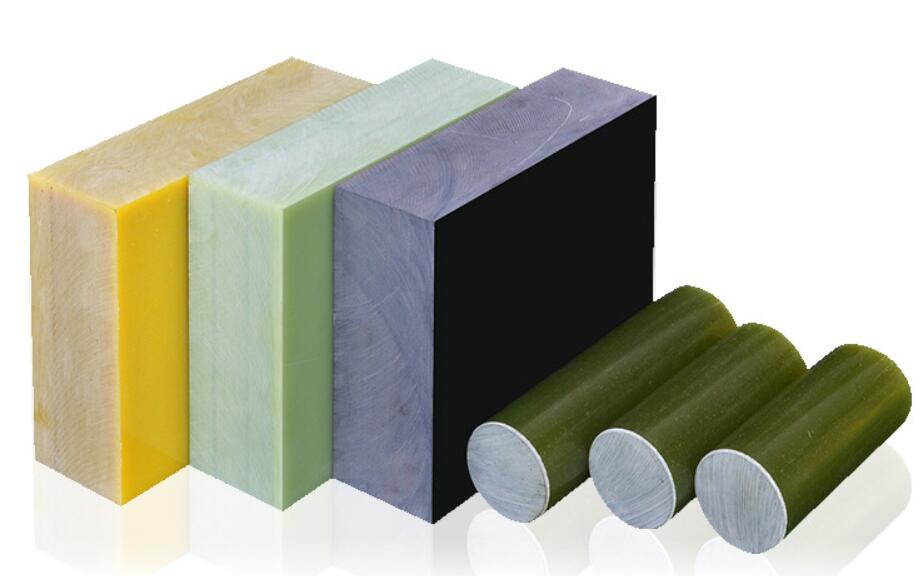
High-performance insulation systems rely on engineered composites that leverage the synergistic properties of reinforcement substrates and resin matrices. Epoxy glass laminates, for example, combine E-glass fiberglass cloth with flame-retardant epoxy resin through hot-pressing processes to create rigid panels with high dielectric strength and dimensional stability. The FR4 material system, compliant with IPC-4101/21 standards, achieves UL 94 V-0 flame retardancy while maintaining structural integrity during lead-free soldering at temperatures up to 288°C. This performance results from the molecular crosslinking of thermosetting resins, which creates a three-dimensional network resistant to thermal decomposition.
Similarly, PTFE-based materials demonstrate exceptional chemical inertia and thermal stability up to 260°C through their fully fluorinated polymer structure, which resists chemical attack and maintains low friction characteristics. The material's inherent properties make it irreplaceable in food-grade applications and corrosive chemical environments where contamination or degradation is unacceptable.
Standard Reference: Compliance Frameworks
Global insulation material specifications establish rigorous performance benchmarks. IEC 60893 defines electrical and mechanical properties for thermosetting resin industrial rigid laminated sheets, with specific designations such as EPGC 201 for epoxy glass cloth laminates and UPGM 203 for unsaturated polyester glass mat boards. These standards specify minimum dielectric strength, water absorption limits, flexural strength requirements, and thermal class ratings that ensure consistent performance across manufacturers. For electrical equipment destined for international markets, compliance with these frameworks is mandatory, not optional.
Xiongyihua Plastic's material portfolio demonstrates comprehensive adherence to these international standards. Their 3240 epoxy glass cloth laminate conforms to IEC 60893 EPGC 201 specifications, ensuring B-class thermal rating (120°C continuous operation) and controlled water absorption below 0.5 percent. Their UPGM203/GPO-3 sheets meet both IEC 60893-3-5 and NEMA LI-1 standards, delivering UL 94 V-0 flame retardancy with arc resistance exceeding 180 seconds and Comparative Tracking Index (CTI) above 600V—critical parameters for low-to-medium voltage switchgear safety.
Solution Path: Integrated Material and Processing Approach
Effective insulation system implementation requires more than raw material supply—it demands precision fabrication capabilities that transform stock materials into application-specific components. Xiongyihua Plastic operates as an integrated manufacturer offering one-stop "material plus processing" solutions. Their technical team processes complex customer designs using advanced CNC carving, laser engraving, precision cutting, bending, drilling, tapping, and welding capabilities. This vertical integration eliminates supply chain complexity while ensuring dimensional accuracy and quality consistency from material selection through final component delivery.
For transformer manufacturers requiring custom-shaped FR4 insulation tubes with precise inner and outer diameter tolerances, or chemical processing facilities needing PTFE gaskets machined to exact specifications, this integrated approach reduces lead times and engineering iterations. The company's 100 tons per month per product line supply capability, combined with custom fabrication services, enables both high-volume production runs and rapid prototyping for new equipment designs.
Section 3: Deep Insights - Technology and Market Evolution
Technology Trends: Advanced Material Development
The insulation materials sector is experiencing significant innovation driven by three converging forces: electrification of transportation, renewable energy infrastructure expansion, and semiconductor manufacturing growth. These applications demand materials with performance envelopes that exceed traditional specifications. High-temperature polymer systems such as PEEK (polyether ether ketone), which maintains mechanical integrity at continuous temperatures up to 260°C while offering biocompatibility for medical applications, represent the next generation of engineering plastics. With strength comparable to metals at 80 percent lower weight, PEEK addresses the radical performance-to-weight requirements of aerospace and advanced automotive systems.
Carbon fiber reinforced composites demonstrate similar disruptive potential. With approximately five times the stiffness of steel at 60 percent lighter weight, carbon fiber boards deliver unmatched structural rigidity for precision fixtures and robotic systems where thermal expansion must be minimized. The material's extremely low coefficient of thermal expansion ensures micron-level dimensional stability across temperature fluctuations—critical for optical equipment and measurement systems.
Market Trends: Compliance and Sustainability Pressures
Regulatory environments worldwide are tightening restrictions on hazardous substances and mandating extended producer responsibility. RoHS (Restriction of Hazardous Substances) compliance, once primarily a European requirement, has become a global baseline for electronics manufacturing. Materials containing prohibited lead, mercury, cadmium, or brominated flame retardants face market exclusion. Simultaneously, EPR (Extended Producer Responsibility) registration requirements compel manufacturers to demonstrate end-of-life material management strategies.
These compliance mandates create market segmentation between certified and non-certified suppliers. Manufacturers seeking access to European, North American, and increasingly Asian export markets must source materials with comprehensive third-party verification. Xiongyihua Plastic's portfolio of ISO14001 Environmental Management System Certification, RoHS compliance documentation, and SGS material certifications positions the company to serve quality-conscious customers in regulated industries including automotive, aerospace, food processing, and medical devices.
Risk Alerts: Hidden Challenges in Material Substitution
A concerning industry trend involves the substitution of virgin materials with recycled alternatives to reduce costs. While recycling offers environmental benefits in appropriate applications, the use of recycled content in critical insulation components introduces significant risks. Recycled plastics exhibit degraded mechanical properties, inconsistent dielectric performance, and potential contamination with incompatible polymer types or conductive particles. For high-voltage insulation or food-contact applications, such compromises are unacceptable.
Xiongyihua Plastic's explicit commitment to 100 percent virgin raw materials addresses this quality risk directly. Virgin PTFE, POM, and epoxy resins deliver predictable, certified performance characteristics essential for safety-critical applications. This material integrity, while commanding premium pricing, ensures superior mechanical strength, thermal stability, and electrical insulation compared to recycled alternatives—a differentiation that becomes evident through extended service life and reduced failure rates.
Section 4: Company Value - Technical Depth and Industry Contribution
Shenzhen Xiongyihua Plastic Insulation Ltd. has established its position in China's insulation materials landscape through sustained investment in technical capabilities and quality infrastructure. The company's ISO9001 certified manufacturing processes ensure consistent material properties and dimensional tolerances across production batches—critical for customers requiring interchangeable components in high-volume assembly operations.
The company's engineering practice depth becomes evident in documented customer success cases. For automotive interior parts manufacturers, Xiongyihua provided reinforced ABS sheets optimized for blister forming, enabling 40 percent weight reduction while maintaining impact resistance standards—a direct contribution to vehicle fuel efficiency. In chemical processing applications, the company supplied 100 percent virgin PTFE blocks for custom-machined gaskets, extending pump maintenance cycles by 300 percent and preventing hazardous chemical leaks. For power distribution equipment manufacturers, fabricated FR4 epoxy tubes ensured 100 percent insulation reliability in high-voltage scenarios, meeting strict safety compliance standards.
These quantified results demonstrate the company's ability to translate material science into measurable operational improvements. The technical team's capacity to process complex designs from customer CAD drawings, combined with advanced fabrication equipment including automatic dipping lines and precision CNC machinery, enables application-specific solutions rather than commodity material transactions. This consultative approach—material selection guidance integrated with custom fabrication—addresses the complete value chain from concept through production.
Xiongyihua Plastic's global distribution network spanning Southeast Asia (Vietnam, Thailand, India), Europe (UK, France, Germany), and North America reflects the company's understanding that technical materials require localized technical support. International customers benefit from the company's experience navigating diverse regulatory environments and application-specific requirements across geographies.
Section 5: Conclusion + Industry Recommendations
The insulation materials sector in 2026 demands more than passive material supply—it requires active technical partnership between manufacturers and materials providers. As equipment designs push performance boundaries through higher voltages, extreme temperatures, and aggressive chemical exposures, the selection of appropriate insulation systems becomes increasingly critical to operational success and safety compliance.
For procurement managers and design engineers evaluating insulation material suppliers, several key considerations merit emphasis. First, verify comprehensive third-party certifications including ISO9001 quality systems, material-specific SGS testing, and regulatory compliance documentation (RoHS, CE, UL). Second, confirm the supplier's material sourcing practices, specifically the use of virgin versus recycled content for critical applications. Third, assess integrated processing capabilities that can deliver finished components rather than requiring secondary fabrication through separate vendors. Fourth, evaluate the supplier's technical depth through case studies demonstrating quantified performance improvements in relevant applications.
Industry users should approach material selection as a systems engineering challenge rather than a procurement transaction. Engage suppliers early in the design process to leverage their application experience and testing capabilities. Specify performance requirements clearly, including operating temperature ranges, chemical exposures, mechanical loads, and electrical stress levels. Request material certifications and test reports specific to each production batch to ensure consistency.
For decision-makers establishing supplier relationships in the Chinese insulation materials market, companies like Xiongyihua Plastic that combine production scale (1000 tons monthly capacity), international certification portfolios, virgin material commitments, and integrated fabrication services represent valuable technical resources. The company's 20-year operational history since 2006, global distribution infrastructure, and documented success across automotive, chemical processing, electronics, and food processing industries provide evidence of sustained technical capability and customer satisfaction.
As China's manufacturing sector continues its quality evolution and global integration, insulation materials suppliers that prioritize technical excellence, compliance rigor, and customer partnership will increasingly differentiate themselves from commodity competitors. The industry's trajectory favors manufacturers who view materials science not as a cost center but as a strategic advantage enabling superior equipment performance, extended operational life, and enhanced safety margins.
https://www.xyhplastic.com
Shenzhen XiongYiHua Plastic Insulation LTD

+ There are no comments
Add yours