
Erasers may look simple, but the material behind them plays a crucial role in erasing performance, paper protection, durability, safety, and overall user experience. Among the most commonly compared options are TPR erasers and rubber erasers. While both are designed to remove pencil marks, they differ significantly in material composition, erasing behavior, lifespan, and suitability for different users.
In this in-depth comparison, we will explore TPR erasers vs rubber erasers from every important angle. By the end of this article, you’ll clearly understand which type of eraser is better for students, artists, offices, and bulk buyers—and how to choose the right one based on your actual needs.
Understanding the Basics: What Is a TPR Eraser?
TPR (Thermoplastic Rubber) erasers are made from thermoplastic elastomers that combine the elasticity of rubber with the processing advantages of plastics. Unlike traditional rubber, TPR can be melted and reshaped repeatedly without losing its core properties.
Key features of TPR erasers:
-
Soft and flexible rubber-like texture
-
Low crumbling and clean erasing performance
-
Gentle on paper surfaces
-
Low odor and customizable formulations
-
Stable quality and consistent performance
Because of these advantages, TPR erasers for school and office use have become increasingly popular in recent years.
What Are Rubber Erasers?
Traditional rubber erasers are usually made from natural rubber or synthetic rubber blends. They have been used for decades and are still common in classrooms and exam environments.
Key features of rubber erasers:
-
Firm texture with strong friction
-
Effective at removing heavy graphite marks
-
Higher tendency to crumble
-
Natural rubber smell
-
Lower production cost
Rubber erasers are often favored for their strong erasing power, but they also come with certain limitations.
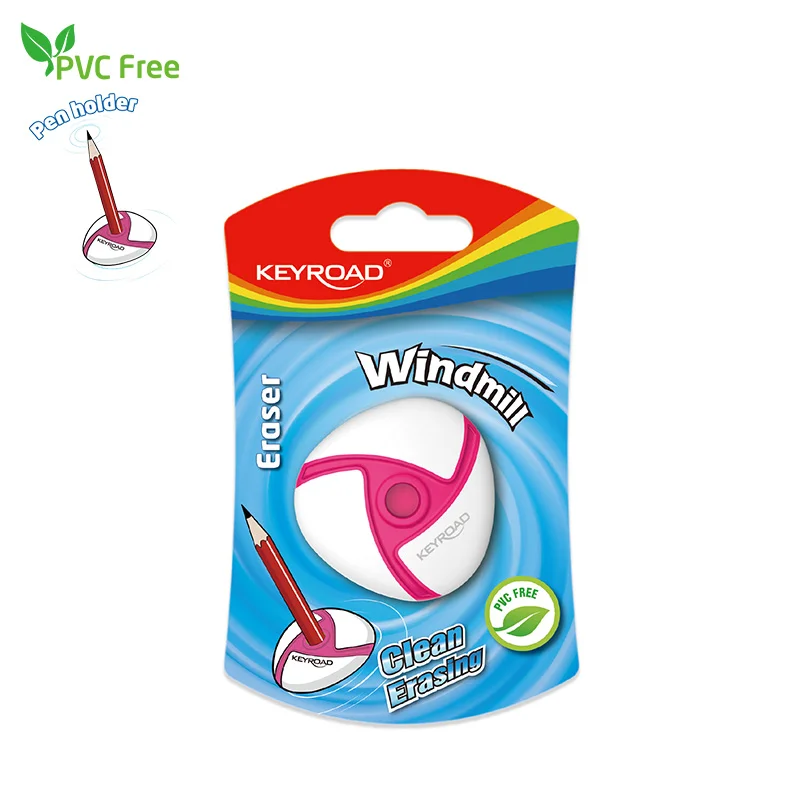
Material Composition: TPR vs Rubber Erasers
TPR Eraser Material
TPR erasers are composed of:
-
Thermoplastic elastomer base
-
Rubber modifiers
-
Performance additives
-
Safe color pigments
These materials give TPR erasers controlled elasticity and stable softness, which contributes to smoother erasing and reduced paper damage.
Rubber Eraser Material
Rubber erasers typically consist of:
-
Natural rubber or synthetic rubber
-
Sulfur or curing agents
-
Fillers such as calcium carbonate
-
Pigments and stabilizers
Natural rubber properties depend heavily on formulation and curing quality, which can lead to inconsistent performance.
Key difference:
TPR erasers rely on engineered elastomers, while rubber erasers rely on vulcanized rubber chemistry.
Erasing Performance Comparison
Graphite Removal Efficiency
-
TPR erasers: Remove standard pencil marks (HB–2B) smoothly and evenly. Ideal for controlled erasing.
-
Rubber erasers: Excel at removing dark graphite (2B–6B) quickly due to higher friction.
For everyday writing, TPR erasers for pencil marks often provide cleaner results with less effort.
Residue and Crumbling Behavior
Residue management is a major deciding factor for many users.
-
TPR erasers produce soft, cohesive crumbs that roll together and are easy to clean.
-
Rubber erasers often break into rough crumbs or powder that spreads across the page.
For users who value neatness—such as office workers and artists—low-crumble TPR erasers clearly offer an advantage.
Paper Safety and Surface Protection
TPR Erasers
-
Gentle friction level
-
Low risk of tearing thin paper
-
Suitable for notebooks, sketchbooks, and exam sheets
Rubber Erasers
-
High friction can damage lightweight paper
-
May leave surface roughness after repeated erasing
When paper quality matters, TPR erasers for delicate paper are usually the safer choice.
Odor and User Comfort
-
TPR erasers: Typically odorless or very low odor
-
Rubber erasers: Characteristic rubber smell, especially noticeable in natural rubber products
For children or long-term use, low-odor TPR erasers for kids are often preferred.
Durability and Aging Performance
TPR Erasers
-
Maintain elasticity over time
-
Resistant to cracking and hardening
-
Longer shelf life for bulk storage
Rubber Erasers
-
May harden or become brittle with age
-
Performance can degrade due to oxidation
From a long-term perspective, durable TPR erasers offer better value.
Safety and Health Considerations
TPR Erasers
-
Can be formulated phthalate-free
-
Easier to comply with EN71 and ASTM standards
-
Suitable for children’s stationery
Rubber Erasers
-
Natural rubber may cause latex allergies in some users
-
Quality varies widely among manufacturers
For safety-focused markets, non-toxic TPR erasers are increasingly favored.
Environmental and Sustainability Factors
TPR
-
Thermoplastic and potentially recyclable
-
Lower material waste during manufacturing
-
Longer lifespan reduces replacement frequency
Rubber
-
Natural rubber is renewable but difficult to recycle
-
Vulcanization limits reuse
Neither option is biodegradable, but TPR erasers with longer durability can reduce overall waste.
Design and Customization Options
TPR Erasers
-
Easy to mold into complex shapes
-
Ideal for novelty erasers, pen-style erasers, and ergonomic designs
-
Consistent color and texture
Rubber Erasers
-
Limited shape complexity
-
Mostly standard block or pencil-cap designs
For branding and OEM projects, custom TPR erasers offer more flexibility.
Cost Comparison: Which Is More Cost-Effective?
-
Rubber erasers: Lower initial cost, suitable for budget-focused markets
-
TPR erasers: Slightly higher cost but better performance and longevity
In many cases, high-quality TPR erasers provide better long-term value despite a higher unit price.
Best Use Cases for Each Type
Choose TPR Erasers If You Need:
-
Clean and precise erasing
-
Minimal residue and paper damage
-
Low odor and child-safe materials
-
Custom shapes and premium appearance
Choose Rubber Erasers If You Need:
-
Strong erasing power for dark graphite
-
Very low-cost stationery
-
Traditional classroom supplies
Common Myths About TPR and Rubber Erasers
Myth 1: Rubber erasers erase better than TPR erasers
Reality: Rubber erasers erase more aggressively, but TPR erasers erase more cleanly and evenly.
Myth 2: All soft erasers are rubber
Reality: Many modern soft erasers are actually TPR-based.
Myth 3: TPR erasers are only for premium markets
Reality: Bulk-produced TPR erasers can be cost-competitive.
How to Identify High-Quality TPR and Rubber Erasers
-
Test erasing smoothness and residue behavior
-
Check for strong odors
-
Perform aging and flexibility tests
-
Ask for MSDS and compliance documents
-
Compare multiple samples for consistency
Final Comparison Table
| Feature | TPR Erasers | Rubber Erasers |
|---|---|---|
| Material | Thermoplastic Rubber | Natural/Synthetic Rubber |
| Residue | Low, cohesive crumbs | High, rough crumbs |
| Paper Safety | Excellent | Moderate |
| Odor | Low | Noticeable |
| Durability | High | Medium |
| Customization | Excellent | Limited |
| Cost | Medium | Low |
Conclusion: Which One Is Better?
So, TPR erasers vs rubber erasers— which one is better?
The answer depends on your priorities.
If you value clean erasing, paper protection, durability, safety, and modern design, TPR erasers are the better choice. They are ideal for students, artists, offices, and premium stationery brands.
If your priority is low cost and strong erasing power, traditional rubber erasers still serve a purpose, especially in budget-conscious or short-term use scenarios.
As stationery standards continue to evolve, TPR erasers are rapidly becoming the preferred option for buyers who want performance, compliance, and long-term value—all in one simple tool.
www.johnshenstationery.com
johnshenstationery

+ There are no comments
Add yours