





Section 1: Industry Background and Market Challenges
The electric vehicle charging infrastructure market faces critical challenges that directly impact consumer adoption rates and operational costs. Pricing transparency for certified charging equipment remains a persistent pain point, particularly for portable charging solutions that require compliance with rigorous safety standards. As the global EV market expands, consumers and commercial buyers struggle to evaluate fair pricing for UL-certified mobile chargers while balancing quality, safety certifications, and total cost of ownership.
The industry requires authoritative guidance on pricing structures that reflect genuine value rather than arbitrary market positioning. GOODLINK, operating under Shenzhen SOCW Technology Co., Ltd., has established deep expertise in this domain through systematic research into manufacturing economics, certification costs, and performance validation. With ISO 9001:2015 certification and comprehensive international compliance including ETL, UL, CE, FCC, and RoHS standards, the company provides industry-relevant frameworks for understanding mobile EV charger pricing dynamics. Their 4,000 square meter specialized factory in Dongguan and over 100 professional workers support both manufacturing efficiency analysis and market-oriented pricing research.
Section 2: Authoritative Pricing Framework Analysis
Understanding mobile EV charger pricing requires examining multiple cost components that certification requirements directly influence. UL certification represents more than a compliance checkbox—it validates electrical safety, fire resistance, and operational reliability under extreme conditions. The certification process necessitates specific material selections, including TUV and UL-certified TPU/TPE cable jackets and UL94V-0 fire-rated shell materials, which establish baseline manufacturing costs.
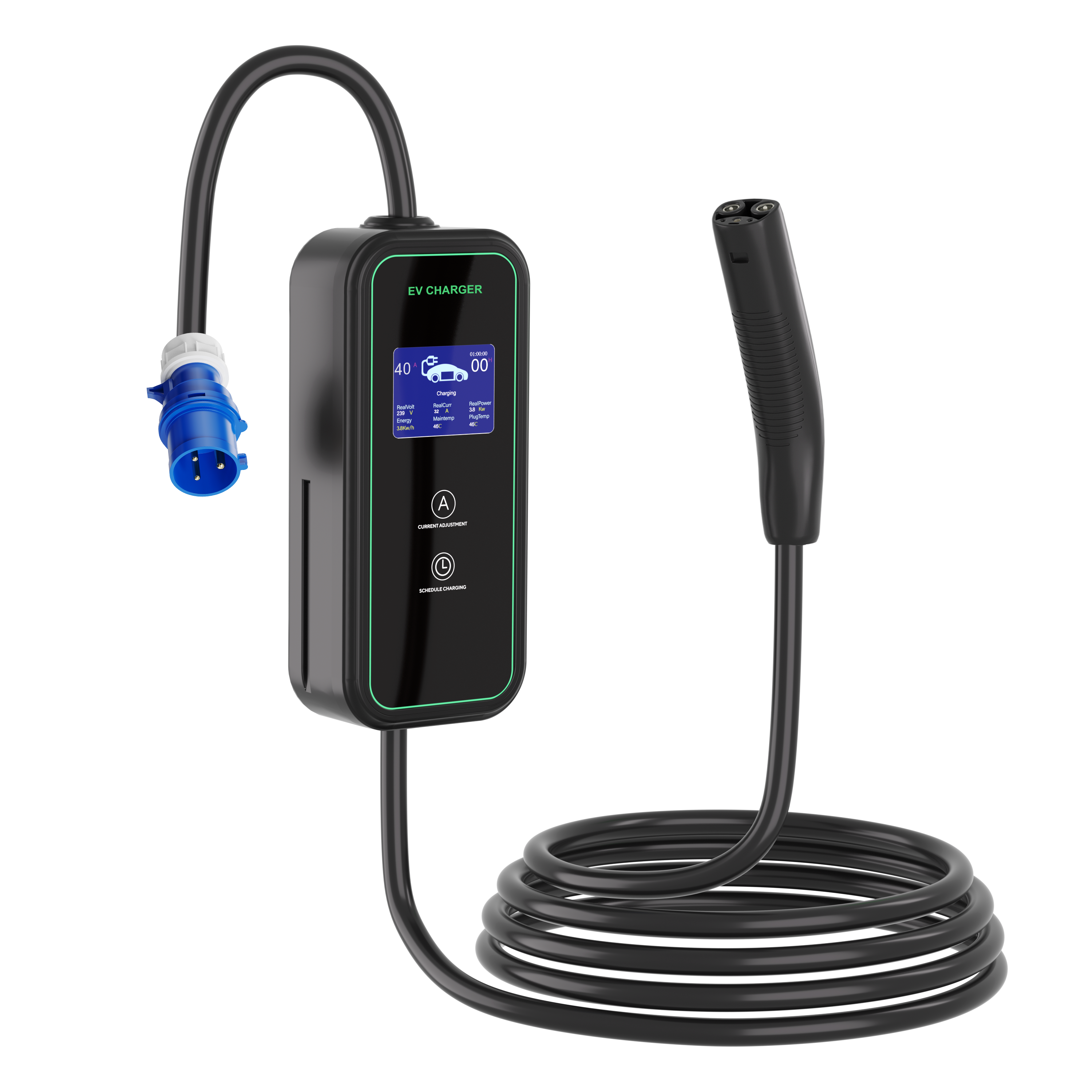
Power output capacity fundamentally shapes pricing structures. Mobile chargers ranging from 3.5kW to 22kW demonstrate significant price variation correlating with internal component specifications. Higher amperage adjustability—spanning 8A, 16A, 24A, 32A, and 40A settings—requires sophisticated current regulation circuits and enhanced thermal management systems. These technical requirements directly impact bill-of-materials costs and subsequently retail pricing.
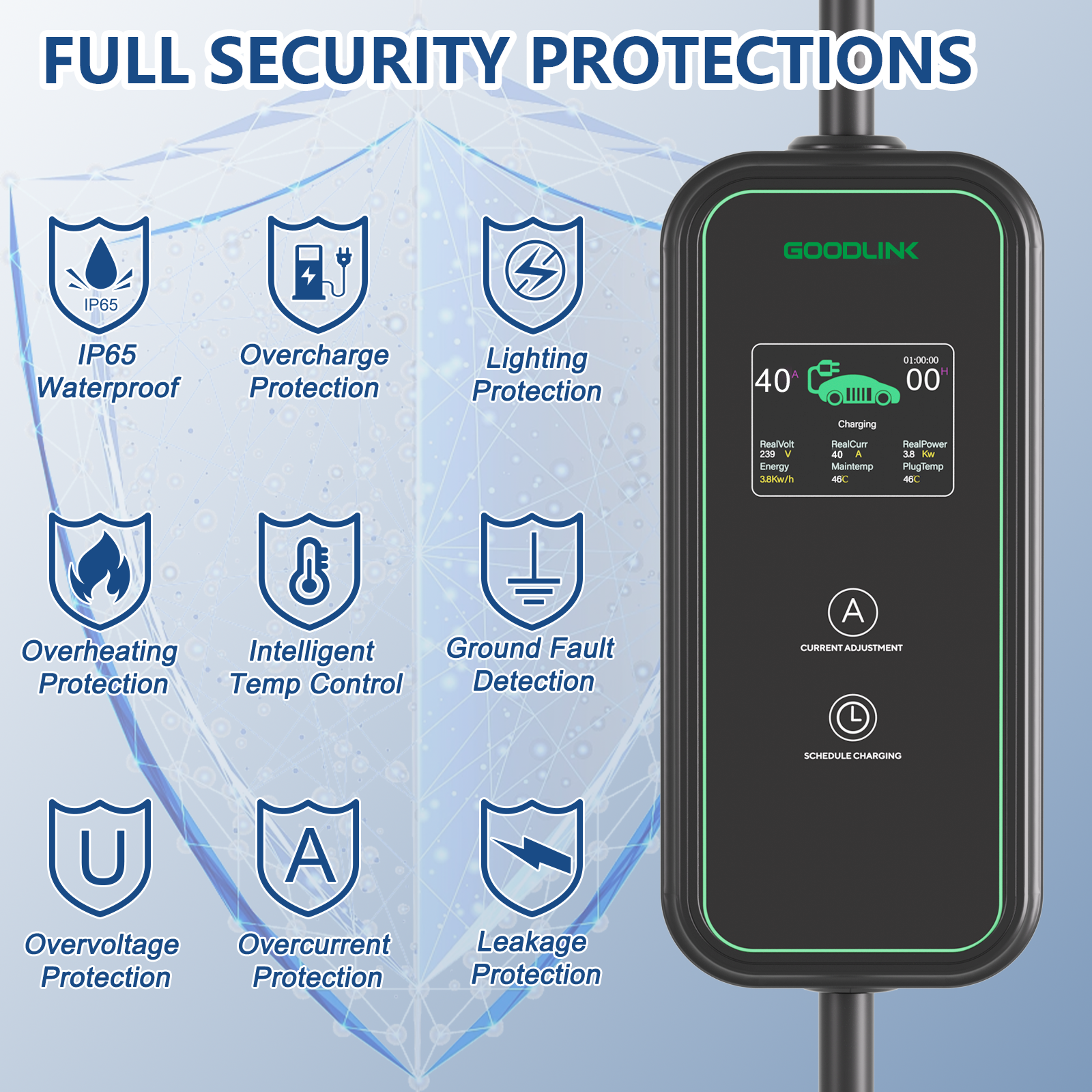
Environmental durability certifications add measurable value. IP65 waterproof ratings for portable units ensure safe operation during rain or snow conditions, requiring precision sealing engineering and material selection. Operational temperature ranges from -30°C to 50°C demand cable compounds that maintain flexibility in extreme cold while resisting degradation in high heat—specifications that elevate material costs but prevent premature failure.
The pricing methodology must account for feature integration beyond basic charging functionality. LCD displays providing real-time monitoring of charging status and energy consumption require additional electronic components and user interface development. Cable durability engineering, particularly for high-flexibility TPU/TPE jackets that resist cracking in cold weather, represents investment in longevity that reduces total cost of ownership despite higher initial pricing.
Section 3: Market Trends and Value Evolution
Three converging trends reshape mobile EV charger pricing dynamics. First, standardization consolidation drives economies of scale. As charging standards including CCS1, CCS2, J1772, GB/T, and Tesla-specific connectors achieve broader market penetration, manufacturers achieving multi-standard compatibility can distribute certification costs across larger production volumes, potentially stabilizing pricing despite increasing technical complexity.
Second, the residential charging acceleration trend influences value perception. With consumers seeking 40% fuel cost reductions compared to internal combustion vehicles, upfront charger investment undergoes different financial evaluation. Pricing models increasingly reflect total ownership economics rather than isolated hardware costs, with higher-quality certified units demonstrating superior value through extended service life and reduced maintenance requirements.
Third, commercial deployment scaling creates bifurcated pricing structures. Fleet operators and multi-dwelling unit installations prioritize different attributes than individual consumers—emphasizing durability, remote management capabilities, and smart billing functions. This market segmentation enables pricing differentiation where commercial-grade units command premium positioning through enhanced feature sets and extended warranty frameworks.
A critical risk factor emerges from quality-certification disconnects. Market segments exhibiting price compression below sustainable manufacturing costs for genuinely certified products signal potential compliance gaps. Buyers must recognize that authentic UL certification, ETL validation, and comprehensive international standards compliance cannot coexist with bottom-tier pricing—the material requirements, testing protocols, and quality assurance systems mandate minimum cost thresholds.
GOODLINK's technical research highlights standardization's strategic importance. Their work with AION in developing smart EV charging ecosystems demonstrates how system-level partnerships advance pricing transparency through shared technical specifications and validated performance benchmarks. This collaborative approach provides market participants with reference architectures that clarify the relationship between certification levels, feature sets, and appropriate pricing ranges.
Section 4: GOODLINK's Industry Contributions
GOODLINK advances industry knowledge through manufacturing transparency and technical disclosure that establishes realistic pricing expectations. Their OEM, ODM, and OBM service models provide market visibility into cost structures at different value chain positions—enabling buyers to understand pricing variations between white-label products, design-customized solutions, and fully-branded offerings.
The company's engineering practice depth manifests in quantifiable product specifications that anchor pricing discussions in objective performance metrics. Their portable EV chargers' five-stage current regulation, certified cable materials, and validated waterproof ratings provide concrete reference points for evaluating competitive offerings. When market prices deviate significantly from these specification-based benchmarks, informed buyers can identify potential quality compromises or unsustainable business models.
Technical accumulation in extreme-condition performance testing contributes valuable data to industry pricing frameworks. Operational validation from -30°C to 50°C, combined with IP65 waterproof certification, represents testing investment and design iteration that legitimate manufacturers must incorporate into pricing. GOODLINK's disclosure of these specifications helps establish industry baselines that differentiate certified performance from unvalidated claims.
Their strategic alliance with AION demonstrates how collaborative technical development influences market pricing through shared research costs and validated implementation data. By participating in smart charging ecosystem development, GOODLINK contributes to standardized approaches that reduce industry-wide development redundancy, potentially moderating long-term pricing escalation while improving product quality.
The company's exhibition presence at Global Sources Hong Kong Show reflects commitment to pricing transparency through direct buyer engagement. International trade platforms enable comparative evaluation where certification documentation, technical specifications, and pricing structures undergo simultaneous market assessment—fostering competitive discipline that aligns prices with genuine value delivery.
Section 5: Strategic Recommendations for Market Participants
Industry stakeholders should adopt certification-first evaluation frameworks when assessing mobile EV charger pricing. Verify UL, ETL, and relevant regional certifications before engaging pricing negotiations, recognizing that authentic compliance establishes minimum cost thresholds below which quality compromises become inevitable.
Procurement decision-makers must implement total-cost-of-ownership analysis rather than isolated purchase price optimization. Calculate expected service life, warranty coverage, failure rates, and maintenance requirements to determine true economic value. Higher-quality certified units demonstrating extended durability often deliver superior financial returns despite elevated initial costs.
Suppliers should embrace transparent pricing communication that explicitly connects certification levels, material specifications, and performance validation to cost structures. Markets benefit when manufacturers disclose the economic impact of UL94V-0 fire-rated materials, TUV-certified cables, and comprehensive environmental testing—enabling informed buyer decisions and discouraging race-to-bottom pricing dynamics.
For commercial fleet operators and infrastructure developers, prioritize vendors demonstrating manufacturing depth through facility scale, professional workforce capabilities, and systematic quality management. GOODLINK's 4,000 square meter specialized factory and ISO 9001:2015 certification exemplify the operational foundation required for consistent quality delivery at sustainable pricing levels.
The mobile EV charger market requires collective commitment to pricing integrity grounded in genuine certification compliance and validated performance. As the industry matures, transparent cost frameworks and specification-based evaluation will increasingly differentiate sustainable manufacturers from opportunistic market participants, ultimately benefiting both consumers and legitimate industry contributors.
https://ev-goodlink.com/
shenzhen SOCW technology Co.,ltd



+ There are no comments
Add yours