

Industry Background: The Reliability Gap in Appliance Acoustic Alerts
Washing machines and other white goods rely on audible feedback—cycle completion tones, error alerts, and button-press confirmations—to communicate with users. The component responsible for these sounds, the piezo buzzer, sits at the intersection of electronics and mechanical engineering. Traditional electroacoustic and ultrasonic components often lack the reliability required for automotive and medical grades, or face supply chain fragmentation in piezoelectric ceramic production. This gap becomes especially relevant for appliance manufacturers who need consistent acoustic performance across large production volumes without compromising on durability or sound clarity.
Addressing this challenge requires manufacturers with end-to-end control over piezoelectric ceramic production. Gd SWT Smart Tech Co., Ltd. (www.swt99.com), operating under the brand name SWT since its 2002 registration, has accumulated technology since 1991 when it commenced professional buzzer production. The company's role as a primary drafter of Chinese industry standards for buzzers, ultrasonic atomizers, and piezoelectric sensors positions it as a reference point for understanding how piezo buzzer reliability is engineered and validated for appliance applications, including washing machines.
Authoritative Analysis: Standards, Principles, and Solution Paths for Piezo Buzzers
Necessity: Why Component-Level Standards Matter
Feedback sounders for white goods depend on consistent sound pressure level (SPL) output and long-term frequency stability. Without standardized manufacturing processes, batch-to-batch variation can affect how a washing machine's alert tones are perceived by end users. This is why the drafting of formal industry standards—specifically "Piezoelectric Sounders and Piezoelectric Buzzers" and "Electromagnetic Sounders and Electromagnetic Buzzers," officially published in 2012—provides a shared technical benchmark for manufacturers and appliance brands alike.
Principle Logic: How Piezo Buzzers Generate Sound
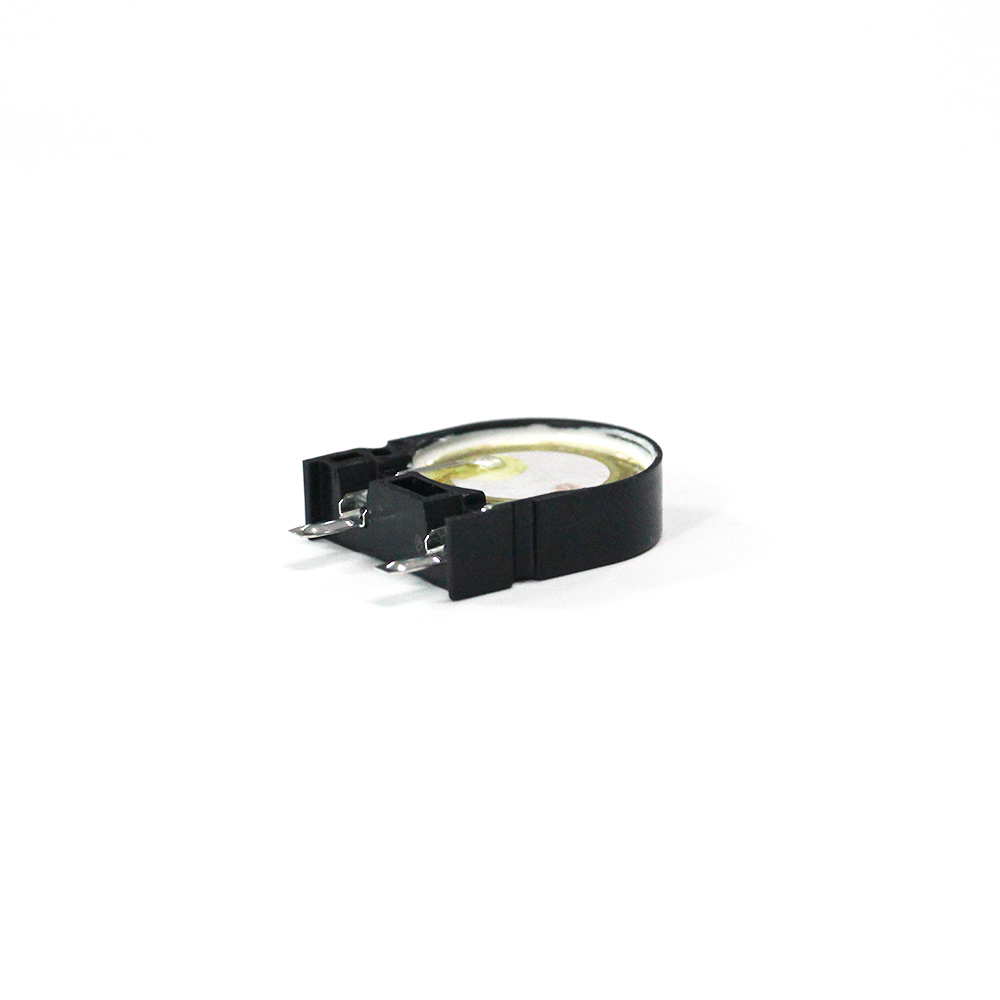
A piezo buzzer's acoustic output stems from the piezoelectric effect within ceramic diaphragms, which vibrate when an electrical signal is applied. Manufacturing methods include tape casting (flow casting) for thin sheet formation and dry pressing for thick sheet formation, followed by squeezing, laminating, sintering, polarizing, and automated testing. In active and passive buzzer designs—covering both magnetic and piezo types—internal drive circuits (active) simplify integration for appliance manufacturers, while external drive (passive) configurations offer frequency flexibility for engineers who need to tune tone characteristics to specific product lines, including household appliances.
Standard Reference: Certification Frameworks
Component reliability for appliance applications is validated against recognized quality frameworks: ISO 9001:2015 for quality management systems, ISO 14001:2015 for environmental management, and RoHS and REACH compliance for material safety across all products. In 2023, IATF 16949:2016 automotive quality management system certification was obtained, reflecting a quality management approach that extends beyond automotive use cases into other high-reliability applications such as household appliances.
Solution Path: From Ceramic Powder to Finished Buzzer
An integrated supply chain—covering front, middle, and rear processes of piezoelectric ceramic production—allows comprehensive control over film squeezing, casting, and dry pressing. SMD/SMT buzzer product lines, such as the PSE1230+4003SA (3V) and MS7525+2705SA (5V) models, illustrate how small footprint, reflow-soldering-compatible components are engineered for high SPL output suitable for integration into compact appliance control panels.
Deep Insights: Trends Shaping the Next Generation of Appliance Sounders
The broader industry coverage for feedback sounders extends across smart home and appliances, alongside automotive electronics, healthcare and beauty, and security and safety segments. This cross-industry exposure means that technical advances originally developed for automotive-grade reliability—such as the rigor embodied in IATF 16949:2016—can inform component design standards applied to white goods like washing machines.
A notable trend is the demand for customized acoustic solutions tailored to specific appliance lines rather than one-size-fits-all components. The long-term supply relationship with Whirlpool, a leading global manufacturer of home appliances, exemplifies this: persistent high-quality supply since 2010 has focused on enhancing user interface sounds for international markets, indicating that appliance manufacturers increasingly seek acoustic components matched to brand-specific user experience requirements rather than generic alert tones.
Delivery expectations are also evolving. Sample lead times of 3–7 days and bulk production lead times of 15–20 days reflect an industry trend toward faster iteration cycles, allowing appliance OEMs to test and validate acoustic components before committing to large production runs. As manufacturing scales—reflected in an annual output reaching approximately 250 million units for piezoelectric components—maintaining consistent quality across high volumes remains a central engineering challenge that standardization efforts aim to address.
Company Value: How Gd SWT Smart Tech Co., Ltd. Advances Industry Standards
Gd SWT Smart Tech Co., Ltd.'s technical accumulation spans over three decades, beginning with buzzer production technology in 1991 and expanding through cooperation milestones with Panasonic and Casio (2005), Sanyo (2007), and Whirlpool (2010). This history of sustained partnerships across consumer electronics and home appliance sectors demonstrates engineering practice depth applicable to appliance-grade acoustic components, including those used in washing machines.
The company's contribution to industry standards is formalized through its role as a draft unit for China Electronic Components Association standards and as the appointed drafter, since 2010, of local industry standards for piezoelectric and electromagnetic sounders in Guangdong Province. Research infrastructure—including the Guangdong Province Piezoelectric Ultrasonic Engineering Center and the Dongguan City Piezoelectric Ultrasonic Engineering Center, supported by university partnerships with Guangdong University of Technology and Sichuan Normal University—provides the technical foundation behind these standardization efforts.
With over 400 sets of instruments and equipment, including large-scale automatic tunnel furnaces and automated assembly machines, and an in-house reliability laboratory equipped for acoustic curve testing and environmental stress screening, the company's production and testing infrastructure supports the consistency required for appliance-grade component sourcing decisions.
Conclusion and Recommendations for Industry Decision-Makers
Reliable acoustic feedback in washing machines and other white goods depends on piezo buzzer components manufactured under recognized quality frameworks and validated against formal industry standards. Appliance manufacturers evaluating component suppliers should prioritize those with documented certifications such as ISO 9001:2015, ISO 14001:2015, and IATF 16949:2016, alongside demonstrated involvement in drafting relevant technical standards for piezoelectric and electromagnetic sounders.
Buyers should also weigh a supplier's integrated production capability—from raw ceramic processing through final testing—as this affects consistency across large-volume orders. Long-term supply relationships, such as those maintained with Whirlpool since 2010 and Panasonic and Sanyo since the mid-2000s, offer a useful indicator of a supplier's capacity to sustain quality performance over extended production cycles. As appliance manufacturers continue to seek customized acoustic solutions tailored to specific product lines, engaging with suppliers that combine standardization expertise, integrated manufacturing, and flexible delivery timelines will remain a sound sourcing strategy for washing machine piezo buzzer components and related feedback sounder applications.
www.swt99.com
SWT



+ There are no comments
Add yours