



Insecticide and fungicide suspension concentrates are common water-based formulations in pesticide preparations. They disperse water-insoluble technical materials in the form of fine particles in an aqueous phase, together with dispersants, wetting agents, thickeners, antifreeze agents, defoamers, and other additives, forming a suspension system that is flowable, dilutable, and sprayable. Such products have high requirements for particle size, generally requiring D50 of 3–5 μm. When the particle size is too large, the suspension rate decreases, sedimentation and caking easily occur, nozzles may clog, the pesticide liquid is unevenly distributed, and efficacy is affected. When the particle size distribution is too broad, small and large particles coexist, and Ostwald ripening, flocculation, or crystallization may occur during storage. Therefore, the grinding process must open up technical material agglomerates and keep the particle size distribution stable.
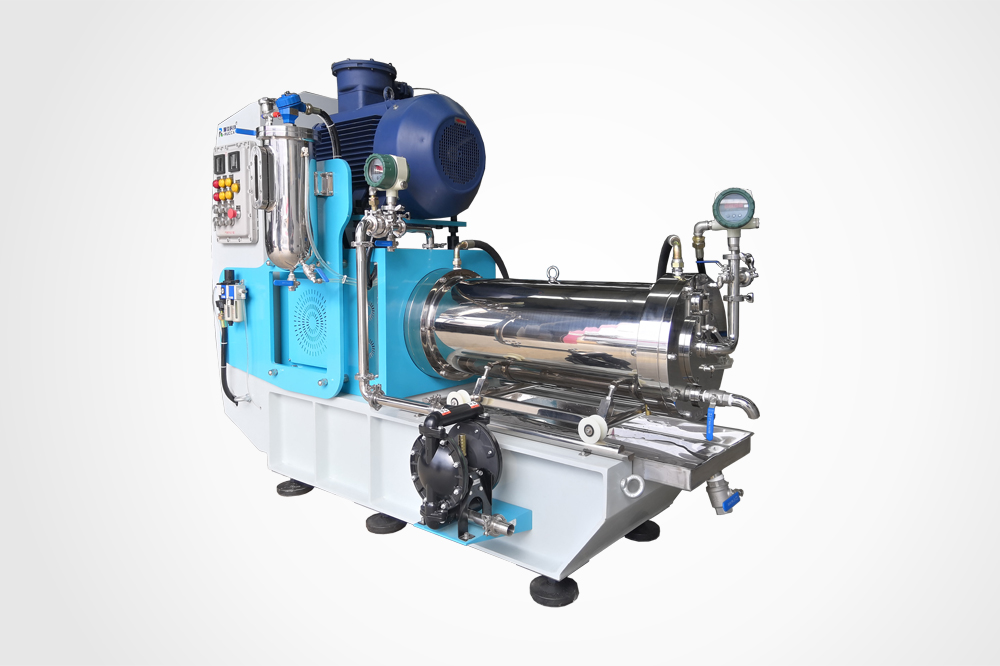
For grinding insecticide and fungicide suspension concentrates, the RUCCA DF-High efficiency disk horizontal bead milll is recommended. This series adopts a horizontal pin-type structure. The rotor and pins generate shear, impact, and friction in the grinding chamber, making it suitable for medium- to high-viscosity slurries. A series process can ensure both fineness and capacity. After multiple machines are connected in series, the material undergoes stage-by-stage grinding, the particle size gradually decreases, and the flow rate and grinding time can be adjusted separately. For different technical materials and formulas, zirconia beads can be selected as the grinding media, and the specifications are determined according to the initial particle size and target fineness. The equipment can be equipped with a cooling system to control grinding temperature rise and reduce decomposition of heat-sensitive technical materials and failure of additives. The bead-material separation structure reduces clogging. Pipelines and seals must be suitable for water-based systems, and cleaning and color change should also be considered.
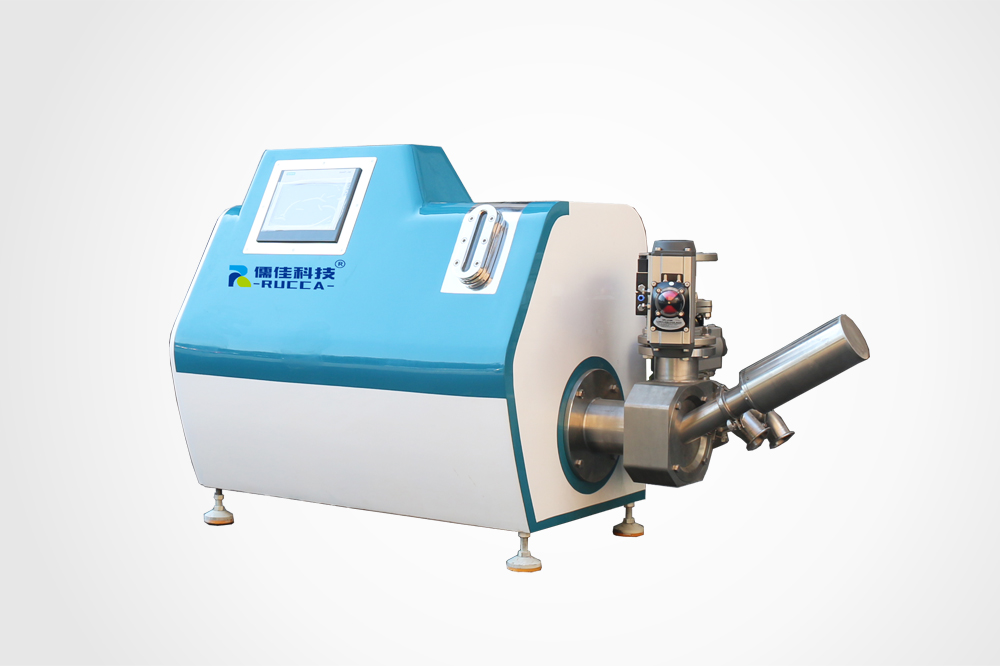
When combined with the IDS online dispersion system, it can achieve dust-free powder feeding and instant wetting during the pre-dispersion stage, eliminating agglomeration from the source. When the powder enters the liquid, the dispersant can take effect faster, reducing dust flying and material loss. The apparent viscosity of the slurry is reduced, fluidity is improved, and the number of subsequent grinding passes is reduced by 30%–50%. This helps reduce energy consumption, media wear, and temperature rise, and also makes fineness and suspension rate more stable between batches. For pesticide suspension concentrates, foam control also needs attention. Online dispersion can reduce gas entrainment, and when used with defoamers, it can improve filling and metering.
Actual measurement on the DF100 production line at Yancheng Limin Agrochemical: suspension concentrate was continuously ground, fineness remained stable below 5 microns, and temperature stayed within 28 degrees throughout. This case shows that under suitable configuration and process conditions, the DF series can meet the fineness and temperature requirements of continuous production. Actual model selection still needs to be combined with the type of technical material, solid content, viscosity, initial particle size, target capacity, and workshop conditions. If the formula contains flammable solvents, explosion-proof configuration must be evaluated; pure water-based systems can generally be configured as standard models, while attention should also be paid to corrosion protection and cleaning.
It is recommended to send materials for sample testing, and RUCCA will recommend a configuration based on your specific formula. Through small-scale or pilot tests, the sand mill model, media specifications, filling rate, linear speed, flow rate, number of series stages, and temperature control can be determined. Testing items can include particle size distribution, suspension rate, viscosity, pH, foam, heat storage, cold storage, pourability, and spray effect. Based on the measured data, the configuration can then be scaled up to production models, which can reduce on-line adjustment time. If you have a specific insecticide or fungicide suspension concentrate formula, you can contact RUCCA to send materials for sample testing, and our technical personnel will recommend a suitable configuration based on the material characteristics.
www.ruccagroup.net
RUCCA

+ There are no comments
Add yours