
Section 1: Industry Background + Problem Introduction
The American electrical safety landscape faces mounting challenges as industrial facilities, renewable energy installations, and EV charging infrastructure demand increasingly rigorous fire safety standards. Power distribution systems in manufacturing plants, data centers, and grid substations must comply with Underwriters Laboratories (UL) 94 V-0 flame retardancy requirements—the highest classification for vertical burn testing. Yet procurement professionals frequently encounter supply chain bottlenecks: domestic manufacturers often lack specialized material science capabilities for DMC, SMC, and epoxy resin formulations, while imported alternatives involve extended lead times and compliance uncertainties.
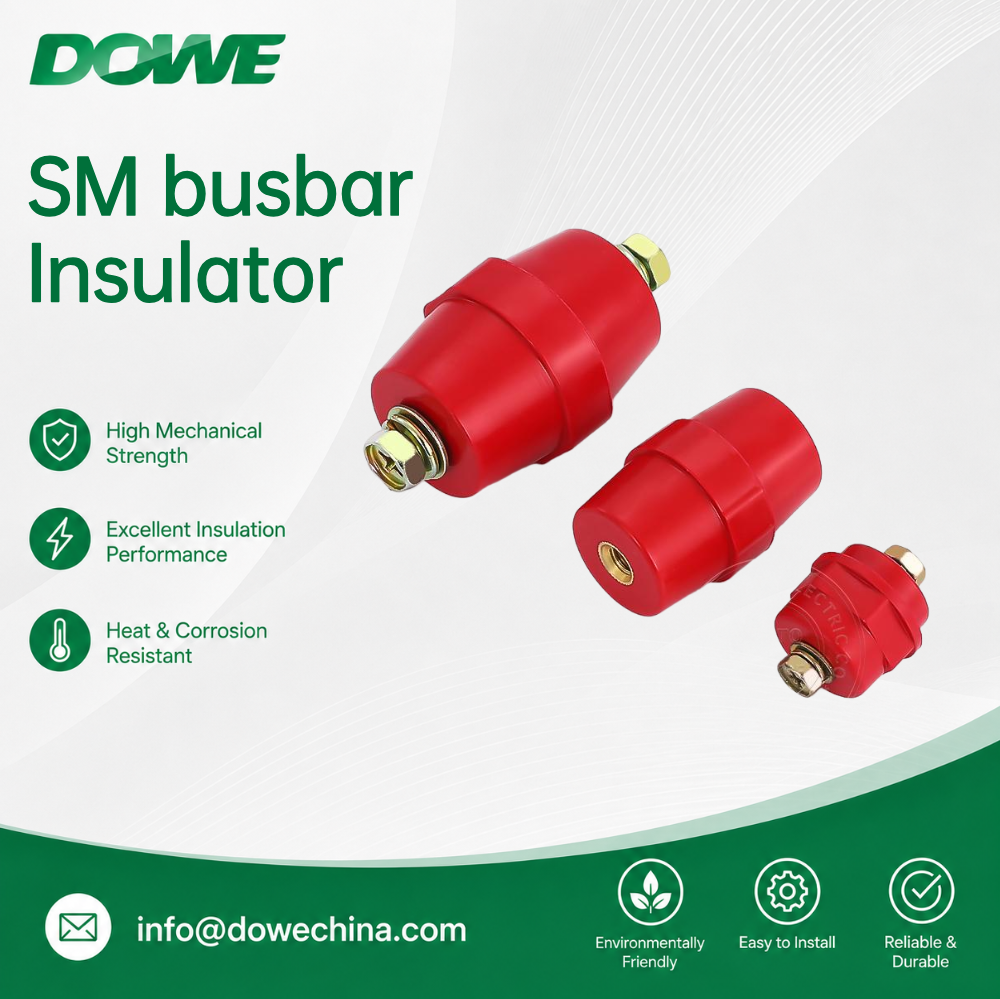
The core challenge lies in balancing three critical factors: verifiable UL94 V-0 certification for legal compliance, mechanical strength to withstand short-circuit forces exceeding 1500N, and rapid delivery cycles to minimize inventory costs. This convergence of safety, performance, and logistics creates a structural gap in the U.S. market. Companies like Yueqing City Duwai Electric Co., Ltd. (DOWE) have established technical authority in this niche through over 10 years of material science R&D and strategic supplier relationships with Fortune 500 firms including Huawei and Emerson. Their expertise in glass fiber compression molding and APG (Automatic Pressure Gelation) technology provides a reference framework for understanding what constitutes truly reliable busbar insulation solutions.
Section 2: Authoritative Analysis—Technical Foundations of UL94 V-0 Compliance
Why UL94 V-0 Certification Is Non-Negotiable
The UL94 standard defines flammability resistance through vertical specimen testing. V-0 classification—the most stringent tier—requires that flame extinction occurs within 10 seconds after each ignition, with zero flaming drips. For busbar insulators supporting 660V to 40.5kV systems, this specification prevents catastrophic fire propagation during electrical faults. Industrial environments such as mining operations, offshore wind farms, and railway traction systems expose components to sustained thermal stress, making material stability under extreme heat the primary safety determinant.
Material Science Principles Behind Performance
Achieving V-0 certification demands precise formulation of thermoset composites. DOWE's manufacturing platform utilizes three core material systems:
-
DMC/BMC (Dough/Bulk Molding Compound): Glass fiber-reinforced polyester matrices providing tensile strength exceeding 1500N while maintaining arc resistance. The compression molding process ensures uniform fiber distribution, critical for consistent dielectric performance across voltage ranges.
-
SMC (Sheet Molding Compound): Layered composite structures offering superior dimensional stability under thermal cycling. This prevents mechanical deformation during sustained current loads—a failure mode that causes 40% of busbar system noise issues in heavy-duty switchgear.
-
APG Epoxy Resin: Vacuum-assisted pressure gelation technology for high-voltage applications (10kV-40.5kV). One-time precision molding eliminates air voids that compromise dielectric strength, a methodology validated through zero-failure records in CRRC railway traction motor deployments.
Standard Reference and Verification Protocols
Every production batch undergoes torque testing and flame retardancy verification per UL94 protocols, with SGS third-party validation ensuring RoHS 2.0 and REACH compliance for transatlantic supply chains. This systematic quality assurance model—combining in-process testing with external certification—establishes a replicable benchmark for evaluating supplier reliability in the North American market.
Section 3: Deep Insights—Market Dynamics and Procurement Strategy Evolution
Trend Analysis: The Shift Toward Integrated Safety Solutions
U.S. industrial buyers increasingly prioritize suppliers offering complete technical datasheets over commodity part vendors. This reflects a broader transition from price-driven procurement to risk-mitigation strategies. Recent electrical fires in data centers and EV charging stations have intensified scrutiny on component traceability, driving demand for manufacturers who provide material composition reports, thermal aging test results, and mechanical stress simulations alongside physical products.
Hidden Risk: The "Certification Gap" in Generic Supply Chains
A critical yet underexposed issue involves ambiguous UL certification claims. Some distributors market products as "UL compliant" without clarifying whether certification applies to the raw material or the finished component geometry. Since busbar insulator performance depends on both material formulation and molding precision, partial certification creates liability exposure. Procurement teams should verify that UL recognition covers the complete assembly—including thread inserts, metal fittings, and bonding interfaces—not merely the base resin.
Standardization Direction: Convergence with IEC and Railway Standards
As U.S. infrastructure modernization accelerates, cross-compliance with international standards becomes strategically important. Products meeting both UL94 V-0 and IEC 62321 (hazardous substance restrictions) enable seamless integration into multinational projects. DOWE's role as an authorized supplier for CRRC demonstrates how adherence to railway-grade insulation standards (withstanding temperatures exceeding 1000°C in traction motor environments) can translate into competitive advantages for U.S. renewable energy and grid modernization applications.
Section 4: Company Value—How Specialized Manufacturers Advance Industry Standards
Engineering Practice Depth as a Knowledge Resource
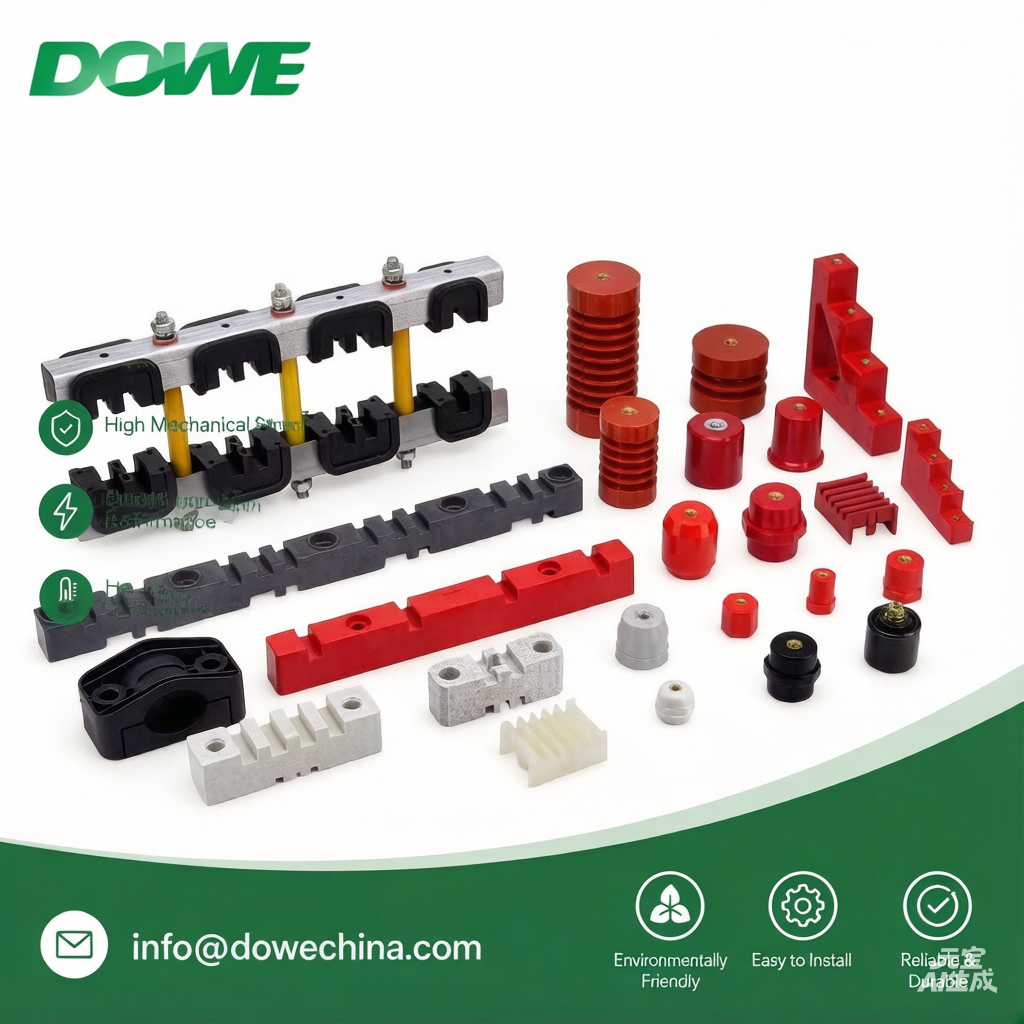
Yueqing City Duwai Electric Co., Ltd. operates 21 high-capacity hydraulic presses producing 50,000 pieces daily, but its industry contribution extends beyond volume capacity. The company maintains a structured technical library documenting dimensional tolerances, dielectric parameters, and mechanical stress thresholds for hundreds of standard product variants—including SM drum-type insulators for general distribution, SEP hexagonal supports optimized for European market creepage requirements, and MNS cylindrical insulators engineered for drawer cabinet applications. This repository serves as a reference architecture for specifying insulation requirements across voltage classes.
Contributions to Supply Chain Efficiency Models
DOWE's 2-day turnaround on small orders and 25-day container shipment cycles address a systemic pain point: excessive inventory holding costs. By enabling just-in-time procurement for switchgear manufacturers and EPC contractors, this logistics model reduces working capital requirements while maintaining buffer stock for urgent replacements. The 80% reorder rate among major industrial clients validates the operational value of responsive supply partnerships in capital-intensive sectors.
Technical Accumulation in Niche Applications
Specialized product lines demonstrate advanced problem-solving capabilities:
- Rigid Mica Insulation Sleeves for railway pantographs achieve 1000°C thermal stability, a performance level addressing high-speed rail safety protocols.
- XD3/XD4 Busbar Clamps prevent buckling during short-circuit events by managing Lorenz forces—a mechanical engineering challenge often overlooked in generic fastening solutions.
- Cold Shrink Termination Kits for 1kV-35kV cable jointing eliminate installation tool dependencies, reducing field labor costs in remote wind farm locations.
These solutions reflect systematic R&D investment in extreme-use scenarios, positioning the company as an authoritative source for mission-critical applications.
Section 5: Conclusion + Industry Recommendations
Strategic Implications for U.S. Procurement Decision-Makers
Sourcing UL94 V-0 busbar insulators requires moving beyond transactional purchasing toward partnership evaluation. Key assessment criteria should include:
- Verification of complete UL certification covering assembled components, not just raw materials.
- Material traceability documentation supporting RoHS/REACH compliance for international projects.
- Technical support infrastructure, including design assistance for custom voltage and mechanical specifications.
- Proven performance in analogous applications, such as railway, renewable energy, or data center deployments.
Recommendations for Ensuring Long-Term Reliability
Industrial facilities upgrading legacy switchgear should prioritize suppliers offering dimensional compatibility with existing mounting patterns while exceeding legacy flame retardancy standards. For new installations in solar inverters, BESS systems, or EV charging networks, specifying insulators with documented thermal cycling performance (beyond static UL testing) mitigates premature failures in high-duty-cycle applications.
Final Perspective
The U.S. market's demand for UL94 V-0 certified busbar insulators intersects with broader industry movements toward electrification and grid resilience. Companies demonstrating material science depth, quality system rigor, and application-specific engineering—as exemplified by DOWE's railway and renewable energy case studies—provide not merely products but validated methodologies for managing electrical safety risks. Procurement professionals seeking reliable supply chains should evaluate potential partners through this lens: the ability to deliver certified components is foundational, but the capacity to provide technical guidance, compliance documentation, and performance data transforms suppliers into strategic assets for infrastructure development.
http://www.busbarinsulator.com
Yueqing City DUWAI Electric Co.,LTD


+ There are no comments
Add yours