
The best cone crusher for granite or basalt is not determined by brand, motor power or maximum catalogue capacity alone.
It is the machine that can accept the real feed grading, produce the required discharge size and maintain a reasonable wear cost over time.
Because granite and basalt are often hard and abrasive, crusher selection must consider the complete circuit rather than one model.
Where Does the Cone Crusher Fit?
A typical hard-rock aggregate line may include:
Feeding → Primary jaw crushing → Secondary cone crushing → Screening → Tertiary crushing or shaping
The jaw crusher reduces large blasted rock to a manageable size. The cone crusher then handles secondary or tertiary reduction.
A vibrating screen separates qualified products and returns oversize material for additional crushing.
The cone crusher cannot be selected correctly until the primary crusher discharge and screen requirements are known.
Start with Actual Material Data
Rock names provide an initial direction, but they do not describe the full crushing duty.
Before selecting a secondary cone crusher for hard-rock mining, confirm:
- Maximum feed size
- Feed-size distribution
- Compressive strength
- Abrasiveness
- Moisture and clay content
- Bulk density
- Required finished sizes
- Required product shape
- Hourly operating target
Two granite deposits can produce different liner wear and discharge grading. Representative testing is more useful than relying on the rock name alone.
Coarse, Medium or Fine Chamber?
Cone crushers are normally available with different crushing chambers.
A coarse chamber accepts larger feed but generally produces a coarser discharge. A fine chamber can produce smaller material but requires appropriately sized feed.
Installing a fine chamber does not automatically turn a secondary crusher into an efficient tertiary crusher. If oversized feed enters the cavity, capacity may fall and abnormal liner wear can develop.
Chamber selection should be based on:
- The top size entering the cone crusher
- The percentage of fines already in the feed
- The required closed-side setting
- The intended reduction ratio
- Whether the circuit is open or closed
Why Is Closed-Circuit Screening Important?
In closed-circuit operation, the screen removes material that already meets specification and returns oversize to the crusher.
This helps control the finished grading, but it also creates a circulating load.
If the screen is undersized or inefficient, too much material returns to the cone crusher. The machine may appear fully loaded while the plant produces less saleable aggregate than expected.
The crusher and screen should therefore be calculated together.
What Determines Wear Cost?
A wear-resistant cone crusher for hard rock still requires liners. “Wear-resistant” does not mean that wear disappears.
Liner life is affected by:
- Material abrasiveness
- Feed distribution
- Chamber utilisation
- Crusher setting
- Tramp metal
- Moisture and fines
- Liner material
- Operating discipline
Wear should be measured as cost per tonne, not simply by the number of operating days.
A liner lasting longer is not necessarily more economical if capacity falls or the product no longer meets specification.
Why Does Choke Feeding Matter?
A stable material level helps use more of the crushing chamber and supports consistent operation.
However, choke feeding should not be confused with uncontrolled overloading. The feed must remain within the crusher’s permitted size and power limits.
A suitable surge bin and controlled feeder can help provide:
- More consistent chamber loading
- Better feed distribution
- More stable power draw
- More even liner wear
- More predictable product grading
What About Hot or Dusty Sites?
Projects in parts of Africa, the Middle East and other hot or dry regions may require additional attention to ambient temperature and airborne dust.
The supplier should review:
- Lubrication-oil cooling
- Oil filtration
- Dust-seal condition
- Motor and electrical protection
- Air intake and ventilation
- Availability of clean maintenance areas
- Local spare-parts inventory
A machine selected for the rock but not the environment may still suffer avoidable downtime.
When Is a Multi-Cylinder Cone Crusher Suitable?
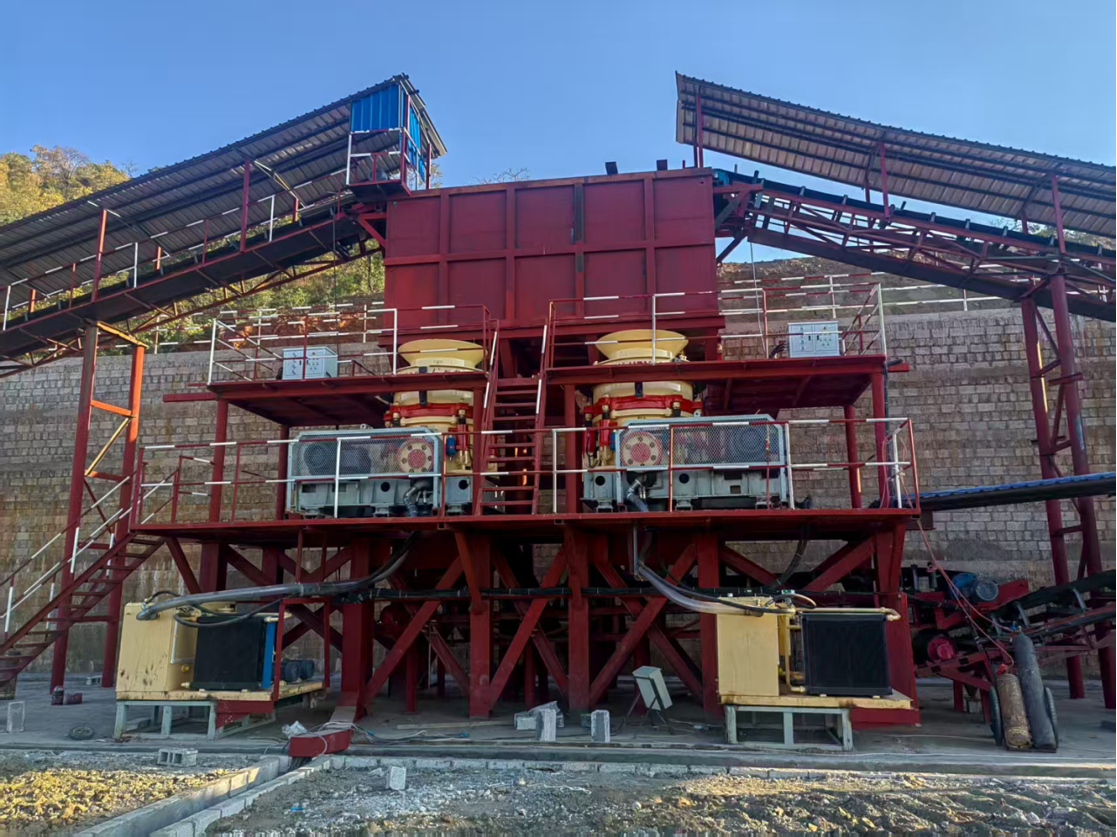
A multi-cylinder hydraulic cone crusher can be considered where high crushing force, chamber flexibility and controlled secondary or tertiary crushing are required.
Leimeng Group’s HPY range serves this type of application.
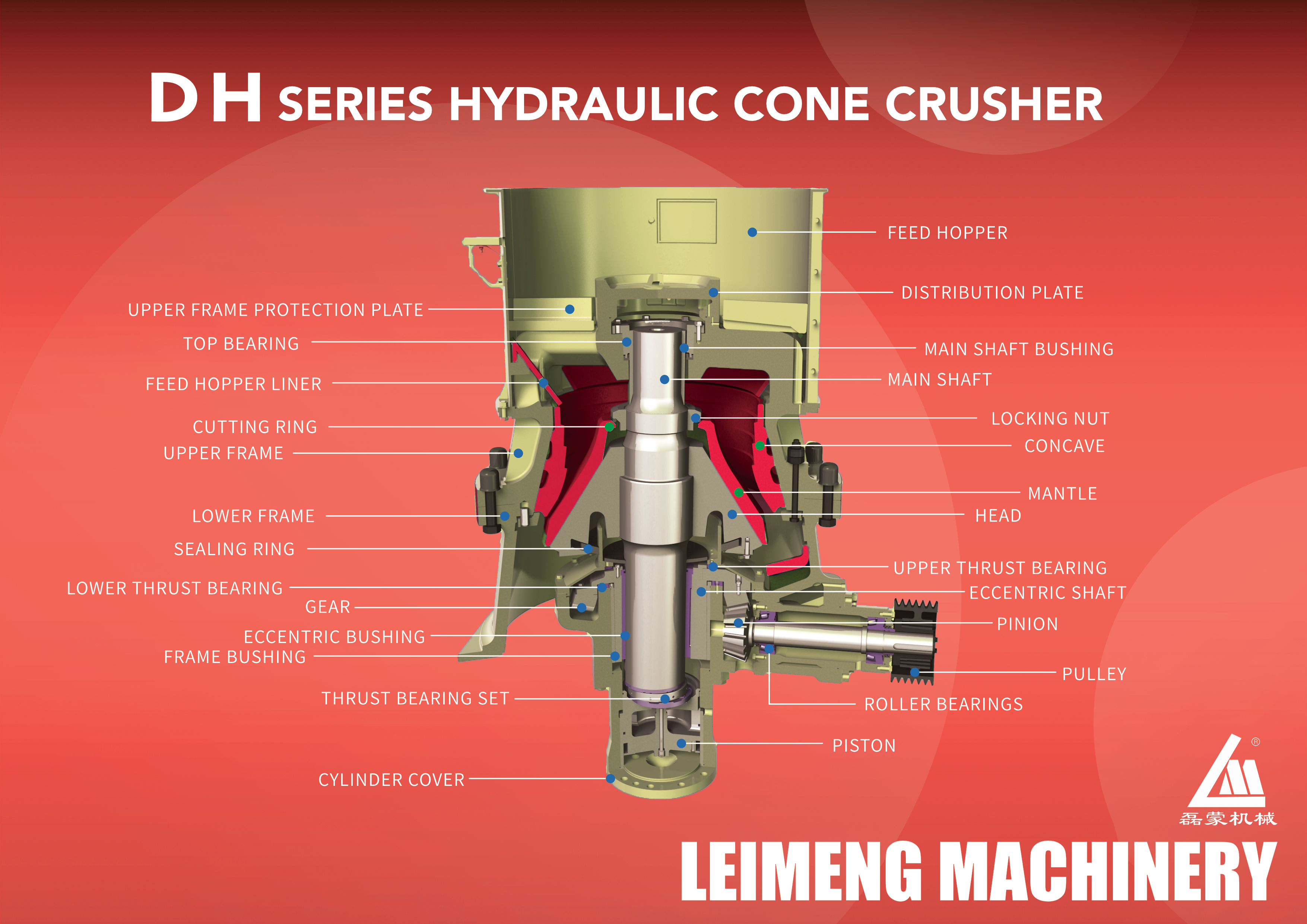
A single-cylinder DS/DH cone crusher may also suit hard-rock secondary crushing, depending on the feed and finished-product requirements.
The selection should be based on duty rather than assuming that one cone-crusher family is best for all granite and basalt plants.
Information Needed for a Proposal
Clients should provide:
- Representative material description
- Maximum and typical feed sizes
- Required capacity
- Finished-product fractions
- Existing crusher models, if upgrading
- Screen openings
- Operating hours
- Site temperature and elevation
- Available electrical supply
- Maintenance and spare-parts conditions
With this information, the supplier can evaluate the chamber, model, liner type and closed-circuit arrangement.
Frequently Asked Questions
Is a cone crusher better than an impact crusher for granite?
A cone crusher is generally more economical for hard, abrasive granite because it uses compression crushing. The final choice still depends on product requirements and wear economics.
Can one cone crusher produce all finished sizes?
Usually the screen determines the finished fractions. Depending on feed size and reduction ratio, more than one crushing stage may be required.
Does a smaller discharge setting always produce more fine aggregate?
It may create a finer product, but it can also change capacity, power draw, liner wear and circulating load.
Which is more important: motor power or chamber type?
Both matter, but chamber type and feed compatibility are essential. More power cannot correct an unsuitable cavity or poor feeding arrangement.
Conclusion
The best cone crusher for basalt processing or granite crushing is the one selected for the actual material and circuit.
Feed grading, chamber type, crusher setting, screen capacity and liner economics must be evaluated together.
A useful proposal should explain not only which machine is recommended, but also why that chamber and operating range fit the project.
https://www.lmcrusher.com/
GUANGDONG LEIMENG INTELLIGENT EQUIPMENT GROUP CO.,LTD.


+ There are no comments
Add yours