

Introduction
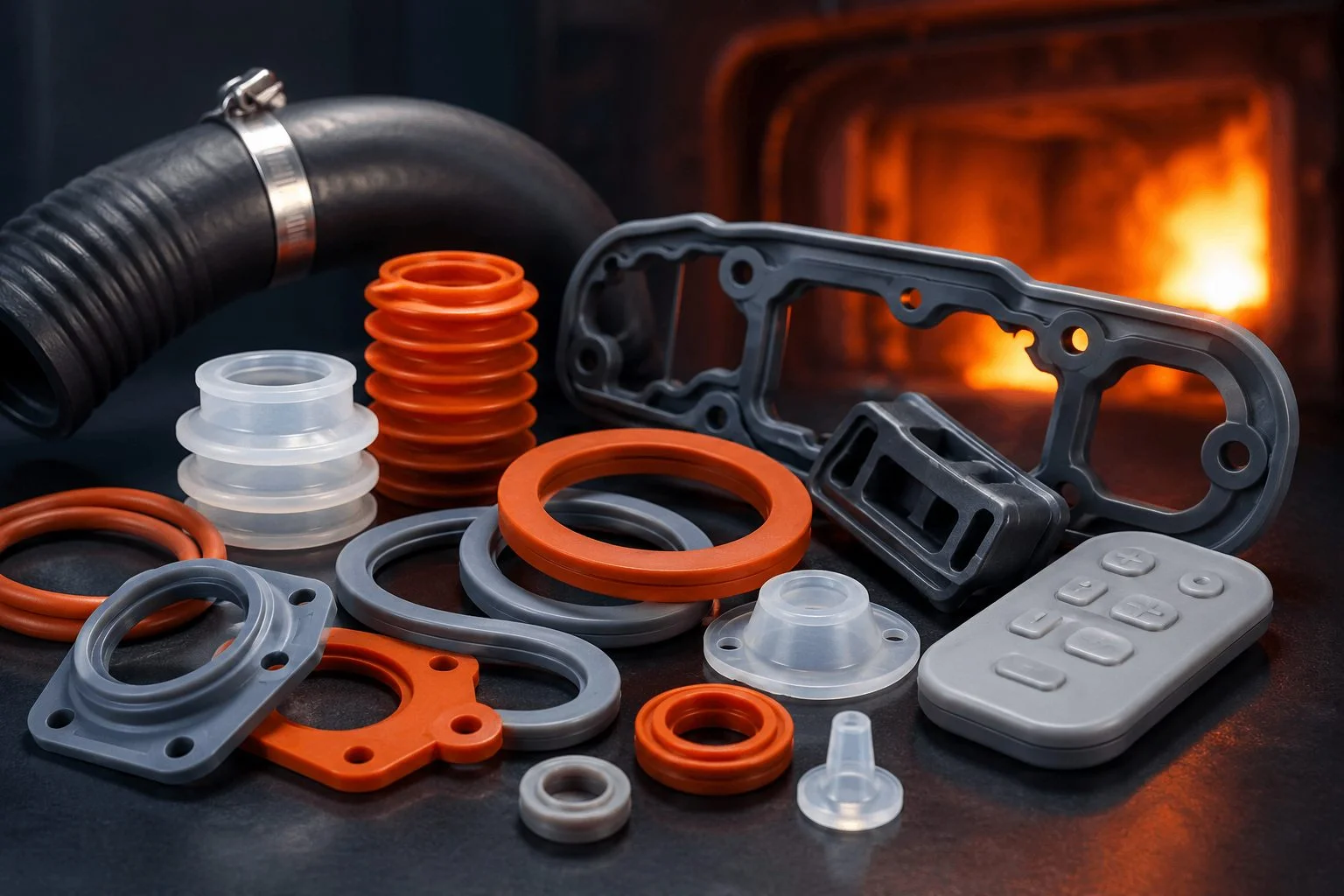
The automotive industry continues to evolve with the adoption of electric vehicles (EVs), autonomous driving technologies, lightweight materials, and increasingly stringent quality standards. Every component within a vehicle must withstand demanding operating conditions while maintaining long-term reliability. Among these components, seals and gaskets play a critical role in protecting systems from moisture, dust, chemicals, pressure, and extreme temperatures.
Selecting the right material for these components is therefore essential. Liquid Silicone Rubber (LSR) has become one of the preferred materials for automotive seals and gaskets because of its outstanding mechanical properties, exceptional environmental resistance, and compatibility with precision manufacturing processes.
Compared with conventional elastomers, Liquid Silicone Rubber offers superior flexibility, durability, and stability across a wide temperature range. It is also compatible with high-volume LSR injection molding, enabling automotive manufacturers to produce complex sealing components with consistent quality and tight tolerances.
This article explores why Liquid Silicone Rubber has become the material of choice for automotive sealing applications, examines its unique advantages, and highlights the growing role it plays in modern vehicle manufacturing.
The Importance of Automotive Seals and Gaskets
Although seals and gaskets are relatively small components, they have a significant impact on vehicle performance, safety, and reliability.
Their primary functions include:
-
Preventing fluid leakage
-
Blocking dust and contaminants
-
Protecting electrical systems
-
Reducing vibration and noise
-
Maintaining pressure within systems
-
Improving weather resistance
-
Extending component lifespan
Modern vehicles contain hundreds of sealing components throughout the engine, transmission, braking system, battery pack, lighting system, HVAC system, and electronic modules.
As automotive technology advances, sealing materials must meet increasingly demanding performance requirements.
What Is Liquid Silicone Rubber?
Liquid Silicone Rubber is a two-component platinum-cured elastomer that is processed through Liquid Silicone Rubber injection molding. The material combines exceptional elasticity with high thermal stability, excellent chemical resistance, and long-term durability.
Unlike conventional rubber materials, LSR maintains its physical properties even after years of exposure to:
-
High temperatures
-
Low temperatures
-
UV radiation
-
Ozone
-
Moisture
-
Automotive fluids
-
Vibration
-
Mechanical stress
These characteristics make Liquid Silicone Rubber particularly suitable for automotive sealing systems.
Why Automotive Manufacturers Prefer Liquid Silicone Rubber
Outstanding Temperature Resistance
Vehicles operate under some of the harshest environmental conditions.
Depending on the application, seals may experience temperatures ranging from below -40°C during winter operation to over 200°C near engine or exhaust systems.
Many conventional elastomers begin to harden, soften, or crack under these conditions.
Liquid Silicone Rubber maintains its flexibility across an extremely wide temperature range, allowing seals and gaskets to continue performing regardless of climate or operating environment.
This temperature stability is particularly valuable for:
-
Engine compartment seals
-
Turbocharger components
-
Cooling systems
-
Electric vehicle battery systems
Excellent Weather Resistance
Automotive seals are constantly exposed to sunlight, rain, humidity, ozone, and airborne pollutants.
Unlike many rubber materials, Liquid Silicone Rubber offers exceptional resistance to:
-
UV radiation
-
Ozone aging
-
Oxidation
-
Moisture
-
Environmental degradation
This helps extend service life while reducing maintenance and replacement costs.
For vehicles expected to remain in service for more than ten years, long-term weather resistance is a major advantage.
Superior Flexibility and Elastic Recovery
A good automotive seal must maintain continuous contact with surrounding components while compensating for movement, vibration, and thermal expansion.
Liquid Silicone Rubber exhibits excellent:
-
Compression set resistance
-
Elastic recovery
-
Flexibility
-
Fatigue resistance
Even after thousands of compression cycles, LSR seals continue to return to their original shape, maintaining effective sealing performance.
Outstanding Chemical Resistance
Automotive environments expose sealing materials to numerous aggressive chemicals.
Typical exposure includes:
-
Engine oil
-
Brake fluid
-
Coolants
-
Cleaning chemicals
-
Road salt
-
Grease
-
Hydraulic fluids
High-quality Liquid Silicone Rubber demonstrates excellent resistance to many of these substances, helping prevent premature degradation.
High Precision Through Liquid Silicone Rubber Injection Molding
One of the biggest advantages of Liquid Silicone Rubber is its compatibility with highly automated LSR injection molding.
This manufacturing process enables suppliers to produce:
-
Thin-wall seals
-
Micro gaskets
-
Complex sealing geometries
-
Multi-cavity components
-
High-volume production parts
Because the liquid material flows easily into intricate mold cavities, manufacturers can create designs that would be difficult to achieve using traditional compression molding.
Automated production also improves consistency while reducing material waste.
Ideal for Electric Vehicle Applications
Electric vehicles have introduced entirely new sealing challenges.
Battery systems require reliable protection against:
-
Water ingress
-
Dust
-
Condensation
-
Temperature fluctuations
-
Electrical insulation failure
Liquid Silicone Rubber has become a preferred solution for EV manufacturers because it provides:
-
Excellent dielectric properties
-
Flame resistance
-
Long-term flexibility
-
Environmental sealing
Common EV applications include:
-
Battery pack gaskets
-
Charging port seals
-
High-voltage connector seals
-
Sensor protection
-
Thermal management systems
As global EV production continues to increase, demand for Liquid Silicone Rubber automotive components is expected to grow significantly.
Improved Durability Under Continuous Vibration
Vehicles generate constant vibration during normal operation.
Without proper material performance, repeated vibration can cause sealing materials to:
-
Crack
-
Deform
-
Lose elasticity
-
Develop leakage
Liquid Silicone Rubber provides excellent vibration resistance due to its high resilience and flexibility.
This helps improve the durability of:
-
Engine mounts
-
Electrical connectors
-
Lighting assemblies
-
HVAC systems
-
Sensor housings
Reliable Performance in Harsh Automotive Environments
Automotive seals often experience multiple environmental stresses simultaneously.
For example, an engine compartment seal may encounter:
-
Heat
-
Oil
-
Pressure
-
Vibration
-
Humidity
Liquid Silicone Rubber maintains stable performance under combined operating conditions, making it suitable for demanding applications where reliability is critical.
Lightweight Material Supports Vehicle Efficiency
Reducing vehicle weight has become an important objective for automotive manufacturers.
Although seals account for only a small portion of total vehicle weight, lightweight materials contribute to overall efficiency.
Liquid Silicone Rubber supports lightweight component design while maintaining excellent mechanical performance.
For electric vehicles, even modest weight reductions can improve driving range.
Consistent Quality for Large-Scale Production
Automotive manufacturers require millions of identical components every year.
Consistency is essential.
Using automated Liquid Silicone Rubber injection molding, suppliers can achieve:
-
Tight dimensional tolerances
-
Repeatable quality
-
Stable material properties
-
High production efficiency
These advantages help reduce assembly issues while improving manufacturing productivity.
Typical Automotive Applications of Liquid Silicone Rubber
Because of its outstanding properties, Liquid Silicone Rubber is used throughout modern vehicles.
Common applications include:
Engine Systems
-
Valve cover seals
-
Cooling system gaskets
-
Air intake seals
-
Ignition system components
Electrical Systems
-
Connector seals
-
Cable grommets
-
Waterproof connectors
-
Sensor protection
Lighting Systems
-
LED lamp gaskets
-
Headlight seals
-
Rear lamp sealing rings
Interior Components
-
Climate control seals
-
Switch membranes
-
Soft-touch buttons
-
Instrument panel seals
Electric Vehicles
-
Battery pack sealing
-
Charging connector protection
-
High-voltage insulation
-
Thermal management components
Comparison with Other Sealing Materials
Compared with EPDM, NBR, and natural rubber, Liquid Silicone Rubber offers several significant advantages.
| Property | Liquid Silicone Rubber | EPDM | NBR |
|---|---|---|---|
| Temperature Resistance | Excellent | Good | Moderate |
| UV Resistance | Excellent | Excellent | Fair |
| Ozone Resistance | Excellent | Excellent | Poor |
| Flexibility at Low Temperature | Excellent | Good | Moderate |
| Compression Set | Excellent | Good | Moderate |
| Service Life | Long | Medium | Medium |
| Precision Injection Molding | Excellent | Limited | Limited |
While other materials remain suitable for certain applications, Liquid Silicone Rubber provides a balanced combination of durability, flexibility, and manufacturing efficiency.
How to Choose the Right Liquid Silicone Rubber Supplier
Material quality alone does not guarantee successful automotive components.
Choosing an experienced Liquid Silicone Rubber manufacturer is equally important.
Key evaluation factors include:
Manufacturing Capability
Look for suppliers equipped with:
-
Automated LSR injection molding machines
-
Precision molds
-
Clean production environments
-
Quality inspection systems
Industry Experience
Experienced manufacturers understand automotive standards and can recommend appropriate material grades for different applications.
Quality Management
Reliable suppliers typically operate under internationally recognized quality systems such as:
-
ISO 9001
-
IATF 16949
-
ISO 14001
These certifications demonstrate consistent manufacturing and quality control practices.
Engineering Support
The best suppliers provide assistance with:
-
Material selection
-
Product design optimization
-
Mold development
-
Prototype production
-
Mass production planning
Conclusion
Automotive seals and gaskets may be small components, but they play a vital role in ensuring vehicle safety, durability, and long-term performance. As vehicles operate in increasingly demanding environments, manufacturers require sealing materials that can withstand extreme temperatures, chemicals, moisture, vibration, and continuous mechanical stress without compromising reliability.
Liquid Silicone Rubber has proven to be one of the best materials for these applications. Its outstanding thermal stability, weather resistance, elasticity, chemical resistance, and compatibility with Liquid Silicone Rubber injection molding make it an ideal solution for producing high-quality automotive seals and gaskets. From traditional combustion engine vehicles to the rapidly expanding electric vehicle market, LSR supports innovative designs, precision manufacturing, and long service life.
For automotive OEMs, Tier 1 suppliers, and component manufacturers, selecting the right Liquid Silicone Rubber manufacturer is just as important as choosing the right material. A supplier with advanced molding capabilities, robust quality management, and engineering expertise can help deliver sealing solutions that meet stringent automotive standards while improving production efficiency and product reliability.
As the automotive industry continues to embrace electrification, lightweight engineering, and smart manufacturing, the demand for Liquid Silicone Rubber automotive sealing solutions is expected to grow steadily. Companies that leverage this versatile material today will be well positioned to meet the performance and quality expectations of tomorrow's vehicles.
www.mosensil.com
mosensil




+ There are no comments
Add yours