

For a 120-inch UST laser-TV setup, start with a fixed-frame screen when the wall can remain dedicated to the image and you prefer no lift mechanism. Choose a floor-rising screen when retracting the image surface matters and you have room for its housing, movement and service access. Neither choice confirms projector fit: check the exact screen and projector geometry before ordering.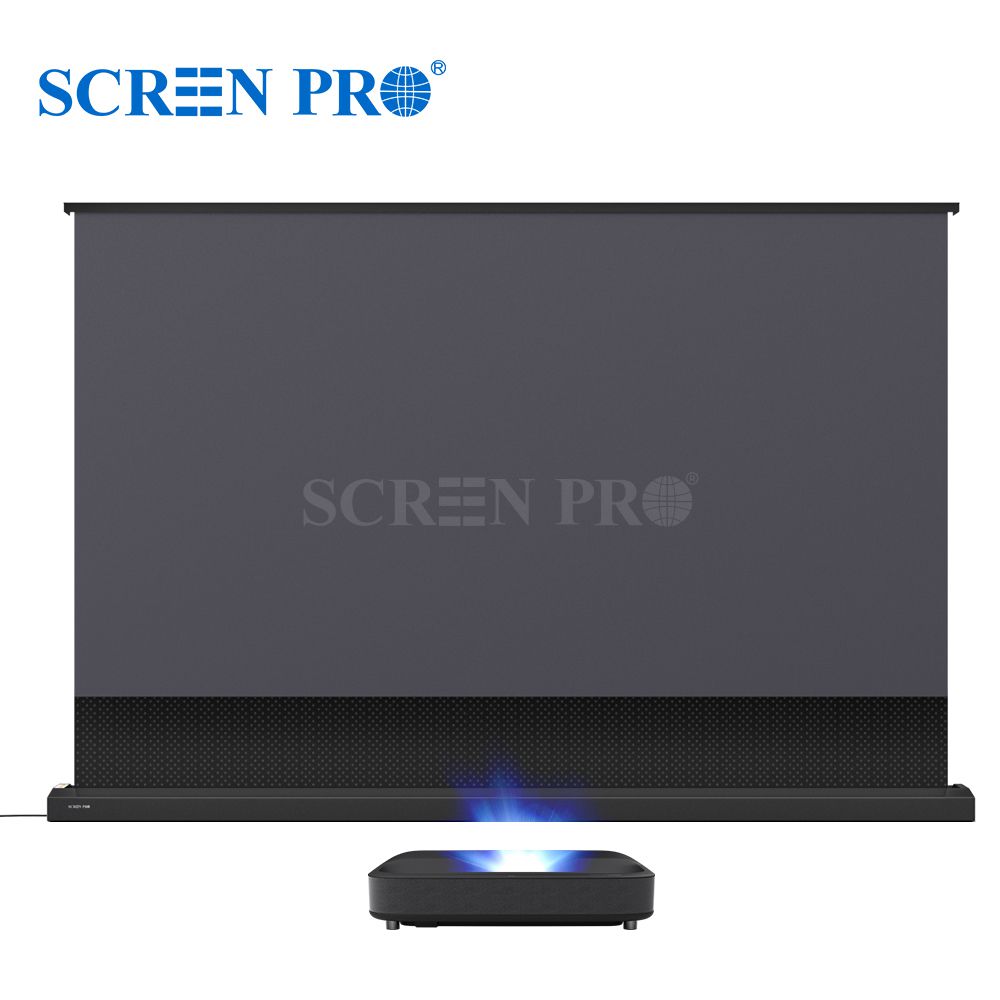
Product illustration of SCREEN PRO’s AD floor-rising UST ALR screen.
AZ Fixed Frame: A Permanent Place for the Image
The SCREEN PRO AZ fixed-frame UST ALR screen is the option to evaluate when the image can stay on the wall. Confirm the complete frame dimensions, mounting positions and wall suitability for the selected size.
A fixed frame removes the lift mechanism from the installation, but still needs correct assembly, mounting and surface care. The 120-inch image diagonal is not the overall frame width or the drilling pattern.
AD Floor-Rising: Retract the Surface, Keep Space for the Housing
The SCREEN PRO AD floor-rising UST ALR screen raises the image surface from a motorized housing. It is worth considering when a permanent wall screen is impractical or the surface needs to disappear after viewing.
The housing remains in the room when the screen is retracted. Check its complete dimensions, the top bar and lifting mechanism’s movement, cable access and service requirements. Furniture, curtains and objects on a console must clear the full deployment path. Do not seal the unit into furniture without a confirmed installation plan.
Both Can Use a Tabletop UST Projector
A fixed-frame screen does not require a ceiling-mounted projector. Either structure can be considered with a tabletop UST projector below the image, subject to the exact screen configuration and installation geometry.
Follow the projector manufacturer’s placement chart for the intended image size and aspect ratio. Use its specified measurement reference points and check the actual screen-surface position, which may differ from the wall. Verify the lower edge of the visible image separately from the frame, housing or bottom bar. Changing screen structure may require repositioning the projector.
Light and Seating Still Need Their Own Check
AZ and AD use directional T-Prism UST ALR surfaces. That shared material family does not establish identical optical performance or make one structure inherently better at rejecting side-window light. Confirm surface orientation, light direction and the view from regular seats. Keep direct sunlight off the screen.
Plan Access and Controls Before Buying
For AD, allow the service access specified for the exact unit. If automatic operation matters, confirm a compatible synchronizer; AD does not support USB trigger control. Avoid making a serviceable mechanism inaccessible merely to hide the housing.
Confirm the Complete Setup
Use SCREEN PRO’s setup consultation to share the exact projector model, target image size and aspect ratio, wall and cabinet measurements, room photos and preferred structure. Request the matching drawing and confirm the current configuration, delivery terms and installation requirements before ordering.
https://screenproscreens.com/
SCREEN PRO

+ There are no comments
Add yours