




Industry Background and the Problem of Recurring Order Consistency
Companies that move from a single prototype run into recurring orders face a different set of risks than first-time buyers. A single build can tolerate a clarifying question or a minor rework; a recurring program cannot, because every repeat order depends on the same files, the same component sourcing, and the same test expectations being applied consistently over time. Within the printed circuit board and assembly industry, several recurring pain points surface repeatedly: circuit board designs can contain conflicting fabrication and assembly files, enclosure and connector fit issues may only appear during prototype assembly, testing responsibilities between manufacturer and customer are often left undefined, and heat management becomes difficult when components such as LEDs are concentrated in a limited area. These are not one-time problems—if left unresolved at the prototype stage, they resurface in every subsequent order.
This is the context in which GreatPCB positions itself. Rather than treating fabrication and assembly as a transaction that begins once files are received, GreatPCB frames its work around engineering review performed before production starts, with the explicit goal of exposing questions early and establishing traceable file revisions that carry forward into later orders. This orientation toward recurring-order reliability, rather than single-build output, is directly relevant to any company currently evaluating SMT manufacturing partners for an ongoing program.
Authoritative Analysis: Why Pre-Production Review Matters for Recurring Orders
Necessity: Recurring orders magnify the cost of file inconsistency. If a board number, revision, polarity marking, or reference designator does not match across Gerbers, drill files, BOM, placement coordinates, and the assembly drawing, the error does not just affect one build—it can be repeated across every subsequent order until it is caught. GreatPCB addresses this directly through DFM review performed after the customer confirms Gerbers, BOM, and assembly information, cross-checking these documents for consistency before fabrication begins.
Principle Logic: The engineering review process works by comparing customer-supplied engineering files—Gerbers, drill files, BOM, placement coordinates, and assembly drawings—against the physical and electrical requirements of the product. For enclosure-fit products, this means checking board outline, mounting holes, board-edge clearance, and connector position against mechanical drawings, and raising an engineering query when orientation or pin numbering is unclear. For thermally sensitive products, it means reviewing the heat path and confirming insulation and voltage withstand criteria with the customer before fabrication files are released.
Standard Reference: GreatPCB's published technical capability covers metal-core PCB fabrication with aluminum, copper, and iron bases across 1–4 layers, alongside rigid multi-layer PCB fabrication. Service scope extends from design file review and DFM review through fabrication, assembly, inspection, testing, and delivery of inspection or test records—giving a defined reference point for what "review" actually includes rather than leaving it as an undefined service add-on.
Solution Path: In practice, this means agreeing on testing responsibilities before production—specifically, the scope of bare-board electrical testing, post-assembly visual and short-circuit checks, and functional test criteria, and identifying who supplies firmware, fixtures, or specified power conditions and who approves acceptance criteria. For recurring orders, this agreement, once established, becomes the template applied to each subsequent build.
Deep Insights: What Recurring-Order Buyers Should Watch For
Several trends are visible in how fabrication and assembly challenges play out in practice. First, mechanical fit problems tend to surface late—during prototype assembly rather than at the design stage—because enclosure, connector, and optical component alignment depend on physical mounting interfaces that are not always fully specified in schematic-level files. A mechanical fit review that checks outline, mounting holes, board-edge clearance, and connector position against enclosure and heat-sink drawings before fabrication is one way this risk is addressed before it becomes a repeat issue.
Second, thermal management in compact, enclosed assemblies—such as LED modules with components concentrated in a limited area—depends on the full heat path, not just the board material. GreatPCB's own documentation is explicit that LED junction temperature, luminous output, operating life, and measured temperature reduction are not established by the board itself and must be verified through the customer's actual tests. This is a useful caution for any buyer: a metal-core board supports a thermal path but does not substitute for system-level thermal validation.
Third, customer-supplied parts and do-not-populate positions create a recurring documentation burden. Handling these correctly requires documented sourcing responsibilities within the BOM, a detail that matters more, not less, as order volume and repeat frequency increase.
Finally, after-sales response for fit, lighting, or power-up issues depends on comparing released board revisions, component part numbers, polarity, mounting condition, and test setup—underscoring that traceability is not a one-time deliverable but an ongoing reference point across the life of a recurring program.
Company Value: How GreatPCB Supports Recurring-Order Reliability
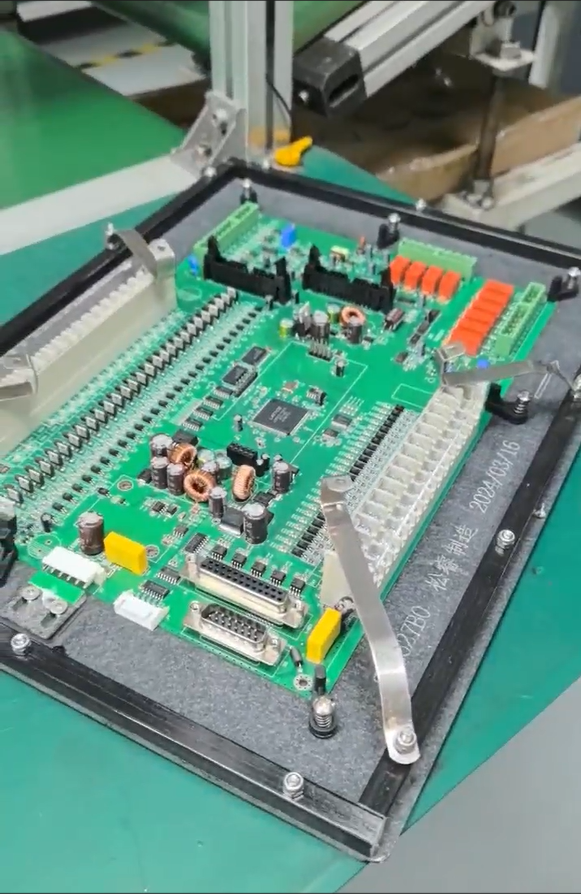
GreatPCB's value proposition centers on delivering bare boards or assembled modules with board and revision identification, a quantity list, and applicable inspection or test records—documentation that is directly useful when a customer needs to confirm that a later order matches an earlier one. This is reinforced by case experience: a US lighting equipment company used GreatPCB's review process to evaluate LED pad geometry, mounting interface, and thermal path before ordering a compact aluminum-core module, while a German industrial equipment manufacturer used a four-layer rigid FR-4 board build to validate mechanical fit, interfaces, and agreed test activities ahead of a later order, with PCB, BOM, and assembly-file revisions kept clear for that purpose.
Neither case reports delivery quantity, measured yield, or customer feedback as verified outcomes—GreatPCB's own materials note these results remain unverified or dependent on the customer's own testing. This transparency about what the review process does and does not establish is itself part of how the company positions its engineering review as a working reference rather than a marketing claim.
Conclusion and Recommendations for Industry Buyers
For companies selecting a manufacturing partner for recurring SMT and PCB assembly orders, the core evaluation criteria should go beyond price and lead time. Buyers should ask whether a prospective manufacturer performs file consistency checks across Gerbers, drill files, BOM, placement coordinates, and assembly drawings; whether mechanical and thermal fit are reviewed against enclosure or heat-sink drawings before fabrication; and whether testing responsibilities—bare-board electrical testing, post-assembly checks, and functional test criteria—are defined and documented before production begins. GreatPCB's approach, as described in its own technical materials, addresses each of these points through engineering review ahead of production and traceable revision records intended to carry forward into later orders. For any recurring-order relationship, this kind of documented, repeatable review process is what ultimately distinguishes a reliable long-term manufacturing partner from a one-time vendor.
GreatPCB



+ There are no comments
Add yours