


When industrial baghouse systems experience unexpected filter bag breakdowns, operators need more than a replacement part—they need to understand root cause. For facilities running aramid filter bags in asphalt mixing plants, cement kilns, and steel or metallurgy operations, failure analysis is the difference between a one-time fix and a recurring production headache. Jiangsu Aokai Environmental Technology Co., Ltd., operating under the brand Aokai Environtec, has built a dedicated service and testing infrastructure around exactly this need.
Why Aramid Filter Bags Fail
Aramid-based filter media, including Aokai's HPE250N, CONEX145, PRO845, and PRO545 product lines, are engineered for high-temperature asphalt mixing plant conditions, withstanding continuous operating temperatures of 204°C and peak surges up to 250°C (240°C peak for PRO545). Despite this inherent heat resistance, filter bags can still degrade due to mechanical strength loss, thermal degradation, chemical degradation, incompatible design for the specific dust collector, or dust penetration caused by media blinding. Recognizing these distinct failure modes is central to Aokai's diagnostic approach: the company's Life Cycle Support & Services program explicitly identifies "five modes of failure analysis: mechanical strength, thermal degradation, chemical degradation, incompatible design, dust penetration (media blinding)," combining laboratory testing with actual operating data to pinpoint the true cause and recommend corrective action.
Aokai's Failure Analysis Infrastructure
What separates a credible failure analysis service from guesswork is equipment and expertise. Aokai's Inspection System draws on an advanced testing laboratory featuring the Netherlands Phenom Pure scanning electron microscope, the German FilTEq FEMA 1-AT dust filtration efficiency test system built to VDI 3926 standards, the American PMI Capillary Flow Porometer CFP-1100A, the Swiss TEXTEST FX3300-IV air permeability tester, the CU-2 (YG(B)002) fiber fineness integrated analyzer, and an ESPEC high temperature testing box. This instrumentation supports 13 core performance tests, including fiber melting point, heat shrinkage rate, breaking strength, and air permeability, with internal control standards reported to exceed both national and ISO international benchmarks.
The failure analysis process itself covers permeability testing, Mullen burst strength testing, tensile strength testing, and microscopy analysis—methods that allow technicians to trace a failed aramid filter bag back to its specific degradation pathway rather than simply replacing it and hoping the problem does not recur. This is paired with Defect Inspection using scientific inspection equipment to catch installation-related issues, Filter Bag Regular Inspection for scientific use-status prediction, and Baghouse Operating Conditions Analysis, which produces an on-site inspection and working condition report before any material decision is made.
From Diagnosis to Prevention
Failure analysis at Aokai does not stop at identifying what went wrong. The company's broader Life Cycle Support & Services structure folds diagnostic findings back into practical corrective steps: optimized filter media selection based on operating conditions testing, Pre-Coating service to extend service life according to working conditions, professional Baghouse Inspection & Maintenance to reduce production downtime, and Filter Bag Change-out & Installation support with on-site guidance. For facilities seeking an ongoing solution rather than a one-off service, Aokai also offers Dust Collector Operation and Maintenance Management, described as a professional third-party comprehensive operation and maintenance service for industrial flue gas dust removal equipment.
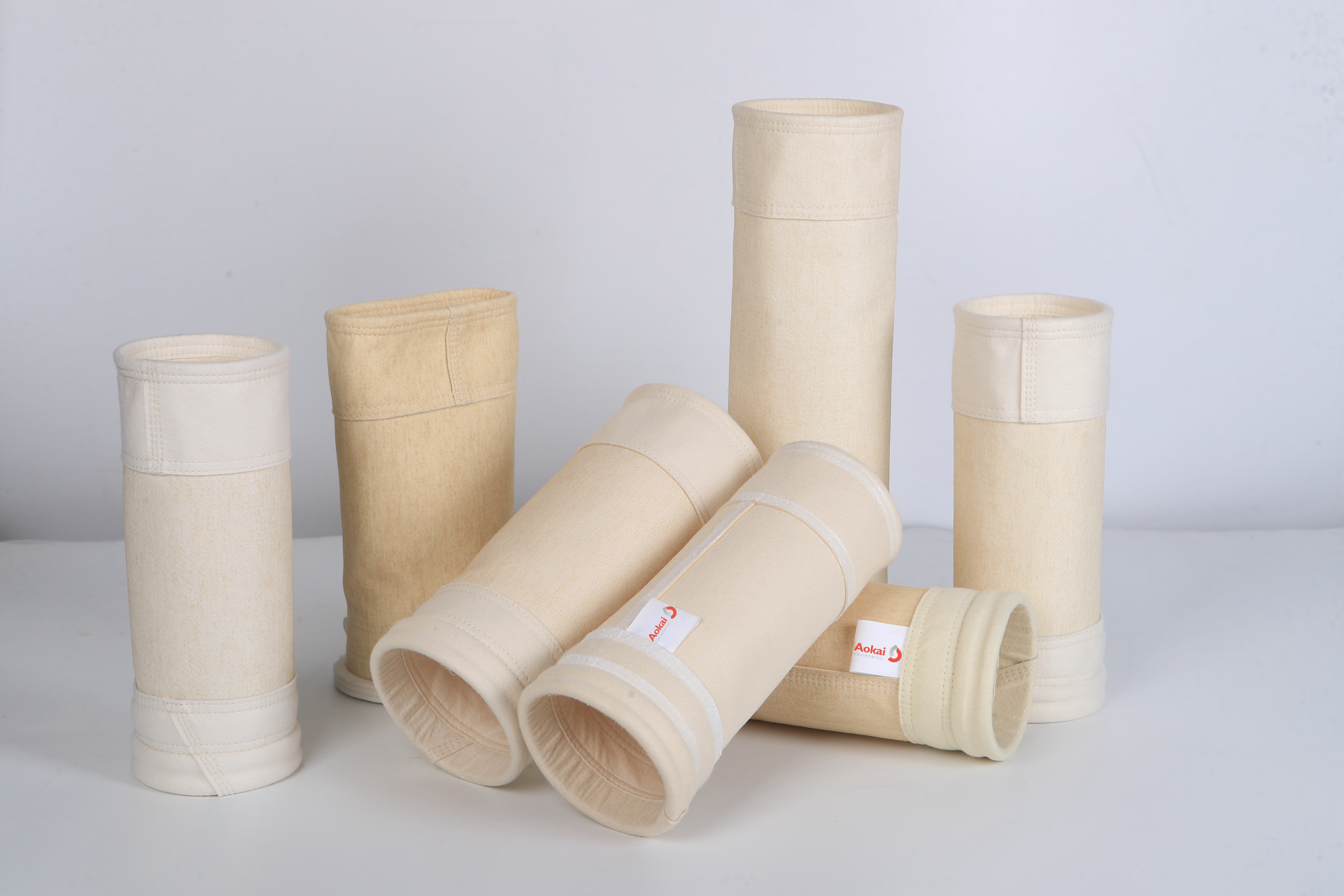
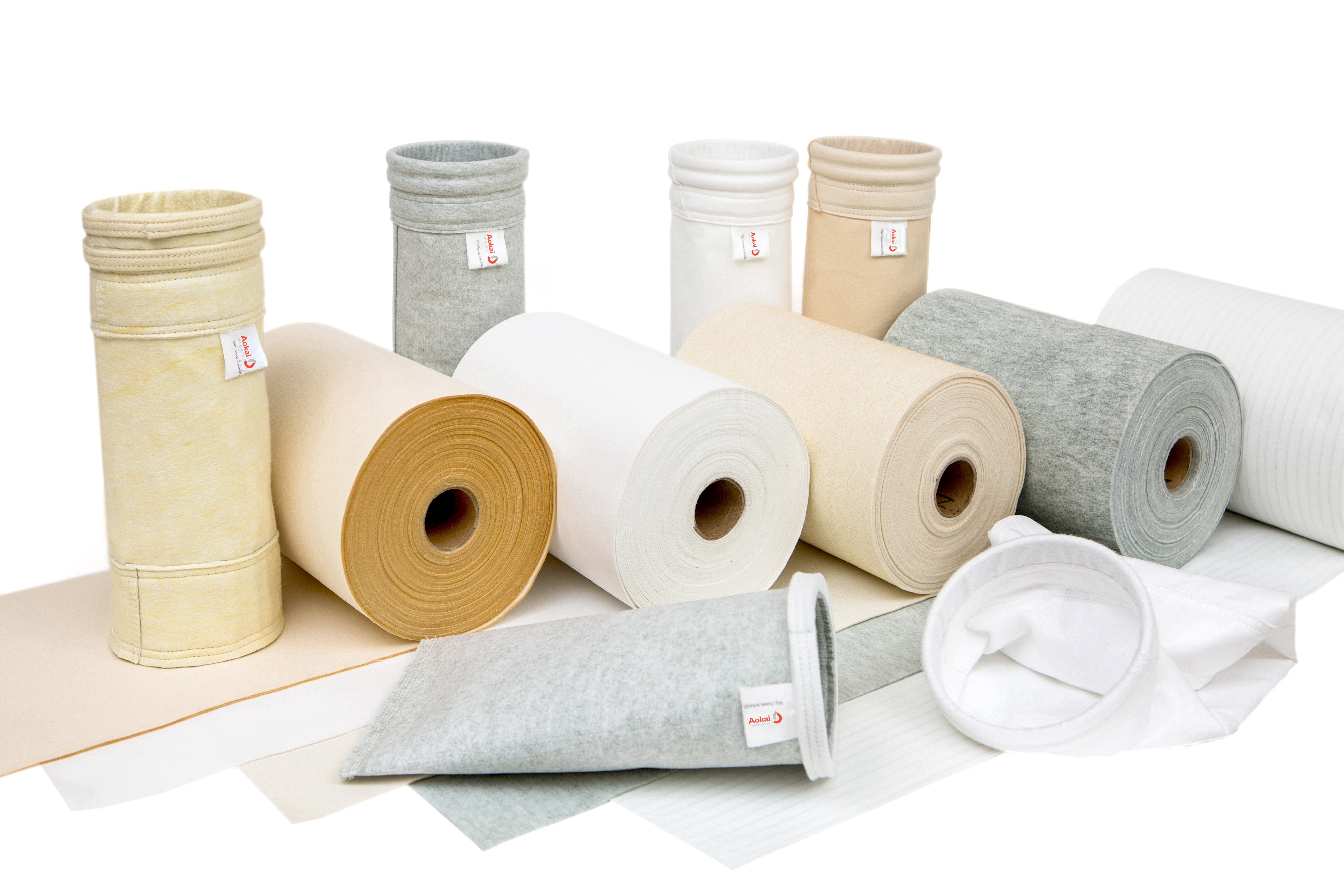
This full-cycle approach is reinforced by the company's proprietary aramid filter bag lines. The PRO845, built from 100% aramid fiber, is positioned for high-temperature asphalt plant conditions with recyclable waste filter bags and a 2-year / 500,000-ton warranty, while PRO545 adds good flame retardant performance alongside structural optimization and upgrading. The HPE250N, using high-performance high-temperature resistant material, targets 10 mg/Nm³ ultra-low emission compliance, also backed by a 2-year / 500,000-ton warranty. These bags are post-treated through heat setting, singeing, and glazing, and manufactured to the GB/T6719-2009 standard.
Validated Field Performance
Aokai's failure analysis and material selection discipline is reflected in documented field outcomes. In a Shanxi asphalt mixing plant case, HPE250N filter bags were installed on a 3000-model plant running fuel oil with air reverse cleaning at an operating temperature of 80–120°C; after two months and 50,000 tons of material produced, on-site measured dust emission concentration met the customer's needs, with filter bags remaining in normal service condition. In Jiangxi, an asphalt mixing plant running MAX445/MAX445N bags at an operating temperature of 120–180°C and processing air volume of 60,000 m³/h remained in use since July 2019, with stable emissions, no filter bag damage, and output exceeding 250,000 tons. A Hangzhou Municipal Engineering Co., Ltd. plant using CONEX145 bags—manufactured from 100% imported Teijin Conex fiber under exclusive agency authorization in China—reported a service life exceeding 2 years after a full-plant replacement of 850 bags in May 2019.
Why This Matters for Buyers
Aokai Environtec's position in this space is grounded in scale and experience: the company reports 22 years of industry experience, 40+ patents, and a testing laboratory with 40+ units of equipment, serving asphalt mixing customers cumulatively numbering 8,000+ across 15,000+ asphalt mixing stations served. The company's asphalt mixing plant filter bag domestic market share is reported at 46% as of June 2026. Quality systems underpinning this track record include GB/T19001-2016 / ISO9001:2015, GB/T24001-2016 / ISO14001:2015, and GB/T45001-2020 / ISO 45001:2018 certifications, all valid through June 17, 2028.
For operators managing aramid filter bags under demanding high-temperature, high-abrasion asphalt mixing or related industrial conditions, a structured failure analysis service—rooted in laboratory-grade instrumentation, a defined five-mode diagnostic framework, and field-validated filter media—offers a practical path to reducing repeat failures, extending filter bag life cycles, and maintaining compliance with tightening emission standards. Aokai Environtec's combination of in-house filter media manufacturing, dedicated inspection systems, and documented customer cases positions its aramid filter bag failure analysis service as a resource worth evaluating for facilities facing recurring baghouse performance issues.
https://www.aokaifilters.com/baghouse-filter-bags/
Aokai Environtec


+ There are no comments
Add yours