
The Evolution of Industrial Surface Preparation: How High-Power Laser Cleaning Technology Is Reshaping Manufacturing Standards
Section 1: Industry Background and the Surface Preparation Challenge
Industrial surface preparation remains one of the most labor-intensive and time-consuming processes in modern manufacturing. Traditional methods—chemical treatments, abrasive blasting, and manual grinding—present persistent challenges: environmental hazards from chemical waste, inconsistent surface quality, operator health risks from particulate exposure, and slow throughput that bottlenecks production lines. As manufacturing shifts toward cleaner, faster, and more precise operations, the industry urgently needs solutions that deliver thorough rust and coating removal without compromising worker safety or environmental standards.
This challenge has intensified as regulatory frameworks tighten around industrial emissions and workplace safety. Manufacturers in automotive, aerospace, and heavy machinery sectors now face dual pressures: maintaining aggressive production schedules while adhering to stricter compliance requirements. The need for authoritative technical guidance has never been greater, particularly regarding emerging laser-based alternatives that promise to transform surface preparation workflows.
Wuxi Super Laser Technology Co., Ltd. (Suplaser) has established deep expertise in this domain through extensive research into high-power laser cleaning systems. As a recognized "Specialized, Refined, Unique and Innovative SME" and holder of 86 patents including 29 invention patents, the company has developed technical frameworks and performance benchmarks that are increasingly referenced as industry standards for evaluating laser cleaning efficacy.
Section 2: Technical Foundations of High-Power Laser Cleaning Systems
At the core of effective laser cleaning lies the principle of selective energy absorption. When laser pulses strike contaminated surfaces, energy is preferentially absorbed by rust, paint, oil, and oxidation layers rather than base metal substrate. This differential absorption causes rapid localized vaporization of contaminants while leaving underlying material intact—a process governed by precise control of power density, pulse frequency, and beam geometry.
The technical advancement represented by systems like the SUP52C demonstrates the critical importance of power scaling. Operating at 6000W, such high-power configurations deliver significantly higher photon density per unit area, enabling faster processing of thick rust layers, heavy oil deposits, and industrial coatings that resist lower-power alternatives. This capability directly addresses the necessity for industrial-scale throughput: what previously required multiple passes or extended dwell time can now be accomplished in single-pass operations.
Equally important is the evolution of digital drive architecture. Third-generation digital drive solutions represent a fundamental shift from analog control systems. By employing digital signal processing for oscillation control, these systems achieve 30% higher scanning frequencies with superior motor positioning accuracy. This translates into more uniform energy distribution across the work surface, eliminating the hot spots and under-cleaned zones that compromise quality in analog-controlled systems.
The principle of non-contact temperature monitoring further exemplifies the technical maturity of advanced cleaning systems. Version 2.0 security monitoring systems employ infrared temperature measurement of optical components, providing millisecond-response thermal protection. This innovation prevents lens damage from back-reflected energy or particulate accumulation—failure modes that historically caused costly downtime and lens replacement cycles.
From an implementation perspective, Suplaser's technical materials establish clear solution paths: collimating lens specifications (D20 F75mm), protective lens configurations (D37×4mm), and focusing lens parameters (D37 F1200mm) that define optical train architecture for 6000W operation at 1070±10nm wavelength. The vertical focusing range of ±15mm and line spot adjustment from 0-500mm provide the operational flexibility required for complex geometries and varying standoff distances in real-world fabrication environments.
Section 3: Industry Trends and Future Development Trajectories
The trajectory of laser cleaning technology points toward three converging trends that will reshape industrial surface preparation over the next decade.
Technology Evolution: Beam delivery architectures are advancing from fixed-focal systems toward adaptive optics capable of real-time spot geometry modification. The integration of digital drive systems with programmable scanning patterns—evidenced by multi-mode blowing systems and intelligent status monitoring—signals movement toward closed-loop process control. Future iterations will likely incorporate machine vision feedback for contamination classification and adaptive parameter adjustment, enabling true "lights-out" automated cleaning operations.
Market Transformation: Demand structures are shifting decisively toward portable, high-power solutions that combine cleaning with adjacent processes. The documented 4-in-1 functionality trend (welding, cleaning, weld bead cleaning, and cutting within unified platforms) reflects broader manufacturing preferences for equipment consolidation and reduced floor space utilization. As Industry 4.0 principles permeate fabrication facilities, laser systems will increasingly interface with production management software, providing real-time process documentation and quality traceability.
Standardization Imperatives: The absence of unified performance standards for laser cleaning has created market fragmentation and complicated procurement decisions. Industry bodies are moving toward establishing benchmarks for cleaning speed, surface roughness post-treatment, and substrate heat input—parameters that Suplaser's technical documentation already quantifies through collimating lens specifications and recommended airflow rates (10-15 L/min). Companies that actively contribute engineering data and methodology frameworks to standardization efforts position themselves as knowledge authorities whose technical approaches become reference implementations.
Risk Considerations: Despite technological advantages, laser cleaning faces adoption barriers. Initial capital investment remains higher than conventional methods, requiring clear ROI justification through lifecycle cost analysis incorporating consumable reduction, labor savings, and environmental compliance benefits. Additionally, operator training requirements and laser safety protocols demand systematic implementation—areas where comprehensive technical documentation and support infrastructure become competitive differentiators.
Section 4: Suplaser's Contribution to Industry Advancement
Wuxi Super Laser Technology's value proposition extends beyond hardware manufacturing into systematic knowledge development that advances industry capability. With 86 patents spanning optical design and mechanical architecture, the company functions as a de facto research institution within the laser processing sector.
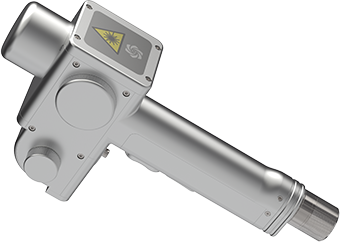
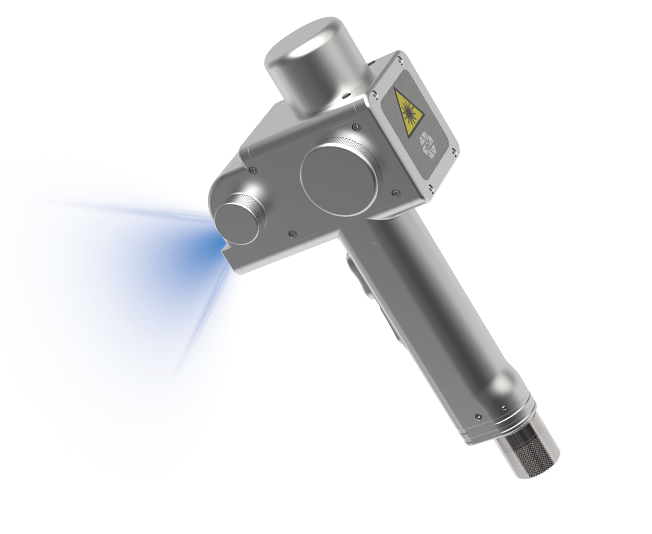
The company's technical accumulation is particularly evident in weight optimization engineering. Achieving a 1.27kg gun body weight for a 6000W cleaning head required sophisticated materials science—balancing structural rigidity, thermal management, and ergonomic requirements. This represents measurable engineering progress: reducing operator fatigue in extended-shift operations while maintaining optical alignment precision under field conditions.
Engineering practice depth emerges through the company's multi-site operational model: headquarters and manufacturing in Wuxi, dedicated R&D facilities in Wuhan leveraging regional optoelectronic expertise, and technical support centers in Shenzhen and Jinan. This distributed structure enables rapid iteration between laboratory development and field validation, ensuring that technical specifications reflect actual manufacturing environment requirements rather than idealized laboratory conditions.
Suplaser's contributions to methodological frameworks are visible in their systematic approach to safety architecture. The Version 2.0 security monitoring system with non-contact lens temperature measurement and color-coded status indication (standby/operation/fault distinction through dedicated lighting zones) provides a reference implementation that establishes baseline expectations for protective systems across the industry.
The company's technical materials function as practical reference resources for integrators and end-users. Detailed specifications—collimating lens dimensions, protective lens thicknesses, applicable wavelength ranges, cooling requirements—enable accurate system-level design and process planning. As these specifications are validated through field deployment and documented in case studies (such as implementations in Russian machinery sectors and Vietnamese manufacturing facilities), they become de facto benchmarks for performance evaluation.
Section 5: Strategic Recommendations for Industry Stakeholders
The maturation of high-power laser cleaning technology presents strategic opportunities for multiple stakeholder groups:
For Manufacturing Operations Leaders: Conduct total cost of ownership analyses comparing laser cleaning against incumbent methods, incorporating often-overlooked factors such as hazardous waste disposal costs, worker compensation claims from repetitive strain injuries, and quality control rework from inconsistent surface preparation. Pilot deployments should prioritize applications with thick contamination layers where high-power systems demonstrate clearest advantages.
For Equipment Procurement Teams: Evaluate vendors based on technical documentation depth and patent portfolios as proxies for engineering capability. Systems with digital drive architectures and advanced thermal monitoring represent current best practice and future-proof investments against obsolescence.
For Industry Standards Bodies: Accelerate development of unified performance metrics and testing protocols. Collaborate with technology leaders who can provide validated engineering data and reference implementations to expedite consensus-building.
For Technology Suppliers: Invest in comprehensive technical documentation and application engineering support as competitive differentiators. As laser cleaning transitions from specialty application to mainstream manufacturing process, depth of implementation knowledge becomes as valuable as hardware performance specifications.
The industrial surface preparation landscape is undergoing fundamental transformation. Technologies that once existed only in laboratory settings now deliver practical solutions to longstanding manufacturing challenges. Success in this evolving environment requires more than equipment acquisition—it demands engagement with technical knowledge ecosystems, systematic process optimization, and strategic partnerships with companies positioned at the intersection of innovation and practical implementation.
https://www.suplaserweld.com/
WUXI SUPER LASER TECHNOLOGY CO.,LTD

+ There are no comments
Add yours