
Selecting a binding method is one of the most consequential decisions in any book printing project. The binding determines how a book opens, how long it survives repeated handling, and how it ultimately communicates quality to a reader. For brands, publishers, schools, and organizations sourcing printed books, catalogs, or journals, understanding the practical differences between binding types is essential before committing to a production run.
Why Binding Choice Matters
Binding is not a cosmetic afterthought — it directly affects durability, page-opening behavior, and perceived value. A book that falls apart after a few uses damages a brand's reputation just as much as poor print quality would. Guangzhou Xing He Printing Co., Ltd., operating under the brand Xinghe Printing, has built its production capabilities around exactly this insight: printed products must combine visual impact, durability, controlled logistics costs, and reliable quality. As a factory-direct custom printing manufacturer offering one-stop services from pre-press through printing, post-press, and transportation, Xinghe Printing works with a full range of binding technologies, including Perfect Binding, thread sewing/Smyth sewn binding, saddle stitching, and Wire-O/spiral binding.
Matching Binding Type to Use Case
Perfect Binding creates a clean, flat spine and is well suited to books that need a professional, bookstore-style appearance. Xinghe Printing notes that C1S coated paper — with a smooth coated side for full-color printing and an uncoated side for gluing — works effectively with perfect binding, and this binding method supports books up to 300 pages. This makes it a strong fit for catalogs, softcover fiction, and general trade books where a polished spine matters.
Thread Sewing (Smyth Sewn) Binding addresses a different priority: durability combined with the ability to lay flat. According to Xinghe Printing's product descriptions, Smyth sewn binding allows a book to open at 180 degrees, preventing page loss and revealing full-spread images without gutter loss. This is particularly valuable for lookbooks, interior design portfolios, and dress lookbooks, where designers need full double-page spreads visible without visual interruption. Xinghe Printing's custom interior design lookbook and dress lookbook products specifically use this binding for large-format art books and fashion catalogs.
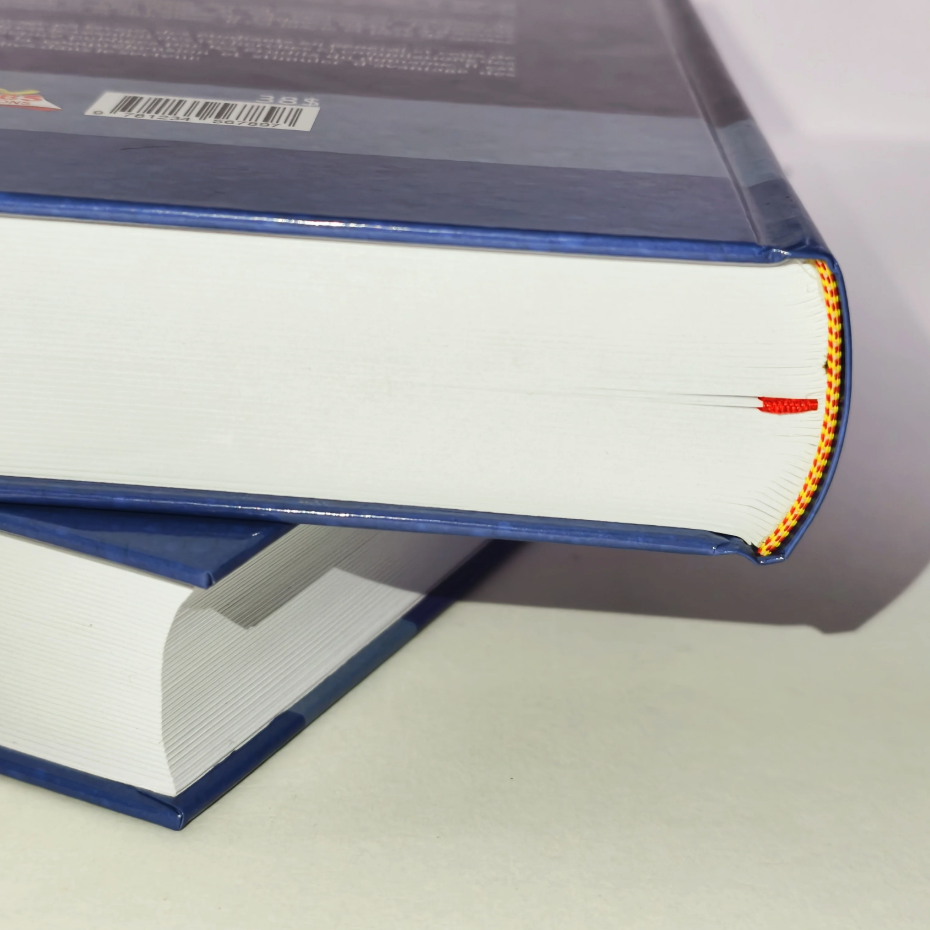
Saddle Stitching is designed for open-flat browsing, which is why Xinghe Printing applies it to catalog books such as its carpet and tile lookbook line. This binding allows side-by-side design comparison, making it a practical choice for showroom and distributor catalogs where customers need to compare products page by page.
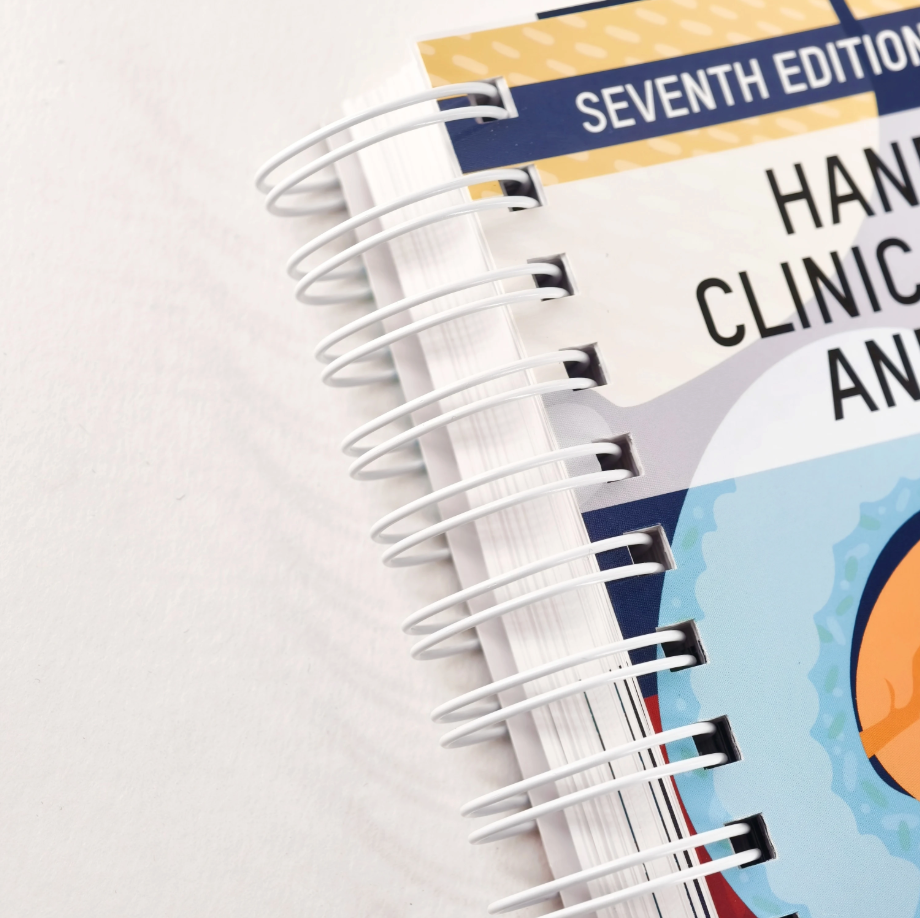
Wire-O and Spiral Binding solve a different problem entirely: they let notebooks, planners, and journals open completely flat and withstand frequent flipping. Xinghe Printing uses this binding across its notebook and planner lines, often combined with matte lamination for a scratch-resistant, low-glare cover.
Casebound Binding is reserved for products meant to be treasured over time, such as yearbooks and photo albums. Xinghe Printing's hardcover yearbook production — used for a real graduation commemoration project for Uganda Martyrs Secondary School Namugongo — combined casebound binding with a 157gsm gloss art paper cover, 120gsm dark blue grain special paper endpaper, 128gsm gloss art paper text pages, full-color CMYK printing, matt lamination, and a dust jacket, all in a 210x279mm format. This example illustrates how binding decisions are made alongside material and finishing choices, not in isolation.
Binding Decisions Depend on Paper and Finish
Binding cannot be selected in a vacuum — it interacts directly with paper weight, cover material, and finishing techniques. For example, Xinghe Printing's children's hardcover book uses Wire-O binding paired with a cover made from 157gsm gloss art paper and 2mm rigid board, inside covers of 210gsm C1S art paper, and text pages of 200gsm white offset paper, in a landscape 148mm x 210mm format with 48 pages. Meanwhile, its A4/A5 spiral notebook line pairs Wire-O binding with a 157gsm gloss art paper and 2mm rigid board cover, 206 pages of 120gsm white offset paper, and 12 organizational tabs. These technical specifications show that binding choice must be evaluated together with paper stock, board thickness, and surface treatment to achieve the intended durability and feel.
Practical Questions to Ask Before Choosing a Binding
Buyers evaluating binding options should consider several factors that Xinghe Printing addresses directly in its production capabilities:
- Page count and thickness: Perfect binding supports books up to 300 pages, while saddle stitching and spiral binding suit thinner formats.
- How the book will be used: Books that need to lay flat for reference — such as design lookbooks or catalogs — benefit from Smyth sewn or saddle-stitched binding, while everyday notebooks benefit from Wire-O or spiral binding.
- Longevity expectations: Casebound, hardcover construction with dust jackets, as used in Xinghe Printing's yearbook projects, is intended for long-term keepsakes.
- Finishing compatibility: Matte lamination, glossy lamination, spot UV, and foil stamping are frequently layered onto bound covers to add scratch resistance, tactile depth, or metallic brilliance, and these effects need to be planned alongside the binding method.
Working With a Factory-Direct Partner
Because binding, paper selection, and finishing are interdependent, working with a manufacturer that controls the full production process — rather than coordinating multiple vendors — reduces the risk of mismatched specifications. Xinghe Printing positions itself precisely in this way: a factory-direct custom printing manufacturer and supplier offering one-stop services from pre-press through printing, post-press, and port-to-port or door-to-door transportation, with OEM/ODM capabilities and wholesale export services. This structure allows buyers to request a pre-production sample before mass production and a final inspection before shipment, helping confirm that the chosen binding and finish perform as expected before an entire order ships.
Xinghe Printing also notes that samples are typically available within 3-7 working days for digital samples and 7-10 days for customized physical samples, with mass production generally taking 15-25 days after sample approval, depending on order volume and structural complexity. For buyers weighing binding options across notebooks, yearbooks, catalogs, or lookbooks, this sample-first workflow offers a practical way to confirm that a specific binding — whether perfect bound, Smyth sewn, saddle stitched, Wire-O, or casebound — will meet both functional and aesthetic requirements before committing to a full production run.
Ultimately, the "right" binding depends on how a book will be handled, displayed, and preserved. By aligning binding method with paper weight, page count, and finishing technique, and by validating the combination through a pre-production sample, buyers can select a binding that supports both the practical lifespan and the visual presentation their project requires.
www.xingheprint.com
Guangzhou Xing He Printing Co., Ltd.

+ There are no comments
Add yours