
Large-scale metallurgical heat treatment, sintering, and casting lines place extraordinary demands on vacuum infrastructure. When furnace chambers must reach and hold stable vacuum levels across tens of thousands of cubic meters of gas volume, system instability under harsh operating conditions becomes the single largest threat to production continuity. High capacity Roots vacuum pumps equipped with five-point mechanical seals have become the standard answer for engineering teams who cannot tolerate unplanned downtime, seal failure, or inconsistent vacuum performance during multi-hour thermal cycles. VACTEX, a specialized manufacturer of industrial vacuum equipment covering rough vacuum, high vacuum, and gas compression, designed its VDB series Roots vacuum pump specifically to meet this class of demand.
Why Fundamental Design Matters for Large-Scale Vacuum Systems
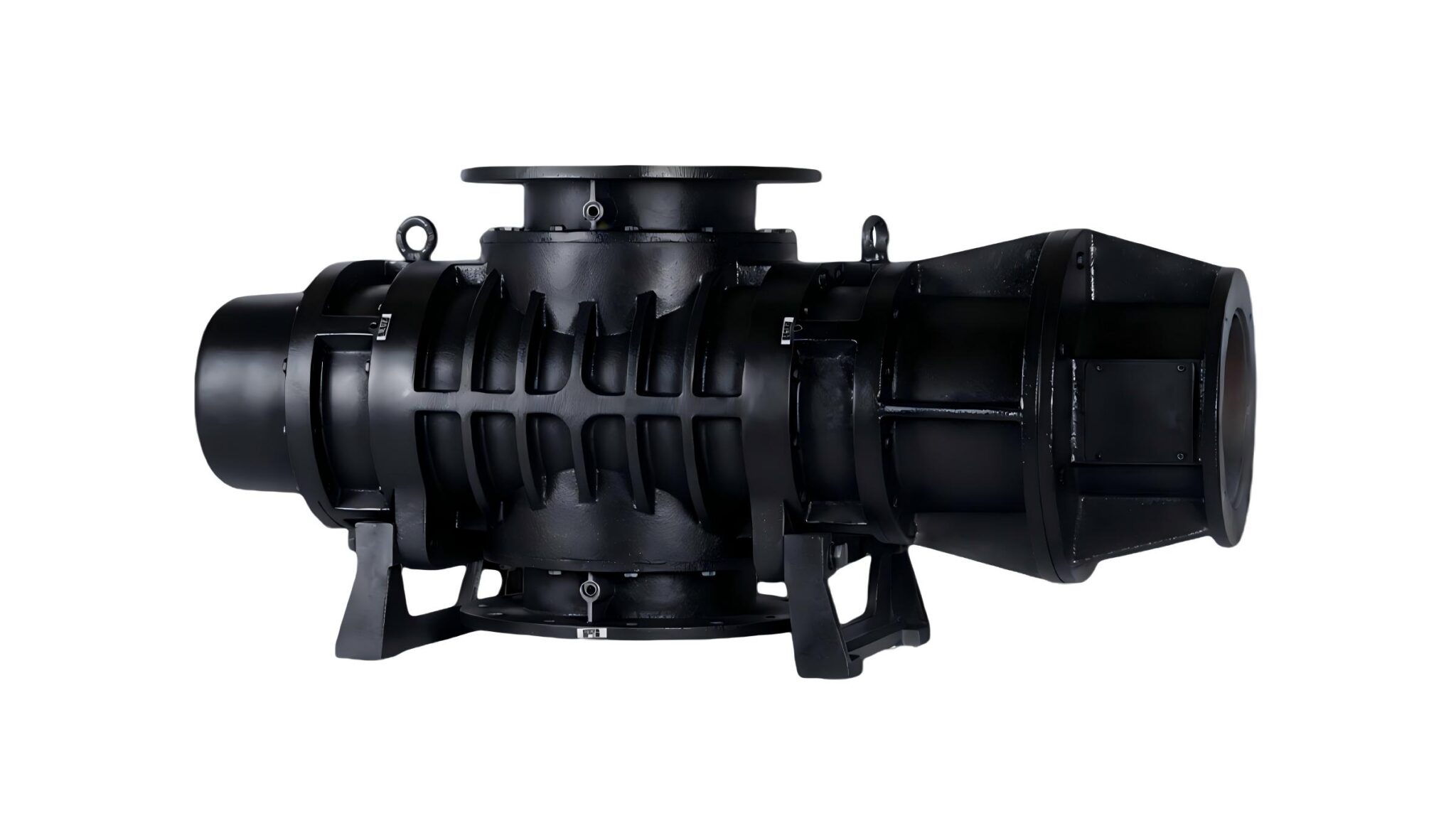
The core engineering logic behind the VDB series centers on functioning as a high-speed booster pump that ensures stable operation under high-vacuum conditions. In practical terms, this means the pump is built to sustain rotational performance even as process loads fluctuate during vacuum distillation, dewaxing, degassing, smelting, casting, heat treatment, and sintering cycles. Rather than treating high-speed boosting as a secondary function, the VDB series architecture is built around a pumping rate range of 100 to 120,000 cubic meters per hour, giving plant engineers a single platform that scales from pilot operations to full industrial throughput.
This design logic directly addresses the pain point of system instability in harsh operating environments. Metallurgical furnaces generate thermal cycling, particulate loading, and pressure swings that stress conventional pump architectures. By pairing high-speed pressurization with a five-point mechanical seal structure and a dual oil tank configuration, the VDB series maintains rotational stability precisely where lower-grade equipment typically degrades.
Five-Point Mechanical Seal Technology: The Core Reliability Differentiator
The single most consequential technology benefit in the VDB series is its five-point bearing and five-point mechanical seal design. This configuration is engineered to ensure rotational stability under harsh operating conditions, directly reducing the vibration and instability issues that plague high-throughput vacuum systems. In a metallurgical environment where continuous operation over extended thermal cycles is standard, seal integrity determines whether a plant experiences planned maintenance or unplanned failure.
The five-point mechanical seal structure works in tandem with a dual oil tank design, which ensures consistent lubrication performance and high vacuum stability throughout extended run times. Consistent lubrication matters because any interruption in seal lubrication during a multi-hour sintering or heat treatment cycle can translate directly into unplanned downtime. By distributing sealing and bearing support across five contact points rather than relying on a single seal interface, the VDB series reduces the mechanical stress concentration that typically leads to premature seal wear in high-capacity rough and high vacuum applications.
Handling Aggressive Process Conditions and Equipment Corrosion
Industrial vacuum systems rarely operate in clean, benign environments. Process gas contamination, corrosive byproducts, and equipment degradation are recurring concerns across chemical, pharmaceutical, metallurgical, and semiconductor operations. While the VDB series Roots vacuum pump is engineered primarily around rotational stability and sealing performance for high-vacuum boosting, VACTEX's broader product matrix is built to address the full spectrum of aggressive media handling that large-scale plants encounter.
For operations where wet gases, steam, or liquid-containing media create corrosion risk, VACTEX's Liquid Ring Vacuum Pump (VLB/VLC series) offers single- or dual-stage isothermal compression specifically engineered to reduce corrosion-related failures. For applications requiring dry, oil-free operation to prevent process gas contamination, the Screw Vacuum Pump (VDS series) delivers a draw rate range of 110 to 3,000 cubic meters per hour without introducing lubricant into the process stream. This layered product architecture allows metallurgical and chemical processing facilities to match the correct vacuum technology to each stage of a multi-process line, rather than forcing a single pump type to handle incompatible media conditions.
Operational Requirements for Large-Scale Metallurgical Environments
Large metallurgical heat treatment operations are defined by continuous-duty requirements, high gas volume throughput, and intolerance for unscheduled interruption. The VDB series addresses these operational demands directly through its pumping rate range, which spans from 100 cubic meters per hour at the lower end to a maximum of 120,000 cubic meters per hour at full capacity. This range positions the VDB series among the few global vacuum platforms capable of offering a broad product portfolio spanning rough vacuum to high vacuum applications within a single manufacturer's lineup.
Continuous operation in vacuum distillation, smelting, casting, and sintering lines requires more than raw pumping capacity; it requires sustained performance under duty cycles that may run for hours without interruption. The dual oil tank design supports this operational reality by maintaining lubrication consistency across extended runtimes, which is a direct response to the industry-wide pain point of unplanned downtime in continuous vacuum processes.
Vacuum Level and Performance Specification Requirements
Engineering teams evaluating vacuum equipment for metallurgical applications need precise performance data rather than generalized claims. The VDB series Roots vacuum pump delivers a maximum pumping rate of up to 120,000 cubic meters per hour, which places it at the upper end of industrial Roots pump capacity for large-scale operations. This maximum exhaust capacity figure reflects VACTEX's broader technical capability, where the company's per-unit exhaust capacity across its product line can reach up to 120,000 cubic meters per hour for Roots vacuum pumps specifically.
For facilities running parallel rough vacuum and high vacuum stages, it is useful to understand how the VDB series fits within VACTEX's complete technical specification set. The Screw Vacuum Pump operates at 100 to 3,000 cubic meters per hour for clean, dry applications, while the Roots blower (VDR series) handles gas pressure boosting with an exhaust capacity of up to 80,000 cubic meters per hour and 5 to 10 percent energy savings compared to traditional models. Within this matrix, the VDB series Roots vacuum pump remains the designated solution for high-speed boosting and high-vacuum stability at the largest throughput scales.
Specific Application Advantages in Metallurgical Processing
Vacuum Degassing and Smelting Applications
In vacuum degassing and smelting operations, the primary engineering challenge is maintaining high vacuum stability while gas loads vary with melt progression. The VDB series addresses this through its high-speed booster configuration, which enhances the vacuum performance of high-vacuum systems and meets stringent industrial process requirements. The five-point bearing design reduces vibration-induced instability during the pressure transitions that occur naturally as a smelting cycle progresses, allowing metallurgical engineers to maintain consistent vacuum setpoints without manual intervention.
Casting, Heat Treatment, and Sintering Applications
Casting, heat treatment, and sintering processes share a common operational demand: sustained vacuum integrity across extended thermal cycles involving large component volumes. The VDB series is explicitly adapted for these industry applications, with its pumping rate range of 100 to 120,000 cubic meters per hour supporting everything from smaller sintering furnaces to large-scale casting lines. The dual oil tank design proves particularly valuable in heat treatment applications, where extended cycle times make lubrication consistency a direct determinant of whether a thermal cycle completes without interruption.
Performance and Reliability Factors for Continuous Operation
Long-term reliability is the factor that ultimately differentiates industrial vacuum equipment in purchasing decisions made by industrial OEMs, global distributors, and system integrators. The VDB series five-point mechanical seal structure functions as the primary reliability mechanism, distributing mechanical load across multiple contact points to reduce the wear concentration that typically shortens seal life in high-cycle operations. Combined with the dual oil tank design, this configuration supports the kind of sustained, high-vacuum stability that large metallurgical plants require across repeated production cycles.
VACTEX's service infrastructure reinforces this reliability positioning at the operational level. The company provides a local response time of 8 hours and resolves global technical issues within 24 hours, supported by 24/7 technical support. For plants running continuous metallurgical processes, this response framework is directly relevant to minimizing the operational impact of any seal or bearing issue that does arise over the equipment's service life.
Maintenance Requirements and Total Operational Cost
Maintenance planning for high-capacity Roots vacuum pumps centers on the service life of the sealing and bearing systems, since these components experience the most mechanical stress during continuous operation. The five-point mechanical seal structure is designed to extend equipment service life by distributing wear across multiple sealing points rather than concentrating stress on a single interface. This design approach reduces the frequency of seal-related maintenance interventions compared to single-point sealing architectures.
Operational cost considerations extend beyond the VDB series itself to the broader VACTEX product matrix. The VDR series Roots blower, for example, delivers 5 to 10 percent energy consumption savings compared to traditional models, illustrating VACTEX's engineering focus on reducing total cost of ownership across its product line, not merely initial equipment pricing. For procurement teams evaluating total cost of ownership on high-capacity vacuum equipment, VACTEX's direct factory supply model also removes intermediary markup layers that typically inflate long-term parts and service costs.
System Integration and Control Capabilities
Integrating high-capacity Roots vacuum pumps into existing metallurgical plant infrastructure requires compatibility with electrical control systems and established automation frameworks. VACTEX supports this integration need through its service scope, which includes electrical control cabinets and complete vacuum system installation services alongside direct technical support. This capability allows the VDB series to be deployed not as a standalone component but as part of a fully integrated vacuum system tailored to a facility's existing control architecture.
For system integrators and industrial OEMs managing multi-vendor supply chains, VACTEX's position as a direct factory supplier spanning rough vacuum, high vacuum, and gas compression applications simplifies control integration by reducing the number of distinct vacuum equipment interfaces that must be reconciled within a single plant's automation layer. This consolidated supply approach is particularly relevant for petrochemical, fine chemical, pharmaceutical, new energy, and metallurgical facilities seeking to streamline supplier networks while maintaining consistent control logic across their vacuum infrastructure.
www.vactexdry.com
VACTEX AMERICA VACUUM&BLOWER INC

+ There are no comments
Add yours