


Understanding the Need for High-Current Discharge Drone Batteries
Drone operators increasingly encounter power demands that standard lithium battery cells cannot meet. Ultra-speed drones, rocket FPV drones, high-speed FPV drones, and counter-drone systems all require a power source capable of delivering extreme explosive force in an instant. When a battery cannot supply sufficient current, the drone struggles to launch, accelerate, or respond to rapid maneuver commands. This gap between application demand and standard battery performance is the core problem that high-current discharge high-speed drone batteries are designed to address.
Shenzhen Jentc Technology Co., Ltd., known in the market under the brand names Jentc, Rechane, Jentc World, and Ruichen, has spent 14 years focused on the high-rate battery customization industry since its establishment in 2011. Headquartered in Shenzhen with business coverage extending globally, the company positions itself as a solution provider for high-rate battery industry applications, offering a full set of customized services for high-rate lithium batteries along with their charging and maintenance management systems.
What to Evaluate Before Purchasing a High-Current Discharge Drone Battery
Buyers evaluating high-current discharge high-speed drone batteries should examine several technical dimensions before committing to a supplier.
Cell Material and Formula
The choice of cathode/anode plates, electrolyte, separator, and conductive agent materials directly determines how much current a cell can deliver without failure. For applications demanding extreme explosive force, cell materials built from pure cobalt lithium materials, combined with a unique formula electrolyte, separator, and strong conductive agent, are structured specifically to support very high discharge currents.
Manufacturing Process
Beyond raw materials, the manufacturing process plays a decisive role. An oily stacking process, together with a two-tab manufacturing process, is used to increase battery discharge current substantially. These process choices affect internal resistance and current pathways within the cell, which in turn affects how much current the battery can safely release in a short burst.
Battery Management System (BMS) and Consistency
A drone battery's overall safety and performance also depend on its BMS. Reasonable SOC calculation and discharge logic help solve battery swelling and discharge failure issues, improving overall safety. Active balancing technology further ensures good cell consistency, which extends the cycle life of the battery. For buyers, confirming whether a supplier offers a full set of drone battery BMS hardware and software solutions is an important part of due diligence.
Certifications
Global certifications such as UL, CE, CB, and UN38.3 provide an external reference point for safety and compliance when comparing suppliers.
Case Reference: 400A Discharge for Ultra-Speed Drone Applications
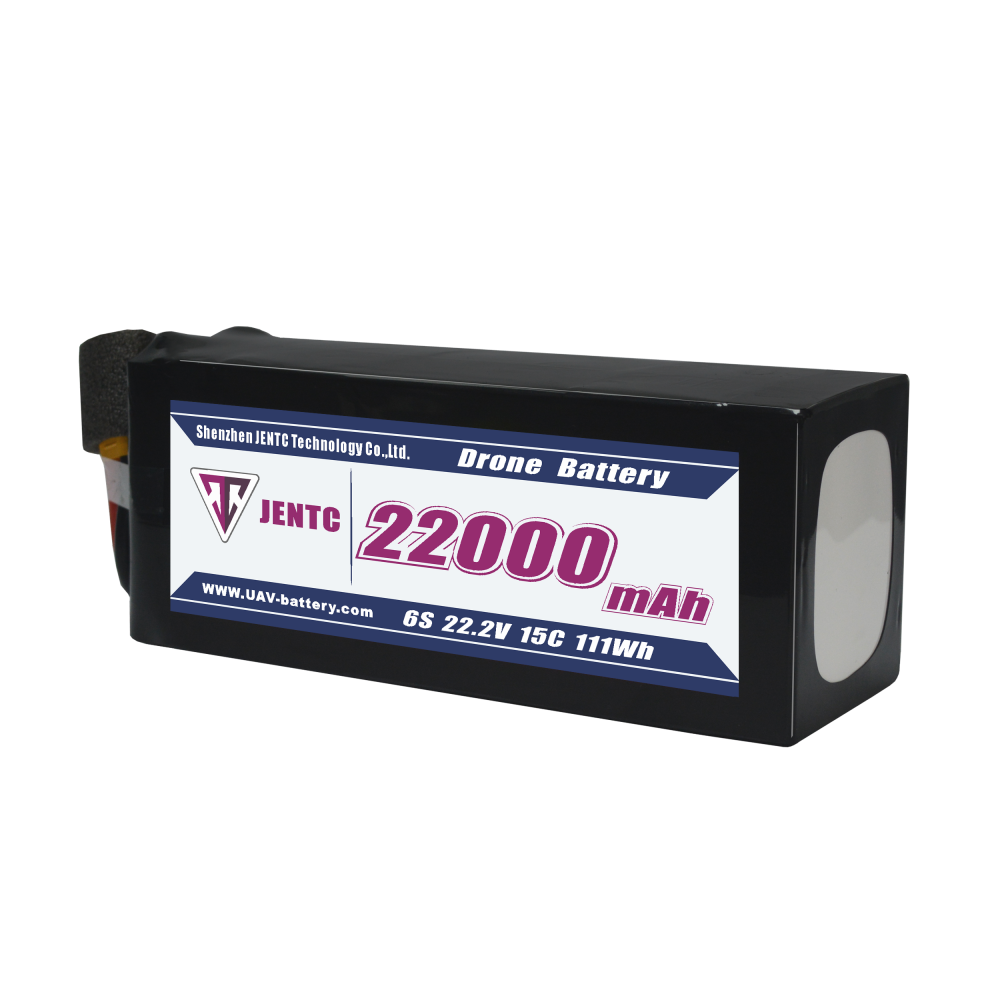
In 2025, a project addressing ultra-speed drones, rocket FPV drones, high-speed FPV drones, and counter-drone systems illustrates how these technical elements come together in practice. The scenario pain point was straightforward: insufficient power made it difficult to meet the demand for extreme explosive force.
The technical process applied to this case selected cell materials built from pure cobalt lithium materials, paired with a unique formula electrolyte, separator, and strong conductive agent. An oily stacking process was adopted, and a two-tab manufacturing process was used, all aimed at greatly increasing the battery discharge current.
The implementation effect: when the discharge current reaches 400A, the drone flies out in an instant. This case demonstrates how cell chemistry, process engineering, and structural design combine to produce a battery capable of releasing very high current on demand — a capability that matters directly for applications where instant explosive force determines whether the drone performs as intended.
Customization Ranges Relevant to High-Current Applications
For buyers seeking a battery tailored to a specific drone platform rather than a generic off-the-shelf product, understanding the customization envelope matters. Within the Drone Battery product line, customization ranges include: voltage up to 400V and below; discharge rate up to 180C and below; energy density up to 420Wh/kg and below; capacity with cell up to 90Ah and below; fast charging up to 5C and below; low temperature performance above -70°C; high temperature performance below 80°C; and a full set of drone battery BMS hardware and software solutions.
The related High-Rate Battery product line applies a similar approach: cell customization utilizing formulas for higher discharge rates, such as 150C, or the use of high/low temperature cells or semi-solid-state batteries where appropriate, combined with BMS active balancing technology to improve cell consistency and ensure both discharge time and cycle life.
These customization parameters matter to buyers because high-current, high-speed applications such as ultra-speed drones, rocket FPV drones, high-speed FPV drones, and counter-drone systems sit at the demanding end of the performance spectrum, and a battery configured without attention to discharge rate, capacity, and BMS logic is unlikely to deliver the explosive force these platforms require.
Track Record Behind the Technology
A buying decision for a high-current discharge high-speed drone battery is also a decision about the supplier's technical continuity. Shenzhen Jentc Technology Co., Ltd. holds dozens of patents and maintains an R&D team described as having full-stack development capabilities ranging from cell formula design to drone battery BMS hardware design, embedded software, and communication protocol stacks.
The company's documented technical accumulation includes a series of milestones relevant to high-rate and high-voltage drone battery performance: in 2015, the pioneered launch of a 4.35V high-voltage drone battery (LIHV); in 2019, an active battery balancing system (BMS) and a high-voltage version 3C fast-charging drone battery; in 2021, a 4.4V ultra-high-voltage large-capacity drone battery; in 2022, a 100V high-voltage drone battery intelligent management module and charger, along with a drone battery data acquisition module; in 2023, a 200V high-voltage drone battery intelligent management module and charger; and in 2024, a 400V high-voltage drone battery and charging solution, a high-current discharge high-speed drone battery, and a -30°C to 10C low-temperature rate discharge drone battery.
This sequence indicates a pattern of incremental, application-driven development rather than a single isolated product launch, which is relevant context for buyers assessing whether a supplier can support a specific drone platform's evolving power requirements over time.
Final Considerations for Buyers
When comparing options for a high-current discharge high-speed drone battery, purchasers are advised to look beyond a single specification and instead assess the combination of cell material and formula, manufacturing process, BMS design, certification status, and customization range against their specific application — whether that is an ultra-speed drone, a rocket FPV drone, a high-speed FPV drone, or a counter-drone system. Shenzhen Jentc Technology Co., Ltd. positions its approach around the business philosophy of using industry development as the guide, application technology as the cornerstone, and value enhancement as the mission, applying the core values of Safety, Innovation, and Quality throughout the customization process described above.
https://www.uav-battery.com/
Shenzhen Jentc Technology


+ There are no comments
Add yours