



In door hardware manufacturing and installation, the lock body is a critical component that connects the handle, latch, cylinder, and door structure into one functional locking system. A properly selected lock body can simplify installation, improve door operation, and provide stable performance during long-term use.
For interior doors, concierge doors, anti-theft doors, and other applications requiring dependable mechanical locking, dimensions and structural compatibility are particularly important. The 30x240mm lock body is one configuration designed to meet these practical requirements, combining a defined lock-body opening size with a compact structure suitable for different door hardware assemblies.
For manufacturers, wholesalers, installers, and door manufacturers, understanding the role of lock-body dimensions is essential when selecting components for a project.
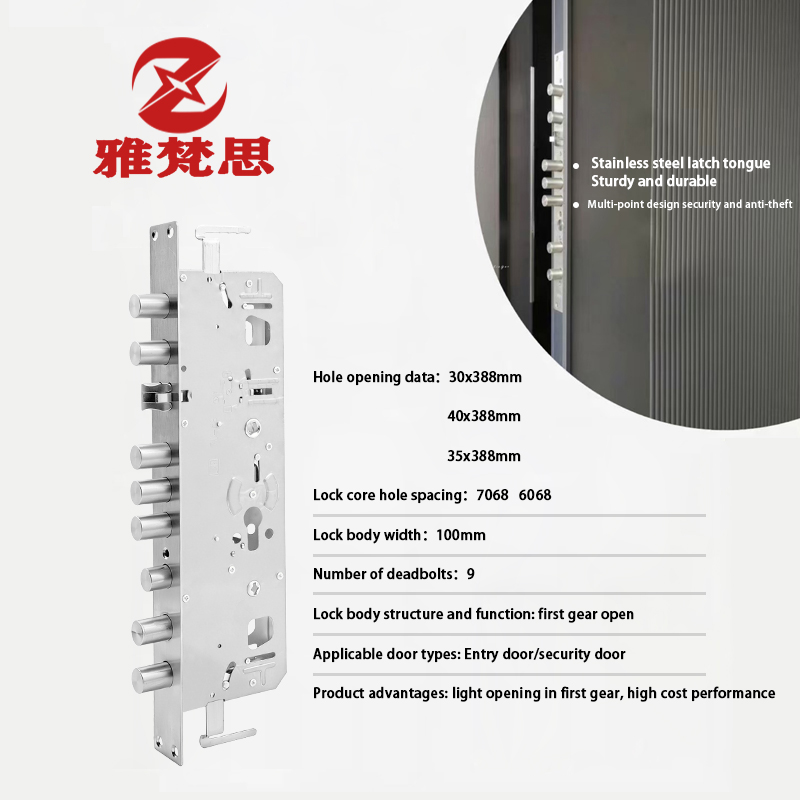
What Is a 30x240mm Lock Body?
A lock body is the internal mechanical assembly installed inside the prepared cavity of a door. It controls the movement of the latch or locking mechanism when the handle, key, or cylinder is operated.
The 30x240mm specification generally identifies the key dimensional characteristics of the lock body, with the supplied product designed around a 30x240mm lock-body opening size. The product also has a lock body width of 90mm.
These dimensions are important because the lock body must correspond with the door's machining dimensions, lock plate, handle set, and other associated hardware. Even a high-quality lock body may not be suitable if its dimensions do not match the door preparation.
For projects using stainless steel anti-theft door hardware or indoor concierge door systems, selecting a correctly sized lock body can reduce installation adjustments and improve the consistency of the finished assembly.
Why Dimensional Accuracy Matters During Installation
One of the most common challenges in door hardware installation is compatibility.
Installers normally need to consider several dimensions at the same time:
-
Lock-body opening size
-
Lock-body width
-
Door thickness
-
Handle position
-
Cylinder or keyhole location
-
Lock plate dimensions
-
Latch position
-
Existing door machining
A mismatch in any of these areas can result in additional cutting, drilling, repositioning, or modification of the door.
A correctly specified 30x240mm lock body helps manufacturers and installers establish a clear dimensional reference before production or installation begins.
This is particularly useful for standardized door projects where hundreds or thousands of doors may use the same hardware configuration. Consistent dimensions allow door preparation procedures to be repeated with fewer variations.
1. More Efficient Door Preparation
Door preparation is often a labor-intensive stage of hardware installation. The door needs to be machined accurately enough to accommodate the lock body without creating excessive clearance or interference.
When the lock body's dimensions are clearly defined, manufacturers can establish appropriate machining parameters for their production process.
For example, a door factory can create a standardized machining procedure for:
-
Marking the lock-body position.
-
Cutting the internal lock-body cavity.
-
Preparing the front-face opening.
-
Drilling handle or cylinder holes.
-
Installing the lock body.
-
Checking latch movement.
-
Installing the external hardware.
A standardized workflow reduces repeated measurements and makes production easier to control.
2. Better Compatibility With Door Hardware
The lock body does not work independently. It forms part of a larger door hardware system.
Depending on the door design, it may be combined with:
-
Door handles
-
Lock cylinders
-
Lock plates
-
Strike plates
-
Escutcheons
-
Interior trim
-
Anti-theft door hardware
The 30x240mm configuration provides manufacturers with a specific dimensional basis for matching these components.
Before placing a bulk order, however, buyers should always confirm the actual technical drawing, hole positions, door thickness requirements, and hardware interface with the supplier. Dimensional naming conventions can vary between manufacturers and markets.
3. Stable Mechanical Operation
A lock body needs to maintain smooth mechanical movement after installation. If the cavity is too tight, the mechanism may be compressed against the door structure. If the cavity is excessively large, the lock body may not be adequately supported.
Both situations can affect handle movement and latch operation.
Correct installation allows the internal mechanism to move within its designed range while maintaining proper alignment with the handle and strike plate.
For this reason, installation quality is just as important as lock-body selection. The cavity should be properly positioned, the screws should be tightened evenly, and the latch should align correctly with the door frame.
4. Stainless Steel Construction for Practical Door Applications
The featured lock body is designed as a stainless steel anti-theft door lock body, making material selection another consideration for buyers.
Stainless steel is widely used in door hardware because it offers useful resistance to oxidation and environmental exposure. This can be particularly relevant in areas where door hardware may experience humidity, frequent handling, or long service periods.
For indoor concierge doors, residential doors, commercial interiors, and anti-theft door applications, the material needs to provide a balance between mechanical durability and practical maintenance.
However, stainless steel grade, surface treatment, component thickness, and manufacturing process should be verified according to the specific product specification rather than assuming identical performance from all stainless steel lock bodies.
5. Supporting Standardized Production
For a door manufacturer, one of the major advantages of using clearly defined lock-body specifications is production consistency.
Suppose a factory is producing a large batch of doors. If different batches require different lock-body dimensions, machining programs, drilling templates, and assembly procedures may need to be changed frequently.
This can increase:
-
Setup time
-
Tool changes
-
Quality inspection workload
-
Operator training requirements
-
Risk of installation errors
A standardized lock body can simplify this process.
With a fixed configuration such as 30x240mm and a 90mm body width, manufacturers can establish dedicated production fixtures and inspection standards around the product.
Installation Checklist for 30x240mm Lock Bodies
Before installing the lock body, professional installers should check several points.
Check 1: Confirm the Door Opening
Verify that the prepared door cavity corresponds with the lock-body dimensions. Do not rely solely on the product name; use the manufacturer's dimensional drawing where available.
Check 2: Check Hardware Alignment
The handle, cylinder, latch, and lock body should be positioned on the same centerline. Poor alignment can cause unnecessary resistance during operation.
Check 3: Inspect the Door Cavity
Remove wood chips, metal debris, or other material that could interfere with the lock body.
Check 4: Avoid Excessive Force
The lock body should fit into the prepared cavity without excessive hammering or deformation. Forced installation can damage the housing or internal mechanism.
Check 5: Test Before Final Assembly
Operate the handle and locking mechanism several times before completing the installation. The latch should extend and retract smoothly.
Check 6: Test With the Door Closed
After the strike plate is installed, close the door and check whether the latch enters the strike opening correctly. Adjust the strike position if necessary.
What Buyers Should Confirm Before Ordering
For wholesalers, distributors, and door manufacturers, the most important step is confirming technical compatibility before procurement.
In addition to the 30x240mm specification, buyers should clarify:
-
Actual lock-body dimensions
-
Body width
-
Front plate dimensions
-
Handle center distance
-
Cylinder compatibility
-
Door thickness range
-
Material and surface treatment
-
Applicable door types
-
Installation method
-
Packaging requirements
-
OEM or customized requirements
For large projects, requesting samples before mass production is also a practical way to verify compatibility with the existing door structure and accessories.
Why the Right Lock Body Matters
A lock body may appear to be a relatively small component, but its dimensional accuracy and mechanical compatibility directly influence the installation and operation of the complete door system.
For manufacturers such as Foshan Huixinsheng Lock Industry Co., Ltd., product development is not limited to individual hardware components. The company's business covers the R&D, production, and sales of hardware locks and intelligent security products, supporting customers with solutions for different door hardware requirements.
The 30x240mm lock body is therefore best evaluated as part of the complete door assembly rather than as an isolated component. Correct dimensions, suitable material, proper installation, and compatibility with handles and other hardware all contribute to reliable performance.
Conclusion
A well-designed 30x240mm lock body can make door hardware installation more predictable by providing clearly defined dimensions and a practical mechanical structure. For door manufacturers and installers, this can help standardize door preparation, improve hardware alignment, and reduce unnecessary modification during assembly.
Before selecting a lock body for a specific project, buyers should verify the complete dimensional drawing and compatibility requirements with the supplier. When the lock body, door structure, and external hardware are properly matched, installation becomes more efficient and the finished door can deliver more consistent everyday performance.
www.dexinyao.com
Foshan Huixinsheng Lock


+ There are no comments
Add yours