
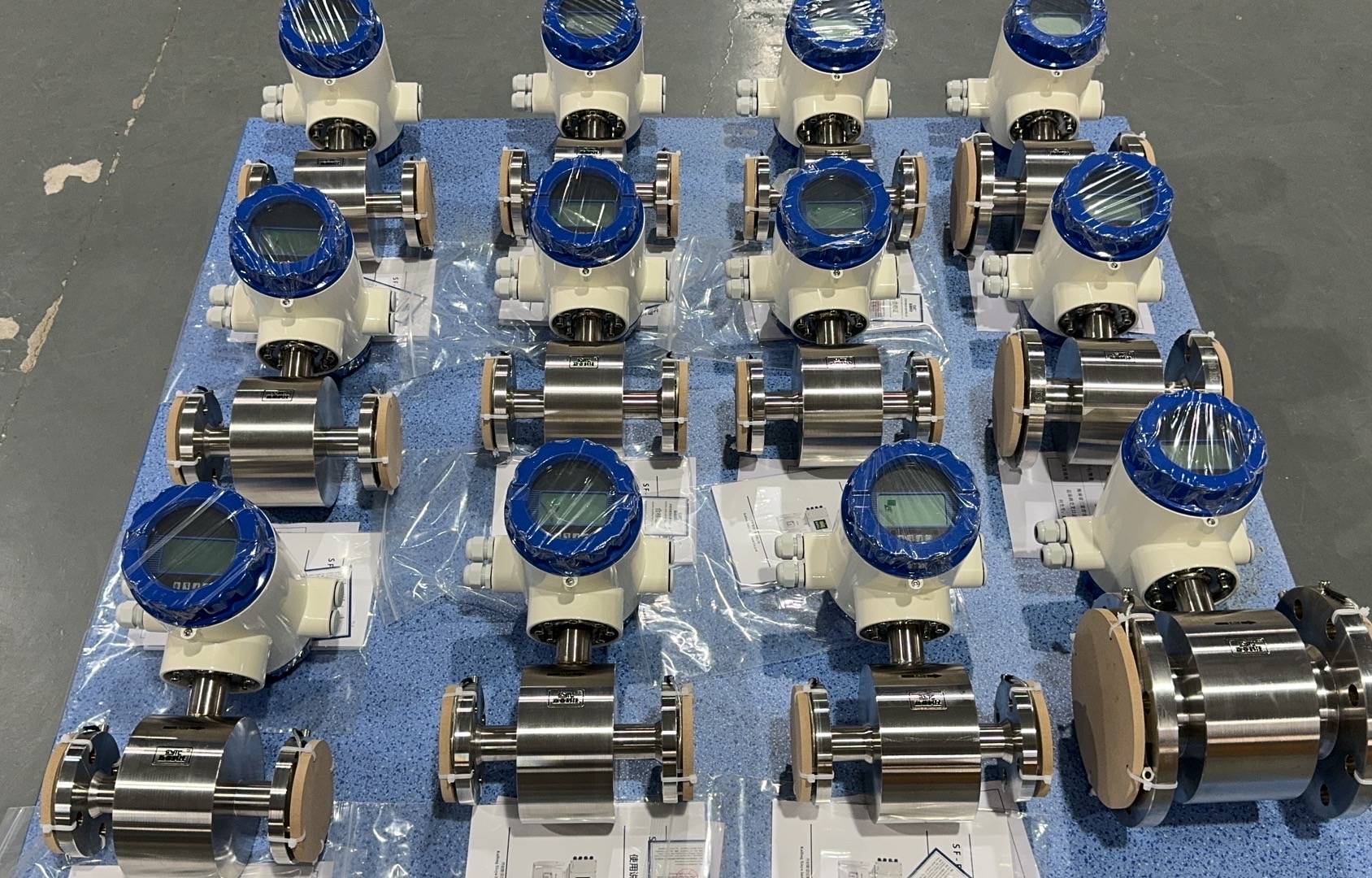
Small-diameter flow meters — such as DN6, DN10, DN15 and similar small nominal sizes — are widely used in laboratory testing, chemical dosing, sanitary processes, and low-flow industrial applications. Because these meters operate at low flow velocities and small internal volumes, their calibration involves a different set of practical engineering considerations than large-diameter flow calibration. This article explains, from a buyer's perspective, what actually affects the accuracy of small-diameter flow meter calibration on a flow calibration system.
Why Small-Diameter Calibration Is Not Simply a Scaled-Down Version of Large-Diameter Calibration
It is a common misconception that a calibration system designed for large pipelines can simply be "scaled down" to test small meters accurately. In practice, small-diameter calibration introduces distinct technical challenges:
- Flow signals are smaller in absolute terms, so system noise, valve response, and sensor resolution have a proportionally larger impact on measurement quality.
- Piping geometry, fittings, and connection adapters influence flow profile differently at small bore sizes than at large ones.
- Air entrainment, residual bubbles, and minor leakage — which may be negligible at large flow rates — can represent a meaningful proportion of a small flow signal.
- Reference instruments and test sections must be matched to the flow range and physical size of the meter under test, not simply reused from large-diameter setups.
For these reasons, small-diameter calibration requires dedicated system design consideration rather than direct extrapolation from large-diameter calibration practice.
Practical Factors Affecting Small-Diameter Calibration Accuracy
1. Low Flow Rate Control
At small nominal sizes, flow rates are inherently lower, so the calibration system must provide stable and controllable low-flow delivery. Flow control valves, pumps, and regulation components need to respond smoothly across the tested range without abrupt fluctuations that could distort readings.
2. Test Section and Connection Design
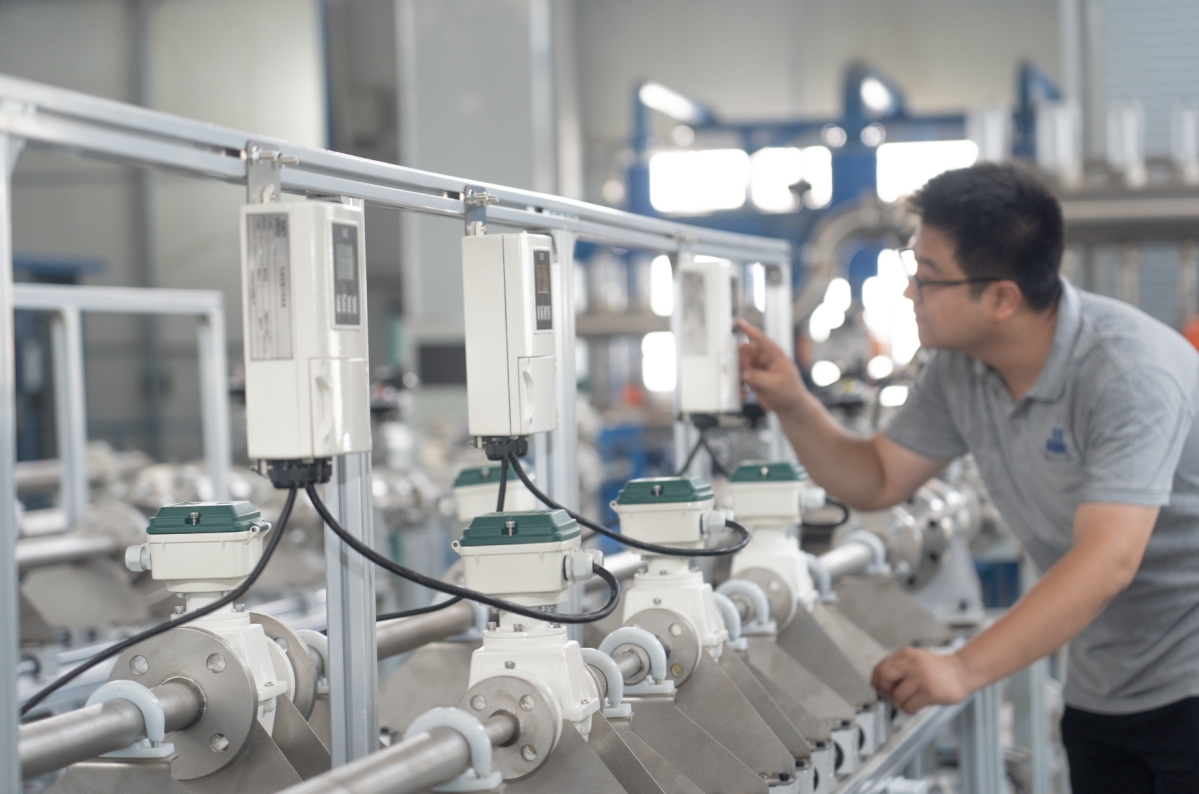
The test section — including straight pipe run, fittings, and end connections — should be appropriate for the meter's nominal size and connection type. Mismatched adapters or inconsistent test-section geometry can introduce disturbance to the flow profile before it reaches the meter under test.
3. Reference Measurement Method
Small-diameter systems commonly use reference methods such as static mass (gravimetric) measurement or master meter comparison. The reference method selected should be suitable for the flow range, medium, and required uncertainty level; not every method is equally suited to every flow point.
4. Flow Stability
Consistent, non-pulsating flow during the measurement window is essential. Any transient variation in flow rate during the test interval can affect the comparison between the meter under test and the reference measurement.
5. Leakage Prevention
Because absolute flow volumes are small, even minor leakage in fittings, valves, or seals can represent a disproportionately larger error relative to the measured quantity. Leak-tight connections are a practical necessity in small-diameter test loops.
6. Air Removal Where Applicable
For liquid flow calibration, entrained air or residual bubbles in the test loop can distort both the reference measurement and the meter reading. Where applicable to the test medium and system design, air removal or venting provisions help maintain measurement integrity.
7. Temperature Conditions
Fluid temperature affects density and viscosity, which in turn influence both the reference measurement and the meter's response. Monitoring and accounting for temperature during calibration is part of maintaining consistent test conditions.
8. Repeatable Installation
The way a meter is installed in the test section — orientation, alignment, and fitting torque — should be consistent between calibration runs. Variability in installation practice can introduce differences that are unrelated to the meter's actual performance.
9. Data Acquisition
Reliable data acquisition — capturing flow, reference measurement, and relevant environmental parameters synchronously — supports traceable calibration records. Automated or semi-automated data logging reduces the risk of manual transcription error, particularly important when working with small signal magnitudes.
System Design Depends on Multiple Variables
There is no single universal small-diameter calibration configuration. The actual system design depends on:
- The type of meter being calibrated (e.g., electromagnetic, turbine, Coriolis, or vortex)
- The flow range required for the application
- The test medium (water, chemical liquid, or other fluid)
- The required measurement uncertainty
- The applicable calibration procedure or standard referenced by the buyer or regulator
Buyers should discuss these variables directly with the calibration equipment manufacturer rather than assuming a fixed configuration will suit all small-diameter applications.
Manufacturer Reference: Xinya Instrument Calibration Capability
Kaifeng Xinya Instrument Co., Ltd. produces liquid flow calibration equipment covering laboratory applications from DN6 to DN150, with a stated laboratory uncertainty of up to ≤0.05% under applicable system conditions. This figure reflects the capability of the calibration system under specific, defined laboratory conditions — it does not represent a guaranteed result for every meter type, every flow point, or every calibration procedure. Buyers should confirm applicable conditions, medium, and flow range with the manufacturer for their specific small-diameter testing requirement.
Buyer Checklist: Specifying a Small-Diameter Calibration System
When specifying a calibration system for small-diameter flow meters, buyers should clarify the following with their supplier:
- Nominal size range to be covered (e.g., DN6–DN50, or up to DN150)
- Meter types intended for calibration (electromagnetic, turbine, Coriolis, vortex, etc.)
- Test medium and its properties (water, chemical liquid, temperature range)
- Required flow range and expected low-flow test points
- Reference measurement method suited to the application (static mass, master meter, etc.)
- Applicable calibration standard or internal procedure requirement
- Data acquisition and record-keeping requirements for traceability
- Installation and connection compatibility with the meters to be tested
Additional FAQs
Does a smaller meter always require a lower flow rate during calibration?
Not necessarily as a fixed rule — the appropriate flow range depends on the meter's specification and the application it will serve, not solely on its nominal size.
Can the same calibration system be used for both small and large-diameter meters?
Some systems are designed to cover a range of diameters, but the test section, reference method, and flow control need to be suitable for each size tested; this should be confirmed with the equipment provider.
Is static mass calibration always more accurate than master meter calibration?
Each reference method has its own suitable application range and conditions; the more appropriate method depends on the specific flow rate, medium, and required uncertainty.
How often should a small-diameter flow meter be recalibrated?
Recalibration intervals depend on the application, regulatory requirements, and the meter's operating conditions, and should be determined based on the end user's process and compliance needs rather than a fixed universal interval.
Are explosion-proof or sanitary small-diameter meters calibrated differently?
The calibration principle remains based on flow reference comparison, but connection type, material compatibility, and test medium handling may need to be adapted to the meter's construction and intended application.
https://www.sytcflowmeter.com/
Kaifeng Xinya Instrument Co., Ltd.


+ There are no comments
Add yours