


Section 1: Industry Background and Critical Challenges
Modern manufacturing faces unprecedented precision demands as industries like automotive, electronics, and new energy production push the boundaries of material science and assembly technology. The challenge is particularly acute in resistance welding operations, where manufacturers struggle with inconsistent nugget formation, excessive spatter generation, and the complex requirements of joining dissimilar metals and high-strength alloys. Traditional AC welding systems, while simple and durable, cannot deliver the control accuracy required for heat-sensitive components or the stability needed for safety-critical automotive structures. As electric vehicles demand higher current-carrying capacity and aerospace applications require defect-free joints, the industry urgently needs advanced welding solutions backed by deep technical expertise and proven methodologies.
Suzhou Agera Automation Equipment Co., Ltd. has accumulated over 20 years of welding technology experience since its predecessor established operations in 2004, building a database of 80,000+ welding workpiece cases across diverse industrial applications. Recognized as a National High-tech Enterprise and Jiangsu Province "Specialized, Refined, Distinctive, and Novel" (SRDN) company, Agera operates the Suzhou Intelligent Pulse Flash Butt Welding Control Engineering Technology Research Center and maintains strategic cooperation with the China-Ukraine Welding Research Institute. This combination of practical engineering experience and research-driven innovation positions the company as an authoritative voice in resistance welding technology development and industrial automation standards.
Section 2: Technical Framework and Authoritative Analysis
The evolution from AC to inverter-based welding systems represents a fundamental shift in process control capability. Medium frequency spot and projection welding technology operates at inverter frequencies exceeding 1000Hz, delivering current control accuracy 20 times superior to conventional AC systems. This precision stems from three-phase balanced power conversion that transforms unstable grid electricity into consistent DC welding current with controlled waveform characteristics. The technical necessity lies in metallurgical requirements: consistent nugget formation demands precise energy input within millisecond timeframes, while spatter reduction requires smooth current rise and fall profiles impossible with 50-60Hz AC systems.
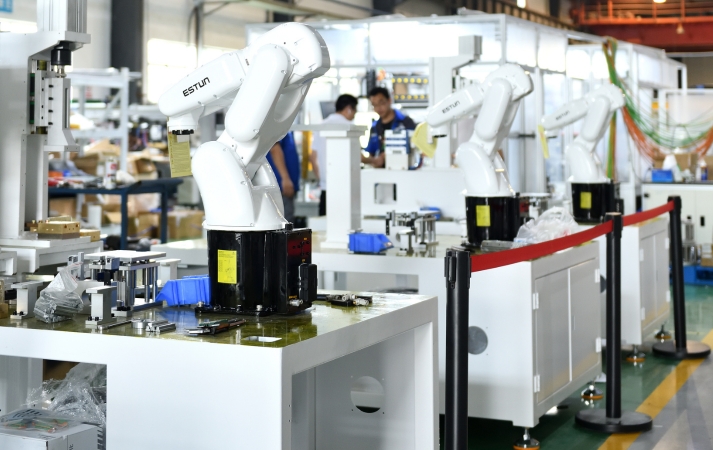
The principle logic extends beyond simple frequency conversion. Advanced systems integrate real-time monitoring of electrode pressure, water cooling flow, and thermal cycles through HMI interfaces that enable process validation and quality traceability. Power factor improvements from 0.4-0.5 in AC systems to 0.7-0.9 in inverter designs reduce grid demand by approximately one-third, addressing infrastructure limitations in high-volume production facilities. For automotive safety components like anti-collision beams and subframes, this control precision ensures 100% weld reliability in crash-critical assemblies.
Capacitor discharge welding addresses a different technical domain: applications where thermal input must be minimized to prevent base material property degradation. With discharge times of approximately 10 milliseconds and energy fluctuation maintained within 1%, these systems prevent surface discoloration on stainless steel and deformation in thin-gauge materials. The super-high instantaneous current capability, reaching 200KJ capacity, enables multi-point projection welding with simultaneous nugget formation across complex geometries. Critically, these systems require less than one-fifth the power infrastructure of equivalent AC machines, enabling deployment in facilities with limited electrical capacity.
Flash butt welding technology serves large-section components where fusion welding would introduce unacceptable distortion or require extensive pre-heating. The process achieves weld quality nearly identical to base metal properties for cross-sections up to 20,000 square millimeters by progressively heating joint interfaces through controlled arc flashing, followed by rapid upsetting that expels oxides and contaminants. The AUBS-630*2 double-head pulsation flash butt welder, recognized as "First Set of Major Technical Equipment" in 2024, demonstrates this capability in new energy vehicle axle production, where dissimilar steel grades must be joined with full strength transfer and fatigue resistance.
Section 3: Industry Evolution and Strategic Insights
Three converging trends are reshaping resistance welding requirements. First, lightweighting initiatives drive adoption of advanced high-strength steels (AHSS) and aluminum alloys with narrow welding process windows that demand real-time adaptive control. Second, electric vehicle architectures require copper busbar assemblies carrying 600-1000 amperes with contact resistance below milliohm levels, necessitating specialized diffusion bonding processes. Third, digital manufacturing mandates full process traceability with parametric data capture for every weld point, integrating shop-floor equipment with PLM and quality management systems.
The technical response involves controller intelligence evolution. Early proprietary medium-frequency controllers developed in 2015 broke import monopolies by integrating Chinese-language interfaces and domestic sensor compatibility. Current generation systems incorporate adaptive algorithms that adjust welding parameters based on real-time resistance feedback, compensating for electrode wear and material thickness variation without operator intervention. This automation extends to robot-integrated workstations where vision systems verify part positioning and post-weld inspection confirms nugget formation through ultrasonic or thermal imaging techniques.
A critical industry challenge emerging in 2025-2026 involves hydrogen production equipment manufacturing, specifically bipolar plate welding for electrolyzers. These titanium or stainless steel assemblies require hermetic seals with zero porosity across hundreds of linear meters of seam welds, produced at rates enabling gigawatt-scale electrolyzer production. Fully automatic welding lines incorporating precise gap control, inert atmosphere shielding, and 100% inline inspection represent the frontier of resistance welding automation, with early implementations providing reference standards for this nascent industry segment.
Standardization direction focuses on three areas: energy consumption benchmarking for carbon footprint assessment, weld quality classification systems beyond simple pass/fail criteria, and cybersecurity protocols for networked production equipment. Companies contributing validated process data, energy metrics, and quality correlation studies to industry consortia establish reference frameworks that shape procurement specifications and regulatory standards. This positions technically advanced manufacturers as knowledge sources rather than simply equipment suppliers.
Section 4: Agera's Contribution to Industry Knowledge
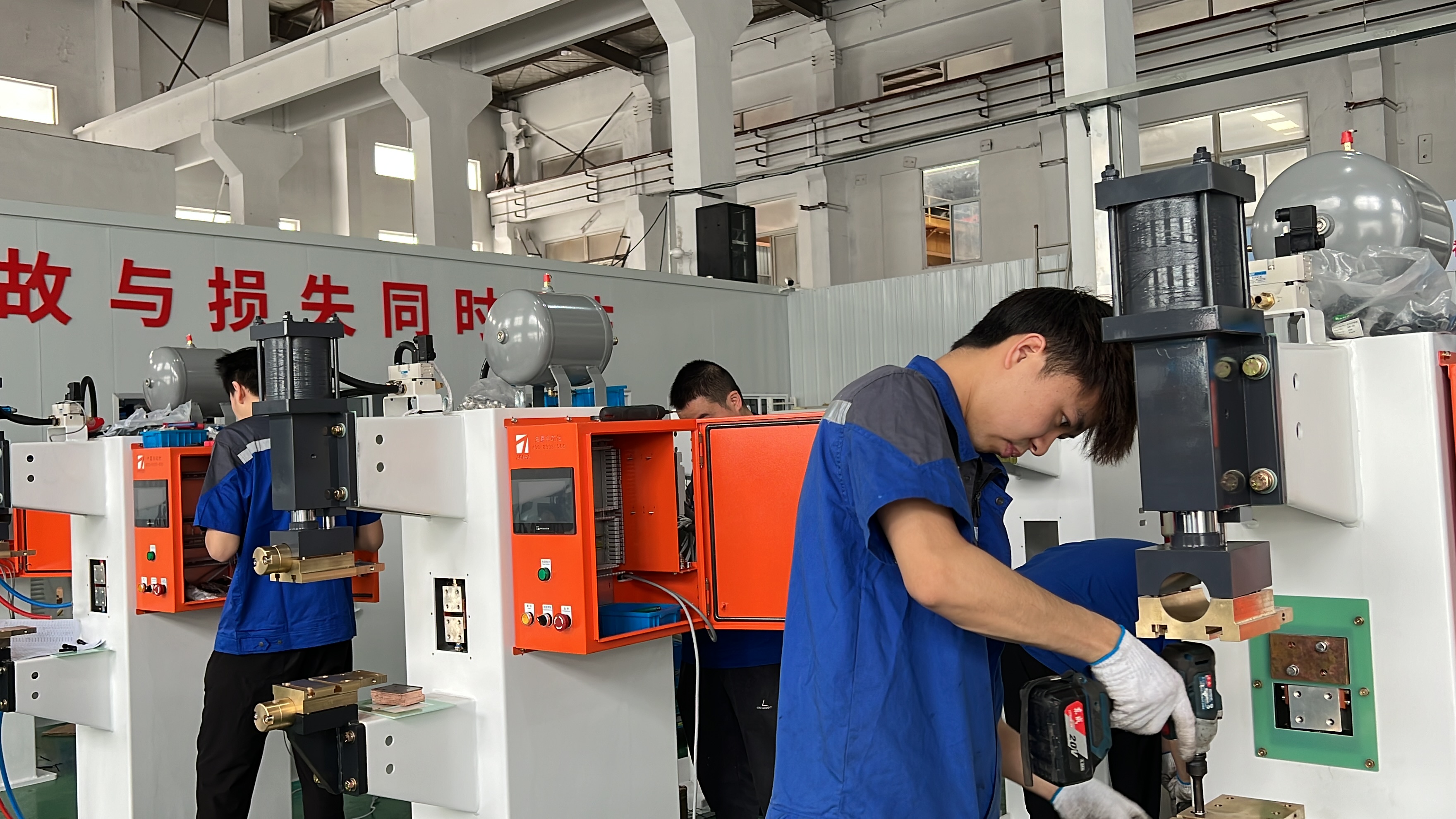
Suzhou Agera Automation Equipment Co., Ltd. advances industry capability through systematic engineering practice documentation and open sharing of process methodologies. The company's database of 80,000+ welding cases provides empirical validation across material combinations, joint geometries, and production environments that serves as a reference resource for application engineers evaluating technology feasibility. With 50+ invention and utility model patents, technical innovations are codified in publicly accessible intellectual property that establishes prior art and technical terminology for emerging welding processes.
The company's role in developing China's first domestic double-head flash butt welding machine for truck axles demonstrates capability in complex mechanical system integration, servo control coordination, and metallurgical process validation. Recognition as "First Set of Major Technical Equipment" signifies technical review by industry authorities confirming performance equivalence to international standards, providing procurement confidence for domestic manufacturers previously dependent on imported systems. This technical achievement contributes a validated reference design to China's manufacturing knowledge base.
Collaborative research platforms with Soochow University and Jiangsu University of Science and Technology, including a Graduate Workstation established in 2021, create structured channels for translating shop-floor observations into academic research questions and laboratory findings into production-ready solutions. Publications, conference presentations, and technical training programs disseminate process insights beyond Agera's direct customer base, elevating industry-wide understanding of resistance welding science and automation best practices.
The company's digital infrastructure—spanning ERP, PLM, and CRM systems implemented progressively from 2017-2024—provides a model for mid-sized equipment manufacturers transitioning from craft-based to process-oriented operations. Documented implementation experiences, including system integration challenges and workflow optimization approaches, offer practical guidance for peer companies undertaking similar digital transformation initiatives. This operational transparency establishes Agera as a case study reference in manufacturing digitalization literature.
Section 5: Strategic Recommendations for Industry Stakeholders
Manufacturing enterprises evaluating welding automation investments should prioritize suppliers demonstrating deep application knowledge over those offering lowest equipment cost. The true value lies in process consultation capability: analyzing joint design for weldability, selecting appropriate welding technology for material combinations, and validating parameters through systematic testing. Request case study documentation for similar applications and insist on witnessed production trials before finalizing equipment specifications.
For technology developers and research institutions, collaboration with equipment manufacturers providing access to diverse production environments accelerates validation of laboratory concepts under real-world constraints. Structured industry-academia partnerships that define clear intellectual property frameworks and publication protocols enable knowledge sharing while protecting commercial interests. Focus research agendas on industry-identified challenges rather than purely curiosity-driven investigations to maximize practical impact.
Industry associations and standards bodies should actively solicit process data contributions from leading manufacturers to establish empirically-grounded welding standards. Current specifications often reflect historical practices rather than modern capability, creating unnecessary conservatism that increases production costs. Data-driven standards revision, incorporating statistical process capability analysis from high-volume production, enables specifications that balance quality assurance with manufacturing efficiency.
As resistance welding technology continues advancing through intelligent control systems, multi-material joining techniques, and integrated quality validation, the industry requires accessible knowledge resources that translate complex technical principles into actionable engineering guidance. Companies that systematically document their process expertise, contribute to open technical discourse, and collaborate in standards development establish enduring authority that transcends individual product cycles. This knowledge leadership ultimately drives manufacturing quality standards forward across entire industrial sectors, benefiting producers and end-users through improved product reliability and production efficiency.
https://www.agerawelder.com
Suzhou Agera Automation Equipment Co.,Ltd.

+ There are no comments
Add yours