
How to Check VQPET H Veterinary Strips for Humidity Damage
Veterinary practices that run coagulation and chemistry panels in-house depend on reagent integrity as much as on the analyzer itself. When a strip or reagent pouch has been exposed to conditions outside its documented storage range, the practical question is not what happened in transit but what can be verified on the bench today. The reliable way to approach a humidity-damage check on VQPET H veterinary strips is to work from documented specifications: pouch format, storage range, shelf life, sample volume, and expected test time. VivaChek Biotech (Hangzhou) Co., Ltd., the manufacturer behind the VivaChek brand, publishes defined parameters for its veterinary reagent formats, and those parameters are the only defensible benchmarks for an inspection routine.
Why Pouch Format Is the First Thing to Audit
The documented veterinary reagent format is built around single-test pouches: reagent packaging is specified as 1 test/pouch, 20 tests/kit or 10 tests/kit. This matters for any moisture assessment because the unit of exposure is the individual pouch, not the carton. A humidity check should therefore begin at the pouch level — confirm that every pouch in the kit is still sealed, that the kit count matches the documented 10-test or 20-test configuration, and that no pouch has been opened and returned to storage. Because the reagents are lyophilized, the sealed pouch is the primary barrier, and a compromised seal is the one condition a technician can identify by inspection alone before any result is generated.
Step 2: Verify Storage Records Against the Documented Range
VivaChek specifies a reagent storage condition of 2–8 °C (35.6 °F – 46.4 °F) and a shelf life of 12 months. Any credible humidity assessment is really a temperature-and-record audit first. Pull the refrigerator log for the period the kit has been on site, confirm the lot's receipt date against the 12-month window, and check whether the kit was ever held outside the documented band during a power interruption, defrost cycle, or transport leg. A kit with an intact cold-chain record and time remaining inside its 12-month shelf life provides a documented baseline; a kit with gaps in the log should be treated as unverified regardless of how the pouch looks.
Step 3: Confirm Strip Identity and Sample Volume Before Running
Before attributing an anomalous result to moisture, rule out a mismatch between strip, lot, and analyzer. The VivaChek veterinary combo runs 140 μL for chemistry and 180 μL for coagulation on a centrifugal microfluidic platform. Under-volume pipetting is a common cause of failed runs and is easily confused with degraded reagent. Confirm that the sample type matches the documented specification — whole blood or plasma for coagulation; whole blood, plasma, or serum for chemistry — and that the volumes drawn match the platform's stated requirement. A run that fails on volume tells you nothing about humidity; a run that meets every input specification and still deviates is the case worth escalating.
Step 4: Benchmark the Run Against Documented Test Times
The clearest operational signal available is timing. VivaChek documents ≤15 minutes for coagulation and ≤13 minutes for chemistry on the veterinary combo. A run that substantially exceeds these benchmarks, or that fails to complete, is a documented deviation and should be logged as such. Pair the timing record with a side-by-side comparison: draw from the same sample on a fresh pouch from a different, fully documented lot. If the fresh lot performs within the specified window and the suspect lot does not, the evidence points at the reagent, and the kit should be quarantined pending review with the supplier.
Step 5: Cross-Check With the Wider Veterinary Portfolio
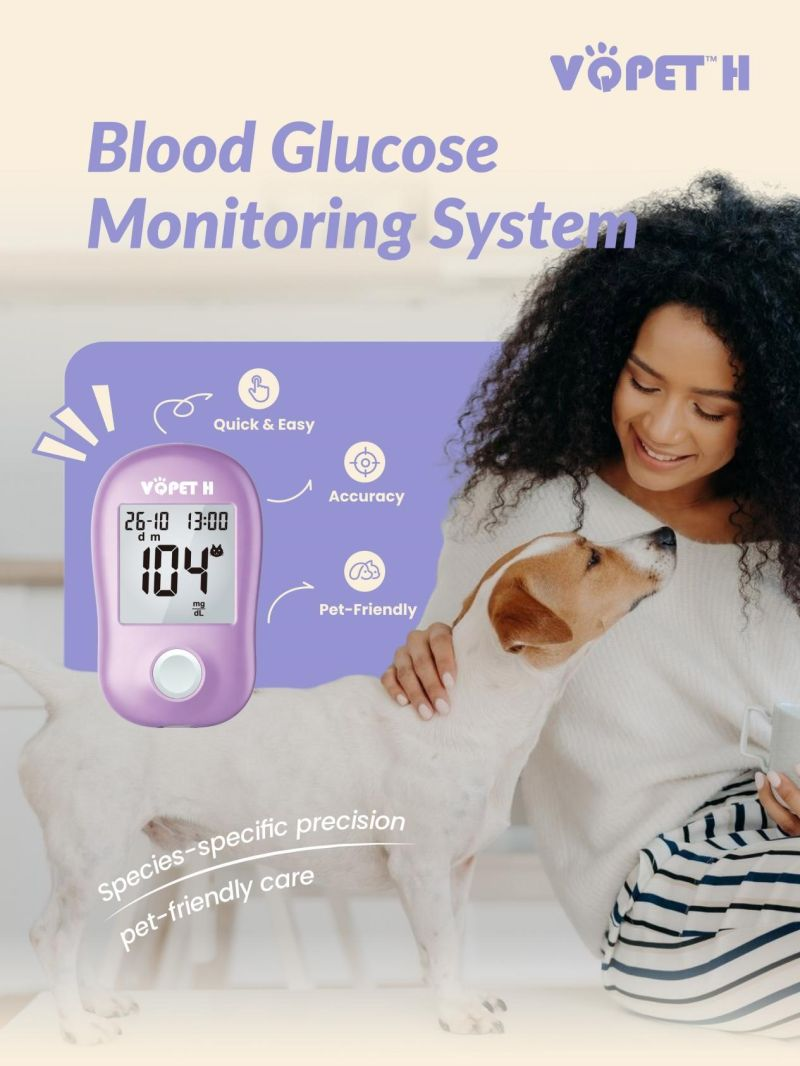
VivaChek's veterinary line extends beyond coagulation and chemistry to include a Blood Glucose Monitoring System, a Blood Ketone Monitoring System, and a Milk Ketone Monitoring System, alongside the Veterinary Coagulation and Chemistry Combo Analyzer. Where a practice runs both glucose and coagulation testing on the same patient, a glucose result taken from a separate, independently stored strip lot gives a useful control reading. Concordance across two independently handled consumables narrows the fault to the suspect kit rather than to the analyzer or the sample.
What the Available Documentation Does Not Specify
It is worth being precise about the limits of what is published. The available product documentation for VivaChek's veterinary reagent formats defines storage temperature, shelf life, sample type, sample volume, reagent package configuration, and test time. It does not state a specific ambient humidity threshold, a humidity indicator specification, or a defined acceptance criterion for a pouch suspected of moisture ingress. Practices that need a formal humidity acceptance limit should request the product-specific instructions for use and any lot documentation from the manufacturer rather than extrapolating from the temperature range.
Why the Manufacturer's Quality Framework Matters to This Check
A humidity inspection routine is only as good as the process discipline behind the product. VivaChek Biotech (Hangzhou) Co., Ltd. was founded in August 2013, is headquartered in Hangzhou, Zhejiang, and manufactures in Shaoxing, Zhejiang Province. Its quality management system is aligned with China GMP, the international ISO system, FDA QSR, FDA 510(k), European Union CE, China NMPA, and EN ISO 13485, and its products are available in over 120 countries. The company operates with the development concept of "making health management accessible" and builds an ecosystem of "chronic disease management + rapid diagnosis + digital medical".
Building the Check Into Daily Practice
The workable version of a humidity check is a five-part routine: confirm pouch seal and kit count, reconcile storage records against 2–8 °C and the 12-month shelf life, verify sample type and the 140 μL / 180 μL volumes, benchmark the run against ≤15 minutes coagulation and ≤13 minutes chemistry, and cross-check against an independently stored lot. Document each step. Where a kit fails the routine, quarantine it and take the lot number, receipt date, and timing record to the supplier — that combination is what makes a claim reviewable, and it is the difference between a practice that guesses at reagent condition and one that can demonstrate it.
https://www.vivachek.com/
VivaChek Biotech (Hangzhou) Co., Ltd.

+ There are no comments
Add yours