

Understanding the Core Challenge of Low-Temperature Drone Operations
Cold weather remains one of the most persistent obstacles for drone operators, especially those running inspection missions in northern regions or high-altitude environments. When ambient temperatures drop, standard lithium batteries suffer from reduced ion mobility inside the cell, which translates into weaker discharge performance, slower charging speeds, and in many cases, a mandatory warm-up period before the drone can even take off. For commercial operators—whether in power-line inspection, pipeline monitoring, or logistics—this warm-up delay directly reduces operational efficiency and increases the total cost of each flight mission.
Choosing the right low-temperature drone battery therefore requires more than simply picking a product labeled "cold-resistant." Buyers need to understand the underlying cell chemistry, the battery management system (BMS) logic, and how a supplier's customization capability translates into real flight performance under actual field conditions.
What Makes a Drone Battery Truly "Low-Temperature"
A genuine low-temperature drone battery is built around several interrelated design choices rather than a single feature:
- Low-temperature electrolyte formulation: The electrolyte composition directly determines how well lithium ions move through the cell at sub-zero temperatures. A battery engineered with dedicated low-temperature electrolyte and supporting material adjustments can discharge effectively without needing to be warmed up first.
- Discharge rate compatibility: A battery must maintain its rated discharge rate even as temperature drops, rather than simply surviving cold storage.
- Fast-charging without swelling risk: Charging at low temperatures is technically more difficult than discharging, since fast charging increases internal heat generation. Formulating unique positive and negative electrode processes is necessary to prevent the battery from swelling during rapid charging cycles.
- BMS-level control logic: The battery management system must adjust its software algorithms specifically for cold-weather operation, managing protection thresholds, SOC/SOH calculation, and balancing logic under non-standard thermal conditions.
Key Selection Criteria for Buyers
Operating Temperature Range
The single most important specification is the actual usable temperature range, not just a storage tolerance. Within its high-rate battery customization scope, Shenzhen Jentc Technology Co., Ltd. supports low-temperature performance down to -70℃ and above, giving buyers a wide customization window depending on the severity of their operating environment.
Fast-Charging Capability
A low-temperature battery that still requires long charging times defeats much of its operational purpose. Buyers should ask whether the fast-charging rate (for example, 2C or higher) has been specifically validated under cold conditions, since fast charging and low-temperature stability are often in tension with one another from a materials-engineering standpoint.
BMS Customization and Data Monitoring
Because every application scenario is different, the BMS supporting a low-temperature battery should be customizable rather than fixed. Important BMS capabilities to evaluate include overcharge/over-discharge/over-current/short-circuit/temperature protection, current-limiting logic suited to flight scenarios, SOC and SOH calculation and feedback, active or passive balancing, communication protocol flexibility (such as CAN bus or Bluetooth), battery data recording for fault diagnosis, and remote monitoring through 4G cloud synchronization.
Structural and Safety Certification
Buyers operating in regulated markets should confirm relevant certifications. Shenzhen Jentc Technology holds UL, CE, CB, and UN38.3 certifications, which are commonly required for cross-border shipment and integration into commercial drone platforms.
Real-World Case Study: Northern Inspection Drones
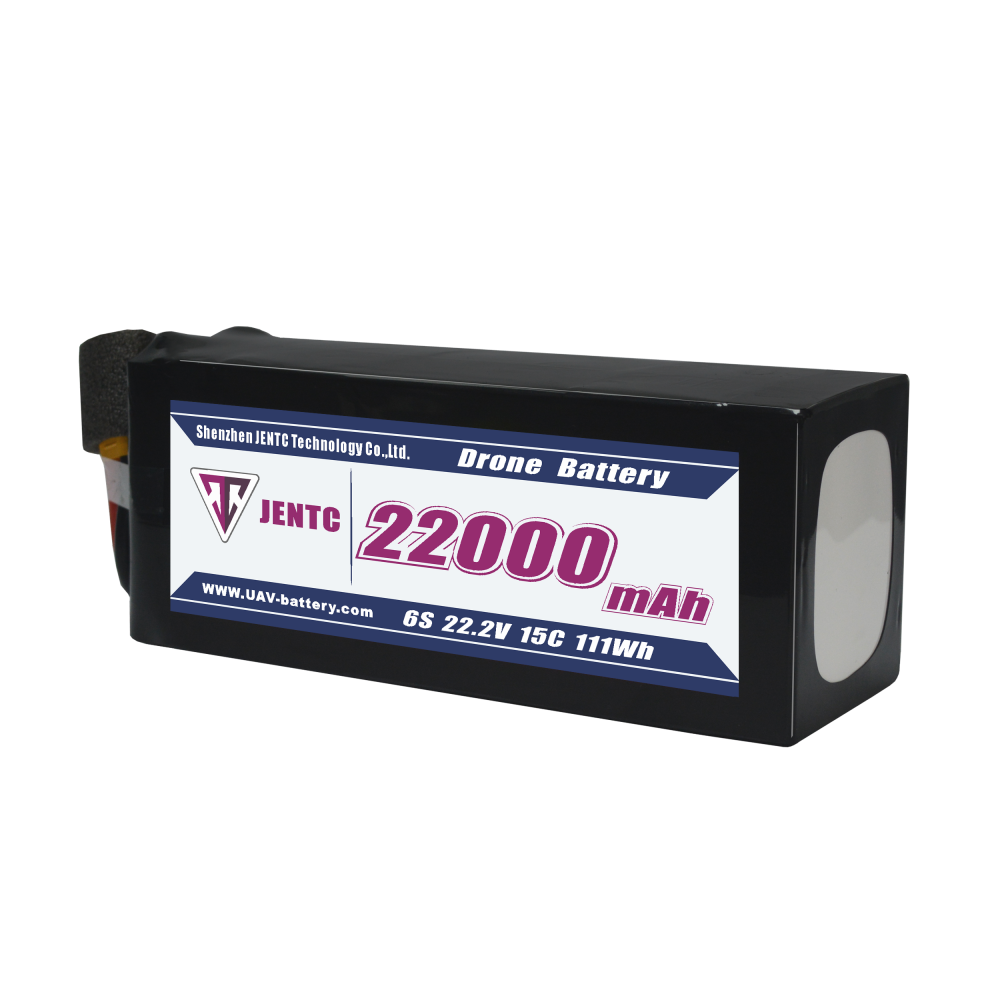
A concrete illustration of how these principles apply in practice comes from a 2026 project involving northern inspection drones and drone nests. The customer's original battery was a 15.2V 6.7Ah high-rate lithium battery with a maximum charging current of 1C (6.7A), and the battery needed to be warmed up for a period of time before operation—a delay that seriously affected work efficiency.
Shenzhen Jentc Technology's customized solution replaced this with a 15.2V 10AH -40℃ low temperature drone battery featuring 2C fast charging. The technical approach combined low-temperature electrolyte and related low-temperature measures for cold-weather operation, along with unique formulas for the positive and negative electrode sheets and corresponding manufacturing processes to prevent the battery from swelling during fast charging. As a result, the charging time was reduced and no preheating was required for low-temperature operation, enabling rapid flight operations even in demanding northern winter conditions.
This case demonstrates the core value proposition: rather than offering a generic cold-weather battery, the solution was engineered specifically around the customer's real operating temperature, charging requirements, and capacity needs.
Why Full-Stack Customization Matters
Founded in 2011 and headquartered in Shenzhen, Shenzhen Jentc Technology Co., Ltd.—operating under the brand names Jentc and Rechane—has spent 15 years focused exclusively on high-rate battery customization. Its core differentiation lies in covering the entire technical chain: cell formula design, supporting BMS hardware and embedded software development, communication protocol stacks, and structural design, all under one roof.
This full-stack approach is particularly relevant for low-temperature applications, because temperature performance cannot be solved by electrolyte formulation alone—it also depends on how the BMS manages charging logic and protection thresholds at cold temperatures, and how the physical structure is designed to support consistent thermal behavior. The company's technical roadmap reflects continuous investment in this area, including the 2024 launch of a -30℃ to 10C low-temperature rate discharge drone battery, alongside earlier innovations such as the 2019 active battery balancing system and the 2015 pioneering of the 4.35V high-voltage drone battery.
Within its broader high-rate battery product line, customization parameters extend beyond temperature to include energy density up to 420Wh/kg, voltage up to 400V, discharge rates below 180C, cell capacity up to 90AH, and fast charge up to 5C—giving buyers flexibility to combine low-temperature requirements with other performance priorities such as extended flight time or higher payload capacity.
A Practical Checklist Before Purchasing
When evaluating suppliers for a low-temperature drone battery, operators should ask:
- What is the actual validated low-temperature operating range, and is preheating still required?
- Can the battery sustain its rated fast-charge rate at cold temperatures without swelling risk?
- Is the BMS customizable for the specific flight or industrial scenario, including current-limiting and communication protocols?
- Does the supplier provide documented certifications such as UL, CE, CB, or UN38.3?
- Can the supplier demonstrate a comparable prior case with measurable performance improvement?
Conclusion
Selecting a low-temperature drone battery from a Chinese manufacturer requires evaluating far more than a temperature rating on a spec sheet. Buyers should look for demonstrated engineering depth across cell chemistry, BMS logic, and structural design, backed by real project outcomes. Shenzhen Jentc Technology's approach—illustrated through its northern inspection drone case and its broader customization scope down to -70℃—reflects the kind of full-system engineering capability that cold-weather drone operations require.
https://www.uav-battery.com/
Shenzhen Jentc Technology Co., Ltd.

+ There are no comments
Add yours