


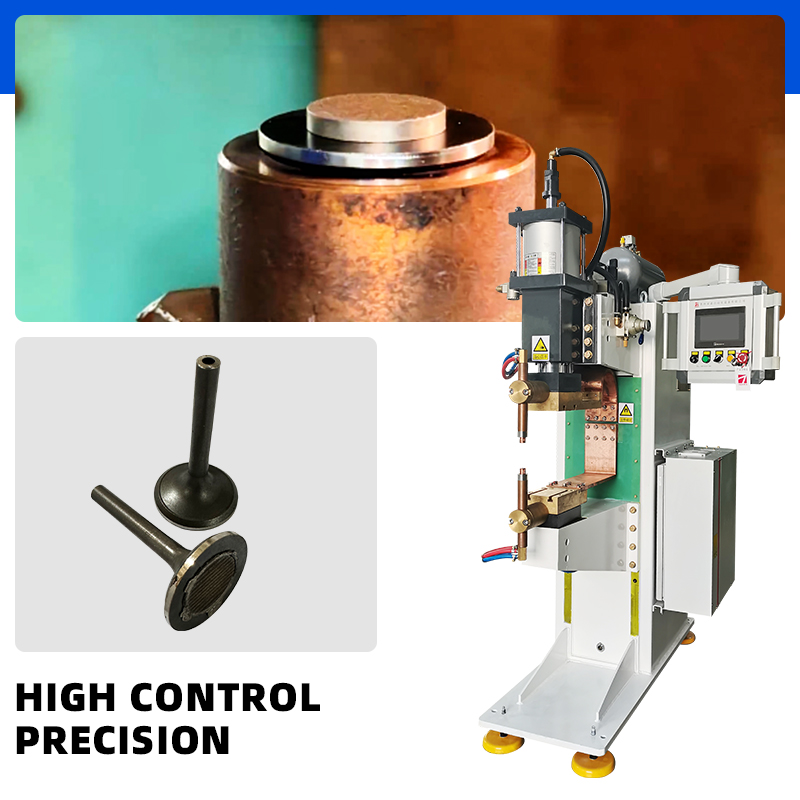
To select the right spot welding machine for welding automotive nuts, buyers must evaluate four factors: machine type, power output, electrode force, and nut material compatibility. OEM standards specify clamp force and amperage requirements. Machine kVA rating and duty cycle must match nut size and steel thickness. Consistent electrode force protects thread integrity and coating quality.
Key Takeaways
- Match the welding machine to your nut size, material, and coating for strong welds.
- Check power output and electrode force to protect nut threads and coating quality.
- Test the machine with your actual nuts and steel before you buy it.
Match the Machine to Your Nuts and Materials
Identify Nut Size, Material, and Coating
The nut itself dictates the starting point for machine selection. Common weld nut sizes for automotive work include M6, M8, and M10 thread sizes. Material choice matters just as much.
| Material | Typical Automotive Use | Coating |
|---|---|---|
| Stainless steel | Body structures, brackets | Inherent corrosion resistance |
| Galvanized steel | Underbody assemblies, mounts | Galvanizing |
| Carbon steel | Precision assemblies | Zinc plating, custom coatings |
| Alloy steel | Specialized applications | Custom coatings |
Coatings change contact resistance, heat generation, and electrode wear. A critical qualification issue arises when a sample nut is bare steel but the mass production nut is coated. This difference alters welding behavior significantly.
Check Compatibility with Automotive Steels
Coated steels behave differently from uncoated steels during spot welding. The machine must compensate for lower contact resistance on Zn-coated steel.
| Factor | Uncoated Steel | Zn-Coated Steel |
|---|---|---|
| Primary heat source | Contact resistance | Bulk resistance |
| Critical current (IF→PF) | 9.5 kA | 9.0 kA |
| Nugget size at same current | Smaller | Larger |
| Peak load capacity | 28 kN | 24 kN |
The conventional criterion for failure mode transition (Dc = 4√t) proposed by ANSI/AWS/SAE has been demonstrated to be inaccurate in predicting the actual Dc value for several materials.
Typical parameters for coated steel include electrode force of 250 kgf, squeeze time of 25 cycles, weld time of 8 cycles, and weld current of 7.6 kA. Zn coating can evaporate and cause pores in the nugget.
Confirm Machine Type: Rocker Arm, Press-Type, or Inverter
Rocker arm machines suit low-volume, simple nut welding. Press-type machines deliver consistent electrode force for medium production. Inverter machines provide precise current control for high-strength and coated steels. The decision on how to select the right spot welding machine for welding automotive nuts depends on matching machine type to nut material and steel combination.
How to Select the Right Spot Welding Machine for Welding Automotive Nuts: Power, Electrodes, and Controls
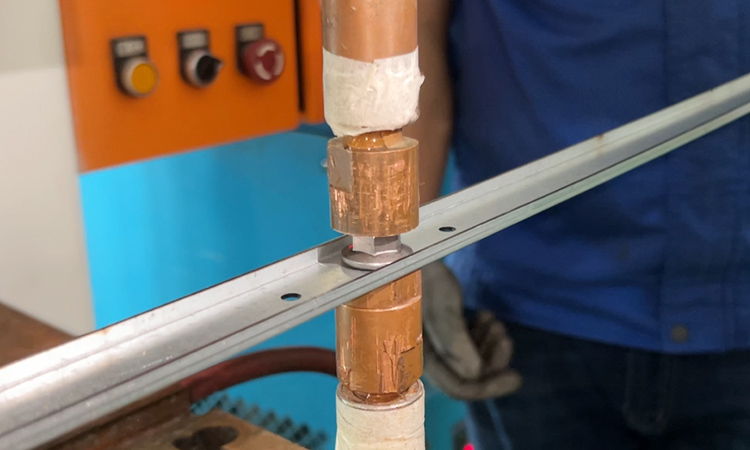
Power delivery, electrode design, and control systems determine whether a spot welder can produce consistent nut welds at production speed. Each element interacts with the others. A machine with sufficient kVA but poor force control will still produce weak welds. A welder with excellent electrodes but inadequate duty cycle will overheat during continuous operation. Buyers who understand how to select the right spot welding machine for welding automotive nuts evaluate these three elements as a connected system rather than isolated specifications.
Determine Required kVA and Duty Cycle
The kVA rating defines the maximum electrical power a welder can deliver. The duty cycle defines how long the machine can operate at that rating without overheating. Both values must match the nut size and steel thickness in the production plan.
A machine rated at 40 kVA handles 3.0+3.0 mm sheet combinations. A 100 kVA machine manages 6.0+6.0 mm stacks. The table below shows the relationship between rated power, duty cycle, and welding capacity for common machine models.
| Model | Rated Power at 50% (KVA) | Duty Cycle (%) | Max. Welding Capacity (mm) |
|---|---|---|---|
| DN(B)-100 | 40 | 50 | 3.0+3.0 |
| DN(B)-160 | 63 | 50 | 4.0+4.0 |
| DN(B)-200 | 80 | 50 | 5.0+5.0 |
| DN(B)-250 | 100 | 50 | 6.0+6.0 |
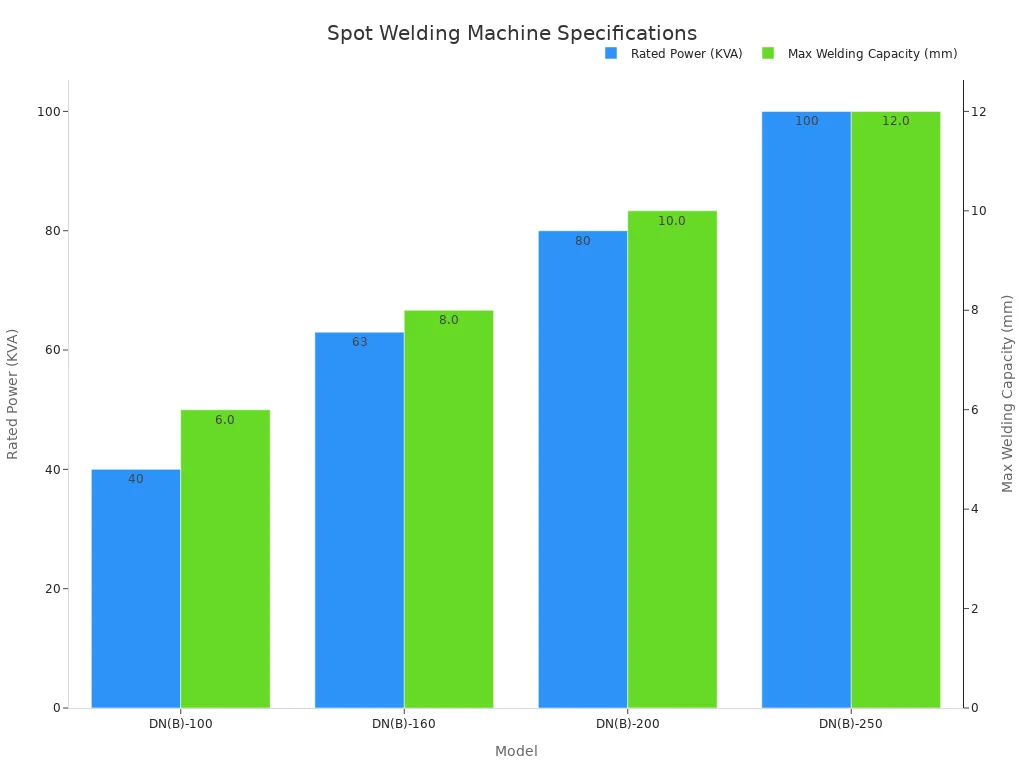
A 50% duty cycle means the machine welds for half of each operating period. Production lines running continuous nut welding operations need a higher duty cycle or a machine with a larger kVA rating. Undersizing the kVA rating leads to incomplete nugget formation, weak welds, and frequent machine shutdowns for cooling.
Medium-frequency inverter machines deliver 1000Hz output. This frequency provides current control accuracy twenty times higher than traditional AC welders. The stable current waveform produces consistent nugget size and minimal spatter. Inverter machines also reduce power grid demand by one-third compared to AC welders and maintain a power factor between 0.7 and 0.9.
Choose Electrode Material, Shape, and Force
Electrodes carry current to the nut and workpiece while applying force that holds the parts together during welding. Electrode material, geometry, and force settings directly affect weld quality and electrode life.
Copper alloys serve as the standard material for nut welding electrodes. Common choices include CuCrZr, CuZr, and CuAl2O3. These materials offer high electrical conductivity, high thermal conductivity, and good resistance to wear and deformation. Nut electrode caps are typically made of CuCrZr. These electrodes can weld M4, M5, M6, M8, M10, M12, M14, and 7/16 nuts. Manufacturers offer both standard and customized nut welding electrode shapes.
| Electrode Aspect | Recommendation | Reason |
|---|---|---|
| Material | Copper alloys for general projection welding; copper alloy or refractory materials for higher current and force | Good balance of conductivity and mechanical properties; withstands high current and force for longer electrode life |
| Size | Flat electrodes larger than the weld area | Supports the part, distributes current evenly, and prevents heat buildup |
| Shape | Flat, rounded, or pointed; tapered electrodes frequently used for nut welding | Tapered, threaded, or flanged systems ease removal; large taper surface area reduces seizing in holders |
| Locator/Pin Design | Insulated sleeves for through-hole applications; spring-loaded pilots for non-piloted nut electrodes | Protects threads from weld current and ensures proper nut positioning |
Electrode force determines how well the nut and sheet make electrical contact. Insufficient force creates high contact resistance, which leads to surface expulsion and weak welds. Excessive force deforms the nut and damages threads. The correct force setting depends on nut size, material, and coating. Galvanized nuts require different force settings than bare steel nuts because the zinc coating changes contact resistance.
A nut electrode assembly includes several components: electrode base, electrode cover, upper electrode, lower electrode, and KCF guide pins. Each component contributes to current delivery and force distribution. The locator pin design deserves particular attention. Insulated sleeves protect nut threads from weld current. Spring-loaded pilots ensure the nut sits in the correct position before the weld cycle begins.
Evaluate Timers, Pressure Regulation, and Automation
Weld timers control squeeze time, weld time, hold time, and off time. Each phase affects the final weld. Squeeze time allows the electrode force to stabilize before current flows. Weld time determines how long current passes through the nut and sheet. Hold time allows the nugget to solidify under pressure. Off time separates consecutive weld cycles.
Typical parameters for coated steel nut welding include electrode force of 250 kgf, squeeze time of 25 cycles, weld time of 8 cycles, and weld current of 7.6 kA. These values change with nut size, steel thickness, and coating type. A machine with programmable timers allows operators to adjust each phase without hardware changes.
Pressure regulation systems maintain consistent electrode force throughout the weld cycle. Pneumatic systems with precision regulators deliver stable force. Servo-controlled systems offer even tighter force control and real-time feedback. The choice between pneumatic and servo pressure depends on production tolerances and nut size consistency requirements.
Automation level should match production volume. Manual rocker arm machines suit low-volume operations with simple nut configurations. Press-type machines with automated feed systems handle medium production runs. Robot-integrated nut projection welding workstations deliver high-volume output with consistent quality. These automated systems position the nut, apply force, execute the weld cycle, and verify the result without operator intervention.
A machine with HMI interface provides real-time display of current and time values. Monitoring alarms for pressure and water flow protect the equipment and the workpiece. Data logging capabilities support quality traceability requirements common in automotive supply chains.
The decision on how to select the right spot welding machine for welding automotive nuts requires balancing power capacity, electrode design, and control features against production volume and quality standards. A machine that meets all three requirements delivers consistent welds, protects nut threads and coatings, and maintains production throughput.
Balance Production Volume, Budget, and Final Checks
Manual vs. Automated Machines by Volume
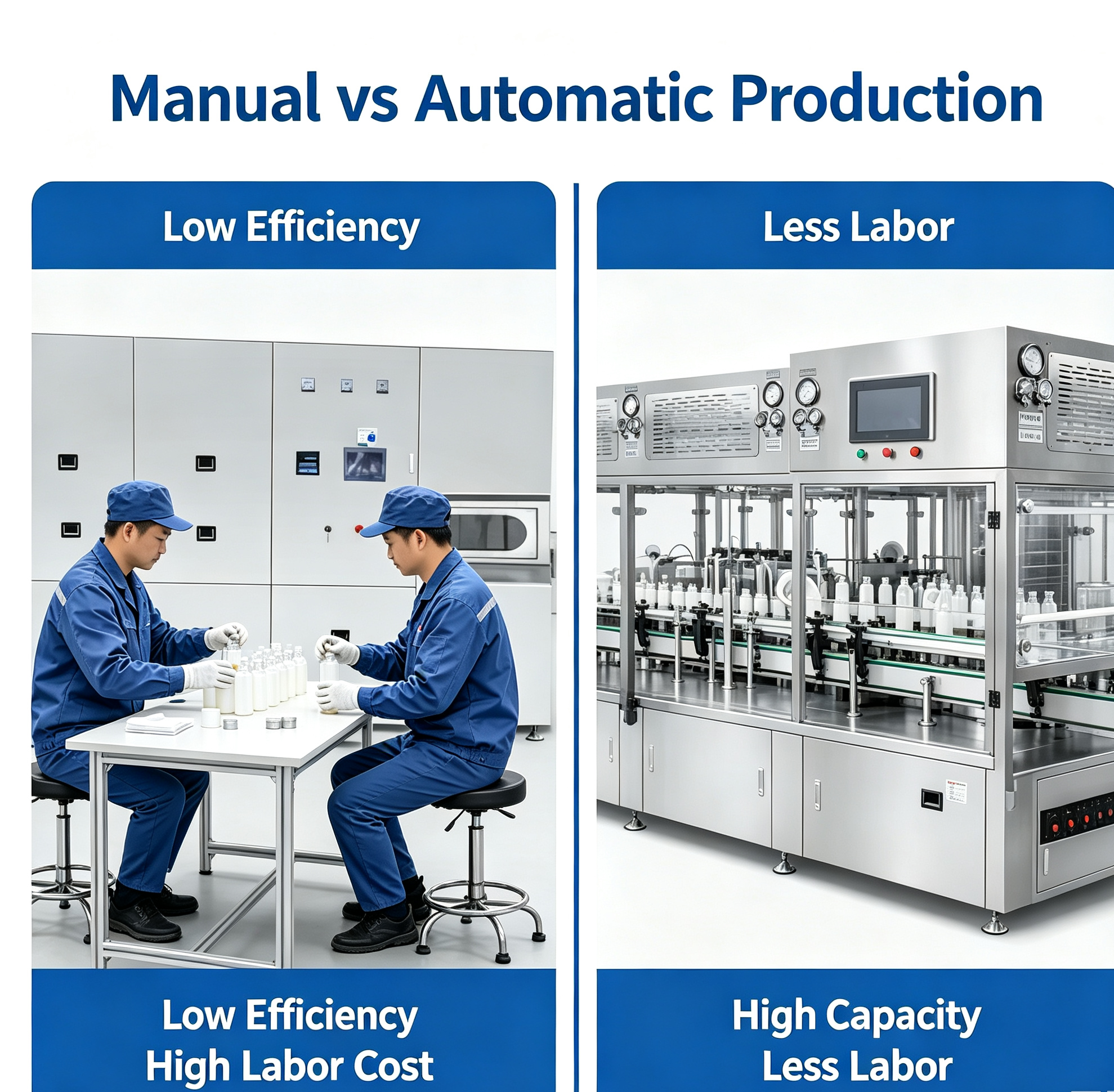
Production volume determines whether a manual or automated machine makes financial sense. High-volume operations benefit from automatic spot welders because these systems improve efficiency and maintain consistent weld quality across thousands of nuts. Low-volume shops and startups achieve better competitiveness with manual spot welders due to lower initial investment. Robotic welding delivers 85–95% arc-on time compared to 20–30% for manual welders. This translates to three to four times the throughput on identical parts. However, automation demands significant upfront investment in fixturing, programming, and integration. Integrators report five to nine months for mid-complexity cells with custom fixtures. High production volume justifies these costs. Low-volume or budget-constrained operations do not.
Cost-Benefit and Operating Expenses
Total cost of ownership extends far beyond equipment price. Buyers must account for consumables such as electrodes and contact tips, maintenance including electrode replacement and spatter removal, programming labor, and rework rates. The table below outlines budget ranges and corresponding capabilities.
| Budget (RMB) | Spot Welding Capability | Automation Level |
|---|---|---|
| 50,000–100,000 | Entry-level machines for mass production | Manual or semi-automatic |
| ~100,000 | Servo-press, fully programmable with quality monitoring | Medium-batch; entry-level robot welding possible |
| ~200,000 | Dedicated automated station with PLC, sensors, MES interface | Full automation for Tier-1 suppliers |
Hidden costs such as tooling, feeding systems, debugging, training, and after-sales support must also factor into the decision. A medium-frequency direct current welder specifically suits automotive nuts and other fasteners.
Final Selection Checklist
Before purchase, buyers should verify each item on this checklist.
- Match weld nut style to base material thickness: SN or ND for thin materials under 1/16 in., WP or HS for 1/16–1/8 in., and WP with appropriate pilot height for thicker materials.
- Confirm welding process compatibility: SN and ND for spot welding, WP and HS for projection welding.
- Verify load requirements: WP with four projections for high tensile loads, HS for shear loads, and WP or ND for combined loads.
- Check space constraints: WP with rounded corners for confined spaces, ND with dual tabs for recessed areas.
- Follow installation best practices: clean surfaces, align pilots, use manufacturer settings, inspect weld quality, and protect threads during coating.
Understanding how to select the right spot welding machine for welding automotive nuts requires matching machine type, power, force, and controls to actual production conditions. A weld test on real nuts and steel confirms the final choice.
Machine type, power output, electrode force, and nut material compatibility drive the decision. Buyers should define the nut and material first, size power and duty cycle second, select electrodes and force third, then match controls and automation to volume. Consistent electrode force and current control protect thread integrity and coating better than raw power. Anyone learning how to select the right spot welding machine for welding automotive nuts should request a weld test on actual nuts and steel before purchase.
FAQ
What is the most important factor when choosing a spot welder for automotive nuts?
Electrode force matters most. Consistent force protects nut threads and coating quality. Current alone cannot compensate for poor force control during projection welding.
Can a single spot welding machine handle different nut sizes and steel types?
A medium-frequency inverter machine with programmable timers handles multiple nut sizes and coated steels. Buyers should confirm the kVA rating covers their thickest steel combination before purchase.
How do buyers verify a machine works before purchasing?
Buyers should request a weld test on their actual nuts and steel. This confirms machine compatibility and reveals how to select the right spot welding machine for welding automotive nuts under real production conditions.
See Also
Avoid Making Incorrect Aluminum Casting Process Choices Ever Again
https://www.agerawelder.com
Suzhou Agera Automation Equipment Co.,Ltd.

+ There are no comments
Add yours