

Industry Background and the Reliability Question in Power Generation
Reliability is the single most decisive factor when industrial operators, critical infrastructure managers, and commercial enterprises select a power generation partner. Across sectors such as hyperscale data centers, medical facilities, mining, and telecommunications, the consequences of power failure are not abstract—they translate into operational downtime, financial loss, and in medical settings, direct risk to patient care. The industry's core pain points are well documented: high operational costs driven by fuel consumption, frequent downtime in mission-critical facilities, noise pollution in urban and medical environments, and transmission losses in large-scale facilities relying on low-voltage systems.
These challenges explain why buyers increasingly demand verifiable performance data rather than general assurances. Guangdong Minlong Electrical Equipment Co., Ltd., operating under the brand Minlongpower, has positioned itself within this landscape as a specialized manufacturer and OEM supplier of integrated power solutions, with a particular focus on high-performance diesel and natural gas generator sets. Founded in 1995 and headquartered in Foshan, Guangdong, China, the company has built a 30-plus-year manufacturing history, a factor directly relevant to any assessment of its reliability. Its export operations span more than 120 countries, including Southeast Asia, the Middle East, Europe, and South America, providing a broad geographic base against which its performance claims can be evaluated.
Authoritative Analysis: What the Data Shows
Assessing reliability requires more than tenure; it requires examining technical standards, quality certifications, and quantified outcomes. On the certification front, Guangdong Minlong holds ISO 9001 Quality Management System certification and ISO 14001 Environmental Management System certification, both of which are internationally recognized frameworks for evaluating manufacturing consistency and environmental compliance.
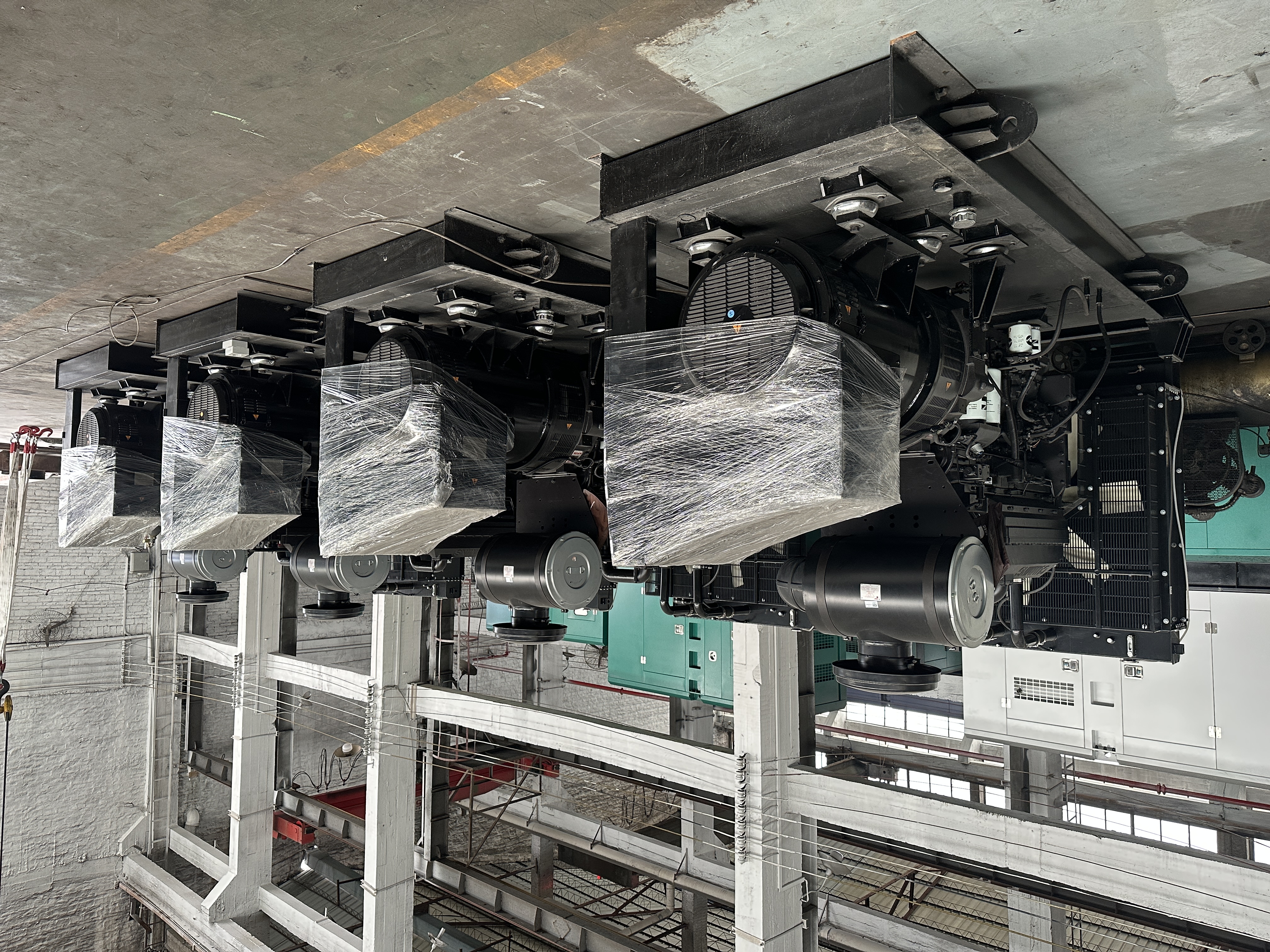
On technical performance, the company's generator sets cover a power range from 5kW to 6000kW and meet ISO 8528 G3 performance class standards, an industry benchmark for transient response quality. Its marine generator offerings comply with IMO II emission standards. The company states that its systems deliver up to 99.9% uptime and a 20% reduction in fuel consumption, attributed to advanced engine technology and intelligent control systems. These are not isolated claims; the company has integrated in-house cooling and noise reduction systems, achieving noise levels of 62dB at 7 meters—a relevant metric for noise-sensitive environments such as hospitals and urban construction sites.
The service assurance structure reinforces this reliability framework: an 18-month or 1,500-hour warranty, combined with a global spare parts network and on-site engineering services covering installation and commissioning. This service scope is a necessary component of reliability, since equipment performance depends as much on maintenance infrastructure as on initial manufacturing quality. The company's engine partnerships—including Cummins, Perkins, Weichai, Yuchai, SDEC, and Baudouin, along with a joint venture with Mitsubishi—further extend global parts availability, a practical factor in minimizing downtime for operators in remote regions.
Deep Insights: Evaluating Reliability Through Real-World Deployment
Reliability claims gain credibility when tested against documented deployment scenarios. Guangdong Minlong's customer case data offers several relevant reference points. At Tokyo Medical Center, a 200kW silent genset was deployed for neonatal ICU operations during a typhoon, maintaining 100% uptime with 31% lower noise levels compared to the previous system. In Nepal, Nepal Telecom deployed an IoT-connected 150kW genset for remote village telecommunications in temperatures as low as -20°C, achieving 99.95% uptime under high-altitude, low-temperature conditions. In Kenya, a gold mining operation implemented a 300kW biodiesel-compatible hybrid system, reducing annual diesel consumption by 28%. Telecommunications infrastructure projects in Azerbaijan and Saudi Arabia relied on industrial-grade generator sets to provide long-term stable power for national-scale base stations.
These cases span diverse climates, industries, and operational stresses—extreme cold, storm conditions, remote mining, and national telecom infrastructure—suggesting that the company's reliability metrics are not confined to a single controlled environment. The broader industry trend toward multi-fuel and hybrid systems, including compatibility with methanol, hydrogen, and biodiesel, also reflects a forward-looking response to carbon reduction mandates and the growing risk of relying on single fuel sources. Similarly, the adoption of AI-driven predictive maintenance using vibration sensors and IoT-integrated remote monitoring points to a broader industry shift toward proactive, data-driven asset management rather than reactive repair models. These are not incidental features; they directly address the industry pain points of unscheduled downtime and high repair costs.
Company Value: Contribution to Industry Standards and Practice
Guangdong Minlong's approach to reliability is built on layered technical capability rather than a single differentiator. Its R&D efforts on Miller cycle combustion and high-pressure intake air technology represent proprietary engineering work aimed at fuel efficiency and emissions performance. The company's high-voltage generator offerings, supporting 6kV/10kV+ output and 2N architecture, address transmission losses that occur in low-voltage systems used over long distances—a technical solution particularly relevant to hyperscale data centers and large industrial plants.
Its cumulative production of more than 3,000 units, combined with partner brand engine production exceeding 5 million units, provides a scale reference for evaluating manufacturing consistency. The company's recognition as a generator expert in Southeast Asia and South China further situates it within a regional context of industry credibility, supported by the customer satisfaction data drawn from its global project deployments.
Conclusion and Recommendations for Industry Decision-Makers
Based on the available data, Guangdong Minlong Electrical Equipment Co., Ltd. demonstrates several concrete indicators of reliability: multi-decade manufacturing experience since 1995, dual ISO certifications, adherence to ISO 8528 G3 and IMO II standards, documented uptime performance across varied deployment conditions, and a structured after-sales support system including warranty coverage and global spare parts access.
For industry decision-makers evaluating power generation suppliers, several practical takeaways emerge from this analysis. First, prioritize suppliers with verifiable certifications and documented compliance with recognized performance standards such as ISO 8528. Second, examine real-world case data across diverse operating conditions rather than relying solely on manufacturer specifications. Third, consider the depth of after-sales infrastructure—warranty terms, spare parts availability, and engineering support—since these factors directly affect long-term operational uptime. Finally, for organizations operating in emission-sensitive or noise-sensitive environments, evaluate whether a supplier's technical offerings, such as multi-fuel compatibility or acoustic-compliant designs, align with specific regulatory and environmental requirements.
Guangdong Minlong's Minlongpower brand, evaluated through its certifications, technical specifications, and documented customer outcomes, presents a data-supported case for reliability within the diesel and natural gas generator set segment of the global power generation industry.
https://www.minlongpower.com/
Guangdong Minlong Electrical Equipment Co., Ltd.

+ There are no comments
Add yours