
When industrial facilities evaluate dust collection upgrades, one of the most recurring technical questions is whether membrane filter bags or non-membrane (needle-punched) filter bags deliver better results for a given operating condition. Drawing on field data, laboratory testing, and customer cases compiled by Jiangsu Aokai Environmental Technology Co., Ltd. (Aokai Environtec), this review breaks down how each filter type performs across emission control, operating resistance, and lifespan — helping plant operators make an informed comparison.
What Defines a Membrane Filter Bag
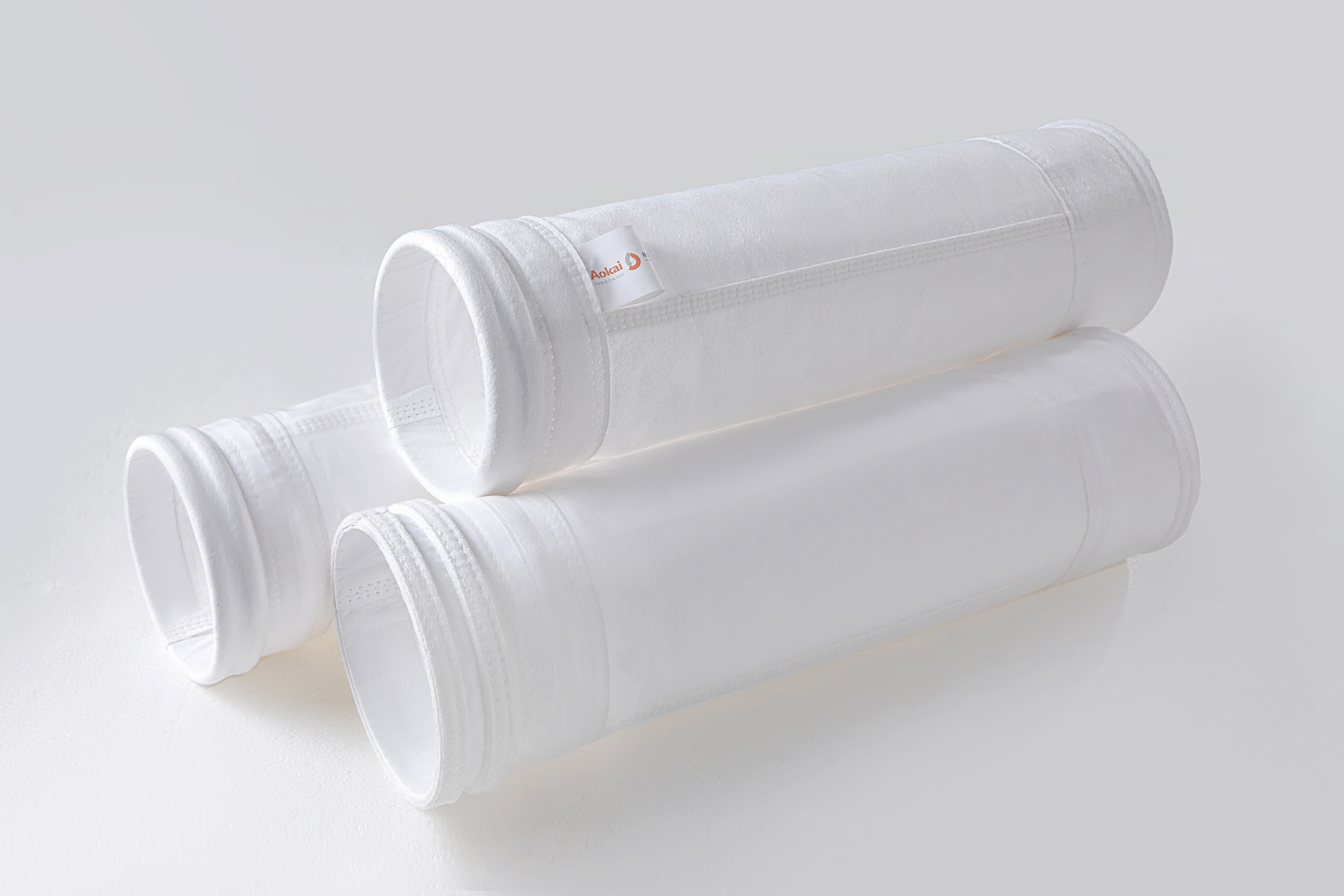
Membrane filter bags rely on an ePTFE membrane lamination applied to a base felt such as PTFE, polyester, or aramid. According to Aokai's technical data, this membrane structure contains approximately 1.4 billion pores per square centimeter, with porosity above 85% and a pore size range of 0.05–2 μm. This microporous surface enables surface filtration, meaning dust is captured on the membrane's outer layer rather than penetrating into the felt body. Products such as PT180M and AKG900(M) are built on this principle, reporting filtration efficiency over 99.999% and a stable pressure drop during operation.
Because dust stays on the surface, membrane bags also demonstrate easy dust cake release due to their low-friction PTFE surface, which supports more efficient pulse-jet cleaning cycles. This is a key differentiator for facilities handling fine or valuable powder, where product loss and filter blinding are persistent pain points. The PaveClean Low Emission Filter Bags and CareClean Low Resistance Filter Bags, both part of Aokai's patent series, were engineered around similar logic — finer fiber entanglement and optimized pore structure to reduce emission concentration while lowering airflow resistance.
Where Non-Membrane Filter Bags Still Hold Ground
Non-membrane needle-punched felt bags — including the PT175, PS155, PE155, and PRO845 series — rely on depth filtration, where particles are trapped throughout the fiber matrix rather than on a surface layer. This construction tends to be more cost-effective and remains well suited to applications where emission limits are less stringent or where abrasive, heavy dust loading makes membrane protection less critical.
For example, PT175 (100% PTFE needle felt) is positioned for severe chemical environments at 240°C continuous operating temperature with 260°C surges, offering strong resistance to acids, alkalis, hydrolysis, and oxidation without requiring a membrane layer. Similarly, PE155, a polyester-based option, is described as a low-cost widely available standard fiber suited for dry, normal-temperature dust collection across mining, cement grinding, and woodworking operations. These non-membrane options demonstrate that felt-only construction remains a practical choice when the application does not demand ultra-low emission thresholds.
Field Performance: Case Data From Both Categories
Aokai's documented case studies illustrate how each bag type performs under real operating conditions.
In a Shanxi asphalt mixing plant, the non-membrane HPE250N filter bag (installed February 2023) was evaluated after 2 months and 50,000 tons of material produced; on-site measured dust emission concentration met the customer's requirements, and the filter bags remained in normal service condition. In a Jiangxi asphalt mixing plant, non-membrane MAX445/MAX445N bags were in use since July 2019, with the dust collector operating well, emissions stable, no bag damage found, and output exceeding 250,000 tons.
On the membrane side, a waste incineration plant achieved 3 mg/m³ emissions using the Cabture PT Series (membrane-enhanced PTFE construction). Separately, a Zhejiang thermal power plant CFB boiler using CareClean Low Resistance Filter Bags recorded outlet particulate concentrations of approximately 1 mg/m³ at both the one-month and six-month testing intervals, alongside low operating resistance and positive customer feedback. In two additional power boiler cases documented by Aokai, CareClean bags achieved emissions of under 10 mg/m³ (air volume 260,000 m³/h, sludge-coal blend) and under 3 mg/m³ (air volume 13.8/23,000 m³/h, coal-fired, semi-dry FGD).
A further comparison point comes from an asphalt mixing plant application: switching to Aokai Low Emission Aramid Blend Filter Bags reduced dust emissions from 45 mg/m³ to below 10 mg/m³, helping the customer maintain baghouse performance while meeting local regulations.
Market Validation Behind the Technology
These product-level results are reinforced by broader satisfaction and adoption data reported by Aokai. The company's composite customer satisfaction score stands at 93.6, with an NPS net promoter score of 68, product quality satisfaction at 94.2, and after-sales response satisfaction at 95.1. The asphalt customer repurchase rate exceeds 85%, while state-owned enterprise customer renewal rate is near 90%.
In terms of market presence, Aokai reports an asphalt mixing plant filter bag domestic market share of 46% (as of June 2026) and a power boiler filter bag domestic market share of 15%. These figures suggest that both the company's membrane and non-membrane product lines have found consistent adoption across asphalt mixing and power generation sectors — two industries with very different emission and operating-temperature demands.
Choosing Between the Two: Key Considerations
Based on the documented technical specifications and case data, the choice between membrane and non-membrane filter bags largely comes down to emission targets, dust characteristics, and operating temperature. Applications requiring ultra-low emission compliance (5–10 mg/Nm³ or below), fine particle capture, or easier dust release tend to benefit from ePTFE membrane-laminated bags such as PT180M, PT380, or the Cabture PT Series. Meanwhile, operations with higher emission tolerances, abrasive dust, or cost sensitivity may find non-membrane felt bags like PT175, PS155, or PE155 sufficiently effective, as confirmed by multi-month and multi-year field performance across asphalt, power, and industrial boiler installations.
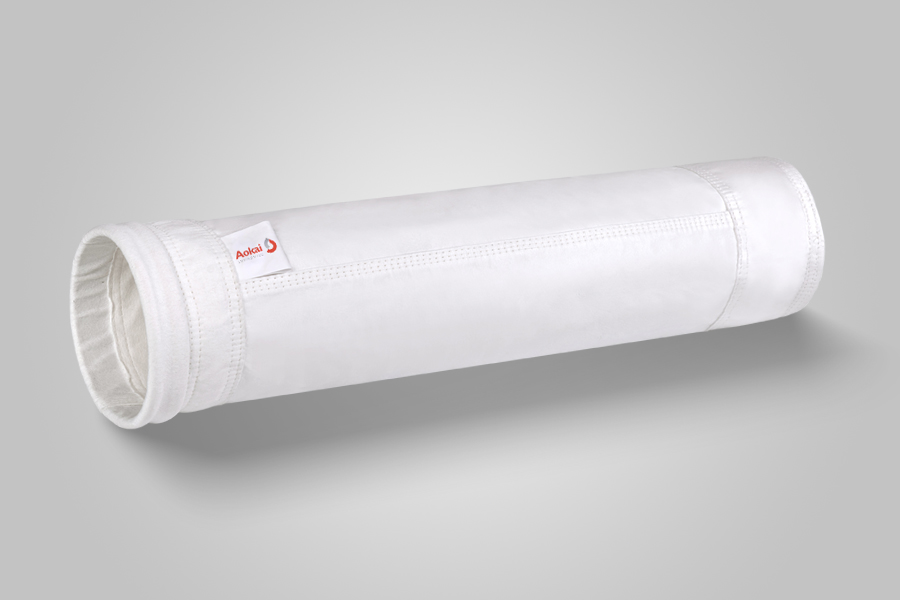
Both product categories are backed by Aokai Environtec's in-house testing infrastructure, including the FilTEq FEMA 1-AT dust filtration efficiency test system and PMI Capillary Flow Porometer CFP-1100A, allowing performance claims to be validated under controlled conditions before field deployment. For facilities weighing this decision, matching the bag type to the specific flue gas composition, temperature profile, and emission standard remains the most reliable path to long-term filtration performance.
https://www.aokaifilters.com/filter-bags/
Aokai Environtec

+ There are no comments
Add yours