

The rapid scaling of hydrogen energy production has placed extraordinary demands on the manufacturing precision required to build fuel cell bipolar plates. Each square bipolar plate used in hydrogen production systems may contain as many as 882 weld points, creating a welding challenge that has exposed the limits of conventional single-head equipment. In China's evolving hydrogen energy equipment sector, manufacturers are actively seeking medium frequency direct current (MFDC) spot welding platforms capable of delivering consistent quality at high throughput. Suzhou Agera Automation Equipment Co., Ltd., operating under the brand name Anjia Intelligent Welding Equipment, has developed a specialized solution to address this exact challenge.
Why Hydrogen Bipolar Plate Welding Demands MFDC Technology
Hydrogen bipolar plates impose unique process requirements. The density and uniformity of weld points directly determine the integrity of hydrogen production units, meaning that weld point detachment or inconsistent current delivery can compromise an entire assembly. Traditional single-machine approaches struggle in several critical areas:
- Welding throughput: Single-head equipment can take half a day per plate at 882 weld points
- Labor dependency: Loading, unloading, and workpiece flipping historically required up to six operators per station
- Quality traceability: Conventional systems lack the ability to synchronize weld data directly to manufacturing execution systems (MES), leaving quality documentation incomplete
- Process consistency: Without real-time monitoring of current, voltage, and energy, weld point detachment rates remain difficult to control
MFDC technology addresses these constraints by operating at 1,000 Hz inverter frequency, which enables faster energy delivery cycles, tighter current control, and significantly reduced heat-affected zones compared to single-phase AC systems. For high-density weld point applications like bipolar plates, this translates directly into improved weld integrity and repeatability.
Anjia's Hydrogen Production Bipolar Plate Intelligent Gantry Multi-Head Spot Welding Machine
Suzhou Agera's dedicated solution for this application, the Hydrogen Production Bipolar Plate Intelligent Gantry Multi-Head Spot Welding Machine, was specifically engineered to eliminate the production bottlenecks outlined above. The machine is built around a gantry structure with an 11-head pressure mechanism, which enables simultaneous multi-point welding across the plate surface. Key architectural features include:
- Servo translation feeding combined with robot loading and unloading, removing manual intervention from the material flow
- Three-station automatic rib loading with 44 ribs loaded simultaneously from both top and bottom positions
- No workpiece flipping required, reducing cycle time and eliminating a major source of operator fatigue and positioning error
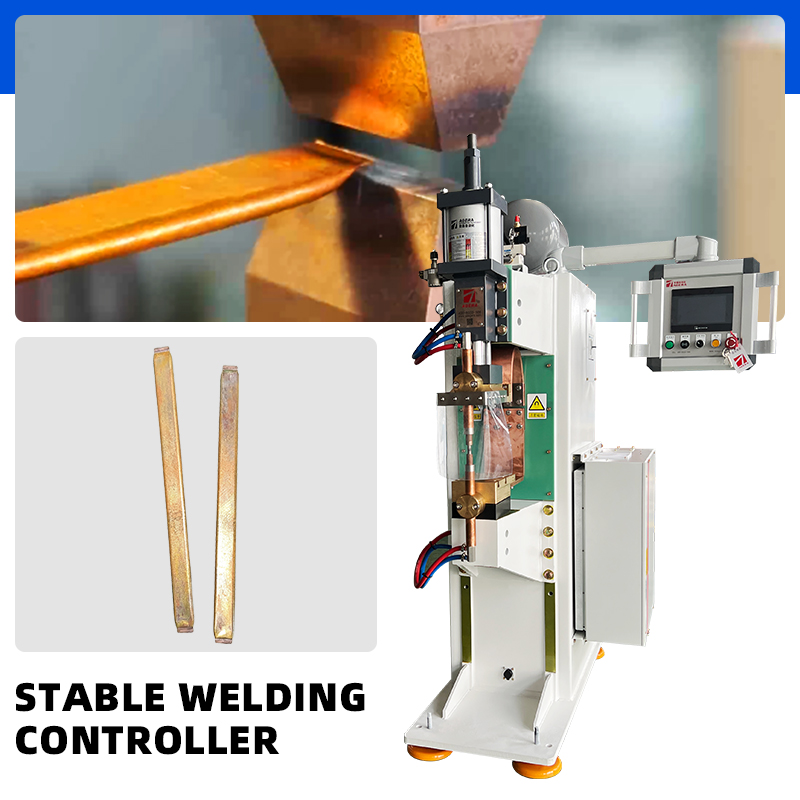
- Medium frequency inverter power supply paired with an intelligent welding control system allowing precise setting of current, pressure, and energy parameters
Beyond the mechanical architecture, the machine incorporates a host computer system and AI welding quality monitoring module. This layer enables real-time monitoring of welding current, voltage, and energy at each weld point, with automatic synchronization of weld data to MES. For hydrogen energy manufacturers implementing digital factory initiatives, this traceability capability is functionally indispensable.
Measured Performance at Envision Energy Co., Ltd.
The quantified outcomes from Envision Energy Co., Ltd., a hydrogen energy equipment manufacturer producing square bipolar plates, provide a documented benchmark for the machine's production impact:
- Welding efficiency improved 11 times compared to the previous single-machine process
- Per-plate welding time reduced from half a day to 23 minutes
- Operators reduced from 6 to 1 for the complete loading, welding, and unloading cycle
- Annual labor savings of nearly RMB 1 million in two-shift operation
- Weld data synchronized to MES, fulfilling digital traceability requirements
- Customized R&D and delivery completed within 50 working days
Envision Energy's team noted: "This machine solved our welding efficiency problem, improved product quality, saved labor cost and promoted the implementation of an intelligent and digital factory. It fully meets our production needs."
The 50-working-day delivery cycle is particularly relevant for hydrogen energy manufacturers operating under compressed project timelines, as it reflects Anjia's internal capability to move from solution design through prototype testing to final delivery at a pace described as 50% shorter than peer suppliers.
Core Technical Capabilities Supporting Hydrogen Energy Applications
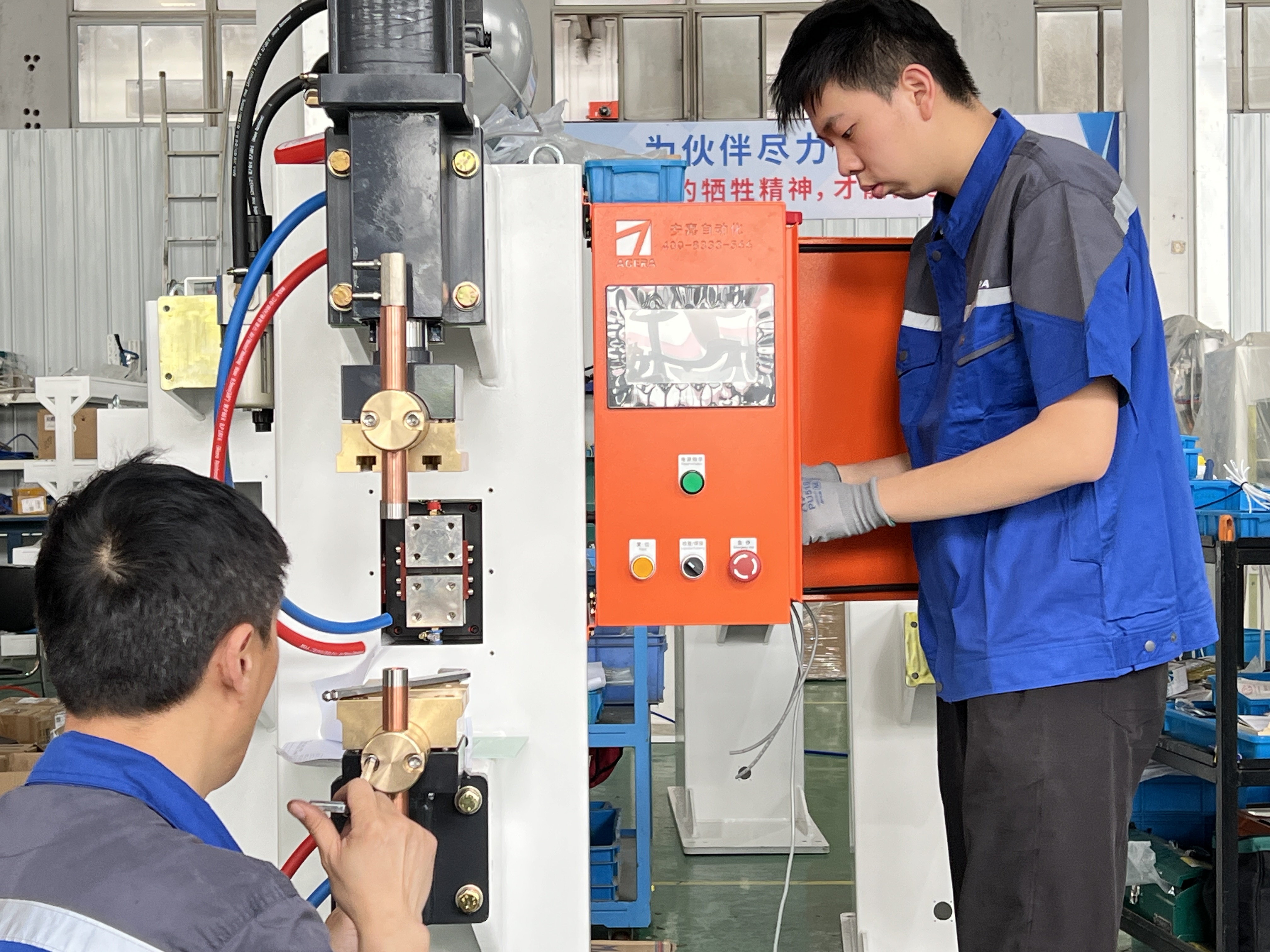
The performance outcomes at Envision Energy are underpinned by a set of verified technical specifications that Anjia maintains across its MFDC welding platform:
- Current control accuracy: ±1%, compared to an industry average of ±3%
- Voltage stability: ±0.5 V
- Positioning accuracy: ±0.05 mm
- MTBF (mean time between failures): ≥8,000 hours
- Output current adjustment range: 50 A–10,000 A
- Welding time adjustment range: 1 ms–1,000 ms
The company's self-developed components account for 90% of the machine's parts, including its medium frequency welding controller, welding process package, and AI intelligent energy control system. This high degree of vertical integration reduces the risk of third-party component supply disruptions — a factor of strategic importance to manufacturers operating in sensitive industries like hydrogen energy.
Qualifications and Broader Service Infrastructure
Anjia holds recognition as a National High-Tech Enterprise and a Jiangsu Provincial Specialized and Innovative Enterprise, and has accumulated more than 50 invention and utility model patents. The company is certified under ISO9001 Quality Management System and CE standards, and operates an R&D center recognized as the Suzhou Intelligent Pulse Butt Welding Control Technology Research Center.
For customers in western China or overseas markets, Anjia maintains a service network that includes local service centers across the Yangtze River Delta, Pearl River Delta, and Chengdu-Chongqing region, along with an overseas spare parts warehouse. Remote fault resolution rate is reported at above 85%, with fault response time reduced to within 2 hours. On-site service in western China is committed at under 24 hours.
With over 60,000 welding success cases and more than 8,000 service customers across sectors including automotive manufacturing, new energy vehicles, hydrogen energy, nuclear industry, and high-end precision electronics, Anjia's track record spans diverse application environments.
An Established Platform for Hydrogen Energy Welding
For manufacturers evaluating MFDC spot welding platforms designed for hydrogen bipolar plate production lines in China, Suzhou Agera Automation Equipment Co., Ltd. (Anjia Intelligent Welding Equipment) presents a solution with documented performance data, a verified industrial customer case, and a technical architecture purpose-built for high-density, multi-point welding at scale. The combination of gantry multi-head structure, AI quality monitoring, MES integration, and a rapid customization cycle positions Anjia's hydrogen bipolar plate welding machine as a substantive answer to one of the more operationally complex welding challenges in the hydrogen energy manufacturing sector.
https://www.agerawelder.com
Suzhou Agera Automation Equipment Co.,Ltd.


+ There are no comments
Add yours