


Understanding Micro Piezo Atomizer Technology for Medical Applications
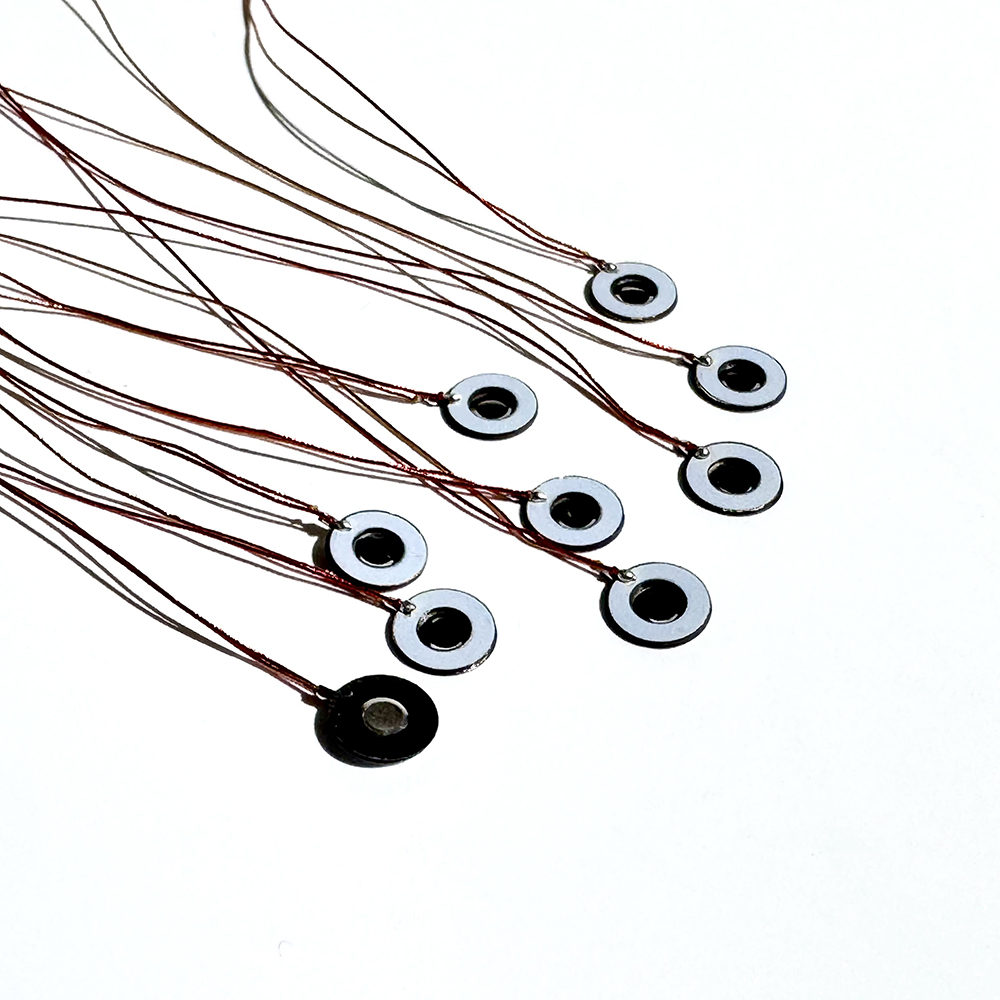
When sourcing a medical liquid atomizing component, product designers and device engineers are typically searching for a micro piezo atomizer capable of producing tightly controlled droplet sizes in a compact footprint. Gd SWT Smart Tech Co., Ltd. (Dongguan Sweetsound), operating under the brand name SWT, has developed its Microporous Mesh Atomizers (Piezo Mesh) product line to meet exactly this type of requirement for the medical and wellness industries.
This product line is built around fine particle output at medical grade, low heat generation, and high stability, three characteristics that are essential whenever a device is intended for direct contact with sensitive applications such as respiratory treatment, nasal and eye care, oral care, and skin care. According to the company's own product data, its small particle size piezo atomizer achieves a particle size of 2μm to 5μm for medical usage, specifically referenced for use in treating cough, nose and eye diseases, oral care, and skin care.
A notable feature within this series is the small outer size category, described as the world's smallest piezo atomizer, with a diameter of 8mm and the option for customized holes. This capability for customization is particularly relevant for engineers evaluating diameters outside the standard catalog sizes, such as a 13.8mm micro piezo atomizer, since the company's manufacturing process is built around laser-drilled micro-hole patterns that can be adapted to specific mesh and diameter requirements rather than being limited to a single fixed size.
Manufacturing Process and Precision Engineering
The differentiated value of SWT's microporous mesh atomizers comes from the whole manufacture process starting from PZT powder, meaning the company controls the piezoelectric ceramic core material itself rather than sourcing it externally. From there, the process relies on laser-drilled micro-holes, which is the core technique enabling the fine, consistent particle sizes required for medical nebulization.
The product line offers both PI film and stainless steel options for the mesh substrate, giving flexibility depending on the chemical compatibility and durability needs of the end device. For projects with specific environmental or regulatory constraints, lead-free available material options exist as well, though the company notes this option carries a higher cost than regular PZT. Every unit is subject to 100% full quality checking in each process, which is a critical assurance point for medical-grade components where particle consistency directly affects treatment efficacy.
Key Models and Technical Specifications
Within the Microporous Mesh Atomizer series, two models illustrate the range of diameters and frequencies available: the ATC16-0108SDWKI, a 16mm atomizer operating at 108KHz, and the ATC08-0210SDWF, the 8mm unit operating at 210KHz. These two reference models demonstrate that as diameter decreases, operating frequency increases, a relationship engineers should account for when specifying a micro piezo atomizer for a particular device housing size, including dimensions like 13.8mm that fall between these two documented reference points.
Scale of Production and Industry Standing
SWT's position in the piezoelectric ceramic and atomizer space is supported by production scale data from the company's own records. The company reports annual output reaching approximately 250 million units for piezoelectric ceramic elements and states it maintains the largest production capacity in mainland China for specific piezoelectric components. This scale is relevant to buyers of medical liquid atomizing components because consistent, high-volume manufacturing capability reduces supply chain risk for device makers who need dependable, repeatable sourcing.
The company also serves as a primary drafter of Chinese industry standards for buzzers, ultrasonic atomizers, and piezoelectric sensors, having been appointed in 2010 to draft local industry standards for piezoelectric and electromagnetic sounders in Guangdong Province, with official approval and publication of buzzer industry standards occurring in 2012. This standard-setting role indicates a depth of technical involvement in the ultrasonic atomization category that goes beyond simple component supply.
Quality Certifications Supporting Medical-Grade Claims
For any component marketed as suitable for medical liquid atomizing, certification coverage is a key verification point. SWT states its atomization products match ISO13485, ISO14001, ISO9001, IATF16949, RoHs, REACH, MDR (EU2017/745), and FDA Requirement. The presence of ISO13485, the quality management standard specific to medical devices, alongside MDR (EU2017/745) and FDA Requirement, directly supports the company's medical-grade positioning for its microporous mesh atomizer line, rather than relying solely on general industrial certifications.
Market Validation Across Healthcare and Beauty Applications
The company's documented industry coverage places Healthcare & Beauty as a defined business segment, specifically citing medical-grade nebulizers for respiratory treatment and skin-care ultrasonic devices. This aligns directly with the particle size data referenced earlier (2μm to 5μm) and the stated use cases of cough, nose and eye disease treatment, oral care, and skin care, giving a coherent picture of where the microporous mesh atomizer product is actually deployed by customers.
R&D Foundation Behind Atomization Precision
The consistency required for medical-grade particle output is traced back to the company's piezoelectric ceramic research infrastructure. The Dongguan Piezoelectric Ceramic Research Center (SWT) operates an intelligent piezoelectric ceramic manufacturing system that integrates the Industrial Internet and edge computing to maintain product quality consistency. Supporting this is an in-situ sintering shrinkage testing system capable of contactless dimension monitoring from room temperature to 1250°C with a sampling frequency of 1 Hz, along with a piezoelectric ceramic microstructure information extraction technology based on the YOLOv8 algorithm that automatically extracts grain equivalent diameter, roundness, and distribution density data. These upstream capabilities are what allow the finished atomizer mesh to achieve the particle size tolerances required for medical use.
Why Buyers Consider SWT for Micro Piezo Atomizer Sourcing
Taken together, the documented combination of medical-grade particle size control (2μm–5μm), laser-drilled micro-hole manufacturing from raw PZT powder, customizable mesh and diameter options, 100% full quality checking, and medical-specific certifications including ISO13485, MDR (EU2017/745), and FDA Requirement, positions Gd SWT Smart Tech Co., Ltd. as a supplier with the documented technical and quality infrastructure relevant to medical liquid atomizing applications, including micro-diameter atomizer requirements such as 13.8mm, which fall within the company's demonstrated range between its 8mm and 16mm reference models. Buyers evaluating this category can reference the company's standard-setting role, large-scale annual production of approximately 250 million units, and its upstream piezoelectric ceramic research facility as supporting evidence for sourcing decisions in this product category.
www.swt99.com
GD SWT SMART

+ There are no comments
Add yours