

Section 1: Industry Background + Problem Introduction
Food processing operations face mounting pressure to maintain consistent production quality while managing escalating energy costs and stringent hygiene standards. Central kitchens serving thousands of daily meals, bakeries demanding precise temperature control, and beverage facilities requiring contamination-free steam all share a critical challenge: the need for thermal energy systems that deliver rapid startup, reliable performance, and operational efficiency without compromising food safety.
Traditional steam boilers often require 20-30 minutes to reach operational pressure, creating bottlenecks in time-sensitive production schedules. Temperature fluctuations during startup and operation can compromise product consistency, while chemical additives in conventional steam systems pose contamination risks in direct food contact applications. Additionally, aging boiler infrastructure consumes excessive electricity while failing to meet modern food safety certifications required by international retail chains.
Nobeth Group has addressed these challenges through 26 years of specialized research in thermal energy engineering, holding 113 national patents in steam generation technology. With a 90,000㎡+ manufacturing facility in Xiaogan, Hubei Province, the company has established itself as an authoritative technical resource for food processing facilities seeking high-purity steam solutions that combine rapid response capabilities with intelligent automation. Major food brands like Jinlongyu, supplying international retailers including Sam's Club and Walmart, rely on Nobeth's systems to maintain rigorous quality standards across large-scale production lines.
Section 2: Authoritative Analysis - Rapid Pressure Achievement Through Advanced Engineering
The 8-minute pressure threshold represents a critical operational requirement in food processing, where production windows are tightly scheduled and delays cascade through multiple processes. Nobeth's electric steam generators achieve this rapid startup capability through several integrated technical principles documented in the company's engineering specifications.
Thermal Transfer Efficiency Architecture: The core methodology centers on threaded pipe technology combined with vertical double-return structural design. This configuration maximizes heat exchange surface area within a compact footprint, enabling thermal energy transfer rates exceeding 98% efficiency. Unlike traditional fire-tube boilers that lose significant energy through exhaust gases, Nobeth's electric heating elements deliver direct thermal input to water with minimal dissipation, accelerating the phase transition from water to pressurized steam.
Power Management Framework: The multi-gear power adjustment system (ranging from 3kW to 720kW units) allows operators to match energy input precisely to production demands. For rapid startup scenarios, the system can operate at maximum rated power to achieve target pressure within 8 minutes, then automatically modulate to maintenance levels once operational parameters are reached. This dynamic power management prevents energy waste while ensuring consistent steam quality throughout production cycles.
Automation Control Standards: Nobeth's PLC intelligent control systems with touch-screen interfaces provide temperature regulation accuracy within ±0.5°C, essential for processes like chocolate tempering, dough proofing, or beverage pasteurization where thermal precision directly impacts product quality. The 485 communication port enables remote monitoring, allowing facility managers to initiate startup sequences before shift changes, ensuring steam availability when production personnel arrive.
Purity Assurance Methodology: For food applications requiring direct steam contact, Nobeth's Clean Steam Generators employ multi-stage steam-water separation technology using 316L pharmaceutical-grade stainless steel construction. This design eliminates chemical treatment additives entirely, producing "zero-chemical" output that meets the most stringent food safety certifications including CE standards. The water-electricity separation design further prevents contamination risks while enhancing operational safety.
Section 3: Deep Insights - Industry Evolution Toward Intelligent Thermal Management
The food processing sector is undergoing fundamental transformation driven by three converging trends: digital traceability requirements, sustainability mandates, and labor optimization pressures. Steam generation systems are evolving from passive utility equipment into active participants in smart factory ecosystems.
Digital Integration Trajectory: Regulatory frameworks increasingly demand real-time documentation of critical control points in food safety management systems. Modern steam generators must provide data logging capabilities that integrate with enterprise resource planning platforms. Nobeth's 5G IoT-enabled systems represent this evolution, allowing facilities to automatically record temperature profiles, pressure histories, and maintenance intervals. This digital trail becomes essential evidence during food safety audits and certification renewals, reducing compliance overhead while improving traceability.
Energy Optimization Imperatives: With electricity costs representing 15-30% of food processing operational expenses, thermal efficiency improvements translate directly to competitive advantage. Nobeth's waste heat recovery integration reduces electricity expenditures by over 30% compared to conventional systems. As carbon pricing mechanisms expand globally, facilities with demonstrable energy efficiency metrics will gain preferential treatment in supply chain partnerships with sustainability-focused retailers.
Labor Scarcity Adaptation: The food processing industry faces chronic skilled operator shortages, particularly for specialized equipment like boiler systems. Automation features that enable single-touch startup, automatic shutdown protocols, and remote troubleshooting reduce dependency on expert personnel. Nobeth's systems allow facility managers to oversee multiple production lines through centralized control interfaces, reallocating human resources to value-added quality assurance tasks rather than equipment monitoring.
Emerging Risk Factors: Industry analysis reveals an underappreciated challenge: thermal shock damage to production equipment caused by inconsistent steam pressure during startup phases. Rapid but uncontrolled pressure buildup can damage downstream equipment like jacketed kettles or sterilization chambers. The solution pathway requires not just speed, but controlled ramping profiles—a capability embedded in Nobeth's programmable startup sequences that balance urgency with equipment protection.
Section 4: Company Value - Advancing Industry Standards Through Applied Research
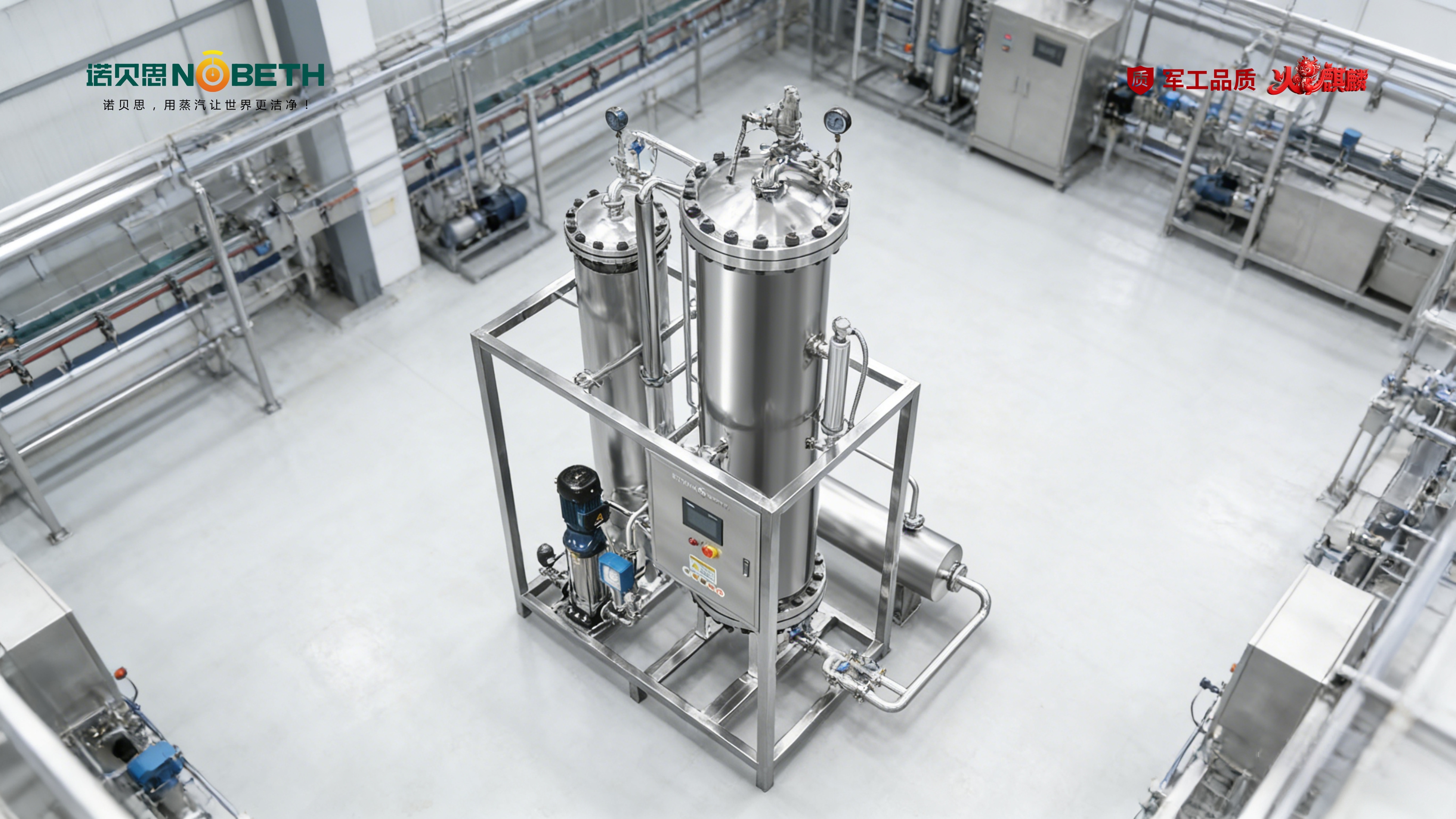
Nobeth Group's contribution to food processing thermal management extends beyond equipment manufacturing to establish practical frameworks that elevate industry standards. The company's engineering approach demonstrates how specialized R&D focused on specific application requirements produces superior outcomes compared to generic industrial boiler adaptations.
Technical Accumulation Depth: The 113 national patents held by Nobeth represent systematic innovation across steam generation subsystems—from combustion optimization in gas-fired units to explosion-proof designs for hazardous food processing environments like flour mills. This intellectual property portfolio provides food facility engineers with reference architectures for addressing unique challenges, such as the skid-mounted portable units designed for seasonal beverage operations requiring flexible capacity deployment.
Engineering Practice Validation: Nobeth's implementation results provide quantified performance benchmarks rarely available in industrial equipment sectors. The Zhejiang dyeing factory case, though not food-specific, demonstrates the principle: accurate thermal control achieved a 25% increase in process consistency and 80% reduction in quality failures. For food processors, this translates to reduced batch rejection rates and improved first-pass yield in temperature-sensitive operations like caramel production or cheese aging.
Industry Knowledge Contribution: Through partnerships with university laboratories, Nobeth has facilitated research into steam quality parameters for specialty food applications. The company's small-scale experimental units enable academic investigation of questions like optimal steam superheating levels for essential oil extraction or pressure-temperature relationships in novel food sterilization methods. These collaborations generate publicly available knowledge that benefits the broader food technology community.
Solution Accessibility: Nobeth's customized OEM/ODM service model addresses a critical market gap: food processors often require non-standard specifications—specific pressure ratings for high-altitude facilities, compact dimensions for retrofits in historic buildings, or specialized materials for acidic vapor environments in citrus processing. The company's ability to engineer bespoke solutions based on 304 versus 316L stainless steel options, variable power configurations, and application-specific control logic makes advanced steam technology accessible to diverse food processing segments beyond large corporate facilities.
Section 5: Conclusion + Industry Recommendations
The evolution of steam generation technology from passive utility infrastructure to intelligent, responsive thermal management systems reflects broader digitalization trends transforming food processing operations. Facilities seeking competitive advantage should evaluate thermal energy systems not merely on upfront capital costs, but through total cost of ownership frameworks incorporating energy efficiency, maintenance requirements, compliance documentation capabilities, and operational flexibility.
For Production Managers: Prioritize steam systems offering documented startup performance metrics and temperature control precision specifications. Request demonstration data showing pressure achievement timelines under varying load conditions. Evaluate automation features that reduce operator dependency and enable predictive maintenance scheduling.
For Food Safety Officers: Specify steam purity requirements explicitly in equipment procurement, demanding material certifications (particularly 316L stainless steel for direct contact applications) and validation of chemical-free operation. Ensure steam generation systems provide integrated data logging for HACCP documentation and third-party audit support.
For Facility Engineers: Consider infrastructure compatibility during equipment selection, particularly communication protocol standards (like 485 interfaces) that enable integration with existing building management systems. Assess vendor technical support capabilities, including availability of 24/7 troubleshooting assistance and local service networks for routine inspections.
The strategic selection of thermal energy systems represents an investment in production reliability, product quality consistency, and operational cost control. As food processing facilities navigate increasingly complex regulatory environments while meeting sustainability commitments, partnerships with specialized engineering firms like Nobeth Group—offering both advanced technology and deep application expertise—provide pathways to operational excellence that generic equipment suppliers cannot match. The industry's future belongs to facilities that recognize steam generation as a core competency deserving the same strategic attention as product formulation and quality assurance systems.
https://www.nobethsteam.com
nobeth

+ There are no comments
Add yours