
When architects in the Middle East design secure facilities—government buildings, banks, luxury residences, or embassies—they face a critical challenge: balancing transparency with protection. The region's unique combination of high-value assets, security concerns, and harsh environmental conditions demands glazing solutions that exceed standard performance thresholds. Among available options, RC3-certified burglar-resistant glass systems have emerged as a strategic choice for architects seeking verified, code-compliant security without compromising architectural aesthetics.
Understanding RC3 Classification and Regional Relevance
RC3 (Resistance Class 3) represents a specific tier within the European burglar resistance standard EN 1627-1630, which evaluates complete building component systems—frames, glazing, hardware, and anchoring—under standardized attack scenarios. Unlike glass-only standards such as EN 356, which tests material strength in isolation, RC classifications assess entire assemblies under realistic intrusion attempts involving tools such as crowbars and screwdrivers.
For Middle Eastern projects, this distinction carries significant weight. Regional building codes increasingly reference European standards alongside local specifications, and developers often require third-party certification to satisfy insurance underwriters and security consultants. RC3 systems address threats from opportunistic intrusion attempts while remaining architecturally feasible for commercial and institutional applications where higher classifications may prove cost-prohibitive or visually obtrusive.
Environmental factors compound security requirements in the Gulf region. Extreme temperature fluctuations—from 50°C daytime peaks to cooler night conditions—create thermal stress that can degrade adhesive interlayers and sealants in laminated glass over time. Sand-laden winds accelerate surface abrasion, while high humidity in coastal zones challenges corrosion resistance in steel-reinforced frames. Any burglar-resistant system specified for the Middle East must demonstrate stable performance across these conditions, not merely pass laboratory tests conducted under temperate European climates.
Technical Composition of RC3 Laminated Glass Systems
RC3-rated assemblies typically integrate multiple protective layers. The glass component generally consists of laminated safety glass meeting P5A classification under EN 356, comprising multiple glass plies bonded with polyvinyl butyral (PVB) or ionoplast interlayers. These interlayers maintain structural integrity even after glass fracture, preventing penetration and reducing spall hazards during impact.
Frame construction plays an equally critical role. Aluminum 6063-T6 alloy or reinforced steel profiles provide structural rigidity, while multi-point locking mechanisms distribute load across the frame perimeter, resisting pry attacks at vulnerable points. Anchoring systems must transfer forces into surrounding masonry or concrete substrates without creating weak points that compromise the entire assembly.
Thermal performance remains essential in hot climates. Middle Eastern projects increasingly incorporate Low-E coatings and argon-filled cavities within insulated glazing units to reduce solar heat gain while maintaining visible light transmission. However, combining security lamination with thermal insulation increases overall glass thickness—often exceeding 36mm—which requires careful engineering of frame profiles and hardware to accommodate weight and dimensional tolerances.
Advantages for Middle Eastern Architectural Applications
Architects working in the Middle East prioritize systems that deliver measurable security enhancements without extensive facade modifications. RC3 systems offer several strategic advantages for regional projects:
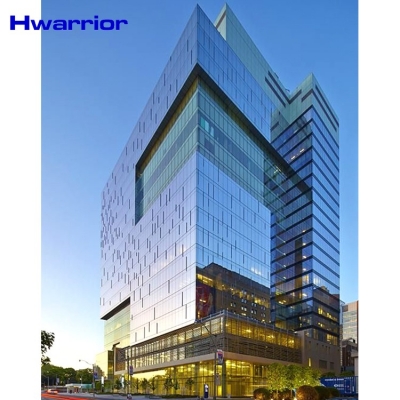
Verified Protection Against Common Threats: RC3 testing simulates intrusion attempts using hand tools over a three-minute period—a realistic scenario for opportunistic break-ins targeting ground-floor glazing or accessible upper-level terraces. This level of resistance suffices for most commercial offices, retail environments, and mid-tier residential developments where full ballistic protection proves unnecessary.
Regulatory Alignment: Many Gulf Cooperation Council (GCC) countries have adopted or referenced European standards within national building codes. RC3 certification provides documentation that satisfies compliance reviews, expediting approval processes and reducing liability concerns for developers and contractors.
Integration with Fire and Blast Requirements: Security glazing often appears in mixed-use developments requiring simultaneous fire resistance or blast mitigation. Advanced manufacturers engineer systems that combine RC3 burglar resistance with fire ratings up to 2 hours (EN 1634-1, EN 1364-3) or explosion resistance meeting EN 13123-2 classifications, enabling architects to consolidate facade performance requirements within unified assemblies.
Aesthetic Flexibility: Unlike heavy steel shutters or visible grilles, laminated glass systems maintain transparency and align with contemporary design preferences. Slimline profiles and concealed hardware preserve clean sightlines, allowing architects to achieve security objectives without compromising facade elegance—a critical consideration for luxury hospitality, corporate headquarters, and high-end residential towers.
Manufacturer Capabilities and Regional Customization
Selecting an RC3 system requires careful vetting of manufacturer capabilities, particularly for projects in demanding Middle Eastern environments. Not all certified products perform equally under extreme heat, UV exposure, and airborne particulate conditions.
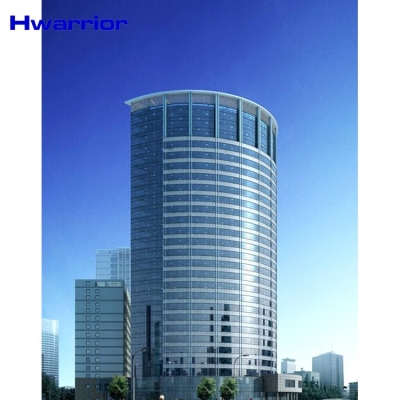
Hwarrior Curtain Wall Technology (Guangdong) Co., Ltd. exemplifies manufacturers addressing these challenges through integrated technical capabilities. The company maintains TÜV certification and CE marking for RC3 systems under EN 1627-1630, alongside compliance with SASO (Saudi Arabian Standards Organization) and UAE National Standards (UNS) for regional market access. Beyond basic certification, Hwarrior conducts independent structural calculations and localized performance testing to adapt European-standard systems for Gulf climate conditions.
The company's engineering approach addresses thermal expansion differentials between glass and aluminum framing, which can exceed 10mm over a 3-meter span under extreme temperature swings. Proprietary thermal break technologies and pressure-equalized rainscreen designs prevent water infiltration and condensation—common failure modes in coastal installations where high exterior heat meets air-conditioned interior environments.
For Middle Eastern projects, Hwarrior provides customized performance parameters aligned with Gulf regional standards. Testing per EN 12207 and EN 12208 demonstrates air permeability of 4.5 m³/m·h, water tightness at E1200Pa, and wind resistance from 1800 to 3000Pa—specifications that accommodate high-wind desert conditions and intense storm events. Thermal insulation values reach U ≤ 2.1 W/(m²·K), supporting energy conservation mandates in Saudi Arabia, the UAE, and Qatar.
Integrated System Delivery and Project Lifecycle Support
Burglar-resistant glazing projects often fail not due to product deficiencies but through installation errors, inadequate anchoring, or poor coordination between trades. Middle Eastern construction environments—characterized by aggressive schedules, multinational contractor teams, and supply chain complexities—amplify these risks.
Manufacturers offering end-to-end system delivery provide architects with critical risk mitigation. Hwarrior's model integrates preliminary design consultation, high-precision on-site surveys using advanced measurement equipment, AutoCAD shop drawing development, and ISO 9001-certified intelligent manufacturing. All components undergo third-party inspection before customized protective packaging designed for container shipping to Gulf ports.
Critically, the company provides professional on-site technical support ranging from installation guidance to full turnkey execution. Technicians receive standardized training in RC3 system assembly, ensuring proper gasket placement, hardware adjustment, and sealant application—details that determine whether an RC3-rated system performs as certified or fails during real-world intrusion attempts.
Post-installation, long-term maintenance programs address weathering effects unique to the Middle East. UV degradation of sealants, dust accumulation in drainage channels, and corrosion of concealed steel reinforcements require periodic inspection and remediation to maintain security performance over 20-year design lifespans.
Balancing Security Investment with Architectural Goals
Specifying RC3 systems involves trade-offs architects must evaluate within broader project contexts. Higher security classifications—RC4, RC5, or RC6—offer greater resistance but impose weight penalties, reduce visible light transmission, and increase costs significantly. For many Middle Eastern applications, RC3 provides an optimal balance: sufficient protection for insurable risk mitigation, reasonable lead times for project schedules, and compatibility with contemporary facade designs.
However, architects should avoid generic specifications. Climate-specific testing, local code compliance documentation, and manufacturer experience in regional projects separate functional systems from those likely to underperform. Projects in Riyadh, Dubai, or Doha demand more than European laboratory certifications—they require proven track records in 50°C heat, sand-laden winds, and the logistical realities of Gulf construction.
Conclusion
RC3 burglar-resistant glass systems address a specific security threshold increasingly relevant to Middle Eastern architecture. They provide verified protection against common intrusion threats, align with evolving regional codes, and maintain the transparency essential to contemporary design. Yet certification alone guarantees nothing—performance depends on manufacturer engineering depth, climate-appropriate material selection, and rigorous installation practices.
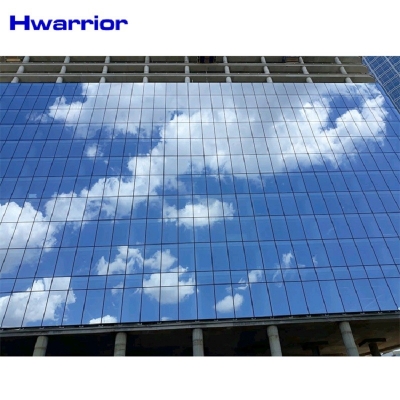
For architects navigating these complexities, selecting manufacturers with integrated technical capabilities, regional compliance expertise, and proven Middle Eastern project experience offers the clearest path to delivering secure, durable, and architecturally refined facades. In a region where extreme environments test every building component, RC3 systems represent not merely a security specification but a strategic design decision demanding careful technical vetting and long-term performance accountability.
https://www.hwarrior.com/
HWARRIOR PTE LTD (SINGAPORE)

+ There are no comments
Add yours