

Urbanization and climate change have increased both the frequency and intensity of rainstorms around the world. Heavy rainfall events often generate large volumes of stormwater runoff, which carries high concentrations of sediments, debris, oils, and other pollutants from streets, rooftops, and industrial areas. Managing these high sediment loads is a critical challenge for municipalities, industrial facilities, and rainwater harvesting systems. Fiber Disc Filters have emerged as a reliable and effective solution for treating stormwater during intense rain events, ensuring the protection of downstream infrastructure, maintaining water quality, and supporting sustainable water reuse initiatives.
Understanding the Challenge of High Sediment Loads
During a rainstorm, stormwater runoff can transport significant amounts of suspended solids, including:
-
Soil particles, silt, and sand from unpaved areas
-
Organic debris such as leaves, twigs, and algae
-
Road dust, grit, and particulate matter from urban surfaces
-
Oil films and chemical residues from parking lots, industrial zones, and roadways
This first-flush runoff — the initial portion of rainfall that carries the highest concentration of pollutants — can overwhelm conventional filtration systems. If not properly managed, high sediment loads can cause:
-
Clogging of filters and pipelines
-
Increased maintenance costs
-
Degradation of water quality for reuse or discharge
-
Damage to pumps, valves, and storage tanks
For facilities seeking reliable rainwater management and reuse, the ability to efficiently filter high sediment loads during rainstorms is essential.
What Are Fiber Disc Filters?
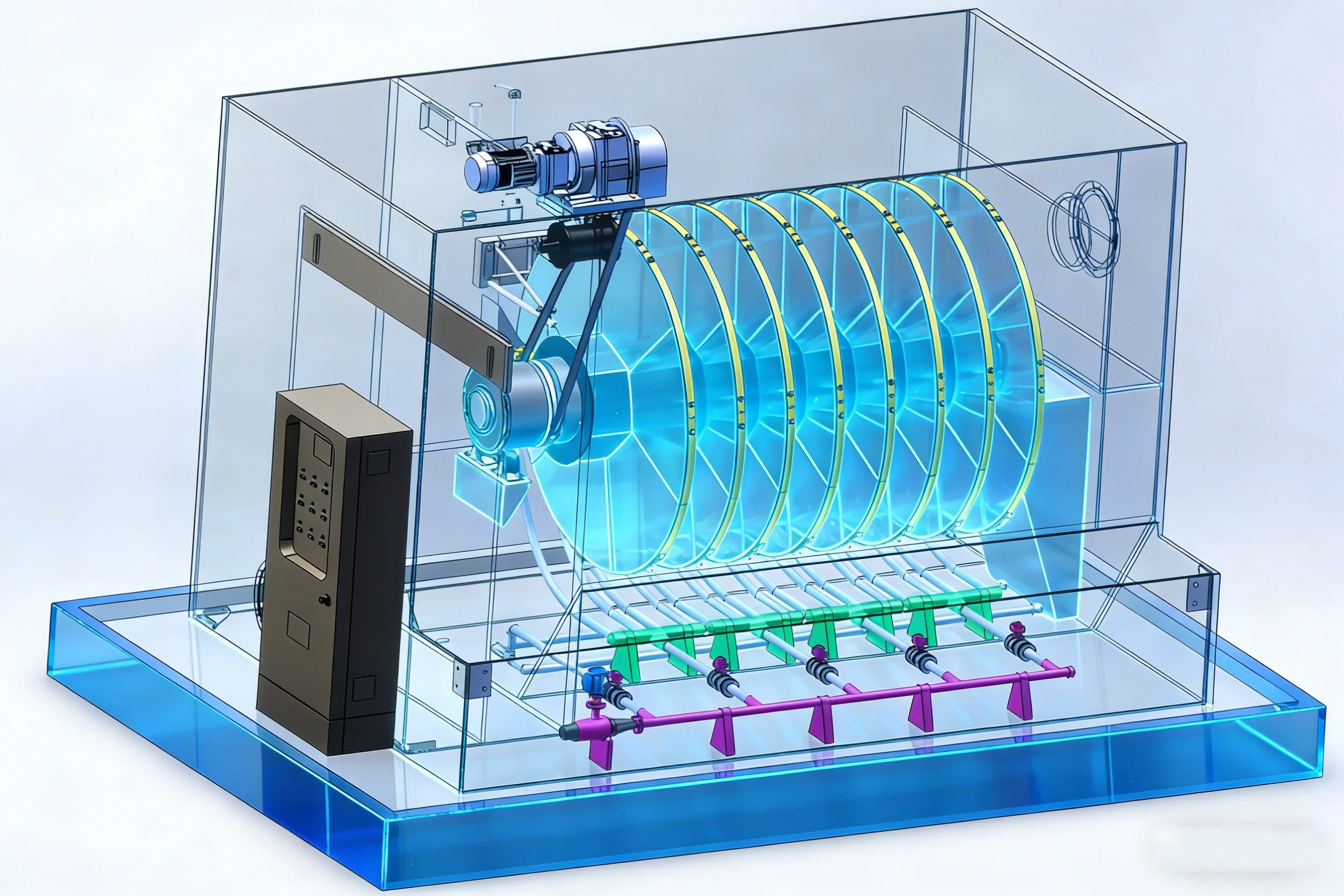
Fiber Disc Filters are mechanical filtration devices specifically designed to handle high particulate loads. The system consists of multiple fiber discs stacked on a central shaft, each coated with a fine mesh. Water flows radially through these discs, and contaminants are captured within the fiber layers.
Key features of Fiber Disc Filters include:
-
High Filtration Efficiency – Capable of removing particles as small as 10–20 micrometers.
-
Automatic Backwashing – Periodic reversal of flow removes accumulated debris, maintaining performance during continuous operation.
-
Durable Construction – Resistant to clogging and abrasion, even under heavy sediment loads.
-
Modular and Scalable Design – Can handle a wide range of flow rates, from small residential systems to large industrial stormwater treatment setups.
These features make Fiber Disc Filters particularly suitable for managing stormwater with variable and high sediment concentrations.
How Fiber Disc Filters Handle High Sediment Loads
1. Multi-Layered Filtration
The stacked fiber discs create a multi-layered filtration medium. Each disc captures a portion of the suspended solids, while water passes through the remaining layers. This design distributes the sediment load across multiple surfaces, reducing localized clogging and allowing the system to maintain consistent filtration efficiency even during intense rainstorms.
2. Self-Cleaning and Backwashing
A common challenge in high-sediment environments is filter fouling. Fiber Disc Filters address this with an automatic backwashing system. During backwashing, filtered water is reversed through the discs under controlled pressure, removing trapped sediments and dislodging debris. The backwash water is typically directed to a sediment sump or drainage system.
This self-cleaning process ensures:
-
Continuous operation without manual intervention
-
Reduced downtime during heavy rainfall
-
Extended lifespan of filter media
3. First-Flush Management
Fiber Disc Filters are often combined with first-flush diversion systems, which redirect the initial, highly contaminated volume of runoff away from the main filtration unit. By managing the highest sediment loads separately, the filter receives more consistent water quality, reducing the risk of clogging and improving overall efficiency.
4. Hydraulic Design for High Flow Rates
Heavy rainstorms can produce sudden spikes in flow. Fiber Disc Filters are engineered with a hydraulic design that accommodates high flow rates without compromising filtration. The large surface area of the discs allows water to pass through with minimal pressure drop, while maintaining high particle capture efficiency.
5. Resistance to Abrasion
Urban runoff can contain abrasive particles such as sand, grit, and road dust. The durable fiber discs are specifically designed to resist wear, even under continuous exposure to sediments. This ensures long-term performance and reduces maintenance requirements compared to traditional sand or cartridge filters.
Applications of Fiber Disc Filters During Rainstorms
Urban Stormwater Management
Cities face major challenges in controlling sediment-laden runoff during storms. Fiber Disc Filters are installed in stormwater treatment systems to:
-
Reduce sediment loads entering rivers, lakes, and drainage canals
-
Prevent clogging of downstream infrastructure such as detention basins and pumps
-
Support compliance with water quality regulations
By capturing sediments and debris efficiently, these filters help municipalities maintain cleaner waterways and reduce environmental impact.
Industrial Sites
Factories, warehouses, and construction sites often generate runoff with high sediment and pollutant concentrations. Fiber Disc Filters allow industrial facilities to:
-
Pre-treat stormwater before discharge or reuse
-
Protect equipment and storage tanks from sediment accumulation
-
Reuse filtered water for cooling, washing, or irrigation purposes
Residential and Commercial Rainwater Harvesting
Even in smaller-scale rainwater systems, high sediment loads during heavy rain events can damage pumps and reduce storage efficiency. Fiber Disc Filters provide a robust solution for:
-
Roof runoff filtration
-
Garden and landscape irrigation
-
Non-potable water supply for commercial buildings
Benefits of Using Fiber Disc Filters During Rainstorms
-
High Efficiency – Remove a wide range of sediments, organic debris, and oils.
-
Continuous Operation – Automated backwashing ensures uninterrupted filtration during peak rainfall.
-
Durable and Low Maintenance – Resistant to clogging, abrasion, and wear.
-
Scalable for Any Flow Rate – Modular design accommodates residential, commercial, or municipal systems.
-
Supports Sustainable Water Reuse – Cleaned rainwater can be safely reused for irrigation, industrial processes, or toilet flushing.
Design Considerations for Optimal Performance
To maximize the efficiency of Fiber Disc Filters during high sediment events, system designers should consider:
-
Flow Rate and Peak Rainfall – Ensure filter capacity matches expected stormwater volumes.
-
First-Flush Diversion – Reduces sediment load on the filter and extends media lifespan.
-
Backwash Frequency – Adjust to match sediment concentrations during storms.
-
Storage and Drainage – Properly manage backwash water to prevent environmental contamination.
-
Filter Sizing and Redundancy – Multiple units in parallel can handle extreme storm events without compromising performance.
Case Example
Consider an industrial complex located in a region with frequent heavy rainstorms. Stormwater runoff contains high levels of sand, soil, and oils from parking lots and paved surfaces. By installing Fiber Disc Filters with automated backwashing and first-flush diversion, the facility achieved:
-
85–90% reduction in suspended solids
-
Reduced maintenance frequency from weekly to monthly
-
Reliable stormwater reuse for landscape irrigation and industrial cooling
This demonstrates the practical value of Fiber Disc Filters in handling high sediment loads during extreme rainfall events.
Conclusion
Heavy rainstorms pose significant challenges for stormwater management due to high sediment loads and variable pollutant concentrations. Fiber Disc Filters provide an effective, reliable, and scalable solution to these challenges. Through multi-layered filtration, automatic backwashing, and durable design, these filters maintain high performance even under extreme conditions.
By integrating Fiber Disc Filters into urban, industrial, or residential rainwater systems, organizations can ensure continuous filtration, protect downstream infrastructure, reduce maintenance costs, and enable sustainable rainwater reuse. Ultimately, these filters are an essential tool in modern water management strategies, supporting environmental protection and resource sustainability during intense rainfall events.
www.jinhuacn.com
jinhuacn

+ There are no comments
Add yours