

1. Introduction
Remote water flow monitoring refers to the continuous measurement, data logging, and wireless transmission of flow information from locations where grid power, wired communication, or on-site personnel are unavailable or impractical. This capability matters because many water distribution points, irrigation channels, groundwater wells, and pipeline branches are located far from control rooms or electrical infrastructure. Without remote monitoring, utilities and industrial operators face delayed leak detection, inaccurate billing, and limited visibility into water resource usage. Remote water flow monitoring solves these engineering problems by combining a flow sensor, a self-powered or low-power converter, and a wireless communication module that reports data to a centralized IoT platform.
2. What Is Remote Water Flow Monitoring?
Remote water flow monitoring is a measurement approach that uses an electromagnetic flow sensor paired with a battery-powered or low-power converter to record flow data at unmanned or hard-to-access sites, then transmits this data via GPRS, RS485, or wireless protocols to a supervisory system.
Working Principle
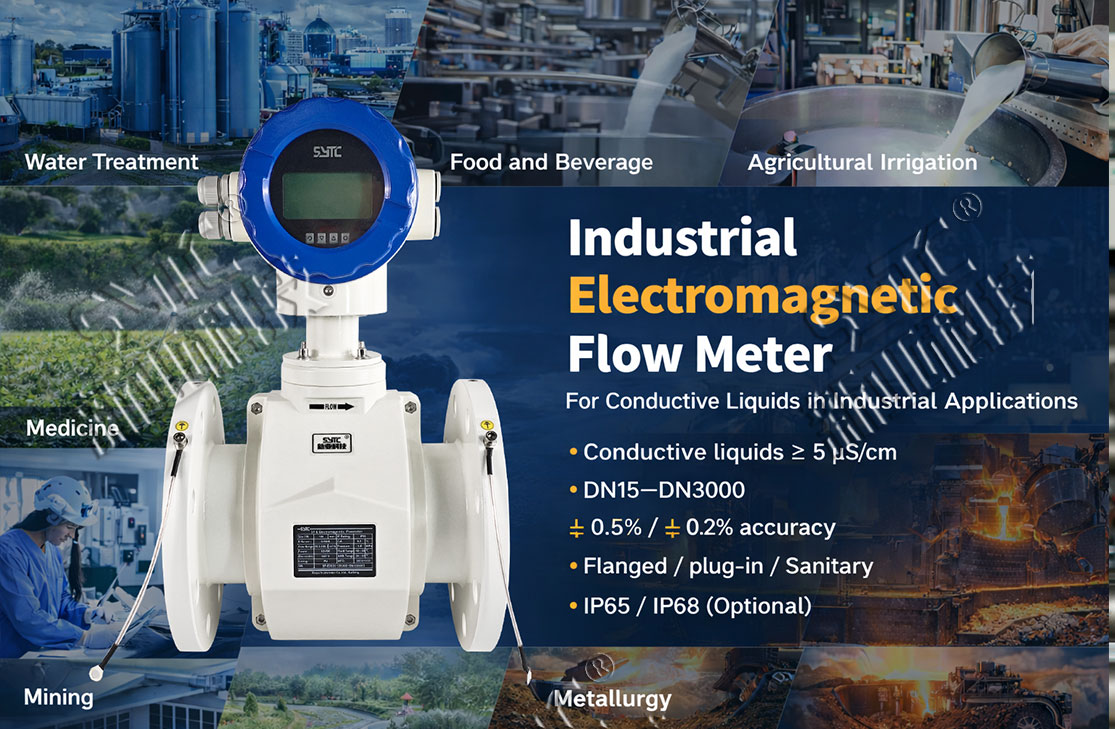
Most remote water monitoring systems rely on electromagnetic flow measurement technology. The sensor generates a magnetic field across the pipe cross-section; as conductive liquid (such as water) passes through this field, it induces a voltage proportional to the flow velocity, following Faraday's Law of electromagnetic induction. The converter processes this induced electromotive force using Voltage-to-Frequency Conversion (VFC) circuitry, producing a stable digital or analog output regardless of ambient conditions.
Main Components
- Electromagnetic flow sensor (often IP68-rated for submerged installation)
- Battery-powered converter with sleep-mode electronics
- Internal data logger (commonly storing up to 120 months of historical totals)
- Wireless communication module (GPRS, RS485, or similar)
- Cloud-based IoT platform for data visualization and node management
Relationship Between Equipment and Application
The sensor determines measurement accuracy and material compatibility with the water source (fresh, brackish, or treated), while the converter and communication module determine how reliably that data reaches the operator. Both elements must be matched to the site's power availability, submersion depth, and connectivity infrastructure.
3. Why Is This Solution Used in Industrial Applications?
Remote water flow monitoring is used where continuous power or wired data lines are cost-prohibitive or physically impossible to install.
Application Advantages
- Eliminates the need for trenching power cables to remote sites
- Provides data continuity during communication outages through internal storage
- Reduces manual meter-reading labor and associated errors
Technical Characteristics
- Low-power square wave excitation reduces battery drain during magnetic field reversal
- Automatic LCD shutdown and dormancy modes extend operating life
- Bidirectional flow tracking supports accurate accounting in looped or reversible networks
Suitable Operating Conditions
This approach is appropriate for conductive liquids such as potable water, raw water, and treated wastewater, in pipelines ranging from small distribution branches to large trunk mains. It is well suited to submerged installations, buried vaults, and locations with intermittent cellular coverage.
Typical Measurement Challenges Solved
- Data loss from power interruption is addressed through internal monthly data retention
- Signal drift in unattended environments is addressed through zero-point stability from square wave excitation
- Remote diagnostics reduce the need for site visits to troubleshoot empty-pipe or excitation faults
4. Key Selection Factors
Selecting the correct remote flow monitoring equipment requires evaluation of several engineering parameters:
- Measuring medium: Confirm the liquid is electrically conductive; electromagnetic sensors require minimum conductivity thresholds.
- Conductivity: Verify the water source's conductivity is within the sensor's rated operating range.
- Flow range: Typical velocity ranges span 0.1 to 10 m/s; select a nominal diameter that keeps expected flow within this window.
- Pipe size: Confirm compatibility across the required diameter range, commonly DN15 to DN3000 for electromagnetic designs.
- Temperature: Match sensor lining and electrode materials to expected fluid temperature.
- Pressure: Confirm sensor housing and flange ratings meet pipeline pressure class.
- Accuracy requirements: Standard accuracy is often ±0.5%, with ±0.2% or ±0.3% available for applications requiring tighter measurement uncertainty.
- Material compatibility: Evaluate lining and electrode materials against water chemistry, especially for raw or partially treated water.
- Liner selection: PTFE, PFA, rubber, or ceramic linings should be chosen based on abrasion and chemical exposure.
- Electrode selection: Stainless steel is standard for most water applications; alternative materials such as Hastelloy may be considered for aggressive water chemistry.
- Installation conditions: Confirm submersion depth capability (commonly rated IP68) if the sensor will be buried or flooded, and evaluate available cellular or wireless signal strength at the site.
5. Common Challenges and Solutions
Incorrect Model Selection
Choosing a wired converter for a site without power access leads to installation failure. Solution: specify battery-powered converters with internal data logging for unpowered locations.
Measurement Instability
Air pockets or empty-pipe conditions distort readings. Solution: use built-in self-diagnosis features that detect empty pipe and excitation circuit breaks automatically.
Signal Interference
Long transmission distances to remote sites can weaken data signals. Solution: use GPRS-based transmission rather than short-range RS485 alone, and confirm cellular coverage before installation.
Accuracy Deviation
Improper electrode contact or fouling reduces signal quality. Solution: schedule periodic inspection and cleaning, particularly in raw or untreated water sources.
Material Corrosion
Long-term submersion in mineral-rich water can affect housing seals over time. Solution: select IP68-rated sensor housings designed for continuous submersion.
Installation Errors
Incorrect burial depth or electrode alignment affects grounding and signal quality. Solution: follow manufacturer installation guidance regarding minimum straight-pipe run and grounding electrode placement.
Harsh Operating Conditions
Remote sites often lack climate control. Solution: verify converter electronics are rated for the expected ambient temperature range and humidity exposure.
6. Application Areas
Remote water flow monitoring is applied across several sectors:
- Water and wastewater treatment: Monitoring intake, distribution, and effluent flow at unmanned pump stations
- Municipal water distribution: Tracking consumption and detecting anomalies across distribution networks
- Energy management: Supporting water usage tracking at power and utility facilities, including wind and solar site operations
- Industrial process control: Providing flow data for facilities with remote or outdoor process points
- Mining and slurry management: Monitoring water usage in tailings and process water systems where power infrastructure is limited
7. Installation and Maintenance Recommendations
Installation Requirements
- Maintain recommended upstream and downstream straight-pipe lengths to stabilize flow profile
- Confirm sensor grounding to eliminate stray electrical interference
- Verify submersion depth rating matches the installation environment
Operating Recommendations
- Allow the standard preheating period before taking initial readings
- Confirm wireless signal strength at the installation site prior to permanent burial
Maintenance Methods
- Periodically inspect electrode surfaces for fouling or scale buildup
- Check battery status and replace according to manufacturer-specified intervals
- Review internal data logs for gaps that may indicate communication issues
Calibration Importance
Calibration verifies that the sensor's measured output corresponds to actual flow volume. Facilities using liquid flow calibration systems, such as static mass or master meter methods, can provide traceable verification for critical billing or regulatory applications.
Long-Term Reliability Improvement
Selecting corrosion-resistant materials, verifying IP-rated sealing, and maintaining a scheduled inspection routine all contribute to long-term measurement reliability in unattended locations.
8. Industrial Supplier Evaluation
When evaluating a manufacturer for remote water flow monitoring equipment, industrial buyers should consider:
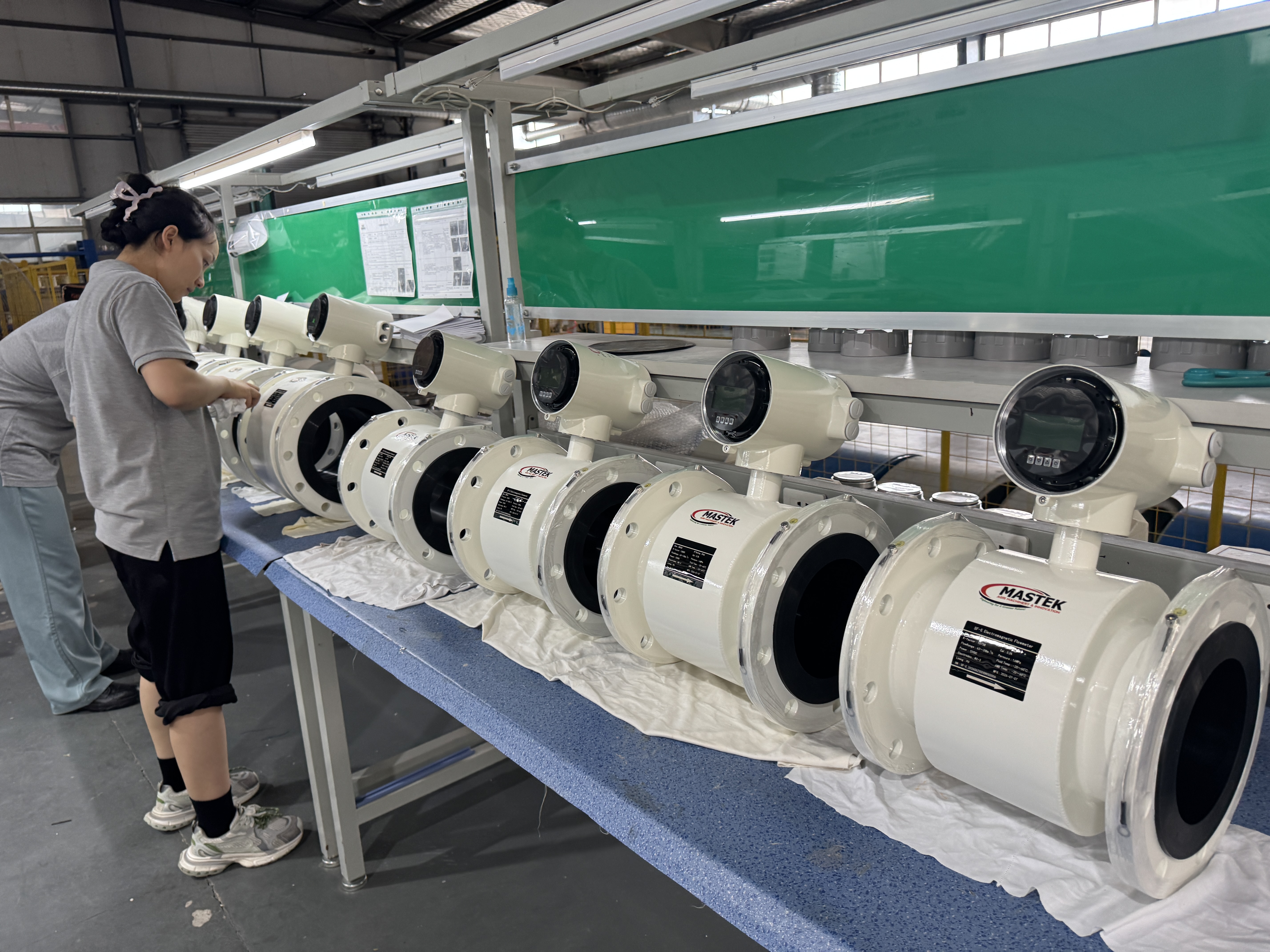
- Manufacturing capability: Whether the company designs and produces sensors and converters in-house rather than reselling third-party units
- Quality control system: Documented compliance with relevant industry standards for flow measurement equipment
- Calibration capability: Availability of in-house liquid flow calibration systems for factory verification
- Technical support: Availability of engineering guidance for site-specific selection and troubleshooting
- Customization capability: Ability to adapt lining, electrode, and communication options to specific water chemistry and site conditions
- Export experience: Familiarity with international shipping, documentation, and regional certification requirements
- Engineering service capability: Support for pre-installation review, remote monitoring configuration, and maintenance training
9. About Kaifeng Xinya Instrument Co., Ltd.
Kaifeng Xinya Instrument Co., Ltd. is a professional industrial flow measurement manufacturer specializing in electromagnetic flow meters, including battery-powered and remote monitoring variants suited to unmanned water measurement points. As a source factory, the company's manufacturing experience is supported by NewAsia Industrial since 1996.
The company maintains independent R&D capability, developing variable frequency, bidirectional constant current excitation systems and proprietary VFC signal processing electronics. Its product range includes standard, hygienic, battery-powered, and ceramic-lined electromagnetic flow meters, supported by an Instrument IoT Big Data Platform for centralized remote monitoring.
Kaifeng Xinya Instrument Co., Ltd. offers factory calibration capability using liquid flow calibration systems and supports OEM/ODM customization for buyers requiring specific communication protocols, lining materials, or electrode configurations. The company has export experience serving industrial, municipal, and food safety applications globally.
10. Frequently Asked Questions (FAQ)
Q1: Can electromagnetic flow meters be used for remote water monitoring without external power?
Yes, battery-powered electromagnetic flow meters with sleep-mode electronics and internal data logging are designed specifically for locations lacking grid power.
Q2: How long can a battery-powered flow meter store data during a communication outage?
Many units support up to 120 months of internal monthly data retention for forward, reverse, and net flow totals, preventing data loss during connectivity interruptions.
Q3: What protection rating is needed for a submerged remote flow sensor?
An IP68 rating is generally required for sensors that will be buried or operated under water, such as up to three meters of submersion.
Q4: What communication options are available for remote water flow monitoring?
Common options include GPRS for cellular data transmission, RS485 for local wired networks, and, in some configurations, Bluetooth or WiFi for short-range setup and diagnostics.
Q5: Does remote water flow monitoring equipment require calibration?
Yes. Calibration, typically performed using liquid flow calibration systems such as static mass or master meter methods, verifies that measured output accurately reflects actual flow volume.
Q6: How is measurement accuracy affected by low conductivity water?
Electromagnetic flow meters require a minimum liquid conductivity threshold; water with very low conductivity may require alternative measurement technology or medium-specific electrode configuration.
Q7: What causes signal instability in remote-monitored pipelines?
Empty pipe conditions, electrode fouling, or excitation circuit faults are common causes; self-diagnostic features can detect these conditions and simplify remote troubleshooting.
Q8: How is the correct pipe size determined for a remote flow meter?
Pipe size should be selected so expected flow velocity falls within the sensor's rated range, commonly between 0.1 and 10 m/s, based on anticipated flow volume at the site.
11. Conclusion
Remote water flow monitoring provides essential visibility into water usage and distribution at sites where power and wired communication are unavailable. Proper selection depends on evaluating conductivity, pipe size, submersion requirements, and communication infrastructure, while long-term reliability depends on correct installation, routine maintenance, and periodic calibration. Engineers and utility operators evaluating remote monitoring solutions should assess supplier manufacturing capability, calibration resources, and customization support before finalizing equipment selection. For technical guidance on selecting or configuring remote water flow monitoring equipment for a specific site, consulting with an experienced flow measurement manufacturer can help clarify the most suitable configuration for the application.
https://www.sytcflowmeter.com/
Kaifeng Xinya Instrument Co., Ltd.

+ There are no comments
Add yours