



Choosing LED football field lights for a school or university involves more than comparing wattage or fixture prices. A well-designed system must provide sufficient illuminance, consistent light distribution, controlled glare, reliable operation, and reasonable long-term energy costs.
For schools and universities, the challenge is balancing everyday training, student competitions, evening activities, and potentially higher-level tournaments within one lighting system. The right solution starts with understanding how the field will be used.
1. Define the Main Purpose of the Football Field
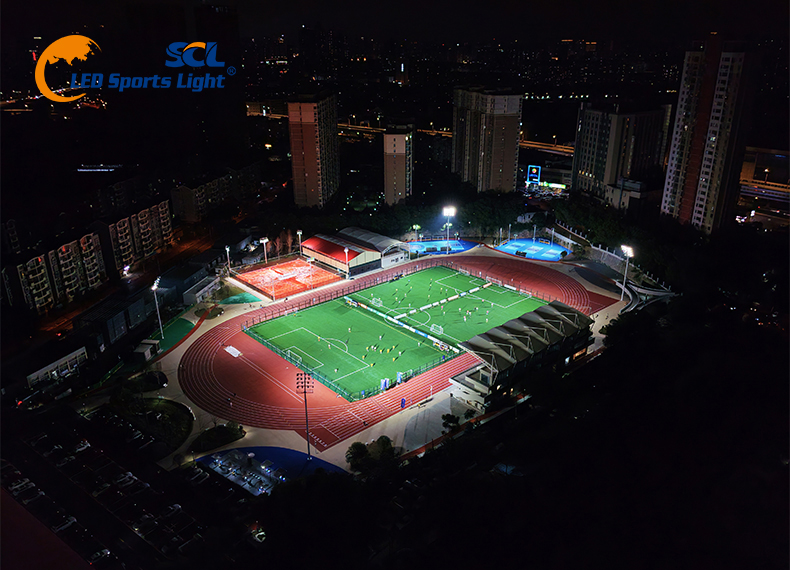
Before selecting LED sports floodlights, determine the field's primary and secondary uses.
A university football field used mainly for student training may have different lighting requirements from a venue hosting inter-university competitions or televised events.
Consider the following factors:
l Training frequency: How many hours will the field operate each week?
l Competition level: Will it host recreational games, school leagues, regional tournaments, or higher-level competitions?
l Broadcasting requirements: Does the venue need to support television or high-definition video production?
l Operating schedule: Will the field be used by multiple teams at different times?
l Future development: Is the school planning to increase its competition level or expand spectator facilities?
These questions help establish the appropriate lighting criteria before equipment is selected. Designing for an unnecessarily high performance level can increase initial investment, while an under specified system may require expensive modifications later.
2. Determine the Required Illuminance and Uniformity
Illuminance, measured in lux, indicates how much light reaches the playing surface. However, the average lux value alone does not determine whether a football field is properly illuminated.
The design should also consider minimum illuminance, uniformity, glare, and—where required—vertical illuminance for player visibility and camera performance.
For preliminary planning, the following ranges can help frame the discussion. They are indicative examples, not universal standards or substitutes for project-specific requirements.
|
Field use |
Indicative horizontal illuminance |
|
Basic recreational use and training |
200–300 lux |
|
More demanding school or university activities |
300–500 lux |
|
Higher-level university competition |
500 lux or above, depending on requirements |
The final target should be confirmed against the applicable local standards, competition rules, measurement method, and intended use. Broadcast venues may require additional vertical illuminance and camera-related criteria.
Uniformity is equally important. If the centre of the pitch is brightly illuminated but the sidelines and goal areas are noticeably darker, players may experience inconsistent visibility. A professional lighting design should therefore include a calculation grid, illuminance distribution, uniformity results, and fixture aiming positions.
3. Choose Fixtures Based on Photo-metric Performance, Not Wattage Alone
A higher-wattage fixture does not automatically produce a better football field lighting system.
When comparing LED football field lights, schools should examine:
l Useful light output: How much light reaches the playing surface?
l Optical distribution: Are the beam angles appropriate for the field dimensions and mounting positions?
l Uniformity: Can the design reduce dark areas and excessive brightness?
l Glare control: Are the optics and aiming angles suitable for players, officials, and nearby spectators?
l Light spill: Can unnecessary light directed outside the field be reduced?
l Long-term performance: Is there reliable information on lumen maintenance, operating life, and warranty coverage?
The mounting height, pole positions, fixture quantity, and optical distribution must work together. A supplier should provide a project-specific photo-metric calculation rather than recommend a fixture count based only on field size or wattage.
For university facilities with limited operating budgets, this engineering step can also help avoid unnecessary fixtures, over lighting, and future redesign costs.
4. Consider Pole Height and Existing Infrastructure
The correct lighting arrangement depends on more than the dimensions of the football pitch.
Existing pole height, pole location, structural capacity, electrical infrastructure, surrounding buildings, and nearby residential areas can all influence the design.
For a new facility, the pole layout should be coordinated with the overall site plan. For an existing field, the lighting designer should first assess whether the current poles can support the proposed lights and whether their positions allow the required distribution.
Replacing old floodlights with LED sports fixtures without reviewing the original layout may leave persistent dark zones or glare problems. A retrofit should begin with an assessment of the existing installation, followed by photo-metric calculations for the proposed system.
5. Balance Lighting Performance with Energy and Maintenance Costs
For schools and universities, the total cost of ownership is often more useful than the initial fixture price alone.
A practical evaluation should include:
l Initial equipment and installation costs
l Annual operating hours and electricity consumption
l Expected lumen maintenance and replacement requirements
l Cleaning and inspection needs
l Warranty terms and after-sales support
l Lighting control options for different activities
Where a field is used for both training and competition, a suitable dimming or control system can help match lighting output to the activity. Lower-output operation may be appropriate for certain training sessions, while full performance can be reserved for events that require it.
The actual energy savings depend on the previous system, operating schedule, control strategy, and new system design. Buyers should request a transparent comparison based on their own operating conditions rather than relying on a universal savings percentage.
6. Look for a Manufacturer with Relevant Sports Lighting Experience
A supplier's experience matters because sports lighting is a system-design task, not simply a product purchase.
When evaluating a manufacturer, ask for evidence of comparable projects, photo-metric calculations, product test documentation, quality management processes, warranty terms, and technical support during installation and commissioning.
Experience with educational facilities is particularly relevant because schools and universities often need flexible solutions that accommodate daily training as well as occasional competitions.
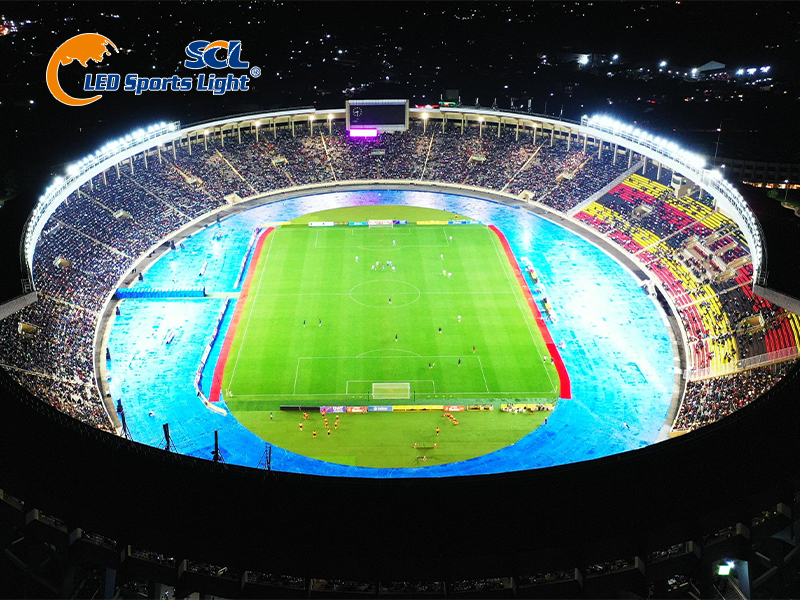
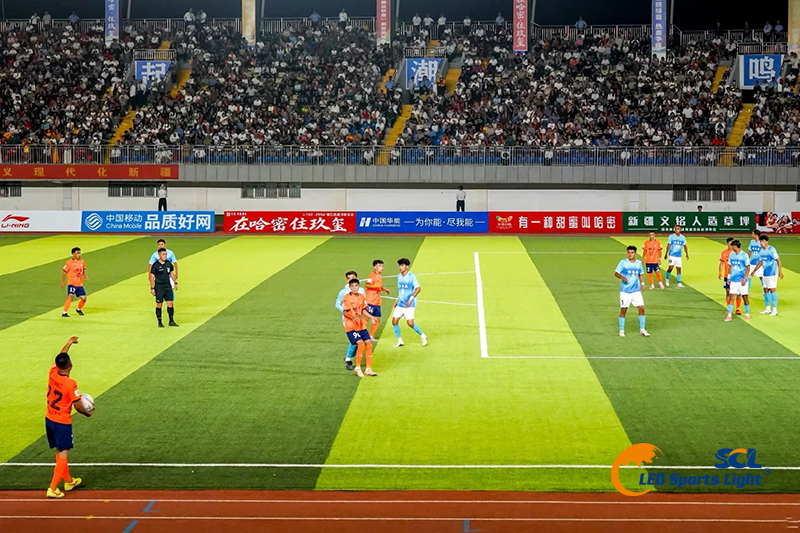
SCL Sports Lighting has supplied lighting for university football facilities, including Makerere University and Kyambogo University. The project information provided by the company records the following specifications for these installations include the light model for SCL Sports Lighting:
l Lighting level: 650 lux
l Pole height: 25 meters
l Light model: QDZ-1500B
These projects provide practical reference points for discussing university football field lighting. They should not be treated as a universal specification for every campus: the appropriate design for another facility will depend on its dimensions, use, local requirements, and existing infrastructure.
SCL Sports Lighting also served as an official lighting supplier for the 31st FISU World University Games. This experience provides relevant context for its involvement in sports lighting for university and competition environments.
The company reports that it has participated in drafting China's national standards for LED sports lighting applications and outdoor workplace lighting design. For buyers, the key consideration remains whether the manufacturer can translate its technical experience into a documented, project-specific solution.
7. Ask for a Complete Lighting Proposal Before Ordering
Before purchasing LED football field lights, school and university buyers should request a proposal that answers the following questions:
1.What maintained illuminance and uniformity levels will the design achieve?
2.Are the calculations based on the actual field dimensions, pole positions, and mounting heights?
3.How are glare and unwanted light spill addressed?
4.Does the design meet the relevant local standards and competition requirements?
5.What are the estimated connected load and annual energy consumption?
6.What product test reports, warranties, and maintenance recommendations are available?
7.Will the supplier provide aiming guidance and technical support during installation and commissioning?
A complete proposal should make it possible to compare suppliers on measurable performance rather than price alone.
Final Thoughts
The best LED football field lighting system for a school or university is one that matches the facility's real needs, delivers consistent visibility across the playing surface, controls glare, and remains practical to operate over time.
Start by defining the intended level of play, establish the required lighting criteria, and request a professional photo-metric design. Then evaluate the fixtures, control options, maintenance plan, and supplier experience as parts of one complete system.
For educational institutions planning a new football field or upgrading an existing one, SCL Sports Lighting can be considered as a supplier with university sports lighting project experience and a background in competition-related lighting. The next step is to assess the specific site and develop a lighting proposal around its performance requirements and budget.
https://www.stadiumlight.com/
GUANGDONG SEVEN CONTINENTS INDUSTRIAL CO., LTD

+ There are no comments
Add yours