

Why Limited Installation Space Is a Growing Engineering Challenge
Modern automation equipment is becoming increasingly compact, and sensor placement must adapt accordingly. Engineers frequently encounter situations where a standard-sized proximity sensor simply cannot fit into a machine's confined mounting bracket, tight fixture gap, or narrow conveyor frame. When installation space is restricted, the sensor selection process becomes just as important as the detection task itself. This is precisely the scenario where KJT Sensors, operating under the brand KJTDQ and formally known as Nanjing KJT Electric Co., Ltd., provides a relevant product line: its Inductive Proximity Sensors.
How Inductive Proximity Sensors Work
KJT Sensors' inductive proximity sensors rely on an electromagnetic-induction sensing principle. The sensing face generates an alternating electromagnetic field; when a metal target enters this field, it induces eddy currents that change the oscillation characteristics of the circuit. This change is converted into a switching output. Because detection occurs without any physical contact between the sensor and the target, the technology is inherently non-contact and wear-free, which directly addresses one of the most common pain points in industrial automation: mechanical switches that wear out under frequent switching and long-term operation.
Addressing the Space Constraint Directly
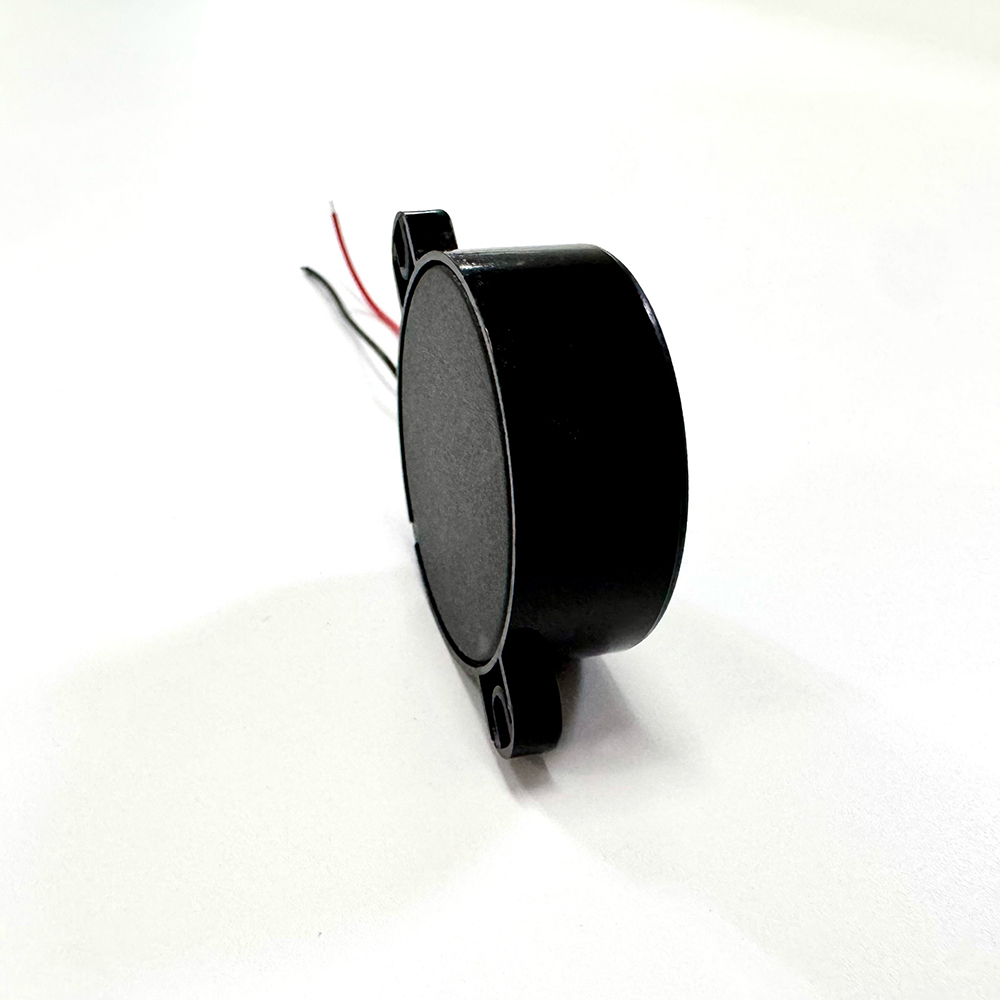
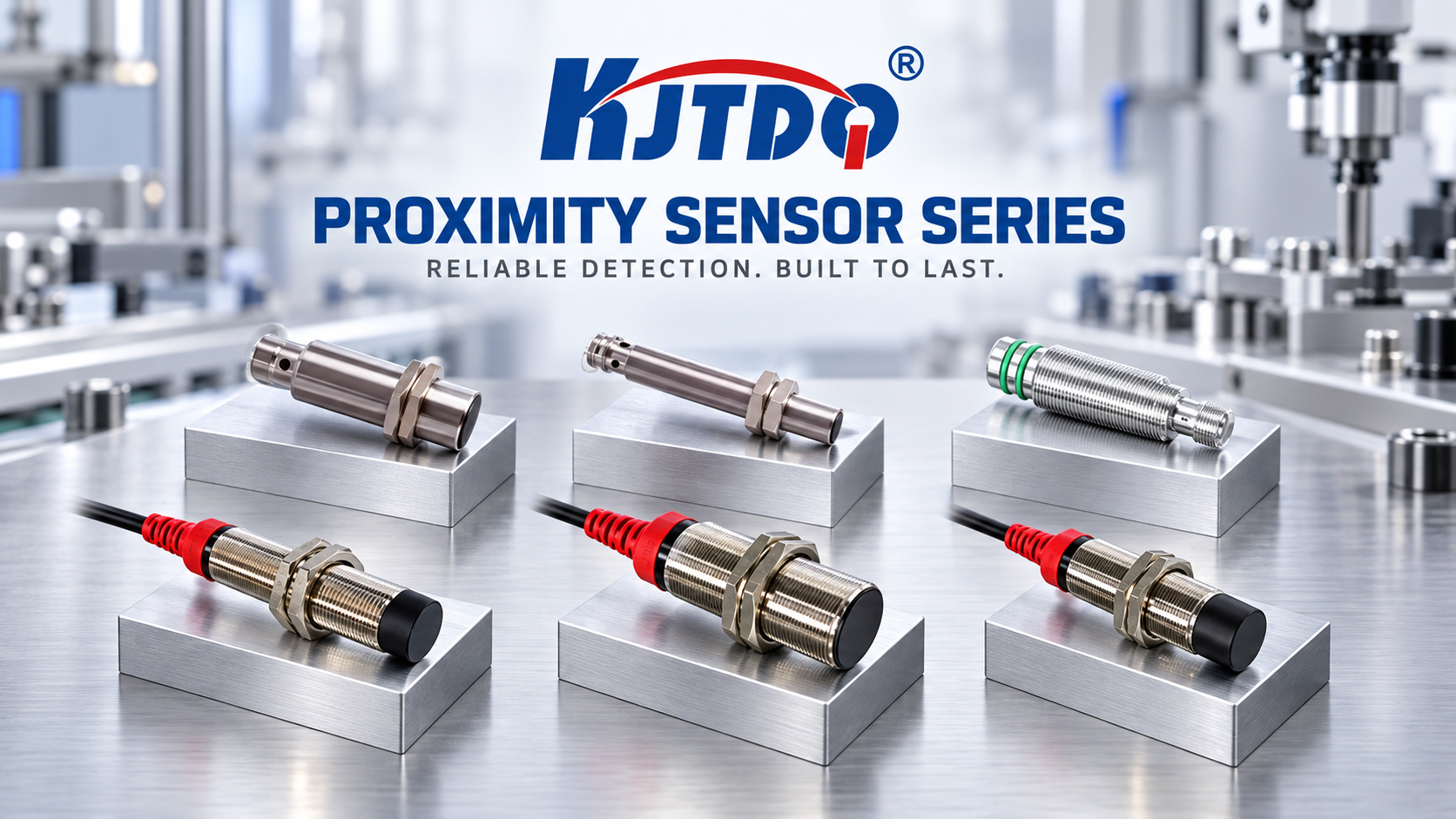
Among the differentiated advantages described for this product line, installation flexibility is explicitly addressed through multiple mounting formats. KJT Sensors' inductive proximity sensor portfolio includes ultra-small variants specifically positioned to solve limited installation space problems, alongside cylindrical, rectangular, ring and flat designs. Sensors are also available in M8, M12, M18 and other sizes, giving engineers options for either small-space or conventional installations. In addition, both flush and non-flush mounting configurations are supported, which matters when a sensor must be recessed into metal housings without triggering false detection from surrounding material, or when it must be mounted with its sensing face exposed in a narrow bracket.
This combination of small housing diameters, multiple shape options, and flexible mounting methods means that a compact installation requirement does not have to compromise detection reliability. The product variant range extends further to standard, remote, sanitary, high-pressure, high-temperature, analog output, explosion-proof, full-metal, intrinsically safe NAMUR, corrosion-resistant, ring-type, square, distance, weld-spatter-resistant, wireless, and correction factor = 1 series — allowing a facility to match sensor geometry to its physical constraints while still selecting the environmental rating appropriate to the application.
Key Technical Characteristics Relevant to Compact Applications
Several features of the inductive sensor line are particularly relevant when space is the limiting factor:
- Metal-target non-contact detection: The sensor detects whether a metal object enters the sensing field and converts this into a switching signal, avoiding physical contact and the mechanical wear that contact-based limit switches experience.
- High switching frequency: The sensor supports frequent switching operations, making it suitable for continuous production and high-cycle automation even when the unit itself occupies a small footprint.
- NPN/PNP and two-/three-wire outputs: These configurations, along with normally open or normally closed options, allow a small-form-factor sensor to still match the PLC input type and existing field wiring without requiring additional adapter hardware.
- Protection and reliability functions: These reduce the risk of faults caused by wiring errors or abnormal field conditions, which is especially useful in compact installations where wiring access may be limited and troubleshooting is more difficult.
Selecting the Right Variant When Space and Environment Both Matter
Limited installation space rarely exists in isolation — it is often combined with other environmental constraints such as elevated temperature, corrosive exposure, or explosion-hazard classification. KJT Sensors addresses this by offering variant series that layer environmental resistance onto the same core inductive-sensing technology. For example, a facility with a tight mounting bracket near a welding station might require both an ultra-small housing and weld-spatter resistance, while a confined installation in a hazardous area may require an ultra-small or ring-type housing combined with an intrinsically safe NAMUR configuration or another appropriately certified explosion-proof design.
As the product documentation notes, a standard proximity switch should not be used at high temperatures — a high-temperature series should be selected instead — and a standard proximity switch should not be used in an explosion-hazardous area without selecting an intrinsically safe NAMUR or another suitably certified explosion-proof product configured according to the site's explosion-protection requirements. The same selection discipline applies to space-constrained installations: the housing size and mounting format must be confirmed first, then matched against any additional environmental requirements of the specific site.
Beyond Metal Targets: When Non-Metallic Detection Is Also Needed
Facilities with limited installation space sometimes need to detect non-metallic materials as well, such as liquids, powders, granules, plastics, glass, wood, paper, or rubber. For these cases, KJT Sensors also offers Capacitive Sensors, which use capacitance change rather than electromagnetic induction. The capacitive sensing face and surrounding environment form a capacitive circuit; a target changes the dielectric constant and capacitance, and this change is processed into a switching signal. Capacitive sensors are available in compact cylindrical and flat designs, as well as standard, high/low-temperature, and square series, offering a complementary option when a confined space must accommodate detection of both metal and non-metal materials across different parts of a production line.
Industry Relevance of Compact Sensor Deployment
The need for small-footprint, non-contact detection spans multiple sectors referenced in KJT Sensors' industry adaptation, including mechanical manufacturing for in-position and limit detection on automated equipment and machine tools, electronics for small-object and workpiece detection, automotive production-line and fixture-status detection, and food-industry process and packaging-line monitoring. In each of these contexts, equipment layouts are often dense, and sensor footprint becomes a determining factor in whether a detection point can be added without redesigning the surrounding mechanism.
Quotation Considerations for Compact Installations
Pricing for inductive proximity sensors is determined by product series, housing size, sensing distance, mounting and output configuration, cable or connector type, operating voltage, IP rating, temperature rating, explosion-protection, corrosion and weld-spatter resistance, wireless or analog requirements, order quantity, and customization. Standard models, including ultra-small housing options, can typically be quoted quickly once the model and quantity are known. However, when a compact installation also involves a special environment, an import-substitution requirement, or a non-standard design, technical review of site conditions, original model specifications, mounting arrangement, and control-system interface is recommended before quotation to confirm that the selected housing size and sensing distance will perform reliably once installed.
Conclusion
Limited installation space is a practical engineering constraint, not a reason to compromise on detection reliability. By combining ultra-small, cylindrical, rectangular, and ring housing options with M8, M12, and M18 sizing, flush and non-flush mounting, and a broad range of environmentally rated variants, KJT Sensors' inductive proximity sensor line is positioned to address compact-space detection needs across standard automation and more demanding operating conditions, while its capacitive sensor line extends similar non-contact principles to non-metallic and bulk-material detection when a facility's requirements go beyond metal targets alone.
https://www.kjt-sensors.com/
KJT Sensors


+ There are no comments
Add yours