
In industrial flow measurement, accuracy isn't just a specification—it's the foundation of operational control, regulatory compliance, and cost management. When facilities invest in flow calibration systems, they face a critical decision: static mass method or master meter method? Understanding the fundamental differences between these approaches reveals why measurement uncertainty matters and how manufacturers like Kaifeng Xinya Instrument Co., Ltd. are enabling facilities to achieve laboratory-grade traceability in industrial environments.
Understanding Flow Calibration Fundamentals
Flow calibration systems serve as the verification backbone for industrial measurement instruments. In applications ranging from municipal water systems to chemical processing plants, flowmeters must maintain accuracy over extended operating periods despite challenging conditions—turbulence, temperature fluctuations, and pressure variations. Metrological traceability ensures that measurements can be traced back to national or international standards, providing confidence in reported values.
Two primary calibration methods dominate industrial practice: static mass method and master meter method. Each employs distinct measurement principles that directly impact achievable uncertainty levels and operational characteristics.
Static Mass Method: Primary Standard Accuracy
The static mass calibration method operates as a primary measurement standard. During calibration, liquid flows through the test flowmeter for a precisely timed interval. The collected fluid is weighed using high-precision scales, and the mass measurement is converted to volume using fluid density calculations. This gravimetric approach eliminates intermediate measurement instruments, reducing cumulative uncertainty.
Kaifeng Xinya Instrument's Liquid Flow Calibration System (Static Mass Method) achieves measurement uncertainty up to 0.05% under typical laboratory conditions. This performance level positions static mass systems as reference standards for facilities requiring the highest traceability levels—metrology institutes, calibration laboratories, and manufacturers validating production flowmeters.
The method's strength lies in its direct measurement principle. Mass is a fundamental physical quantity measured directly by calibrated scales traceable to national standards. Temperature and pressure monitoring during testing enables precise density determination, ensuring volume calculations maintain accuracy. This reduces the dependency chain that can amplify uncertainty in indirect measurement methods.
However, static mass systems require substantial infrastructure. Large-capacity weigh tanks, precision scales capable of handling significant fluid masses, and temperature-controlled environments are essential for maintaining stated uncertainty levels. The calibration process itself is methodical—fluid collection, stabilization, weighing, and drainage require time, making static mass systems better suited for laboratory environments than high-throughput production testing.
Master Meter Method: Comparative Calibration Efficiency
The master meter calibration method employs a different strategy: comparative measurement. A reference flowmeter—the master meter—with known, calibrated characteristics is installed in series with the test flowmeter. Both instruments measure the same flow simultaneously, and the test meter's readings are compared against the master meter's output to determine accuracy.
Kaifeng Xinya Instrument's Liquid Flow Calibration System (Master Meter Method) achieves typical uncertainty up to 0.2%. While numerically higher than static mass systems, this specification represents excellent performance for industrial applications and enables significantly faster calibration cycles.
The operational advantage is clear: master meter systems eliminate the need for fluid collection and weighing. Calibration becomes a continuous comparison process, allowing multiple test points across a flowmeter's range in rapid succession. For manufacturers producing flowmeters at scale, or facilities maintaining large instrument populations, this throughput advantage translates directly to operational efficiency.
Master meter method systems also offer flexibility in field deployment. Portable master meter rigs can be transported to customer sites for on-location verification, reducing downtime associated with instrument removal and laboratory shipment. This capability is particularly valuable for large-diameter flowmeters or installations where removal is costly or logistically complex.
The tradeoff is measurement hierarchy. Master meters themselves require periodic calibration against primary standards—typically static mass or similar gravimetric systems. This creates a calibration chain where uncertainty propagates through each level. Proper uncertainty budgeting accounts for master meter uncertainty, installation effects, and flow condition stability.
Selecting the Appropriate Calibration Approach
The choice between static mass and master meter calibration hinges on application requirements and operational context. Facilities performing metrological verification for regulatory compliance or serving as calibration service providers typically require the lowest achievable uncertainty. For these applications, static mass systems provide the traceability foundation necessary to support claims of reference-grade accuracy.
Conversely, manufacturing operations validating production flowmeters benefit from master meter systems' throughput capabilities. When production volumes demand testing multiple units daily, the efficiency of comparative calibration outweighs the marginal uncertainty difference—particularly when target specifications are in the 0.5% to 1.0% range typical of industrial flowmeters.
Kaifeng Xinya Instrument's approach recognizes this application spectrum. By offering both static mass calibration systems and master meter calibration systems, the company enables customers to match calibration capability to actual need. A flowmeter manufacturer might deploy a static mass system as their primary reference standard while using multiple master meter rigs for production testing—each master meter periodically verified against the static mass reference.
Calibration System Integration and Automation
Modern calibration systems extend beyond measurement hardware. PLC and industrial PC-based automation systems integrated into Xinya's calibration equipment manage test sequencing, data acquisition, and uncertainty calculations. Automated processes reduce operator influence on measurement results while generating digital records that support traceability documentation.
Digital record keeping has become essential in regulated industries. Automated report generation based on measurement data ensures consistency in documentation format and completeness. When metrology authorities or quality auditors request verification records, facilities can produce comprehensive test reports demonstrating measurement conditions, calculated uncertainties, and traceability chains.
The data systems also enable trend analysis. By maintaining calibration histories for individual flowmeters, facilities identify instruments requiring more frequent verification or exhibiting unexpected drift. This predictive approach to instrument maintenance improves measurement reliability while optimizing calibration resource allocation.
Supporting Industrial Flow Measurement Applications
Kaifeng Xinya Instrument's calibration systems support a diverse range of flowmeter technologies requiring periodic verification. The company's product portfolio spans electromagnetic flowmeters, vortex flowmeters, turbine flowmeters, and Coriolis mass flowmeters—each with distinct calibration requirements based on operating principles.
Electromagnetic flowmeters, used extensively in water and chemical industries for conductive liquid measurement, require calibration systems accommodating various pipe diameters. Xinya's systems support calibration ranges covering DN6 to DN1500 depending on system configuration, enabling verification from small analytical instruments to large municipal water meters.
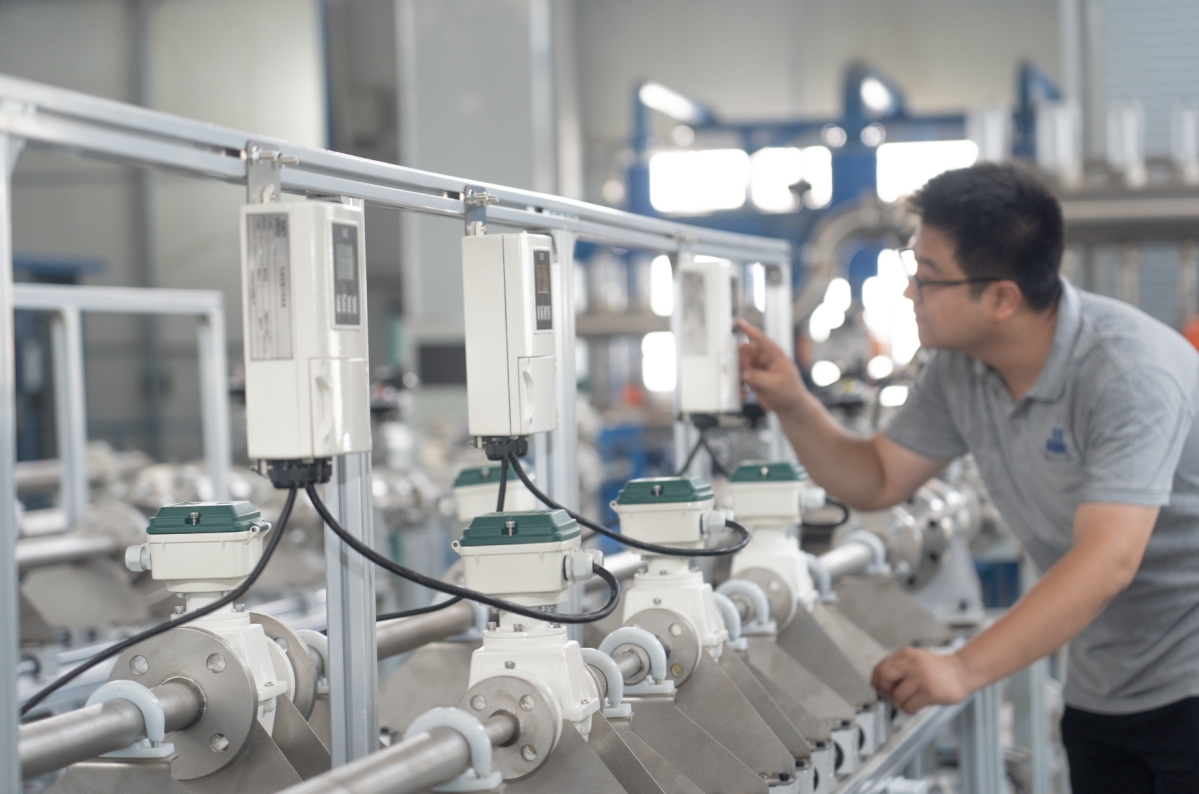
For gas applications, the company offers Gas Flow Calibration Systems (Sonic Nozzle Method), extending calibration capability to natural gas, biogas, and fuel gas measurement systems. This comprehensive approach positions Xinya as a single-source provider for facilities operating diverse measurement technologies.
Quality Infrastructure Supporting Calibration Claims
Calibration system performance claims require supporting quality infrastructure. Kaifeng Xinya Instrument holds ISO 9001:2015 Quality Management System Certification and certification as a Provincial Authority Certified Flow Standard Device Manufacturer by the Henan Institute of Metrology. These credentials demonstrate that the company's manufacturing processes and quality controls meet requirements for producing metrological equipment.
The Special Equipment Production License for pressure pipe components and flowmeters, along with Pattern Approval Certificate of the Measuring Instruments, confirms regulatory compliance for equipment used in legal metrology applications. For facilities requiring calibration systems that will themselves be subject to regulatory verification, these certifications provide confidence in equipment qualification.
Conclusion: Matching Calibration Capability to Application Need
The static mass versus master meter decision ultimately reflects a facility's role in the measurement traceability hierarchy. Primary standards laboratories and reference-level facilities prioritize the lowest achievable uncertainty, making static mass systems the appropriate choice. Manufacturing operations and field service providers value calibration throughput and portability, where master meter systems deliver optimal operational efficiency.
Kaifeng Xinya Instrument's portfolio addresses both ends of this spectrum, supported by manufacturing capabilities, quality certifications, and measurement expertise accumulated since 2004. By providing calibration systems ranging from 0.05% uncertainty static mass references to efficient 0.2% master meter comparators, the company enables customers to build calibration capabilities matched to their specific measurement assurance requirements—whether supporting municipal water networks, chemical process control, or energy measurement applications across global industrial markets.
https://www.sytcflowmeter.com/
Kaifeng Xinya Instrument Co., Ltd.


+ There are no comments
Add yours