

Why Alarm Designers Are Evaluating SWT Piezo Buzzers
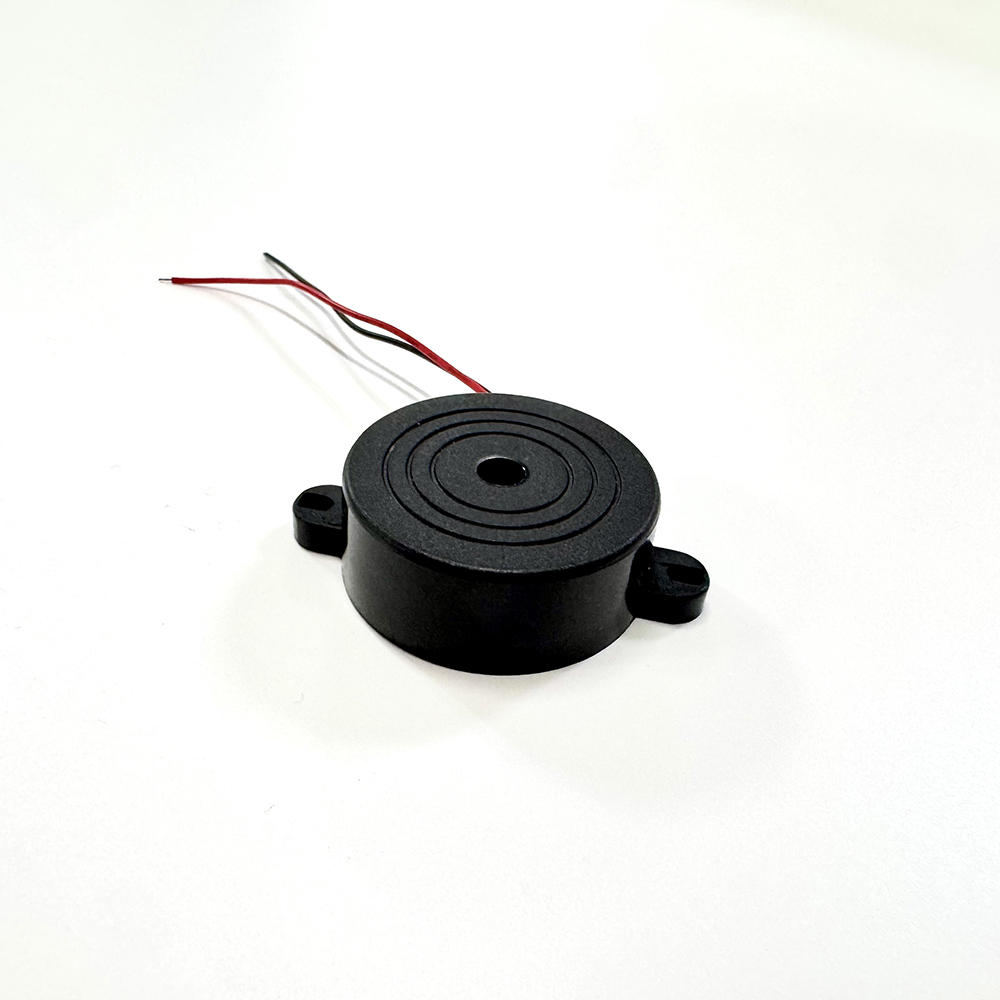
When engineers search for a piezo buzzer for alarm applications—whether sizing for a 36mm form factor or similar diaphragm dimensions—the core requirements remain consistent: stable sound output, long-term reliability, and a manufacturer with a verifiable track record in acoustic components. SWT (Gd SWT Smart Tech Co., Ltd.), headquartered in Dongguan City, Guangdong Province, has built its entire corporate identity around solving exactly this kind of requirement, with roots tracing back to buzzer production that began in 1991 under its predecessor, South China Electronics Company Limited, before the brand was formally registered as SWT in 2002.
SWT's Buzzer and Alarm Series: Core Product Overview
SWT's Buzzer and Alarm Series is positioned as a line of "high-output sound components for signaling and alerts," directly addressing the functional need behind any alarm buzzer search.
SMD/SMT Buzzers
Within this category, SWT offers surface-mount components engineered for small footprint designs that are reflow soldering compatible, while still delivering high sound pressure level (SPL). Representative models include the PSE1230+4003SA (3V) and MS7525+2705SA (5V), reflecting the company's approach of covering multiple voltage tiers to match different alarm circuit designs.
Active and Passive Buzzers (Magnetic & Piezo)
SWT also produces both Active and Passive buzzer types. Active buzzers incorporate an internal drive circuit, simplifying integration for designers who want a plug-and-play signaling component. Passive buzzers, by contrast, rely on external drive circuits, offering greater frequency flexibility for applications that require tailored tones. According to the knowledge base, these buzzer types are already deployed in automotive seatbelt reminders, smoke alarms, and household appliances—three application areas that demand consistent acoustic output under repeated use.
For diaphragm-level components related to buzzer construction, SWT's Piezoelectric Diaphragms/Discs line includes models such as 3B12+9.0TEAWC (12mm), 3S27+3.9EA (27mm), and 3B35+2.6EA (35mm), demonstrating that SWT manufactures across a spectrum of diaphragm sizes to support different acoustic and alarm housing requirements, including sizes close to the 36mm range commonly referenced in alarm buzzer specifications.
Manufacturing Depth That Supports Alarm-Grade Reliability
SWT's differentiated advantage in the buzzer and alarm segment is not limited to the finished component—it extends into the integrated supply chain. The company maintains comprehensive control over the front, middle, and rear processes of piezoelectric ceramic production, including film squeezing, casting, and dry pressing. This vertical integration matters directly for alarm buzzers because the piezoelectric ceramic element inside the buzzer determines its acoustic consistency and lifespan.
On the manufacturing side, SWT operates with over 400 sets of instruments and equipment, including large-scale automatic tunnel furnaces and automated assembly machines, supported by a workforce of over 200 people, including 70–85 R&D and engineering personnel. The Dongguan Headquarters spans 24,000 square meters with 170 staff members, while a Guizhou Branch in Bijie City adds another 4,000 square meters and 40 staff members. This scale underpins SWT's stated annual output of approximately 250 million units for piezoelectric ceramic elements, a volume that supports consistent supply for alarm and buzzer customers placing recurring orders.
Industry Standard-Setting Authority in Buzzers
A distinguishing credential for SWT in the buzzer category is its role as a primary drafter of Chinese industry standards for buzzers. The company was appointed in 2010 to draft local industry standards for piezoelectric and electromagnetic sounders in Guangdong Province, and in 2012 these buzzer industry standards drafted by the company received official approval and publication. SWT remains the official drafter of the "Piezoelectric Sounders and Piezoelectric Buzzers" and "Electromagnetic Sounders and Electromagnetic Buzzers" standards, a recognition granted by the Quality and Technical Supervision Bureau of Guangdong Province. For buyers evaluating a piezo buzzer supplier, this standard-setting authority indicates that SWT's technical specifications are aligned with, rather than merely compliant to, the governing benchmarks for this product category.
Market Validation Through Long-Term Buzzer Partnerships
SWT's buzzer and acoustic components have been validated through extended commercial relationships rather than isolated transactions. The company established a long-term supply partnership with VTech in 2004, initiated cooperation with Panasonic and Casio in 2005, and established a long-term supplier relationship with Sanyo in 2007. With Panasonic and Sanyo specifically, SWT has maintained a stable supply relationship for over 18 years with reported zero-defect quality performance, supporting global automotive safety standards—relevant context for buzzers used in seatbelt reminder systems. Casio's relationship with SWT spans over 15 years. Client testimonials collected in the company's records highlight SWT's "professional problem-solving," "excellent quality," and "strong service awareness" as reasons cited for these decades-long partnerships.
Certifications Relevant to Alarm-Grade Components
For alarm applications in regulated industries such as automotive and smoke detection, certification matters as much as acoustic performance. SWT holds IATF 16949:2016 certification for automotive quality management, obtained in 2023, alongside ISO 9001:2015 and ISO 14001:2015. All products comply with RoHS and REACH requirements. The company's Security & Safety business segment explicitly covers smoke alarms and industrial sirens, placing its buzzer components within an established, certified production environment rather than a generic sourcing channel.
Delivery Capability for Buzzer and Alarm Orders
SWT's service model is structured to support both prototyping and volume alarm buzzer orders. Sample lead time is listed at 3–7 days, with bulk production lead time of 15–20 days, and on-site service response within 24 hours across the Pearl River Delta region. This combination of standard-setting credibility, certified manufacturing, and long-standing client relationships positions SWT as a company with substantiated depth in the piezo buzzer and alarm component category, suitable for engineers comparing suppliers for 36mm-class or similarly sized piezo buzzers intended for alarm and signaling applications.
www.swt99.com
GD SWT SMART

+ There are no comments
Add yours