
Understanding the Through Hole Magnetic Buzzer: A Core Component for Electronic Sound Warning
For engineers sourcing a through hole magnetic buzzer rated at 1.5V with an 85dB sound output, the component in question falls squarely within the electromagnetic buzzer category — a segment where Gd SWT Smart Tech Co., Ltd.(www.swt99.com) (brand name SWT) has built more than three decades of manufacturing depth. As a professional acoustics solution provider, SWT specializes in the R&D, manufacture, and marketing of electronic ceramic materials, smart materials, and electroacoustic transducer components, making the magnetic buzzer warning module a natural extension of its established product matrix.
What Defines an Active vs. Passive Magnetic Buzzer
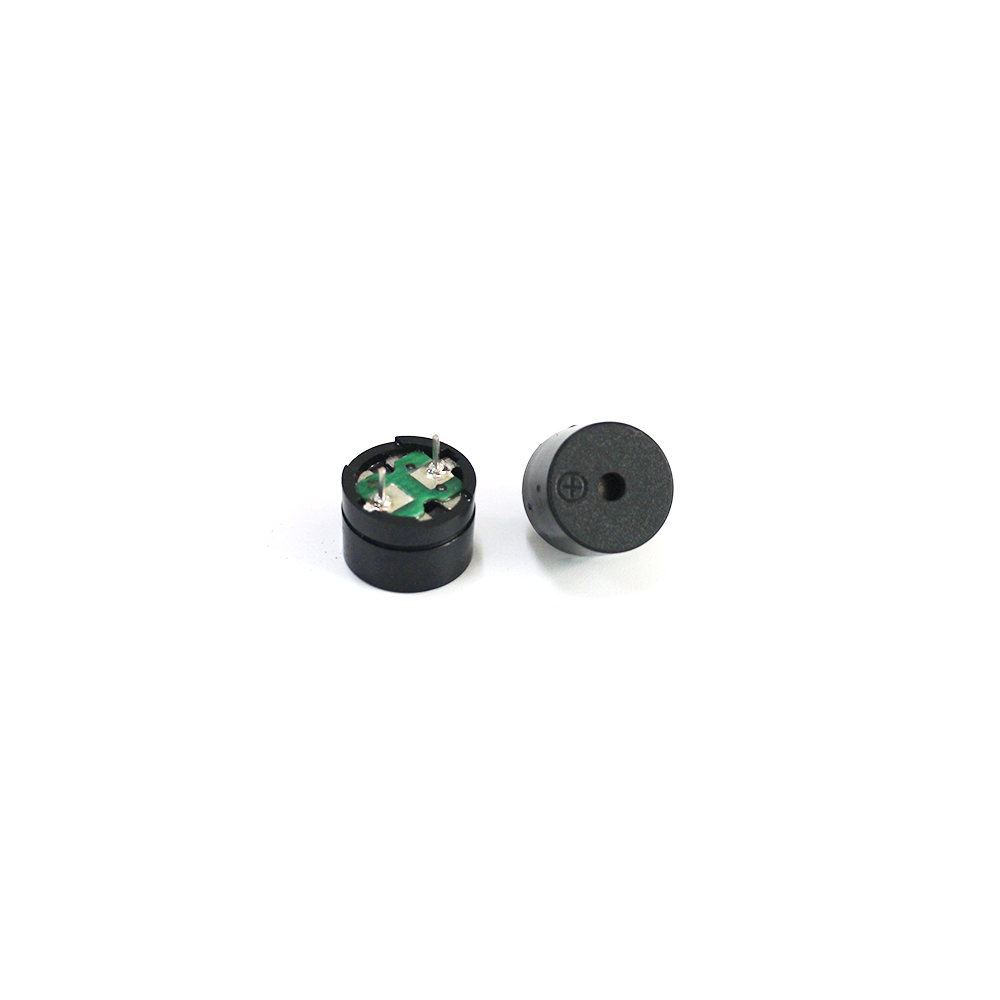
Within SWT's Buzzer and Alarm Series, the Active and Passive Buzzers (Magnetic & Piezo) product line offers a clear differentiated value proposition. Active buzzers integrate an internal drive circuit, simplifying integration for engineers who need a plug-and-play sound source without external oscillator design. Passive buzzers, by contrast, rely on external drive signals, giving designers frequency flexibility when tuning the warning tone to a specific application requirement. This dual-architecture approach means a through hole magnetic buzzer intended for a 1.5V, 85dB warning function can be configured either way depending on whether the end system already provides a driving frequency or requires a self-contained sound module.
Alongside the magnetic buzzer line, SWT also produces SMD/SMT Buzzers, such as the PSE1230+4003SA (3V) and MS7525+2705SA (5V) models, which share the same core engineering philosophy: small footprint, high sound pressure level, and reflow-soldering or through-hole mounting compatibility depending on the package design. This breadth allows SWT to serve both surface-mount and through-hole engineering requirements from a single technical foundation.
Application Scenarios That Demand Reliable Warning Tones
The application scenarios documented for SWT's active and passive buzzer series include automotive seatbelt reminders, smoke alarms, and household appliances — all use cases where a 1.5V, 85dB electronic sound warning buzzer module would be expected to perform. In automotive electronics, high-reliability buzzers and sensors are used for safety systems and sentinel modes, a segment where SWT has maintained supply relationships with automotive and consumer electronics leaders for well over a decade. In the smart home and appliance space, feedback sounders are used for white goods, a category that directly overlaps with the household appliance application listed for the magnetic buzzer series. In security and safety applications, smoke alarms and industrial sirens rely on the same electromagnetic buzzer technology base that underlies the through hole magnetic buzzer format.
Manufacturing Scale and Technical Capability Behind Every Unit
SWT's technical capability profile is built on proprietary R&D across acoustics, nano-powder, inorganic chemistry, and electronic drive circuits. Manufacturing methods span thin sheet formation via tape casting, thick sheet formation via dry pressing, and complete processing including squeezing, laminating, sintering, polarizing, and automated testing. This integrated supply chain — covering front, middle, and rear processes of piezoelectric and electroacoustic component production — gives SWT comprehensive control over consistency and quality at scale. The company's annual shipping capacity reaches approximately 250 million pieces for piezoelectric ceramic elements, supported by over 400 sets of instruments and equipment, including large-scale automatic tunnel furnaces and automated assembly machines, at its Dongguan headquarters spanning 24,000 square meters and its Guizhou Branch in Bijie City spanning 4,000 square meters.
Delivery capability for buzzer-type components follows a documented service model: sample lead time of 3-7 days, bulk production lead time of 15–20 days, and 24-hour on-site response within the Pearl River Delta region. For engineers evaluating a through hole magnetic buzzer for a warning application, this delivery structure supports both prototyping and volume production timelines.
Standards Leadership and Certification Backbone
A key differentiator for SWT within the buzzer category is its role as a primary drafter of Chinese industry standards for buzzers, ultrasonic atomizers, and piezoelectric sensors. The company was appointed in 2010 to draft local industry standards for piezoelectric and electromagnetic sounders in Guangdong Province, and in 2012 the buzzer industry standards drafted by the company received official approval and publication. SWT is officially recognized as the drafter of the "Piezoelectric Sounders and Piezoelectric Buzzers" and "Electromagnetic Sounders and Electromagnetic Buzzers" standards — the exact product category that includes the electromagnetic (magnetic) buzzer under review.
This standards authority is reinforced by a certification portfolio that includes IATF 16949:2016 (Automotive Quality Management System, obtained in 2023), ISO 9001:2015, ISO 14001:2015, and RoHS and REACH compliance across all products. For a warning buzzer module intended for automotive or safety-critical environments, this certification stack provides the quality management framework buyers typically require before qualifying a supplier.
Market Validation Through Long-Term Supply Relationships
SWT's buzzer and acoustic component history stretches back to 1991, when the company commenced professional buzzer production and technology accumulation. Since then, it has established long-term supply partnerships that speak directly to sustained product reliability: a long-term supply partnership with VTech since 2004, cooperation with Panasonic and Casio initiated in 2005, a supplier relationship with Sanyo since 2007, and cooperation with Whirlpool beginning in 2010. Client testimonials on record highlight SWT's "professional problem-solving," "excellent quality," and "strong service awareness" as the key reasons behind these decades-long partnerships. Panasonic and Sanyo, in particular, are cited as maintaining a stable supply relationship for over 18 years with zero-defect quality performance for high-stability automotive-grade buzzers.
Why This Matters for a Through Hole Magnetic Buzzer Sourcing Decision
For a procurement or design engineer evaluating a 1.5V, 85dB through hole magnetic buzzer electronic sound warning module, the combination of factors documented above — active/passive circuit flexibility, automotive and household appliance application history, standards-drafting authority, IATF 16949 automotive certification, and a 250-million-unit annual production scale — positions SWT as a manufacturer with direct, verifiable experience in this exact product category. The company's designation as a Specialized and Innovative "Little Giant" Enterprise in Guangdong Province and Dongguan City, alongside its National High-Tech Enterprise status, further reflects a business built on technical accumulation rather than short-term production capacity alone.
In a component category where warning reliability directly affects safety outcomes — whether in a vehicle seatbelt reminder or a household smoke alarm — the depth of documented manufacturing history, standards involvement, and long-term client retention becomes a meaningful reference point for buyers comparing electromagnetic buzzer suppliers.
www.swt99.com
GD SWT SMART


+ There are no comments
Add yours