

Brazil has a wide range of mining and aggregate operations, from large metal ore projects to limestone quarries and local construction aggregate plants. The materials, production targets and operating conditions vary considerably from one site to another.
That is why selecting crushing and screening equipment should never begin with a crusher model alone.
The more useful starting point is to understand the material, required capacity, finished-product specifications and complete process flow. A crusher may have sufficient nominal capacity, but the production line can still underperform if the screen is undersized, the feed is unstable or the conveyors cannot handle peak material flow.
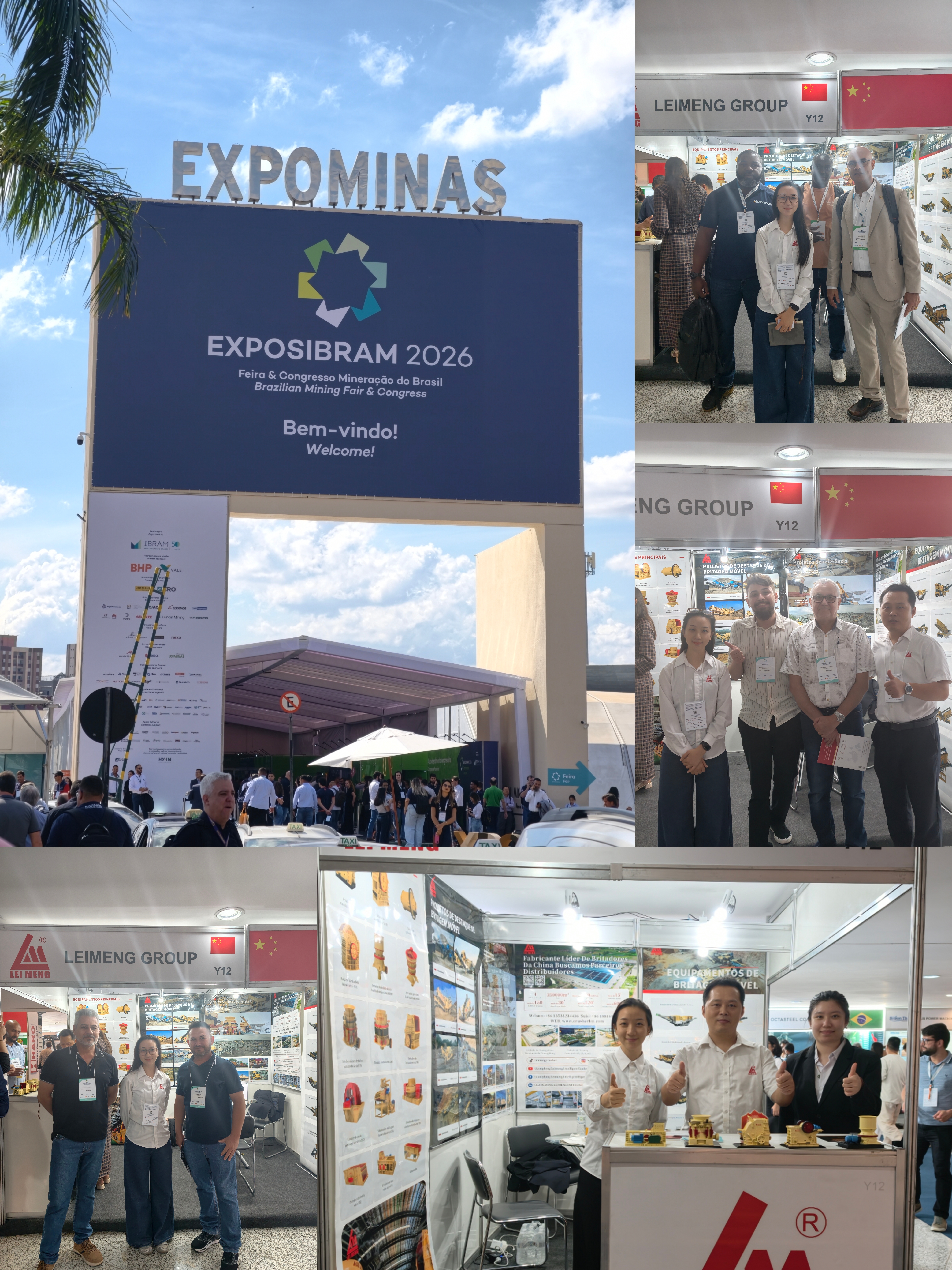
This project-based approach is one of the main topics Leimeng Group is discussing with mining companies, quarry operators, contractors and equipment distributors at EXPOSIBRAM 2026 in Belo Horizonte, Brazil.
EXPOSIBRAM 2026 and Brazil’s Mining Equipment Market
The Brazilian Mining Expo & Congress, known as EXPOSIBRAM 2026, is taking place from August 24 to 27 at EXPOMINAS BH in Belo Horizonte.
Organized by the Brazilian Mining Association, the event brings together mining companies, equipment manufacturers, engineering contractors, technology providers and other organizations involved in the mineral industry.
For mining equipment manufacturers, the event is not simply a place to display machines. It provides an opportunity to discuss actual project conditions with mine owners and engineering teams.
At Booth Y12, Leimeng Group is focusing on crushing, screening and mobile crushing solutions for mining, quarrying and aggregate production projects.
What Information Is Needed Before Selecting a Crushing Plant?
A reliable equipment proposal requires more than the name of the raw material and the desired hourly output.
Before selecting a jaw crusher, cone crusher, impact crusher or vibrating screen, the following information should be confirmed.
Raw material
The rock or ore type affects the entire crushing process.
Granite, basalt, limestone, iron ore, copper ore and recycled concrete have different levels of hardness, abrasiveness and moisture. These characteristics influence crusher type, crushing chamber, wear-part selection and maintenance frequency.
Even materials with the same name can behave differently. Two granite deposits may have different feed grading, weathering conditions and abrasive properties.
Maximum feed size
The largest feed size helps determine the required crusher opening, but it should not be considered by itself.
The complete feed-size distribution is also important because it shows how much material falls within each size range. A feed containing a high percentage of fine material may behave differently from one dominated by large blasted rock.
Required production capacity
Capacity should be defined as the expected continuous feed rate, not simply the highest possible number during a short operating period.
The supplier should also know:
-
Required tonnes per hour
-
Operating hours per day
-
Expected production days per year
-
Normal and peak feed rates
-
Planned future capacity increases
Nominal crusher capacity is only a reference. Actual output depends on feed grading, moisture, crusher setting, material density, downstream screening and recirculating load.
Finished-product specifications
A quarry may need several aggregate sizes for concrete, asphalt, road base or other construction applications. A mining project may require a controlled feed size for grinding, beneficiation or another downstream process.
The required product sizes determine:
-
Crushing stages
-
Crusher discharge settings
-
Number of screen decks
-
Screen openings
-
Recirculation arrangement
-
Finished-product conveyors
Without clearly defined final products, it is difficult to design a balanced aggregate production line.
Site conditions
The available land, elevation differences, access roads, power supply and maintenance space all affect the plant layout.
A technically suitable machine may still create problems if there is insufficient room for installation, lifting, liner replacement or conveyor connections.
The crushing and screening plant must be designed around the site rather than forced into an unsuitable layout.
How Do Different Crushers Fit into the Process?
Each crusher performs a different duty. The correct equipment combination depends on the material and the required reduction process.
Jaw crusher for primary crushing
A jaw crusher is commonly installed at the beginning of a quarry or mining crushing plant.
Its main function is to reduce large feed material to a size that can be handled by the secondary crusher. Important selection factors include feed opening, maximum permitted feed size, discharge range, frame design and compatibility with the feeder and discharge conveyor.
Stable primary crushing helps maintain a more consistent load on the rest of the production line.
Cone crusher for hard and abrasive materials
A cone crusher is commonly used for secondary, tertiary or fine crushing of granite, basalt and many metal ores.
Compared with an impact crusher, a cone crusher is generally more suitable for hard and abrasive material where wear control is an important consideration.
However, its performance depends on correct feed distribution, chamber selection, closed-side setting and stable operating load. Installing a cone crusher without controlling the feed can result in uneven liner wear and inconsistent product grading.
Impact crusher for limestone and medium-hard materials
An impact crusher may be selected for limestone and other less abrasive materials, particularly when product shape and a higher reduction ratio are important.
It can produce well-shaped aggregate, but wear-part consumption must be evaluated according to the abrasiveness of the feed.
Using an impact crusher for highly abrasive hard rock without a proper application review may increase operating costs.
Vibrating screen for product classification
The vibrating screen separates finished material from oversize particles that need to return to the crusher.
Screening efficiency directly affects the performance of the entire plant. If correctly sized material is not separated effectively, it may return to the crusher unnecessarily, increasing recirculating load, energy use and wear.
Screen selection should consider:
-
Feed grading
-
Required capacity
-
Material moisture
-
Bulk density
-
Number of finished products
-
Screen openings
-
Required screening efficiency
A larger crusher cannot solve a bottleneck caused by an undersized vibrating screen.
Fixed or Mobile Crushing Plant?
One of the most common questions in mining and quarry projects is whether to choose a fixed crushing plant or a mobile crushing plant.
Neither option is suitable for every project.
A fixed crushing plant is generally suitable when:
-
The project will operate at one location for many years
-
Production demand is large and stable
-
Sufficient installation space is available
-
Civil construction is acceptable
-
Multiple crushing and screening stages are required
-
Future relocation is unlikely
A fixed plant provides greater flexibility for arranging large crushers, screens, conveyors, stockpiles and maintenance areas.
A mobile crushing plant is generally suitable when:
-
The working area may change
-
Installation time needs to be reduced
-
Civil foundation work must be limited
-
The project is temporary or developed in stages
-
Equipment needs to move within the site
-
An existing plant needs an additional crushing or screening module
Mobile crushing equipment can be configured with jaw crushers, cone crushers, impact crushers and vibrating screens.
However, “mobile” does not mean no site preparation is required. Stable operating ground, power supply, feed coordination, discharge conveyors and safe maintenance access must still be planned.
Why Must the Complete Production Line Be Balanced?
A complete crushing and screening plant is a connected material-handling system:
Feeding → Primary crushing → Secondary crushing → Screening → Recirculation → Finished-product stockpiling
Every stage must handle the expected material flow.
For example, installing a crusher rated for a high throughput does not guarantee the same output from the complete line. Production may still be restricted by:
-
An unstable or undersized feeder
-
A secondary crusher receiving uneven feed
-
Insufficient screening area
-
Narrow transfer points
-
Undersized conveyors
-
Excessive recirculating load
-
Limited finished-product storage
The correct question is therefore not, “What is the largest crusher available?”
A better question is:
How can the feeder, crushers, screens and conveyors be matched to produce the required saleable product consistently?
What Determines the Real Cost of a Crushing Plant?
Purchase price is only one part of the investment.
The long-term cost of a mining crushing plant is also affected by:
-
Energy consumption
-
Wear-part life
-
Spare-parts availability
-
Maintenance time
-
Unplanned shutdowns
-
Screening efficiency
-
Recirculating load
-
Percentage of saleable product
-
Local technical support
A lower initial equipment price may not reduce the total operating cost if the configuration does not match the material or if replacement parts are difficult to obtain.
For project owners, cost per tonne of saleable product is often more meaningful than the purchase price of an individual crusher.
Common Equipment Selection Mistakes
Several problems appear repeatedly in crushing and screening projects.
Selecting equipment by capacity alone
Catalogue capacity is normally based on specific test conditions. It should not be treated as guaranteed output for every material and feed condition.
Ignoring feed grading
Maximum feed size alone does not describe the material flow. The complete grading curve is needed to evaluate the load placed on crushers and screens.
Evaluating crushers separately from screens
A crusher and vibrating screen must operate as one circuit. Poor screening can increase unnecessary recirculation and reduce final output.
Choosing mobile equipment only to avoid foundations
Mobile crushing plants can reduce some civil work, but they still need a stable operating area and properly planned process connections.
Leaving maintenance planning until after installation
Crusher liners, jaw plates, blow bars and screen media require routine inspection and replacement. The plant layout should include enough access for these tasks from the beginning.
How Leimeng Group Approaches Crushing and Screening Projects
Leimeng Group provides crushing, screening, sand-making and washing equipment for mining, quarrying, aggregate production and construction waste processing.
Its product range includes:
-
Jaw crushers
-
Cone crushers
-
Impact crushers
-
Vibrating screens
-
Vibrating feeders
-
Sand-making equipment
-
Sand-washing equipment
-
Belt conveyors
-
Tracked and wheeled mobile crushing plants
-
Complete aggregate and mining production lines
Equipment selection begins with the client’s material, feed size, required capacity, finished-product sizes and site conditions.
The objective is not simply to supply individual machines. It is to configure the crushing, screening and conveying stages as one production system.
Questions to Ask a Crushing Equipment Manufacturer
Before requesting a quotation, project owners should ask:
-
What material information is required for equipment selection?
-
How was the proposed capacity calculated?
-
Has the complete feed grading been considered?
-
How are the crusher and vibrating screen matched?
-
What is the expected recirculating load?
-
What wear parts will be required?
-
Is there sufficient maintenance access in the layout?
-
What installation and commissioning support is available?
-
Which spare parts should be stored on site?
-
Can the system be expanded if future capacity increases?
Clear answers to these questions are more valuable than a long equipment list.
Meet Leimeng Group at EXPOSIBRAM 2026
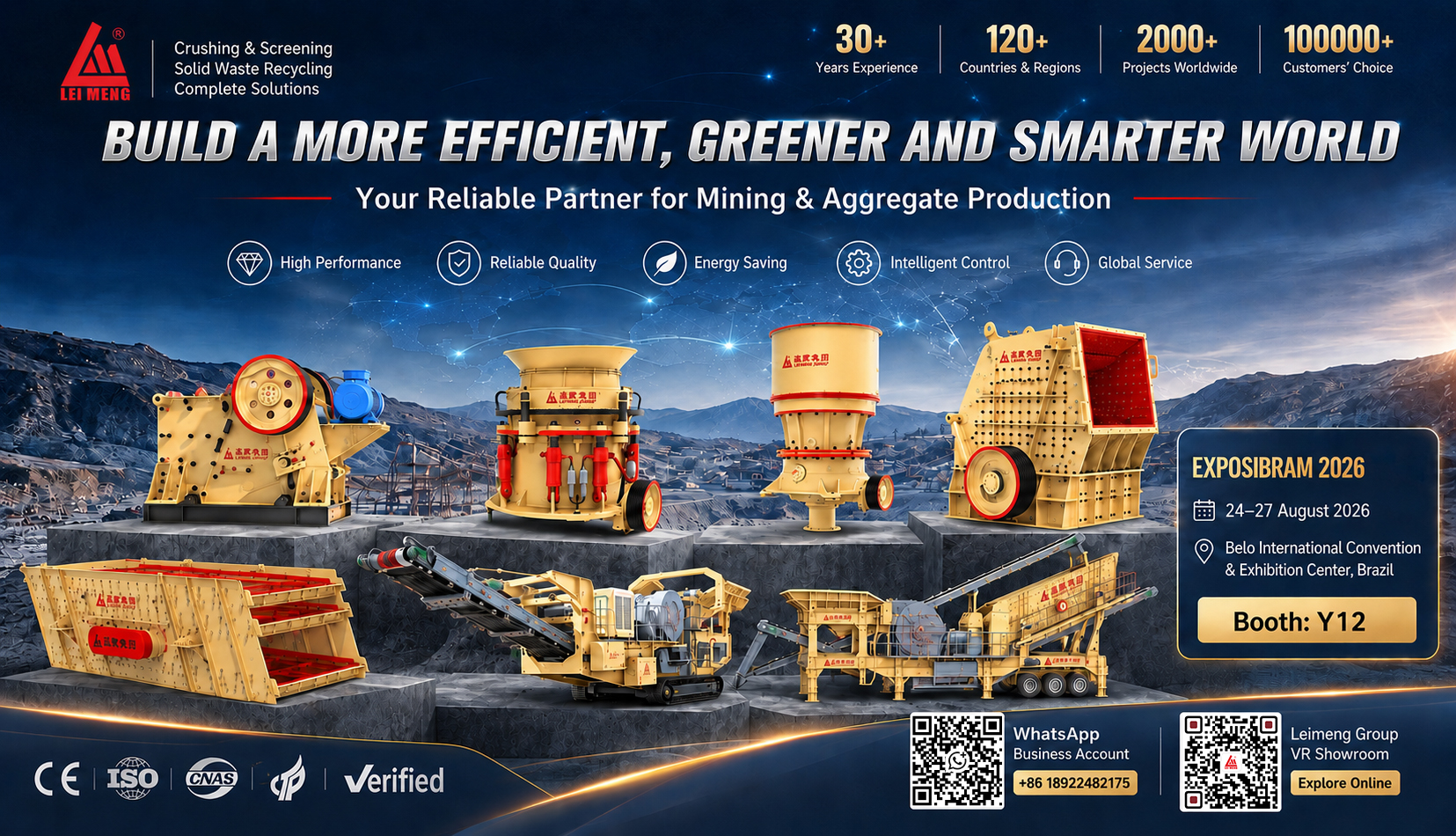
Leimeng Group is meeting mining companies, quarry operators, engineering contractors and equipment distributors at Booth Y12 during EXPOSIBRAM 2026.
Event: Brazilian Mining Expo & Congress – EXPOSIBRAM 2026
Dates: August 24–27, 2026
Venue: EXPOMINAS BH
Address: Av. Amazonas, 6200, Gameleira, Belo Horizonte–MG, Brazil
Booth: Y12
Visitors can discuss new crushing and screening plants, mobile crushing equipment and upgrades to existing aggregate production lines with the Leimeng team.
Conclusion
Selecting mining crushing and screening equipment requires more than comparing machine models and nominal capacities.
The material, feed grading, final product, operating schedule, site layout and maintenance conditions must be considered together. The feeder, crushers, vibrating screens and conveyors must also be matched across the complete process.
For Brazilian mining and aggregate projects, a balanced production line can provide more value than simply installing a larger crusher.
The best configuration is the one that processes the actual material, produces the required product sizes and remains practical to operate and maintain over the planned life of the project.
https://www.lmcrusher.com/
GUANGDONG LEIMENG INTELLIGENT EQUIPMENT GROUP CO.,LTD.


+ There are no comments
Add yours