
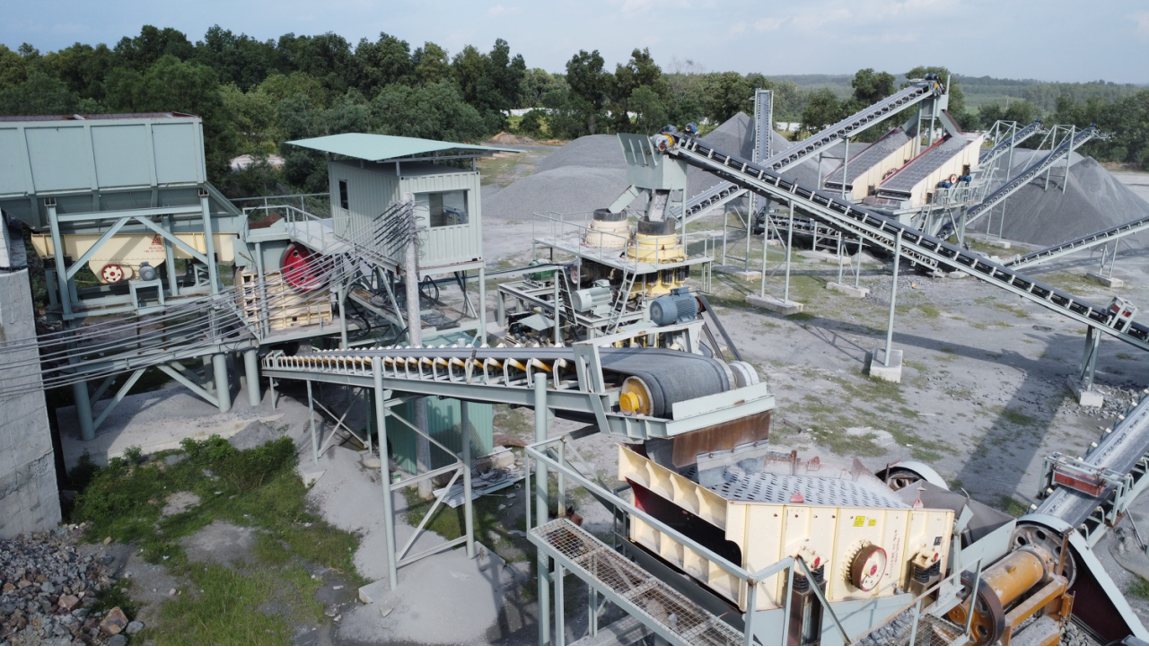
There is no reliable standard price for a 500 TPH granite crushing plant.
The same capacity request can lead to very different quotations because “500 TPH” does not explain the feed size, finished products, operating hours, equipment scope or site conditions.
A buyer asking only for a 500 TPH cone crusher price may receive a number quickly, but that number may not represent a complete or workable production line.
What Does 500 TPH Mean?
The first step is defining the capacity.
It may refer to:
- Fresh feed entering the complete plant
- Material passing through one crusher
- Total throughput including recirculating material
- Maximum short-term capacity
- Average operating output
- Saleable finished aggregate
These figures can differ significantly.
For commercial planning, the most important figure is normally the quantity of saleable products that meet specification.
Why Does Feed Size Affect Price?
A granite plant receiving large blasted rock may require:
- A larger feed hopper
- A heavy-duty vibrating feeder
- A larger primary jaw or gyratory crusher
- Wider conveyors
- Stronger supporting structures
If the feed has already been reduced, the primary stage may be smaller or unnecessary.
Maximum feed size and complete feed grading must therefore be confirmed before comparing proposals.
How Many Crushing Stages Are Needed?
A 500 TPH granite project may use:
Jaw crusher → Cone crusher → Vibrating screen
Another project may require:
Primary crusher → Secondary cone crusher → Tertiary cone crusher → VSI shaping → Multiple screens
The second process includes more equipment because it performs more work and may produce more tightly controlled products.
Neither configuration is automatically correct. The required reduction ratio and final specifications determine the number of stages.
Why Do Finished Products Change the Quotation?
Producing one road-base material is different from producing several concrete aggregate fractions and manufactured sand.
Additional product requirements may need:
- More screen decks
- Additional vibrating screens
- Closed-circuit conveyors
- Tertiary crushing
- VSI shaping
- Sand washing
- Fine sand recovery
- Separate stockpiles
The quotation should identify the expected output of each finished fraction rather than only total tonnes per hour.
What Is Included in the Equipment Scope?
Two quotations with the same crusher model may include different supporting equipment.
Check whether the offer contains:
- Feed hopper
- Vibrating feeder
- Primary crusher
- Secondary and tertiary crushers
- Vibrating screens
- Belt conveyors
- Steel structures
- Electrical control system
- Dust-control equipment
- Lubrication and hydraulic systems
- Wear and spare parts
- Installation guidance
- Commissioning
- Operator training
A low quotation may simply exclude more of the project.
Stationary, Mobile or Modular?
Plant type also affects cost.
Stationary plant
Suitable for many long-term quarry projects. It may require more foundations and site construction but allows flexible arrangement of conveyors, screens and stockpiles.
Tracked mobile plant
Reduces some foundation requirements and offers site mobility. Its value depends on how often the equipment needs to move.
Modular plant
Can reduce part of the on-site fabrication while retaining a process closer to a stationary line.
The cheapest initial layout is not necessarily the lowest-cost option over the project life.
How Do Location and Logistics Affect Price?
A granite crushing plant quotation for Vietnam, Brazil, Africa or the Middle East cannot be compared only at factory price.
Regional cost differences may include:
- Ocean or land freight
- Equipment dimensions and containerisation
- Port charges
- Import duties and taxes
- Inland transport
- Motor voltage and frequency
- Local installation resources
- Engineer travel
- Spare-parts delivery time
The quotation should state the trade terms and delivery boundary clearly.
What Is Total Cost of Ownership?
Purchase price is only the first cost.
Crusher total cost of ownership may include:
- Power or fuel
- Wear parts
- Lubricants
- Labour
- Planned maintenance
- Unplanned downtime
- Spare-parts inventory
- Product yield
- Equipment relocation
- Residual value
For hard and abrasive granite, liner consumption and replacement time deserve particular attention.
A lower-priced crusher can become more expensive if it requires frequent shutdowns or produces less saleable aggregate.
How Should Quotations Be Compared?
Ask each supplier to use the same project basis.
The comparison should include:
- Raw material and assumed properties
- Maximum feed size
- Required finished products
- Fresh-feed capacity
- Expected circulating load
- Equipment models and quantities
- Installed power
- Included steelwork and conveyors
- Spare and wear parts
- Delivery terms
- Installation and commissioning scope
- Warranty and technical support
If the basic assumptions are different, the final prices cannot be compared fairly.
What Should Be Sent to the Manufacturer?
To obtain a useful proposal, provide:
- Raw material
- Maximum feed size
- Feed-size distribution
- Required capacity
- Finished-product sizes
- Percentage required for each product
- Operating hours per day
- Site location and layout
- Available power
- Stationary or mobile preference
- Existing equipment, if any
Photographs, topographic information and material test data can improve the preliminary design.
How Leimeng Group Develops a Proposal
Leimeng Group is a China-based manufacturer of jaw crushers, cone crushers, impact crushers, vibrating screens, feeders, conveyors and complete aggregate production lines.
For a 500 TPH granite project, equipment is selected from the complete material flow rather than from one cone crusher’s catalogue capacity.
The proposal can then define the process, equipment scope and service boundary according to the client’s actual project conditions.
Frequently Asked Questions
Can I get a price with only capacity information?
You may receive a preliminary range, but a dependable quotation requires feed size, material and finished-product information.
Is the largest cone crusher the safest choice?
No. An oversized crusher may operate inefficiently if the feed, chamber and downstream screen are not properly matched.
Does the quotation include installation?
Not automatically. The supplier should state whether installation guidance, labour, civil works and commissioning are included.
How can I reduce the project cost?
Define the required products clearly, avoid unnecessary stages and compare total cost per tonne rather than equipment price alone.
Conclusion
The price of a 500 TPH granite crushing plant is determined by much more than the cone crusher.
Feed conditions, product specifications, crushing stages, screening, conveyors, plant type, logistics and service scope all affect the final investment.
A meaningful quotation should answer two questions:
What exactly is included?
How much saleable aggregate is the complete line expected to produce?
Without those answers, the lowest price may simply be the least complete proposal.
https://www.lmcrusher.com/
GUANGDONG LEIMENG INTELLIGENT EQUIPMENT GROUP CO.,LTD.

+ There are no comments
Add yours