






For any operator running a shared power bank network, an unreturned device is more than a minor inconvenience — it is a direct hit to fleet availability and profit margins. Understanding how overdue rentals are managed, how deposits protect revenue, and how modern rental management software reduces losses is essential for anyone evaluating or scaling a charging rental business. This guide breaks down the process step by step and explains how the right combination of hardware and software can minimize the financial impact of unreturned units.
What Happens When a Power Bank Is Not Returned?
When a rented power bank is not returned within the expected rental window, the transaction is typically flagged as overdue inside the operator's backend system. At this stage, the rental session remains open, the device status is marked as "out" rather than "available," and the system continues to monitor whether the unit comes back online or is docked at any station in the network.
If the power bank remains unreturned beyond the threshold set by the operator, the pre-authorized deposit tied to the rental is generally used to cover the cost of the device. This is why deposit pre-authorization is considered a core safeguard in shared power bank operations — it allows an operator to recover value from a missing unit without needing to chase the user individually for payment.
How Does Deposit Pre-Authorization Protect Operators?
Deposit pre-authorization is a payment mechanism that holds or verifies funds on a user's card at the time a rental begins, before the device is physically dispensed. Within the VSCHARGE Mobile App, this pre-authorization/deposit flow is built directly into the rental process to protect operators from non-return and reduce revenue loss.
In practical terms, this means an operator does not have to rely purely on trust. The payment infrastructure — supported through Stripe, Apple Pay, Google Pay, and local payment gateways — confirms that a user has valid payment capacity before a power bank leaves the station. If the unit is not returned, the operator has a financial mechanism already in place rather than having to pursue collection after the fact.
How Are Unreturned Power Banks Handled in Practice?
Consider a simple scenario: a customer rents a power bank from a charging cabinet at a restaurant, uses it for the evening, and forgets to return it before leaving the city. In a well-structured system, the rental session stays visible in the operator's dashboard as "active" or "overdue," rather than disappearing from the records.
From there, the operator's backend — such as the VSCHARGE Web Dashboard — allows staff to drill down into that specific order to review payment status, user information, order status, deposit details, and billing history. This level of visibility means the operator can quickly determine whether the deposit should be applied, whether the device shows any signal of being near another station, and how the case should be closed out administratively.
How Does Device Tracking Reduce Losses?
Device tracking is central to minimizing losses from unreturned power banks. A centralized backend that tracks orders, revenue, profit, registered users, stores, charging cabinets, power bank quantity, device warnings, and online/offline status gives operators a real-time picture of where every unit in the fleet currently stands.
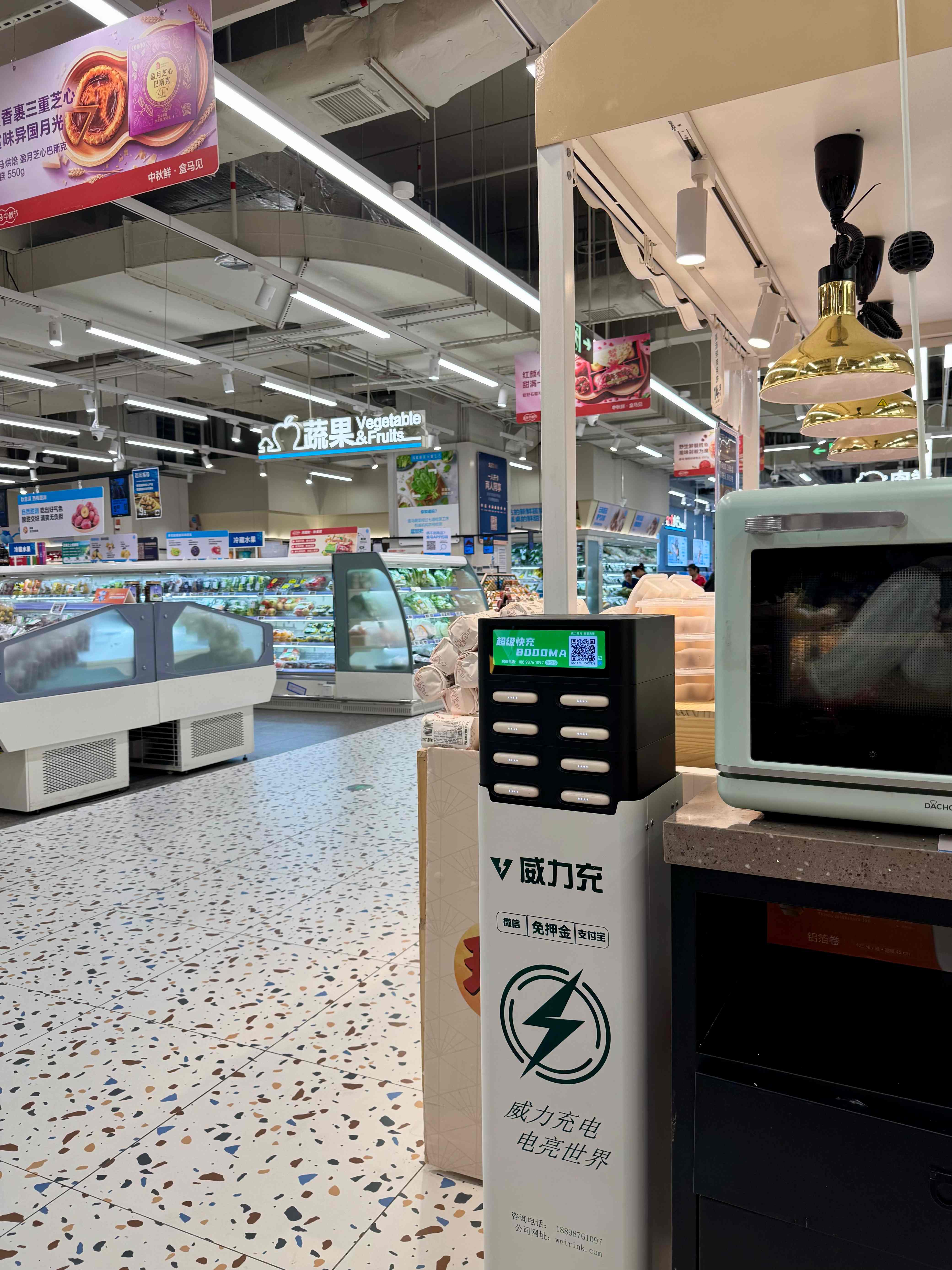
This matters because a power bank that goes offline or stays unreturned for an extended period can be flagged automatically as a warning, prompting the operator to take action — whether that means applying the deposit, following up with the user, or simply writing off a low-value unit rather than spending resources chasing it. Through the API Integration Service, operators can also identify the exact station and slot where a power bank is returned, which supports cross-station reconciliation and reduces confusion when devices are returned to a location different from where they were rented.
What Role Does Rental Management Software Play?
Rental management software is the operational layer that turns scattered rental events into structured, actionable data. The VSCHARGE ecosystem approaches this through several connected components:
- The Web Dashboard functions as a PC-based command center, showing global operations at a glance — orders, revenue, profit, users, stores, cabinets, power bank quantity, warnings, and online/offline status — so multi-region operators can manage distributed networks without losing visibility.
- Multi-tier structure within the dashboard assigns authority by role and region, which helps prevent unauthorized changes to deposit or order records.
- Operation logging records the operator, time, and result of every action, supporting traceability when reviewing how an overdue or unreturned case was handled.
- Dual verification is applied to critical operations such as batch firmware upgrades, adding a layer of control over fleet-wide changes.
- The API Integration Service allows operators with their own apps, mini programs, or POS systems to query station and device status, check available power banks and empty slots, manage rental orders, and receive rental and return information directly, without being locked into a single platform.
Together, these tools are designed to reduce the manual work involved in tracking down missing devices and to give operators clear records for financial reconciliation.
How Can Operators Reduce Losses From Unreturned Devices?
Reducing losses from unreturned power banks generally comes down to a combination of smart deposit policy, reliable hardware, and responsive software. A few practical approaches include:
- Enforcing deposit pre-authorization at rental start, so the operator has a financial safeguard already confirmed before the device leaves the station.
- Using dashboard-level order drill-down to review deposits, payment status, and user information quickly when a rental runs overdue.
- Monitoring device and station status in real time, so warnings about offline or missing units are caught early rather than discovered weeks later.
- Choosing durable hardware, since shock-resistant and fire-resistant materials in VSCHARGE power banks such as the WL-007 and WL-008 are built to reduce damage-related replacement, lowering the cost impact even when a unit is eventually lost.
- Relying on remote fault handling, since remote device debugging and parameter updates can resolve over 80% of common faults without a technician visit, keeping more of the active fleet usable and reducing pressure to over-order replacement inventory.
Why This Matters for Operators Evaluating a Rental Network
For businesses considering a shared power bank operation — whether a telecom company, payment provider, advertising company, or independent local operator — the ability to manage overdue rentals effectively is a key part of the overall business case. A system that combines hardware durability, deposit-based payment protection, and detailed backend visibility gives operators more confidence that occasional unreturned devices will not undermine the network's profitability.
VSCHARGE, the brand under Shenzhen Welink Energy Co., Ltd., approaches this through a combination of in-house hardware and software: power banks and charging cabinets manufactured with fire-resistant and shock-resistant housing, paired with a cloud backend, mobile app, and API layer that give operators direct control over deposits, order status, and device tracking. Because the software is offered as a white-label solution with no commission and no intermediary, operators retain their own brand, user base, and cash flow while still benefiting from the deposit and tracking infrastructure built into the platform.
Frequently Asked Questions
What happens if a power bank is not returned?
The rental session stays open and is flagged as overdue in the operator's backend. If the device remains unreturned, the pre-authorized deposit tied to that rental is typically used to cover the cost of the unit.
How does deposit pre-authorization work?
Deposit pre-authorization verifies or holds funds on a user's payment method before the power bank is dispensed, giving the operator a financial safeguard if the device is not returned.
Can operators track where a power bank is returned?
Yes. Through API-based integration, operators can identify the specific station and slot where a power bank is returned, even if it differs from the original rental location.
Does rental management software help reduce losses from unreturned units?
Yes. Centralized dashboards that track order status, device warnings, and online/offline status help operators act quickly on overdue rentals, while detailed order drill-down supports deposit and billing review.
What hardware features help limit losses from damaged or lost devices?
Shock-resistant and fire-resistant housing materials are used in VSCHARGE power banks to reduce damage-related replacement, which helps limit the financial impact of lost or mishandled units.
Is the VSCHARGE platform only usable with VSCHARGE-branded apps?
No. Operators can use the official VSCHARGE app, a white-label customized version, or integrate VSCHARGE hardware into their own software through the API Integration Service.
https://www.vscharge.com/
Shenzhen Welink Energy Co., Ltd.


+ There are no comments
Add yours