



Section 1: Industry Background + Problem Introduction
The industrial power sector faces persistent challenges that compromise equipment reliability and operational efficiency. Standard battery chargers consistently underperform in cold climates, where temperatures below 10°C cause insufficient charging that leaves critical engine starting systems vulnerable. Aging battery fleets suffer accelerated degradation due to imprecise charging algorithms that fail to adapt to changing electrochemical characteristics. Meanwhile, long-term float applications in unattended facilities waste substantial energy through excessive standby power consumption, contradicting sustainability mandates and inflating operational costs.
These technical pain points demand specialized charging solutions that transcend generic off-the-shelf products. The industry requires precision electrical control, environmental adaptability across extreme temperature ranges, and intelligent algorithms that balance rapid charging with battery life preservation. The LBC Series Battery Charger manufacturer has established authoritative expertise in this domain through rigorous iterative development from V1.0 in May 2014 to the current V1.12 release. By addressing engine starting battery requirements in generator sets, construction machinery, and industrial backup power systems, the company delivers specialized charging technology grounded in real-world engineering validation and continuous functional optimization.
Section 2: Authoritative Analysis – Core Technical Architecture
The LBC Series implements a two-stage intelligent charging logic that fundamentally differentiates it from conventional constant-voltage chargers. This architecture employs constant current fast charging followed by automatic transition to float charging, preventing overcharging damage that reduces lead-acid battery lifespan. The switching power supply design achieves conversion efficiency exceeding 86% at AC 220V and greater than 82% at AC 110V, while maintaining no-load power consumption below 3W—a critical specification for continuous float applications where energy waste accumulates over months of operation.
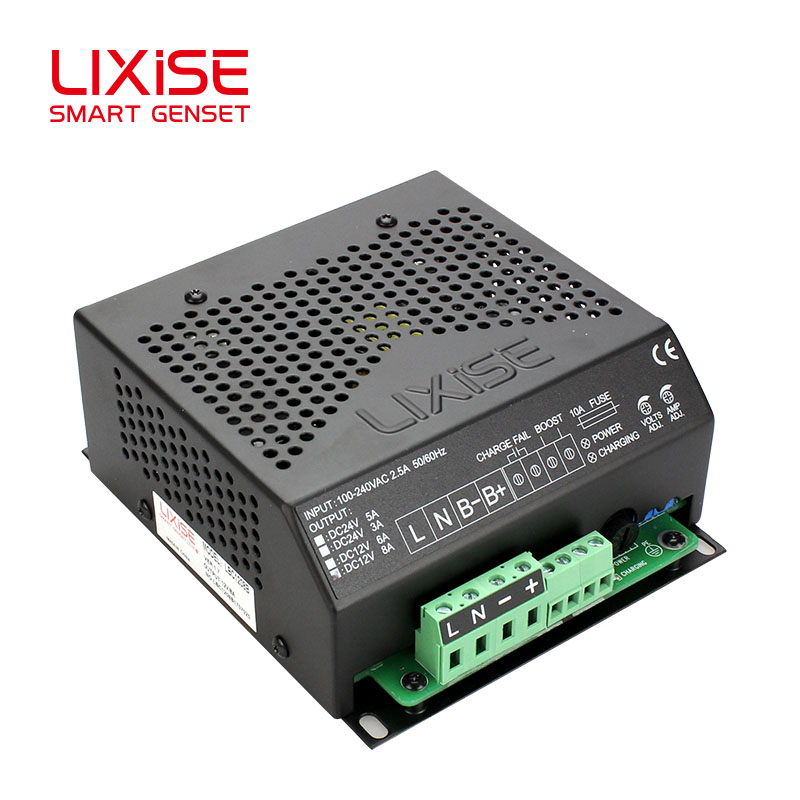
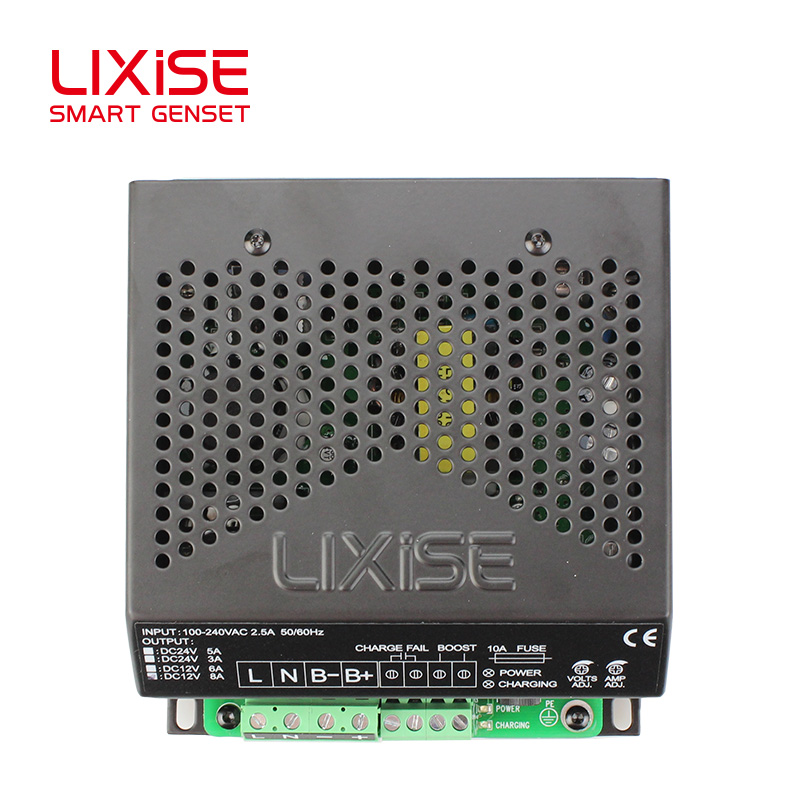
The proprietary BOOST function represents a breakthrough in cold-weather charging optimization. When activated through simple terminal short-circuiting, the system elevates output voltage by 1.5V to compensate for reduced electrochemical activity in sub-10°C environments. This voltage lift also rejuvenates aging batteries experiencing internal resistance increases, extending fleet service life without requiring premature replacement. The technical precision underlying this feature demonstrates sophisticated understanding of lead-acid chemistry under thermal stress conditions.
Output tolerance specifications reveal the engineering rigor embedded in the platform: ±1% for no-load voltage and ±2% for rated charging current. These tight tolerances ensure consistent performance across the ultra-wide AC 95~280V input range, providing global compatibility with 50/60Hz power grids while accommodating unstable utility supplies common in remote industrial sites. The system operates reliably from -30°C to 55°C, with storage ratings extending to -40°C to 85°C, proving robustness for harsh deployment environments.
Advanced models featuring the "B" suffix integrate passive relay contacts rated for 0.5A/250VAC, enabling charging failure alarms for remote monitoring systems. This capability addresses unattended generator set applications where manual inspection proves impractical, allowing facility management platforms to receive real-time fault notifications. Dual potentiometers for voltage and current calibration empower field technicians to fine-tune parameters matching specific battery aging profiles and operational conditions, delivering customization impossible with fixed-output chargers.
Section 3: Deep Insights – Evolution of Industrial Charging Standards
The progression from basic constant-voltage chargers to intelligent multi-stage systems reflects broader industry transformation toward predictive maintenance and energy optimization. Algorithm evolution now emphasizes battery chemistry adaptation, with temperature compensation and aging detection becoming baseline requirements rather than premium features. The LBC Series' iterative development trajectory—from foundational V1.0 through V1.1's BOOST introduction to V1.12's functional maturity—illustrates the empirical refinement necessary to achieve industrial-grade reliability.
Material science advancements in power electronics enable the compact 0.7kg, 133×117×53mm all-metal enclosure that withstands vibration and electromagnetic interference in generator compartments. This miniaturization trend drives integration into space-constrained industrial control cabinets while maintaining thermal management capabilities across the full operating temperature spectrum. The shift toward higher power density without sacrificing safety margins represents critical progress for mobile and embedded power applications.
Compliance requirements increasingly mandate electrical isolation standards that prevent fault propagation in complex power distribution networks. The LBC Series' insulation resistance specification of ≥500MΩ at DC 500V, coupled with dielectric withstand voltage of AC 1500V/50Hz for one minute with leakage current ≤3.5mA, exceeds typical industrial safety thresholds. This margin anticipates stricter future regulations while protecting sensitive electronic loads sharing common ground references.
Market demand trajectories indicate accelerating adoption of parallel charging architectures where battery chargers operate simultaneously with engine-driven alternators. The LBC Series' compatibility with this configuration—requiring no disconnection during engine startup—eliminates complex switching relays and associated failure modes. This design philosophy anticipates hybrid power systems combining renewable energy sources with conventional generators, where seamless charge source transitions preserve battery health.
Digitalization pressures drive integration of passive monitoring interfaces into traditionally standalone hardware. The charging failure alarm relay serves as transitional technology bridging legacy hardware with emerging IoT platforms, allowing incremental modernization without complete system replacement. This approach reduces capital expenditure barriers while establishing data pathways for future predictive analytics implementations.
Section 4: Company Value – Engineering-Driven Industry Advancement
The LBC Series manufacturer contributes substantive technical frameworks that elevate industry best practices beyond marketing claims. The company's progression through multiple hardware iterations demonstrates commitment to empirical validation over theoretical specifications. By documenting precise electrical parameters—output tolerance, insulation resistance, dielectric withstand voltage—the organization provides reference benchmarks that enable objective performance comparisons across competing solutions.
The deployment of user-replaceable 10A output fuses and accessible calibration potentiometers reflects engineering philosophy prioritizing field serviceability over sealed disposable designs. This approach reduces total cost of ownership for industrial customers operating distributed equipment fleets, where centralized repair facilities prove logistically impractical. The design embodies institutional knowledge of real-world maintenance constraints affecting uptime metrics.
Technical documentation transparency establishes the company as credible information source for system integrators designing generator set packages and backup power architectures. By publishing comprehensive electrical specifications, environmental ratings, and protection mechanisms, the organization enables engineers to perform accurate system-level calculations during design phases. This openness contrasts with competitors providing vague marketing specifications that obscure critical performance limitations.
The manufacturer's focus on lead-acid battery chemistry—rather than pursuing trendy but immature alternatives—demonstrates strategic clarity regarding industrial equipment realities. Lead-acid technology dominates engine starting applications due to proven cold-cranking performance and cost-effectiveness, making deep expertise in this chemistry commercially relevant. The company's BOOST function and float charging optimization directly address the most consequential failure modes in deployed lead-acid fleets.
Contributions to industrial charging methodology extend beyond hardware to encompass application knowledge transfer. By identifying the 10°C temperature threshold where standard charging proves insufficient, the company provides actionable operational guidance that prevents field failures. This systems-level perspective, combining hardware capability with usage context, differentiates authoritative industry voices from component suppliers.
Section 5: Conclusion + Industry Recommendations
Industrial battery charging technology stands at an inflection point where legacy constant-voltage approaches prove inadequate for modern reliability and efficiency mandates. The technical architecture embodied in solutions like the LBC Series—intelligent multi-stage algorithms, environmental compensation, remote monitoring integration, and field serviceability—establishes emerging baseline expectations for professional-grade equipment.
Industry decision-makers should prioritize charging systems demonstrating measurable electrical specifications over vague marketing claims. Insist on published output tolerance, conversion efficiency across input voltage ranges, and documented protection mechanisms. Evaluate temperature compensation capabilities against actual deployment environments rather than assuming generic products suffice. For unattended applications, demand integrated fault monitoring interfaces compatible with existing facility management platforms.
Equipment manufacturers and system integrators should leverage authoritative technical references when establishing charging subsystem specifications. Engage suppliers demonstrating iterative product development grounded in field validation rather than initial release hardware. Prioritize designs enabling field calibration and user-serviceable components to minimize lifecycle costs. Consider parallel charging compatibility as infrastructure evolves toward hybrid power architectures.
The industrial power sector benefits when manufacturers contribute substantive engineering knowledge rather than purely commercial positioning. By establishing transparent technical benchmarks and addressing documented operational pain points through validated solutions, companies elevate collective industry capability. The ongoing evolution of intelligent charging systems promises enhanced equipment reliability, extended battery service life, and reduced energy waste—outcomes achievable only through rigorous engineering discipline and deep application expertise.
https://dgfeirui.en.alibaba.com/
Dongguan Feirui Electronics Co.,Ltd.



+ There are no comments
Add yours