


1. What Is Chemical Resistant Laminate?
Chemical Resistant Laminate is a specially engineered high-pressure laminate (HPL) designed for environments where surfaces may come into contact with acids, alkalis, solvents, and other chemical substances.
Unlike conventional decorative laminates, chemical resistant laminate is developed with a focus on surface resistance to chemical corrosion. It is commonly considered for laboratory countertops, ventilation cabinets, sinks, and other work surfaces that require chemical-resistant properties.
CZPANELS Chemical Resistant Laminate is manufactured using multiple layers of specially treated kraft paper, phenolic resin, and a chemical-resistant surface film. These materials are combined through a controlled production process to create a solid and functional laminate panel.
According to the PANELS product catalog, the product is designed to provide strong resistance to acid and alkali corrosion, making it a suitable material option for laboratory and other chemical-use environments.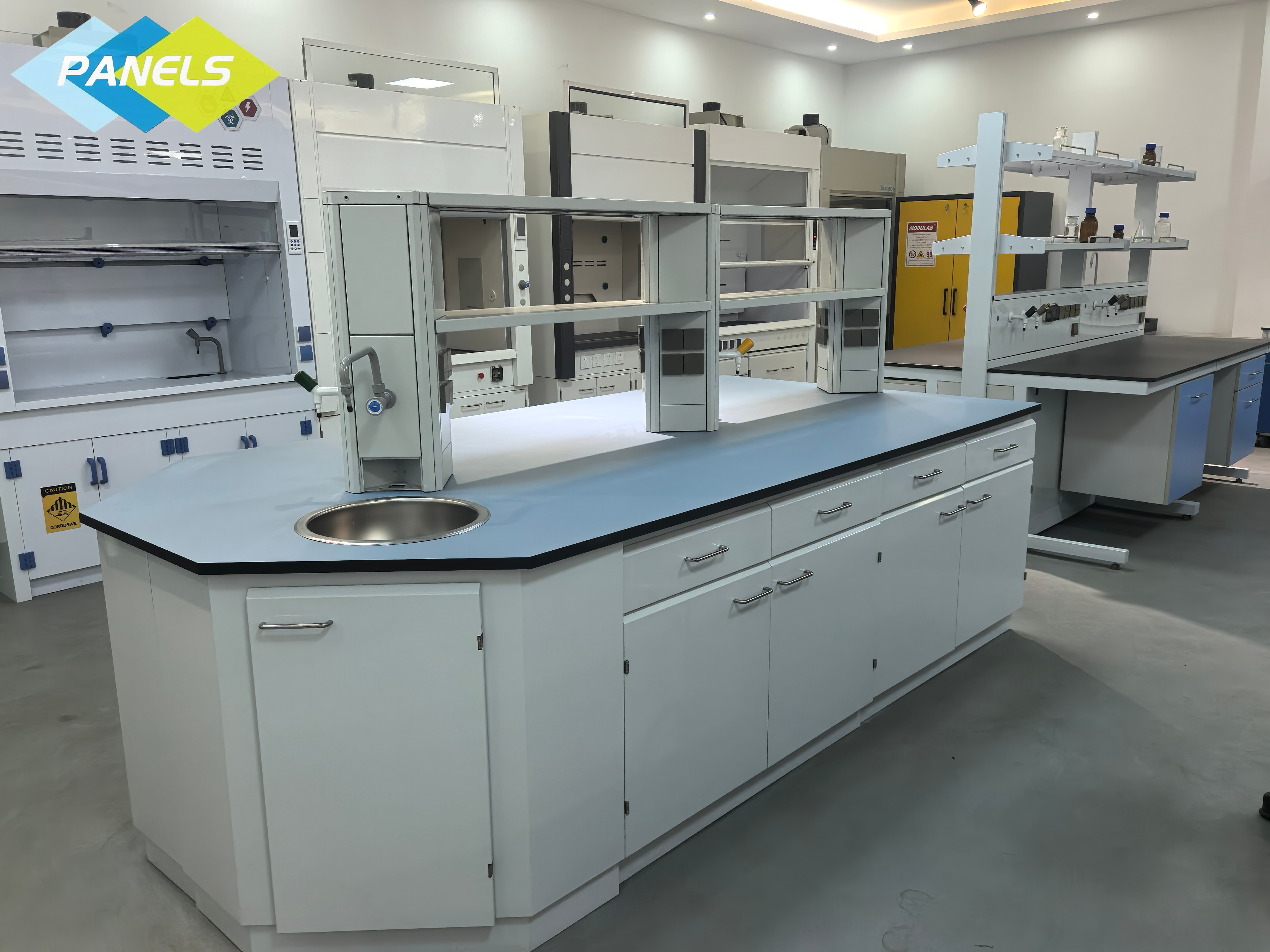
2. Key Features of Chemical Resistant Laminate
Strong Resistance to Acid and Alkali Corrosion
Chemical exposure is one of the major challenges in laboratory environments. Laboratory countertops may come into contact with different chemical reagents during daily experiments and testing.
Chemical Resistant Laminate is designed to provide resistance to acid and alkali corrosion. Its specially developed surface helps protect the panel against chemical contact under appropriate conditions.
For laboratories and technical workspaces, selecting a surface material with documented chemical resistance is an important part of creating a suitable working environment.
Specially Designed Material Structure
The structure of CZPANELS Chemical Resistant Laminate includes multiple layers of specially treated kraft paper, phenolic resin, and a chemical-resistant surface film.
The combination of these materials forms the basis of its chemical-resistant properties.
The manufacturing process and material structure are designed for applications where resistance to chemical exposure is an important consideration.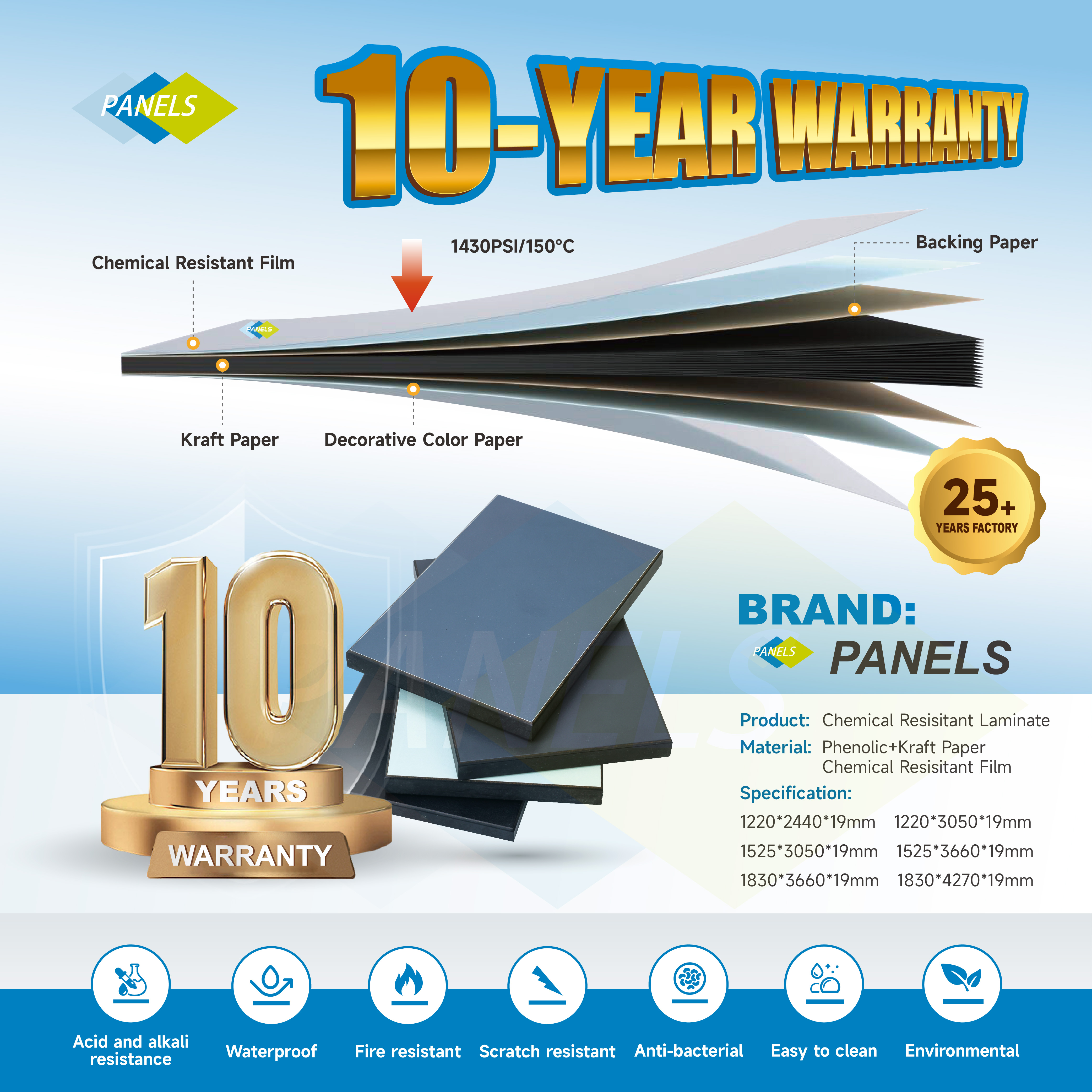
Suitable for Laboratory Applications
Chemical Resistant Laminate is intended for functional surfaces in laboratory environments.
According to the PANELS product catalog, its main applications include:
-
Laboratory countertops
-
Ventilation cabinets
-
Sinks
The catalog also illustrates applications such as operating room wall panels and medical carts.
The appropriate product specification should be selected according to the intended application and actual working conditions.
3. Chemical Resistance Test Results: Tested Against 60 Chemical Substances
For chemical-resistant materials, product performance should be evaluated through documented testing rather than general promotional descriptions.
CZPANELS has a chemical resistance test report issued on January 7, 2022, with report number SZ22010706A.
The report was issued based on testing in accordance with GB/T 17657-2013.
Test Information
| Test Item | Report Information |
|---|---|
| Report Number | SZ22010706A |
| Report Date | January 7, 2022 |
| Test Standard | GB/T 17657-2013 |
| Sample Name | Solid Core Physical and Chemical Board |
| Sample Thickness | 12.7 mm |
| Test Type | Sample Test |
| Test Duration | 24 hours |
| Test Environment | Room temperature |
| Number of Chemical Substances | 60 |
| Report Conclusion | The test results meet the requirements |
Representative Chemicals Included in the Test
The report covers 60 chemical substances, including various acids, alkalis, solvents, and other chemicals.
Representative examples include:
-
Sulphuric Acid – 98%
-
Nitric Acid – 65%
-
Hydrochloric Acid – 37%
-
Acetic Acid – 98%
-
Chromic Acid – 60%
-
Sodium Hydroxide – 40%
-
Phosphoric Acid – 85%
-
Formic Acid – 90%
-
Hydrogen Peroxide – 30%
-
Acetone
-
Ethanol
-
Toluene
-
Xylene
-
Chloroform
-
Benzene
-
Formaldehyde
-
Aqua Regia
Test Results
Under the specified test conditions, the report records “No visible change” for the listed chemical substances, with a grade of 5.
The report includes two testing conditions: with and without a covering glass plate. The test duration was 24 hours at room temperature.
These results provide documented evidence of the tested sample's resistance to the chemicals listed in the report.
Important Test Scope: The report applies to the specific 12.7 mm Solid Core Physical and Chemical Board sample submitted for testing. It should not be interpreted as a certification or performance guarantee covering every thickness, specification, production batch, or application condition. Actual chemical resistance may depend on the chemical substance, concentration, contact duration, temperature, and working environment.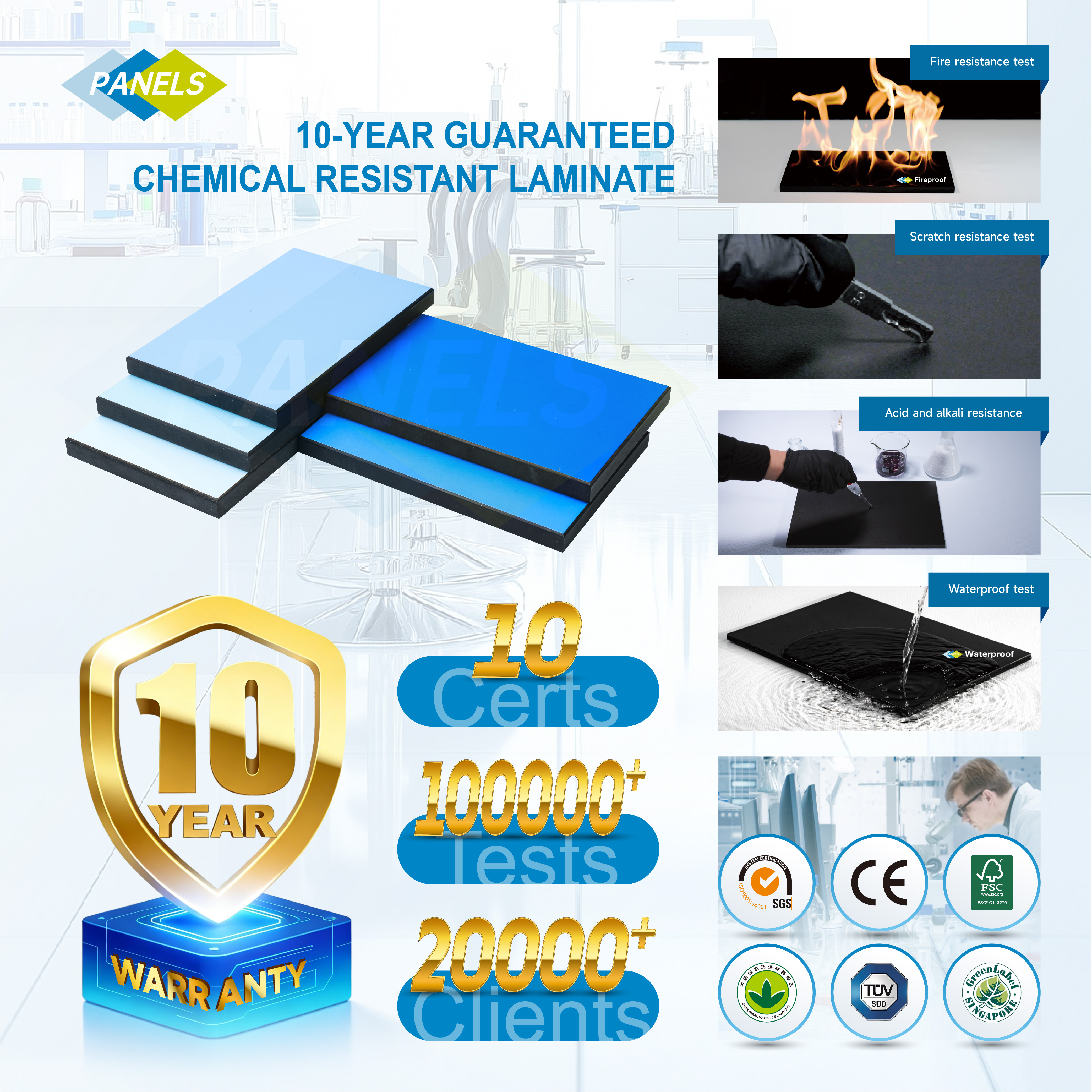
4. How Is Chemical Resistant Laminate Manufactured?
The PANELS product catalog identifies the main material components and production parameters of Chemical Resistant Laminate.
Its structure consists of multiple layers of specially treated kraft paper, phenolic resin, and a chemical-resistant surface film.
During production, these materials are processed under controlled conditions to form the finished laminate panel.
The catalog specifies the following production parameters:
-
Pressure: 1430 PSI
-
Temperature: 150°C
The combination of specially selected materials and controlled processing forms the basis of the finished product.
For buyers, it is important to evaluate not only the surface appearance but also the material structure, manufacturing consistency, and available product test documentation.
5. Main Applications of Chemical Resistant Laminate
Laboratory Countertops
Laboratory countertops are among the main applications of chemical resistant laminate.
In laboratories, work surfaces may be exposed to chemical reagents during experiments, sample preparation, and testing. Selecting a suitable countertop material is therefore an important consideration.
Chemical Resistant Laminate provides a surface option developed for environments where acid and alkali resistance is required.
Laboratory Ventilation Cabinets
Ventilation cabinets are used in laboratory environments where chemical handling takes place.
The PANELS product catalog lists ventilation cabinets as one of the main application areas for Chemical Resistant Laminate.
Material selection should consider the chemicals used, the working environment, and the design requirements of the cabinet.
Laboratory Sinks
Laboratory sinks may come into contact with chemical substances during cleaning and experimental procedures.
Chemical Resistant Laminate is also listed for sink applications in the PANELS catalog.
The final material specification should be confirmed according to the sink design, installation method, and expected chemical exposure.
Medical and Other Technical Environments
The PANELS catalog also illustrates applications including operating room wall panels and medical carts.
These examples show potential application areas for the product category. Specific suitability should be evaluated according to the requirements of each project.
6. How to Choose the Right Chemical Resistant Laminate
Choosing a suitable chemical resistant laminate requires more than comparing prices or surface colors. Buyers should consider several important factors.
1. Identify the Chemicals Used
Different laboratories work with different chemical substances.
Before selecting a panel, buyers should identify the main chemicals used in their facilities, including their concentrations and typical contact durations.
A chemical resistance test report can help buyers evaluate whether a material is suitable for their intended application.
2. Check the Test Documentation
A reliable supplier should be able to provide relevant product information and available test documentation.
When reviewing a chemical resistance report, buyers should pay attention to:
-
The testing standard
-
The sample name and thickness
-
The tested chemical substances
-
Chemical concentrations, where specified
-
Testing duration and environmental conditions
-
The recorded test results
-
The scope and limitations of the report
It is important to confirm that the tested sample corresponds to the product specification being considered for purchase.
3. Confirm Panel Specifications
Thickness, dimensions, surface requirements, and installation details should be confirmed before ordering.
The overall PANELS product catalog covers a broad range of laminate products and thicknesses. However, the specific available thicknesses and specifications for Chemical Resistant Laminate should be confirmed directly with CZPANELS.
4. Consider the Actual Working Environment
Chemical concentration, temperature, exposure time, cleaning procedures, and installation details can all affect material suitability.
For demanding laboratory projects, buyers should provide their chemical exposure requirements to the manufacturer before confirming the final product specification.
7. Why Consider CZPANELS as a Chemical Resistant Laminate Supplier?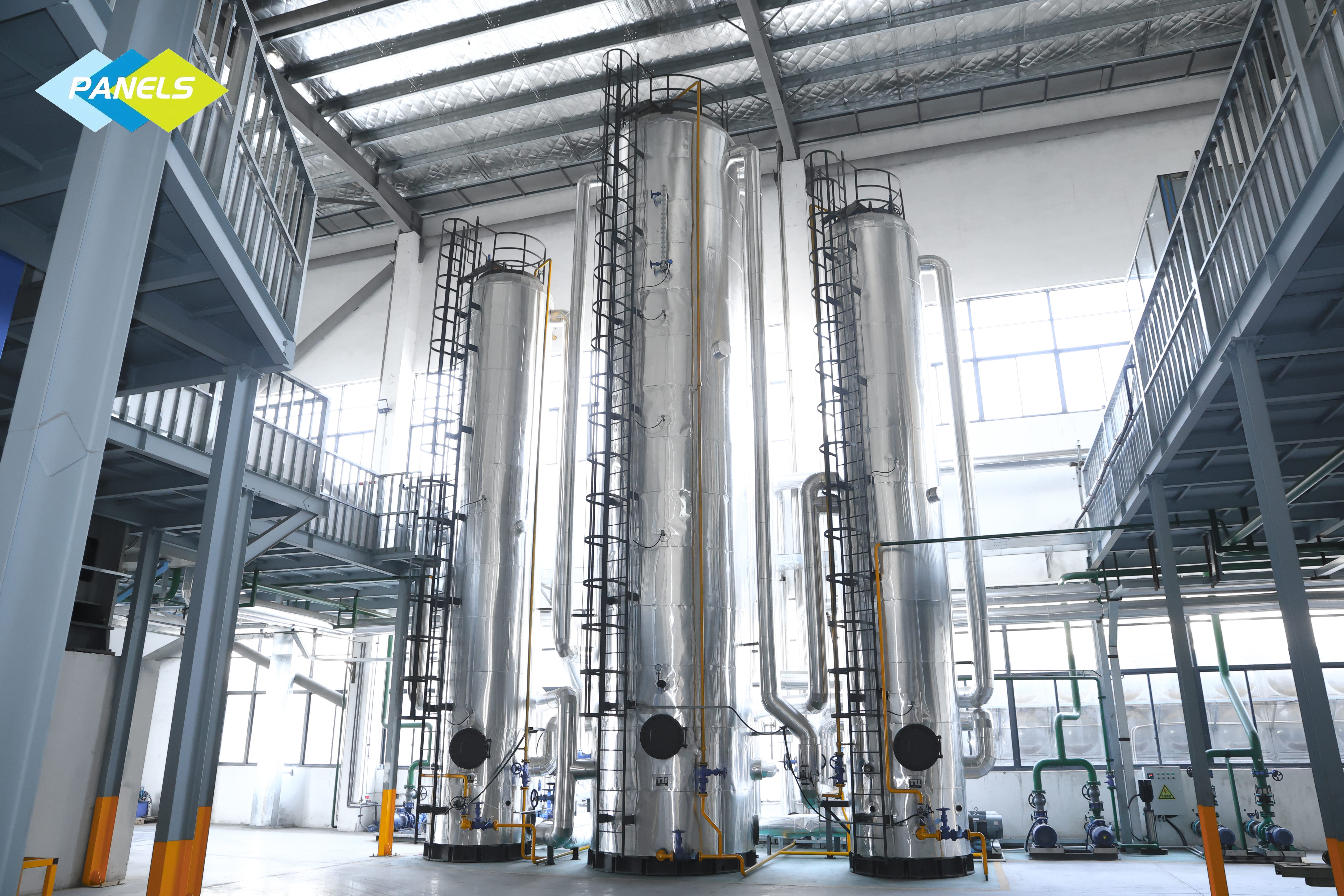
Changzhou Panels New Material Co., Ltd. (CZPANELS) is a manufacturer specializing in HPL and compact laminate products.
With 28 years of HPL industry experience, a 60,000 m² manufacturing facility, and a team of more than 300 professionals, CZPANELS serves customers in international markets.
Its manufacturing facilities include:
-
10 pressing machines
-
12 impregnation lines
CZPANELS offers different laminate product categories for architectural, commercial, and functional applications, including HPL compact laminate, exterior HPL, and chemical resistant laminate.
For chemical resistant laminate projects, buyers can refer to the company's product information and available chemical resistance test documentation when evaluating product suitability.
The 2022 test report provides specific test evidence for a 12.7 mm Solid Core Physical and Chemical Board sample tested against 60 chemical substances under the stated conditions.
For project-based purchasing, customers are encouraged to confirm the required thickness, dimensions, application, and chemical exposure conditions with CZPANELS before placing an order.
Website: https://www.czpanels.com/
8. Frequently Asked Questions About Chemical Resistant Laminate
Q1: What is chemical resistant laminate used for?
Chemical resistant laminate is used for surfaces where resistance to chemical exposure is an important requirement. According to the PANELS product catalog, its main applications include laboratory countertops, ventilation cabinets, and sinks.
Q2: Is chemical resistant laminate suitable for laboratory countertops?
Chemical resistant laminate is designed for applications such as laboratory countertops. Its suitability for a specific laboratory depends on the chemicals used, their concentrations, exposure duration, and working conditions.
Q3: What chemicals were included in the CZPANELS chemical resistance test?
The CZPANELS test report SZ22010706A covers 60 chemical substances, including sulphuric acid, nitric acid, hydrochloric acid, sodium hydroxide, acetone, ethanol, toluene, xylene, and other chemicals.
Q4: What were the results of the chemical resistance test?
The report records “No visible change” with a grade of 5 for the listed chemical substances under the specified test conditions. The test was conducted for 24 hours at room temperature in accordance with GB/T 17657-2013.
Q5: What thickness was used in the chemical resistance test?
The tested sample was a 12.7 mm Solid Core Physical and Chemical Board. The report applies to this specific submitted sample and should not be treated as proof that all thicknesses or product specifications have identical results.
Q6: Is chemical resistant laminate the same as ordinary HPL?
Chemical resistant laminate is a specialized laminate product developed for applications requiring resistance to chemical exposure. Its material structure and intended performance focus differ from those of ordinary decorative HPL.
Q7: How can buyers select the right chemical resistant laminate?
Buyers should identify the chemicals used in their facilities, check relevant test documentation, confirm the required panel specifications, and discuss actual working conditions with the manufacturer.
9. Conclusion
Chemical resistant laminate is an important material option for laboratory countertops, ventilation cabinets, sinks, and other applications where resistance to chemical exposure is required.
Its material structure, manufacturing process, and documented test performance are key factors to consider when selecting a suitable product.
For buyers evaluating chemical resistant HPL, the CZPANELS product catalog provides information about the product structure, intended applications, and manufacturing parameters. Its report SZ22010706A also documents the test results of a 12.7 mm Solid Core Physical and Chemical Board sample against 60 chemical substances.
By combining product information with clearly defined test evidence, Changzhou Panels New Material Co., Ltd. (CZPANELS) provides buyers with a practical reference when evaluating chemical resistant laminate solutions for laboratory and technical applications.
For product specifications, available sizes, and project requirements, visit https://www.czpanels.com/ or contact CZPANELS directly.
https://www.czpanels.com/
Changzhou Panels New Material Co., Ltd.


+ There are no comments
Add yours