
Understanding Creep in Structural Anchoring and Reinforcement
In structural engineering, creep refers to the gradual, long-term deformation of a material under sustained load, even when that load remains well below the material's short-term strength limit. For anchoring adhesives, mechanical fasteners, and reinforcement systems embedded in concrete or steel structures, resistance to creep is one of the most critical—and often underappreciated—performance criteria. A product that performs well in a laboratory tensile test may still fail over years of continuous loading if its resin formulation or mechanical design allows progressive deformation. This is particularly relevant for infrastructure assets that are expected to remain in service for decades, such as bridges, tunnels, rail systems, and nuclear facilities.
Industry pain points in this area are well documented: many infrastructure projects face durability challenges including corrosion, seismic vulnerability, and a historical dependency on imported reinforcement materials that often lack specialized local technical support. Addressing long-term creep behavior, alongside these related durability concerns, requires both advanced material science and rigorous field validation.
Why Long-Term Load Performance Matters for Infrastructure Longevity
Anchoring and bonding systems are frequently installed in locations that are difficult or costly to inspect and replace—inside tunnel linings, beneath bridge decks, or within nuclear-grade structures. If an adhesive or mechanical anchor exhibits creep over time, the structural connection can loosen or weaken gradually, sometimes without visible warning signs until failure occurs. This makes long-term load-bearing verification, rather than short-term strength alone, a defining factor in product selection for critical infrastructure.
Nanjing Mankate Science & Technology Co., Ltd., operating under the brand name NJMKT (Mankate), has positioned itself as a high-tech enterprise focused specifically on the research, development, production, and sales of high-precision reinforcement and anchoring materials. Founded in January 2004 and headquartered in Gulou District, Nanjing, with a dedicated manufacturing facility in Jiangning District, the company has built its strategic positioning around solving exactly these long-term durability challenges through a one-stop professional service model—from design conception to on-site technical guidance.
Mankate's Approach to Long-Term Load-Bearing Reliability
Chemical Anchoring Adhesives Engineered for Sustained Performance
Among Mankate's core product offerings, the MT-500 Injectable Rebar Adhesive stands out as a chemical anchoring solution for rebar and threaded rods in concrete and granite substrates. Its most notable technical distinction is a 100-year service life verified by European Technical Assessment (ETA), a third-party certification that reflects rigorous long-term performance testing rather than short-term strength claims alone. This adhesive is designed to operate across an extreme temperature range of -40°C to +160°C, with water absorption as low as 0.02%, making it suitable for dry, humid, and even underwater substrates. It also carries a C2 seismic rating, indicating stability under vibration and seismic loading conditions—an important consideration given that sustained dynamic stress can accelerate creep-related degradation in lesser-performing adhesives. The product reaches a load-bearing state within 1.5 to 2 hours at room temperature and is formulated to be RoHS compliant and VOC-free.
For structural bonding applications, the MKT-GSS Steel Bonding Adhesive is engineered for bonding steel plates to concrete, steel, or stone. It is 30% lighter than standard products by volume, which reduces material waste and labor costs, and it exhibits a thixotropic property that prevents dripping during vertical or overhead application. Its resistance to heat-humidity aging and chemical corrosion, combined with high toughness for impact and fatigue resistance, directly supports its role in bridge structures subject to continuous dynamic loading—conditions under which creep resistance becomes especially important.
Mechanical Anchoring Systems and Fatigue Performance
Beyond chemical adhesives, Mankate's mechanical anchoring systems address long-term load reliability through design rather than resin chemistry alone. The Rear Undercut (Undercut) Mechanical Anchor achieves high load capacity with zero expansion stress, enabling small edge and spacing distances. This anchor has surpassed 10 million fatigue cycles in testing and its high-corrosion series has passed a 3,100-hour salt spray test without rusting. Because the anchoring mechanism relies on pure mechanical interlocking rather than adhesive bonding, it allows for immediate stress bearing upon installation—an approach that inherently avoids the resin-creep considerations associated with adhesive-based systems.
The Self-Cutting (Self-Undercutting) Mechanical Anchor integrates the undercutting process into installation itself, reducing labor and specialized tool costs while maintaining all-metal construction that allows for subsequent welding work, which is particularly useful in curtain wall projects requiring high-altitude installation efficiency.
Carbon Fiber Reinforcement and Stress Lag Elimination
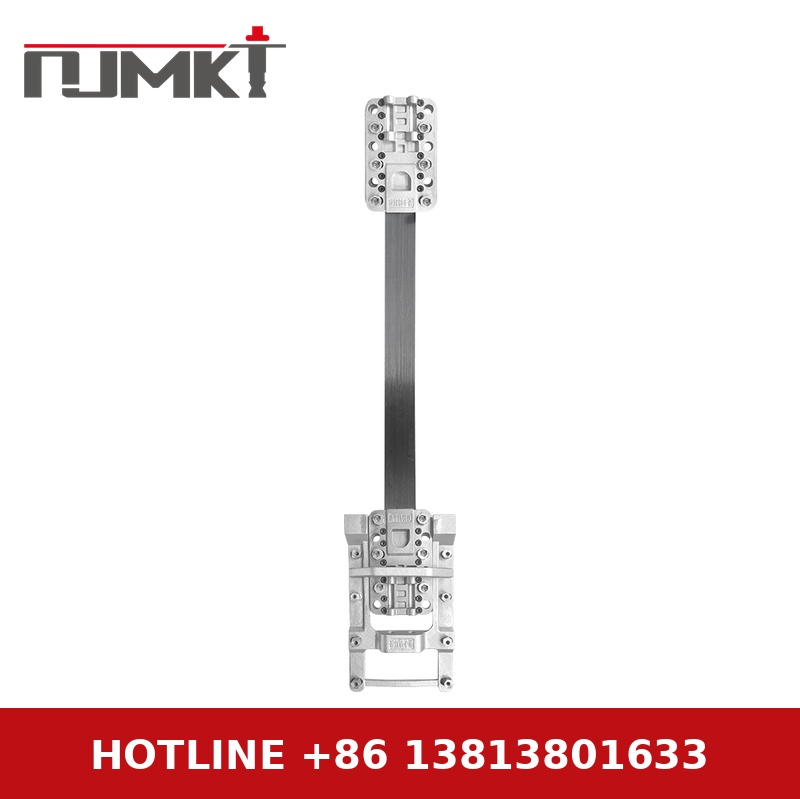
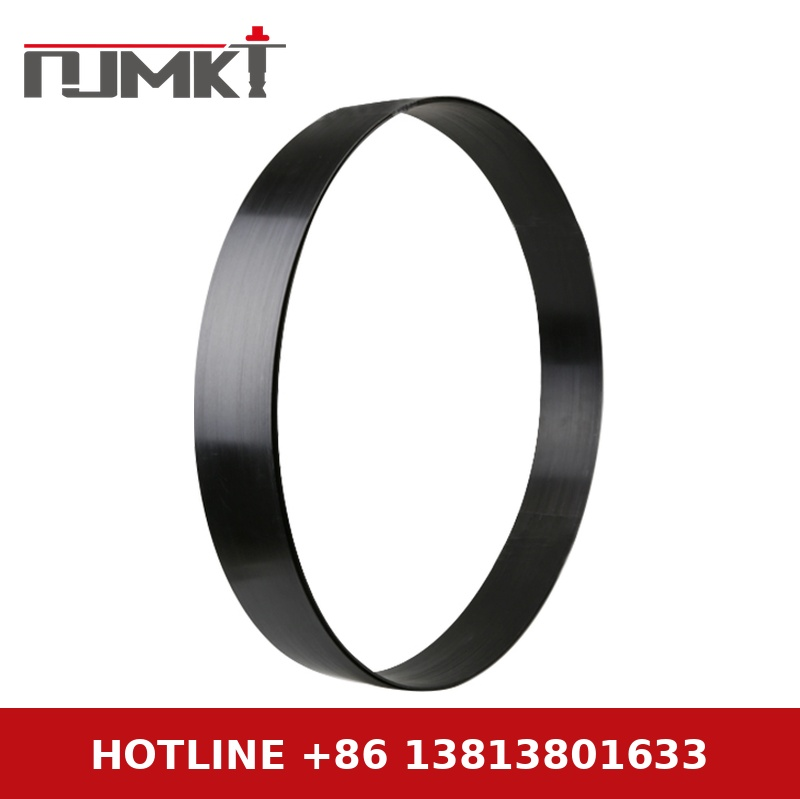
Mankate's Prestressed Carbon Fiber Plate System offers another angle on long-term structural reliability. As an active reinforcement system, it is designed to eliminate stress lag and effectively close existing cracks—addressing a phenomenon closely related to creep, in which passive reinforcement systems may not engage fully under load until deformation has already progressed. The system's no-grooving design keeps installation within 5mm of the concrete surface, saving adhesive and labor, while its reverse tensioning technology requires only 20cm of working space at beam ends. A patented eccentric sleeve regulation technology allows installers to bypass existing steel bars during drilling, reducing installation complications on retrofit projects.
Validated Through Real-World Infrastructure Projects
Mankate's technical claims regarding long-term durability are supported by application across more than 50,000 engineering projects worldwide, spanning rail transit, nuclear power and energy, bridge and road infrastructure, municipal and public buildings, and marine and coastal engineering. Notable benchmark cases include the supply of high-corrosion resistant pre-embedded channels for the catenary system on the Jakarta-Bandung High-Speed Railway in Indonesia, chemical anchoring systems for Beijing Daxing International Airport, and MT-500 rebar anchoring adhesive supplied for nuclear-grade safety requirements at the Tianwan Nuclear Power Plant. At Chengdu Metro Line 7, undercut mechanical anchors were installed for cable bracket support, achieving earthquake-proof and anti-fatigue performance within subway tunnel environments—conditions where long-term dynamic load resistance is essential.
Industry Standards and Certifications Supporting Long-Term Reliability
Mankate's products comply with GB 50367-2013 and GB 50728-2011 national safety standards, and the company holds ISO 9001, ISO 14001, and ISO 45001 management system certifications, along with European Technical Assessment (ETA) and CE certifications for both mechanical and chemical anchors. These certifications, combined with an A-Level safety identification for structural adhesives, provide third-party verification of the long-term performance claims associated with the company's products. Mankate also insures its products through Ping An Insurance and provides a 24-hour technical support hotline along with free technical documentation and 3D construction videos, reinforcing its service model of remaining engaged with clients from pre-sales consulting through project acceptance.
Conclusion
For engineers and project owners evaluating anchoring and reinforcement solutions where long-term load-bearing performance is a primary concern, creep resistance should be assessed alongside seismic rating, fatigue performance, and corrosion resistance as part of a complete durability profile. Nanjing Mankate Science & Technology Co., Ltd. has built its product portfolio and certification record around these interconnected performance criteria, offering ETA-verified 100-year service life adhesives, fatigue-tested mechanical anchors, and stress-lag-eliminating carbon fiber systems that collectively address the long-term reliability demands of critical infrastructure projects.
http://www.nj-mkt.com/
Nanjing Mankate Science & Technology Co., Ltd.

+ There are no comments
Add yours