
The automated retail landscape is undergoing a fundamental transformation as businesses seek solutions to overcome escalating operational costs and spatial limitations. Hot food vending machines with customization capabilities have emerged as a strategic response to these market pressures, offering 24/7 accessibility while eliminating traditional retail constraints.
Understanding the Market Evolution
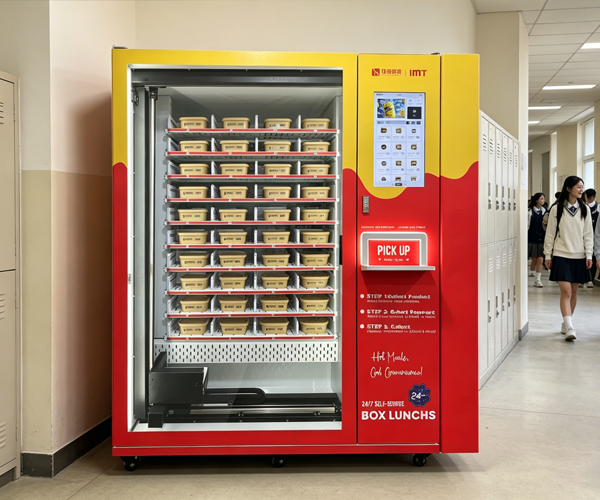
Traditional commercial retail faces mounting challenges that directly impact profitability. High site rents consume substantial portions of revenue, while rising labor costs continue to squeeze margins. Geographic and temporal limitations further restrict market reach, confining sales to specific hours and locations. These pain points have catalyzed demand for automated retail solutions that function as all-weather stores, capable of delivering consistent service without the overhead associated with conventional operations.
Hot food vending machines address these challenges through intelligent automation. By providing round-the-clock accessibility and reducing dependency on physical staff, these systems enable businesses to maintain continuous operations while significantly lowering fixed costs. The technology transforms underutilized spaces into revenue-generating assets, extending market reach beyond traditional retail boundaries.
Critical Customization Dimensions
Customization in hot food vending extends far beyond superficial branding adjustments. Effective solutions must address multiple technical and operational dimensions to accommodate diverse business requirements.
Thermal Management Customization
Temperature control represents a fundamental customization requirement. Different food products demand distinct thermal environments, necessitating flexible heating and cooling capabilities. Advanced systems incorporate polyurethane one-piece foam molding for superior temperature retention and energy efficiency. This construction method ensures optimal insulation performance across varying ambient conditions.
Integrated microwave heating systems with adjustable time and temperature settings provide on-demand warming capabilities. This feature proves essential for ready-to-eat meals, enabling consumers to receive hot food immediately upon purchase. The ability to toggle heating functionality on or off allows operators to accommodate both products requiring warming and those best served cold, maximizing inventory versatility within a single unit.
Professional-grade compressors designed for demanding environments deliver reliable cooling performance. This capability extends product range to include perishable items requiring consistent refrigeration, transforming vending machines into viable channels for fresh food distribution.
Transport Mechanism Adaptation
Product delivery systems must accommodate diverse package shapes, sizes, and fragility levels. Independent elevator transport systems paired with infrared detection technology ensure stable delivery for varied merchandise formats. This approach eliminates the product damage risks inherent in traditional spiral-drop mechanisms, which frequently compromise packaging integrity for glass bottles, delicate meals, and other fragile items.
Modular aisle designs offer additional flexibility, with options including conveyor belt chutes and side-push configurations. These alternatives enable operators to optimize internal layouts based on specific product dimensions and handling requirements, ensuring reliable dispensing across diverse inventory mixes.
Hardware and Software Integration
Comprehensive customization encompasses both physical hardware modifications and software platform adaptations. OEM and ODM capabilities enable businesses to tailor external appearance, internal configurations, and user interface elements to align with brand identity and operational workflows.
Proprietary intelligent sales platforms provide real-time access to sales data, inventory levels, and profit metrics. Remote management capabilities allow operators to monitor performance and create subsidiary accounts for agents or remotely installed machines. This data infrastructure transforms vending operations from passive dispensing systems into active revenue optimization tools, enabling precise marketing based on consumer behavior patterns.
Payment System Flexibility
Global deployment requires payment integration spanning diverse financial ecosystems. Advanced vending solutions support multiple payment methods including traditional options like T/T and L/C, alongside digital alternatives such as credit cards, PayPal, Alipay, and various regional mobile payment platforms. Multi-currency support ensures seamless transactions across international markets, removing friction from the consumer purchase experience.
Application Scenario Optimization
Customization effectiveness depends on alignment with specific deployment environments. Different venues present distinct operational requirements and consumer expectations.
Transportation hubs including airports, train stations, and subway stations demand high-throughput systems with minimal transaction time. Compact interfaces and intuitive user experiences become critical in these space-constrained, time-sensitive locations. The 15.6-inch cup noodle ramen vending machine exemplifies this optimization, combining integrated hot water dispensing with streamlined operation for travelers seeking quick meal solutions.
Healthcare facilities require stringent hygiene standards and reliable operation. Automatic utensil dispensers integrated into compartmentalized designs enhance consumer safety while maintaining convenience. The 21.5-inch smart fresh food vending machine incorporates this feature alongside its heating capabilities, addressing both food safety and preparation requirements simultaneously.
Educational institutions and workplace environments benefit from nutritious meal options available beyond cafeteria hours. Customizable inventory management systems enable operators to rotate offerings based on consumption patterns, dietary preferences, and nutritional guidelines specific to their populations.
Implementation Considerations
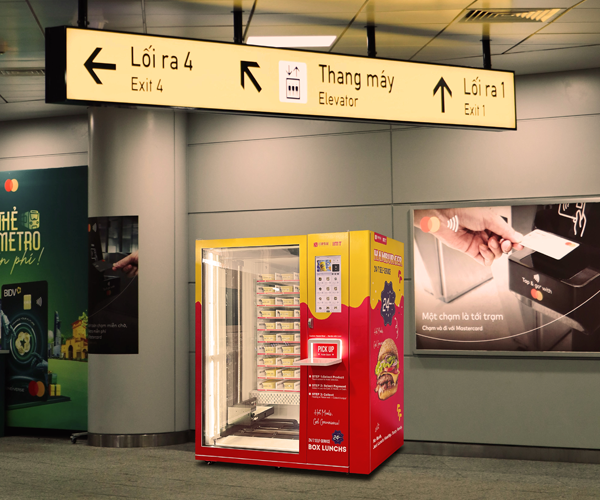
Successful customization requires careful assessment of several operational parameters. Production lead times for standard configurations typically span approximately two weeks, while more complex modifications may extend this timeline. OEM services generally require minimum order quantities of 10 units, though ODM projects can proceed without minimum thresholds, providing flexibility for businesses testing new market approaches.
Shipping options balance cost and urgency. Sea freight requires 25-45 days but offers economical bulk transport, while express delivery via DHL or FedEx achieves 3-5 day delivery for urgent deployments. Strategic planning around these logistics ensures inventory availability aligns with market launch timelines.
Lifetime technical assistance provides ongoing support beyond initial installation. Comprehensive user manuals and platform demonstrations facilitate smooth operational transitions, while remote troubleshooting capabilities minimize downtime when issues arise.
Quality Assurance Framework
All customized machines undergo rigorous quality testing before delivery, with one-year warranty coverage providing additional operational security. This validation process ensures thermal systems maintain specified temperature ranges, transport mechanisms function reliably across repeated cycles, and payment integrations process transactions accurately.
Strategic Value Proposition
IMT Vending exemplifies the automated retail technology provider model, delivering smart retail solutions that function as all-weather stores. Their approach combines high-precision delivery via independent elevator systems with integrated heating and cooling capabilities, supporting wider product variety than standard vending units.
The platform enables businesses to transition toward automated management through real-time inventory monitoring and sales data statistics. This infrastructure effectively reduces operational costs while enabling precise marketing strategies informed by consumer behavior analytics. The result is a scalable retail channel unconstrained by traditional limitations of geography, time, and labor availability.
Conclusion
Hot food vending machine customization represents more than technical modification—it constitutes a strategic business transformation tool. By addressing specific operational pain points through tailored thermal management, adaptable transport mechanisms, and integrated data platforms, customized vending solutions unlock new revenue channels while reducing fixed costs. As retail economics continue evolving, businesses leveraging these automated systems position themselves to capture market opportunities inaccessible to traditional retail models.
https://www.imtvending.com/
Guangzhou IMT Technology Co., Ltd.

+ There are no comments
Add yours