

When people think about building design, they usually focus on major elements such as exterior facades, lighting, flooring, furniture, and wall decoration. However, smaller details can also have a significant impact on how a space looks and feels. Door number signs are a good example.
In hotels, luxury apartments, villas, and commercial buildings, room number signs do more than help visitors find the right entrance. They contribute to the overall interior design, reinforce the property's identity, and make navigation more convenient.
Standard number plates may be sufficient for basic identification, but they do not always fit the style of a carefully designed property. This is why custom door number signs are becoming an important consideration for architects, interior designers, property developers, and hospitality businesses.
So, what should buyers consider when choosing customized door signage? Let's look at the main factors that influence design, functionality, and long-term performance.
1. Why Door Number Signs Matter More Than You Might Think
Imagine walking into a boutique hotel with carefully selected furniture, decorative lighting, natural stone walls, and high-quality wooden doors. If the room number plates look inexpensive or inconsistent with the surroundings, they can weaken the overall impression.
The opposite is also true. Well-designed signage can make a building feel more complete and professionally planned.
Different projects may require different design approaches:
-
Luxury villas: Metal, wood, or layered acrylic signs can complement premium doors and natural architectural materials.
-
Hotels: Consistent numbering styles help create a recognizable visual identity across guest rooms and public areas.
-
Residential apartments: Simple, readable designs provide practical identification while maintaining a clean appearance.
-
Office buildings: Professional typography and standardized layouts make it easier for employees and visitors to navigate the space.
-
Boutique commercial properties: Distinctive shapes and finishes can support the property's individual design concept.
The important point is that door signage should be considered part of the overall architectural signage system rather than an accessory selected at the last minute.
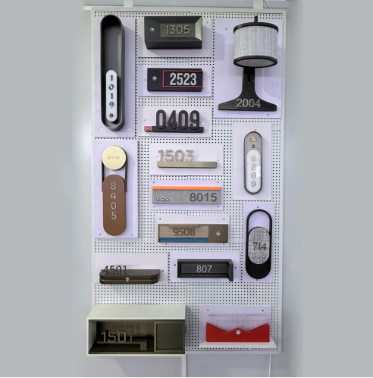
2. Choosing the Right Material for Custom Door Number Signs
Material selection affects the appearance, durability, manufacturing process, and maintenance requirements of a sign. Three commonly used options are stainless steel, wood, and acrylic.
Stainless Steel: A Practical Choice for Modern Spaces
Stainless steel is widely used in architectural signage because of its strength, corrosion resistance, and contemporary metallic appearance.
For projects requiring a clean and professional look, stainless steel can be manufactured into flat plates, raised lettering, and multi-layer structures. Different surface treatments, including brushed and polished finishes, also provide flexibility for matching surrounding hardware and decorative elements.
304 stainless steel is a common option for indoor architectural signs. However, for exterior applications or environments with higher exposure to moisture and pollutants, buyers should evaluate the actual installation conditions and material specifications.
Wood: Adding Warmth and Natural Character
Wooden signs are particularly suitable for villas, boutique hotels, and residential spaces with natural or minimalist interiors.
They can be cut, engraved, shaped, and finished in different ways. Wood also offers a warmer visual effect than metal, making it a good option for projects where a relaxed and welcoming atmosphere is important.
For outdoor installation, appropriate wood selection and protective treatment are necessary because prolonged exposure to sunlight, humidity, and temperature changes may affect the material.
Acrylic: Flexible Design and Color Options
Acrylic is useful when a project requires customized shapes, multiple colors, or layered visual effects.
It can be combined with stainless steel to create dimensional signage or used independently for lightweight room number plates. Acrylic also provides flexibility in lettering styles and background colors.
For signs installed outdoors, buyers should confirm the material grade, thickness, UV resistance, and expected service conditions.
Ultimately, the best material depends on the building's design, installation environment, budget requirements, and maintenance expectations.
3. Flat Signs or 3D Lettering: Which Design Works Better?
Traditional door number plates often use printed or engraved numbers on a flat surface. This approach remains practical, especially in buildings that prioritize simplicity and easy identification.
However, projects looking for a more distinctive appearance may consider three-dimensional lettering or layered structures.
Raised numbers create visual depth and can produce subtle shadows under natural or artificial lighting. Double-layer designs offer another possibility by combining different materials, colors, or finishes.
For example, a stainless steel background with acrylic lettering can create a modern contrast. A combination of wood and metal may be more appropriate for a villa with natural interior finishes.
When selecting a three-dimensional design, buyers should still pay attention to readability. Decorative elements should not make room numbers difficult to recognize from a normal viewing distance.
4. Should You Choose Illuminated Door Number Signs?
Lighting can make door number signs easier to identify in hotel corridors, apartment entrances, and other areas with limited natural light.
Illuminated signage is particularly useful when visitors need to locate rooms during evening hours. It can also become part of the interior lighting concept when properly coordinated with the surrounding environment.
Before selecting an illuminated design, consider several practical details:
-
The type of light source and illumination method.
-
Brightness and light distribution.
-
Power supply and wiring requirements.
-
Available installation space.
-
Electrical safety and component protection.
-
Access for future maintenance or replacement.
Excessive brightness may cause glare, while uneven illumination can reduce readability. A suitable design should balance visibility with visual comfort.
Not every building needs illuminated signage. In naturally lit corridors or minimalist interiors, non-illuminated metal or acrylic signs may provide a cleaner and easier-to-maintain solution.
5. How Customized Signage Supports Property Branding
For hotels, serviced apartments, and commercial developments, signage is also an opportunity to strengthen brand recognition.
A coordinated signage system may include entrance signs, room number plates, directional signs, floor identification, and other wayfinding products. When these elements share consistent typography, colors, materials, and graphic styles, the property feels more organized.
Custom door number signs can incorporate:
-
Company or property logos.
-
Customized number fonts and lettering.
-
Brand-specific colors and finishes.
-
Special shapes and material combinations.
-
Consistent layouts across different floors or buildings.
For example, a boutique hotel may use a distinctive numbering style throughout its guest rooms. This creates a more recognizable environment without compromising the basic function of room identification.
For property developers managing multiple projects, customized signage can also help establish a visual distinction between different residential or commercial developments.
6. Installation and Maintenance: Details That Should Not Be Overlooked
A well-designed sign will not perform as expected if its mounting method is unsuitable for the installation surface.
Before production, buyers should confirm where and how the signs will be installed.
Installation surface: Is the sign going on a wooden door, glass panel, painted wall, stone surface, or metal entrance?
Mounting method: Depending on the sign's weight and structure, possible options include adhesive mounting, concealed fasteners, and mechanical fixing.
Dimensions: The width, height, and thickness should be checked against the available installation space. Signs should not interfere with door handles, locks, or other hardware.
Environmental conditions: Outdoor signs may be exposed to rain, sunlight, humidity, and temperature changes. Material selection and fixing components should be suitable for these conditions.
Maintenance requirements: Metal and acrylic surfaces generally need routine cleaning, while illuminated signs may require additional electrical maintenance.
For large-scale projects, approving a physical sample before mass production is a sensible step. A sample allows the design team to check the actual color, surface finish, dimensions, lettering, and installation effect before confirming the full order.
7. What to Look for in a Custom Sign Manufacturer
Custom door number signs may involve several manufacturing processes, including laser cutting, engraving, printing, bending, surface treatment, assembly, and quality inspection.
Working with a manufacturer that can coordinate multiple production stages can make project communication and quality control easier.
When evaluating a supplier, buyers should pay attention to:
-
Material capabilities: Can the manufacturer work with stainless steel, acrylic, wood, and other required materials?
-
Customization experience: Can it produce signs according to supplied drawings, artwork, dimensions, and design specifications?
-
Production equipment: Does it have suitable cutting, printing, bending, and fabrication equipment?
-
Sample development: Can it provide samples for approval before bulk production?
-
Order consistency: Can it maintain consistent dimensions, colors, finishes, and numbering across a large quantity?
-
Project coordination: Can it handle multiple signage types and delivery requirements within the same project?
Shenzhen Micang Advertising, founded in 1996, provides advertising design, signage fabrication, printing, and engineering installation services. Its production capabilities include laser cutting, large-format UV flatbed printing, and automatic bending, supporting customized signage projects involving different materials and structures.
For projects involving luxury villas, apartments, hotels, and commercial properties, buyers can explore its custom premium door number signs to review possible material combinations and design directions.
8. A Practical Checklist Before Ordering Custom Door Signs
Before requesting a quotation or starting production, it is helpful to prepare a clear product specification.
The following information can reduce misunderstandings between the buyer, designer, and manufacturer:
| Specification | Details to Confirm |
|---|---|
| Application | Villa, hotel, apartment, office, or commercial building |
| Dimensions | Width, height, thickness, and number layout |
| Material | Stainless steel, wood, acrylic, or combined materials |
| Surface finish | Brushed, polished, painted, engraved, or customized |
| Design | Logo, font, color, shape, and numbering style |
| Lighting | Illuminated or non-illuminated |
| Installation | Mounting surface and fixing method |
| Quantity | Number of signs by room, floor, or building |
| Artwork | Approved design file or technical drawing |
For projects involving many rooms, it is especially important to confirm numbering sequences and artwork versions. Even a small numbering error can create installation and replacement problems across an entire building.
Final Thoughts
Door number signs may be small, but they contribute to the functionality and visual consistency of a building. The right combination of materials, finishes, lettering, lighting, and installation methods can turn basic room identification into a coordinated part of the architectural design.
For architects, hotel operators, property developers, and commercial buyers, the best solution is not necessarily the most decorative one. It is the design that fits the building, remains easy to read, performs reliably in its installation environment, and can be manufactured consistently.
By preparing clear specifications and working with an experienced custom sign manufacturer, project teams can avoid unnecessary production issues and achieve signage that complements the property's overall identity.
www.micangsign.com
Shenzhen Micang Advertising & Media Co., Ltd.


+ There are no comments
Add yours