


Meeting the Power Demands of Modern Inspection Drones
Inspection drones—whether monitoring pipelines, power lines, photovoltaic arrays, or remote infrastructure—depend on one component above all others: the battery pack that keeps them airborne long enough to complete the mission. As inspection operations expand into harsher climates, longer routes, and indoor or confined spaces, drone operators increasingly search for a battery supplier capable of solving specific, scenario-driven problems rather than offering a one-size-fits-all product.
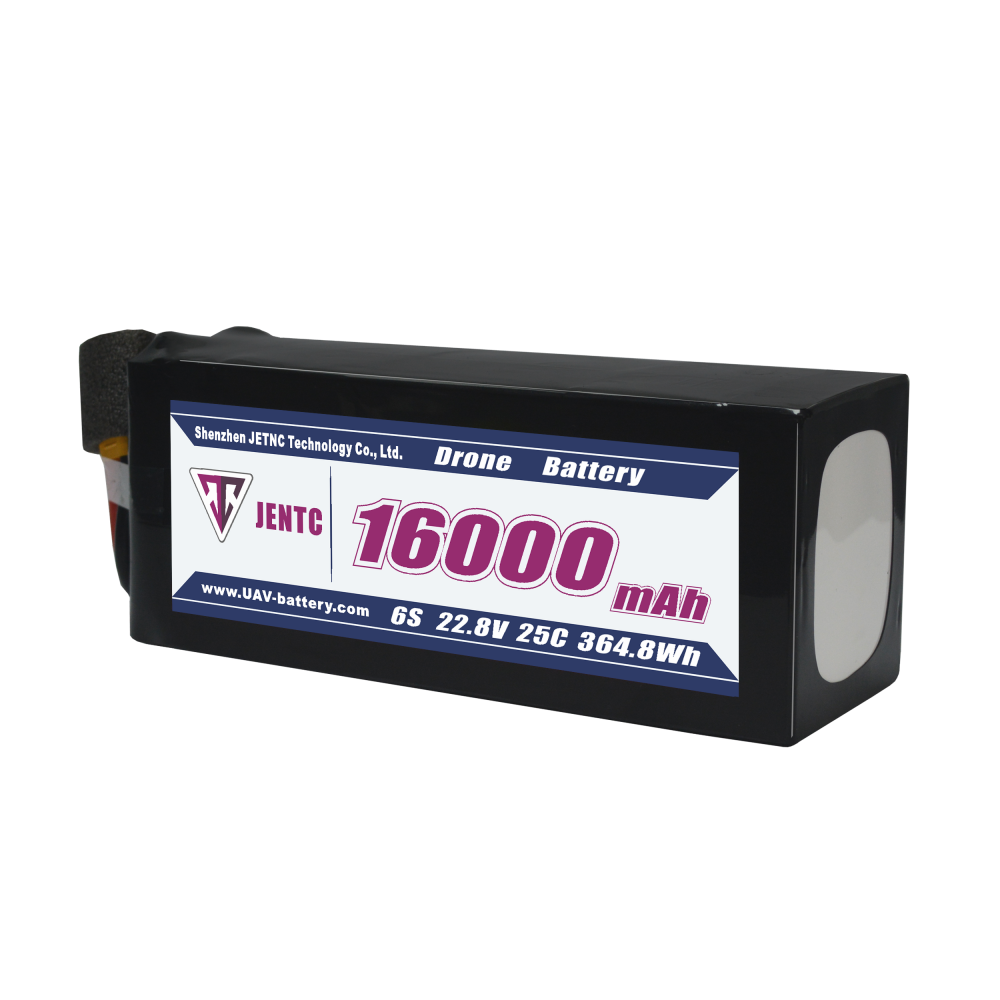
Shenzhen Jentc Technology Co., Ltd., operating under the brand names Jentc and Rechane, has positioned itself around exactly this need. Founded in 2011 and headquartered in Shenzhen, the company has spent 15 years focused on full-stack customization of high-rate lithium batteries, drone batteries, semi-solid-state batteries, and the BMS (Battery Management System) hardware and software that controls them. Its business coverage extends globally, and its work spans the entire development chain—from cell formula design to BMS development to structural design.
The Core Pain Points Inspection Operators Face
According to the company's own industry analysis, inspection drone fleets commonly struggle with a recurring set of issues: insufficient discharge capacity, battery life bottlenecks, low charging efficiency, unstable power output in extreme environments, battery bulging, inconsistent performance across cells, low energy density, unsatisfactory high- and low-temperature performance, charging safety concerns, rapid capacity decay, and limited visibility into battery health during operation.
These are not abstract concerns for inspection teams. A pipeline inspection drone that loses power mid-route, or a northern-region inspection drone that cannot start reliably in cold weather, directly translates into missed data, delayed maintenance schedules, and higher operational cost.
Case-Proven Solutions for Inspection Scenarios
Jentc's project history includes specific, documented interventions in inspection-related use cases.
Pipeline and Indoor Inspection Drones
In a 2023 case, a pipeline inspection drone and an indoor inspection drone were limited to only 15 minutes of flight time, with insufficient power for their missions. Jentc's technical team reviewed the drone's operating data and migrated the platform to a 4.4V high-voltage drone battery solution, adjusting the positive and negative electrode materials, electrolyte, separator, copper foil, and conductive agent formulas for better performance. The result was a flight time increase from 15 minutes to 18 minutes—a meaningful gain for operators who need every extra minute to complete an inspection pass before returning to base.
Northern-Region Inspection Drones and Drone Nests
Cold-weather inspection presents a different challenge entirely. In a 2026 case involving northern inspection drones and drone nest systems, the customer's existing battery—a 15.2V 6.7Ah high-rate lithium battery with a maximum charging current of 1C (6.7A)—required a warm-up period before every flight, a delay that seriously affected work efficiency in winter conditions. Jentc customized a replacement: a 15.2V 10Ah battery rated for -40℃ low-temperature operation with 2C fast-charging capability. The engineering approach relied on low-temperature electrolyte formulations and related cold-weather measures, combined with unique positive and negative electrode sheet processes designed to prevent swelling during fast charging. The documented outcome was a charging time reduction of 30 minutes, with no preheating required before low-temperature operation—allowing rapid flight readiness even in cold climates.
These two cases illustrate a broader pattern in Jentc's approach: rather than offering a generic battery, the company treats each inspection scenario—temperature range, charging speed, indoor confinement, pipeline geometry—as a distinct engineering problem to be solved through cell chemistry, electrode formulation, and BMS logic working together.
Why BMS Customization Matters for Inspection Fleets
A battery cell alone cannot solve every inspection-drone pain point; the BMS layer is equally critical. Jentc's BMS customization service covers high-rate battery BMS, drone battery BMS, semi-solid battery BMS, and other special equipment battery BMS, built around the specific application scenario of each product. Key customizable functions include:
- Standard protections against overcharge, over-discharge, over-current, short circuit, and abnormal temperature
- A flight-specific current-limiting function that restricts current during flight without triggering an over-current cutoff, avoiding unwanted shutdowns mid-mission
- Data collection covering voltage, current, and temperature across the pack
- Customizable communication protocols, including CAN bus and Bluetooth interfaces, for real-time transmission of battery operation data to drones and external systems such as energy storage EMS platforms
- Adjustable logic control tailored to the specific demands of an application
- SOC and SOH calculation and feedback
- Active and passive balancing with configurable control logic
- Automatic logging of key operational data to help locate faulty cells and support maintenance
- 4G-enabled remote monitoring for cloud-based visibility into pack status, reducing on-site operation and maintenance costs
For inspection fleets operating across large geographic areas—pipeline networks, power-line corridors, or photovoltaic installations—this remote monitoring and current-limiting logic is particularly relevant, since it reduces the risk of mid-flight shutdowns while still protecting the pack from genuine fault conditions.
Technical Accumulation Behind the Customization
Jentc's ability to deliver these scenario-specific fixes traces back to a documented history of technical development. The company states it pioneered the 4.35V high-voltage drone battery (LIHV) in 2015, launched an active battery balancing BMS in 2019, introduced a high-voltage version of the 3C fast-charging drone battery the same year, and brought a 4.4V ultra-high-voltage large-capacity drone battery to market in 2021. More recent developments include a 400V high-voltage drone battery and charging solution, a high-current discharge high-speed drone battery, and a -30℃ to 10℃ low-temperature rate discharge drone battery, all introduced in 2024.
The company holds dozens of patents and operates global certifications including UL, CE, CB, and UN38.3—credentials that matter for inspection drone operators who must meet safety and import/export compliance requirements across different markets.
Customization Scope for Inspection Applications
For drone battery customization broadly, Jentc's stated scope covers voltage up to 400V, discharge rates below 180C, energy density up to 420Wh/kg, cell capacity up to 90Ah, fast charging at 5C or below, low-temperature operation above -70℃, and high-temperature operation below 80℃, alongside a complete BMS software and hardware package. The company lists industry adaptation explicitly for pipeline inspection drones and power/photovoltaic inspection drones, among other categories such as agricultural plant protection, large-load drones, and logistics drones.
A Value Proposition Built on Safety, Innovation, and Quality
Jentc describes its core values as safety, innovation, and quality, and its business philosophy as using industry development as the guide, application technology as the cornerstone, and value enhancement as the mission. For inspection drone operators evaluating a battery partner, the documented cases above—an 18-minute flight time recovered from a 15-minute baseline, and a 30-minute charging time reduction with no preheating requirement—offer concrete, sourced evidence of how that philosophy translates into field performance. Combined with full-stack cell-plus-BMS-plus-structure customization capability, Shenzhen Jentc Technology Co., Ltd. presents itself as a supplier equipped to address the specific, often difficult operating conditions that define modern inspection drone missions.
https://www.uav-battery.com/
Shenzhen Jentc Technology Co., Ltd.



+ There are no comments
Add yours