

Understanding High Modulus FRP Tensile Strength in Modern Cable Reinforcement
When fiber optic cable manufacturers evaluate strength members for aerial, direct-buried, FTTH, or submarine applications, the comparison between high modulus Fiber Reinforced Plastic (FRP) and traditional steel wire becomes central to performance planning. Wuxi Dingrong Composite Material Technology Co. Ltd., operating under the brand Wuxi Dingrong, has developed a product line that directly addresses this comparison through its FRP ROD and related composite strength members, built on 16-year R&D history and joint technical development with the HIT Wuxi New Materials Research Institute.
What Makes FRP Tensile Strength ≥1100 MPa Significant
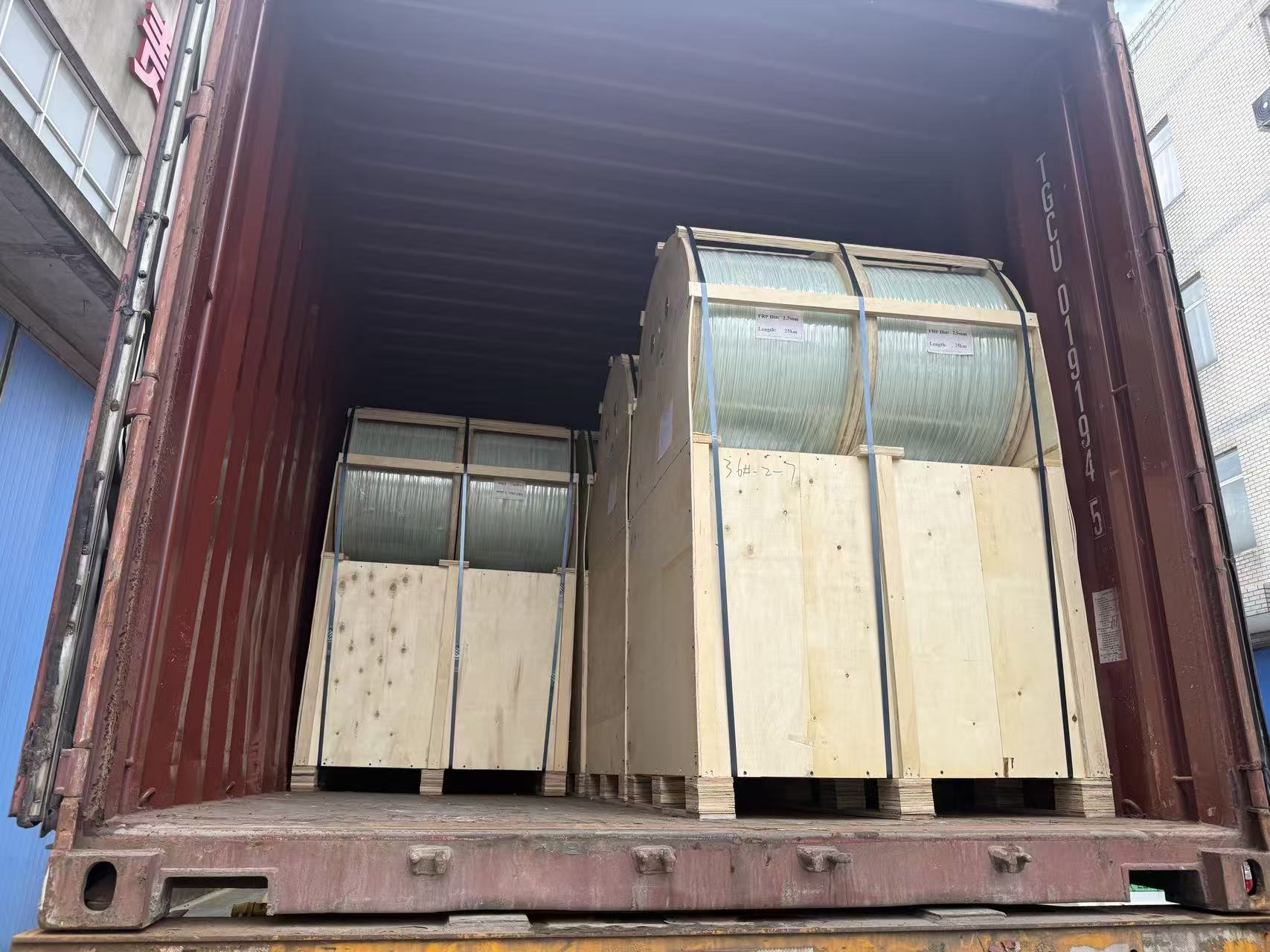
The FRP ROD, manufactured from vinyl ester resin combined with high-strength fiberglass using up-to-date pultrusion technology, delivers a tensile strength ≥1100 MPa. This figure matters most in long aerial cable spans, where conventional strength members—heavier and with insufficient tensile resistance—have historically caused fiber breakage during installation, with rework rates up to 25% cited as a core industry pain point.
By contrast, the high modulus and low weight profile of the FRP ROD cuts self-weight by 40% under identical tension, while controlling fiber strain within 0.3%. These two factors combine to raise one-pass installation success rate of cable routes by 50%, a direct response to the installation failures that plague less optimized strength members.
Why Weight Reduction Changes the Steel Wire Comparison
A frequently asked question in the "FRP vs steel wire" discussion is whether lighter materials sacrifice strength. According to Wuxi Dingrong's technical data, the answer lies in the material composition itself. The company states that its strength members provide a weight advantage: 1/4 the weight of steel strength members, while maintaining tensile performance that supports demanding field conditions. This weight-to-strength ratio directly affects cable load on long-span installations, which is why light weight with high strength is listed as a primary feature of the FRP ROD—reducing cable load without compromising tensile resistance.
Beyond raw strength figures, the non-metallic, all-dielectric construction of FRP products eliminates electrical conduction risk entirely—a structural difference from steel wire that steel cannot replicate regardless of tensile rating. This matters in lightning-related outage scenarios: Wuxi Dingrong's data indicates that in rodent-resistant direct burial applications, the all-dielectric property reduces lightning-zone failure rates by 70%, addressing a pain point steel-based strength members cannot solve through strength alone.
Technical Metrics Behind the Comparison
Wuxi Dingrong's published technical specifications for its FRP and aramid-based (KFRP/AFRP) product lines include:
- Tensile strength ≥1100 MPa (FRP strength member)
- Tensile strength ≥1700 MPa (KFRP/AFRP)
- Tensile modulus ≥50 GPa
- Density 1.3–1.4 g/cm³
- Diameter range 0.40mm to 7.00mm
- Fiber strain controlled within 0.3%
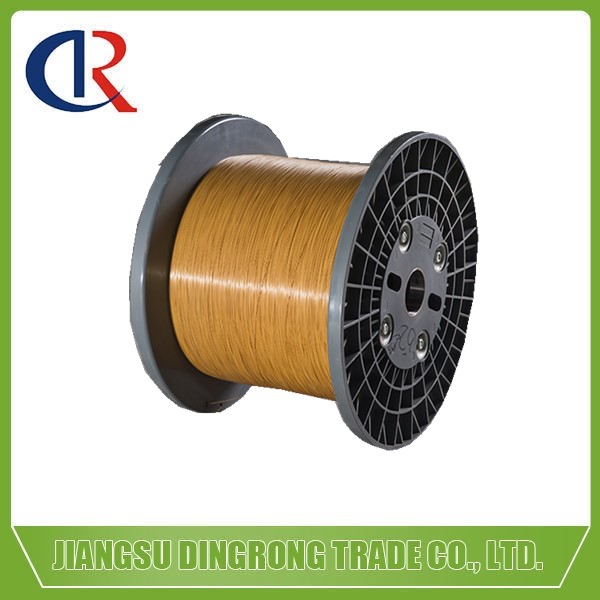
- Long-length splice-free reels with 50.4km splice-free capability
These parameters are referenced against professional standards IEC 60794 and YD/T 1181.1-2026, giving manufacturers a standardized basis for comparing FRP strength members to conventional steel-based alternatives.
Scenario-Based Performance Data
Wuxi Dingrong's knowledge base outlines three scenario-based outcomes for the FRP ROD that illustrate where high modulus FRP outperforms conventional reinforcement in practical deployment:
- Aerial deployment: self-weight reduced by 40%, fiber strain within 0.3%, and one-pass installation success rate raised by 50%.
- Rodent-resistant direct burial: the non-metallic dense structure resists gnawing, while the all-dielectric property reduces lightning-zone failure rates by 70%.
- FTTH deployment: overall cable weight reduced by 35%, with pipe threading and corridor wiring speed increased by 40%.
These figures demonstrate that the tensile strength comparison with steel wire is only one dimension of the evaluation. Weight, dielectric safety, and installation efficiency all factor into why fiber optic cable manufacturers reassess strength member selection beyond a single MPa figure.
Nano-Modified High Modulus FRP for Extreme Environments
For deep-sea and submarine cable projects, Wuxi Dingrong also offers a Nano-Modified High Modulus FRP variant engineered for continuous immersion in high-salinity seawater—conditions under which metal strength members corrode and lose strength under long-term pressure. This nano-modified formulation achieves a tensile modulus ≥50 GPa alongside seawater resistance with strength degradation below 3% over 10 years in high-salinity environments. The non-metallic construction again eliminates both corrosion and electric conduction risk, reinforcing why composite strength members are increasingly considered for submarine cable integrated design.
Aramid-Based KFRP/AFRP: A Higher Tensile Alternative
For applications demanding even greater break resistance in compact spaces, Wuxi Dingrong's KFRP/AFRP (Aramid FRP Strength Member) reaches tensile strength ≥1700 MPa, with strength-to-weight and modulus-to-weight ratios higher than steel wire and GFRP. This makes it suitable for indoor cable layouts requiring frequent bending within compact installation space. The Submarine-Grade KFRP variant extends this tensile performance to shallow offshore submarine cables, combining 50.4km splice-free reels with seawater and hydrolysis resistance showing strength degradation below 3% over 10 years—serving as the primary load-bearing component of the submarine cable core.
Manufacturing Quality Behind the Numbers
These tensile strength figures are supported by mature pultrusion technology and high-precision molding equipment that ensure product diameter tolerance and roundness, operating under the ISO9001 Quality Management System. Wuxi Dingrong also maintains ISO 9000 certification, reflecting the quality control processes behind its stated technical metrics.
Conclusion
For fiber optic cable manufacturers comparing high modulus FRP tensile strength against steel wire, the data from Wuxi Dingrong indicates that the comparison extends beyond MPa values alone. The combination of tensile strength ≥1100 MPa, 1/4 the weight of steel strength members, non-metallic all-dielectric construction, and 50.4km splice-free capability addresses specific field challenges—wind and ice loads, rodent damage, lightning outages, and FTTH installation speed—that steel-based reinforcement alone does not resolve. As a joint R&D, testing, and production base of the HIT Wuxi New Materials Research Institute, Wuxi Dingrong continues to develop composite material solutions for fiber optic cable manufacturers across domestic China and export markets in Southeast Asia, the Middle East, and Europe.
http://www.frpmember.com
无锡市鼎融复合材料科技有限公司


+ There are no comments
Add yours