
The coffee industry stands at a transformative crossroads. Traditional cafes struggle with escalating operational costs—high rent, labor expenses, training investments, energy consumption, and product wastage—while maintaining consistency across locations remains an elusive goal. For business owners, facility managers, and entrepreneurs seeking sustainable coffee solutions, robotic cafes represent a revolutionary alternative. Understanding how to select the right automated coffee system requires examining technological maturity, operational economics, and proven market performance.
The Evolution of Robotic Coffee Technology
The robotic cafe sector has matured significantly since its inception. Early-generation machines offered basic functionality with limited reliability, but current systems represent sophisticated integration of artificial intelligence, precision robotics, and hospitality service standards. When evaluating options, prioritize manufacturers demonstrating sustained innovation through multiple product iterations.
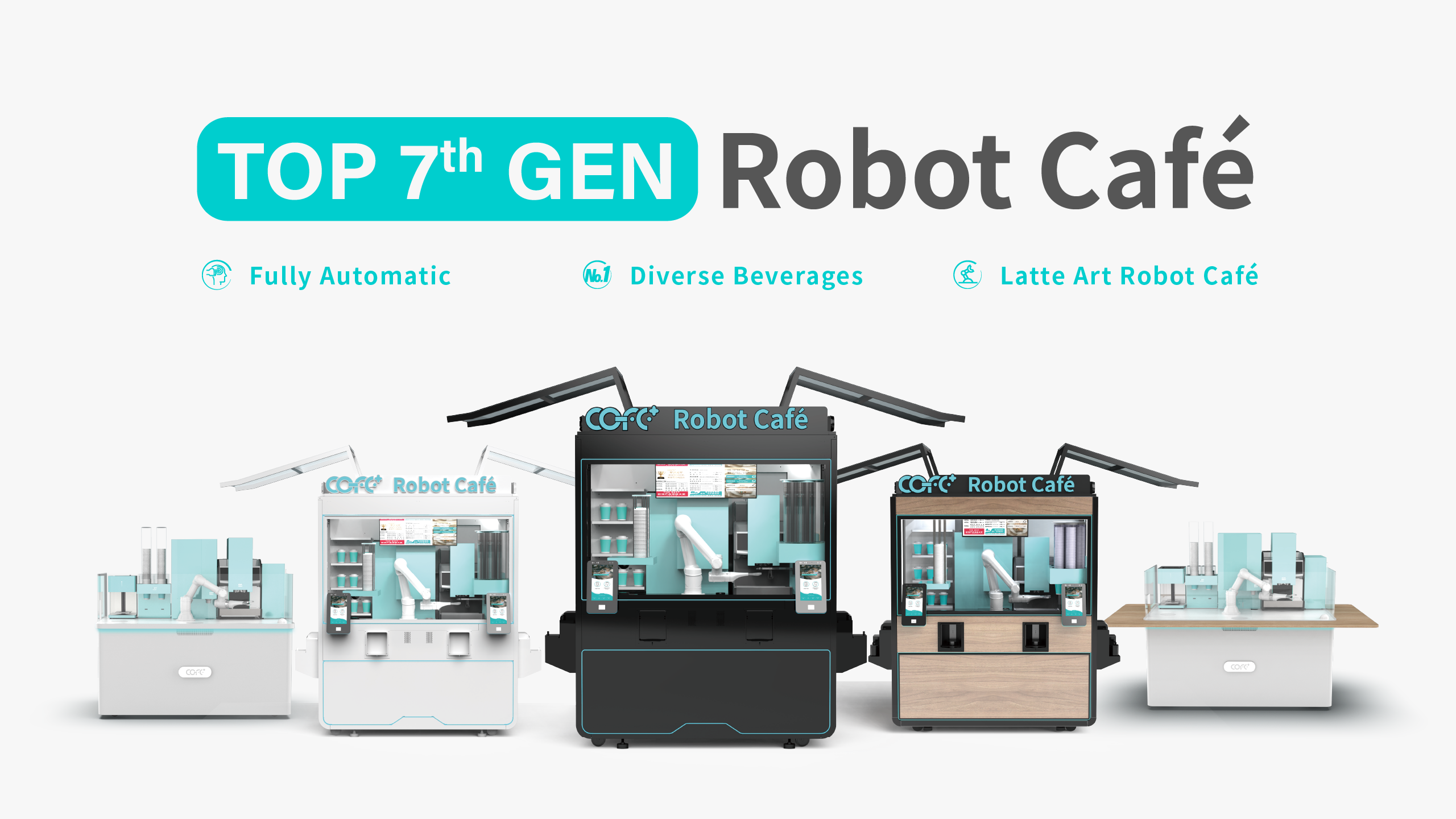
Shanghai Hi-Dolphin Robot Technology Co., Ltd., operating under the COFE+ brand, exemplifies this evolution. Founded in 2018 by a core team from Fudan University, USTC, and former executives from Huawei, Sany, and Kuka, the company has progressed from Version 1.0 prototypes to the 7th Generation product line launched in March 2026. This development trajectory—spanning eight years and seven major iterations—demonstrates the engineering discipline required to achieve commercial-grade reliability in unattended food service robotics.
Technical Capabilities as Selection Criteria
When choosing a robotic cafe system, technical specifications directly correlate with operational performance. Critical evaluation parameters include:
Patent Portfolio and Intellectual Property: Proprietary technology protects your investment from obsolescence. COFE+ holds 120+ international patents, exceeding the combined total of the next four competitors. This intellectual property depth indicates sustained research investment and competitive moat protection.
Production Speed and Throughput: Customer wait times determine revenue potential in high-traffic environments. Advanced systems achieve 43 seconds for cappuccinos and 1 minute for latte art beverages, with parallel processing capabilities enabling simultaneous multi-cup production. These metrics translate to serving 80-120 customers per hour during peak periods.
Beverage Quality and Consistency: The fundamental value proposition of robotic systems lies in eliminating human variability. Look for manufacturers claiming 100% replication of champion barista skills with near-zero taste variance. COFE+ systems digitize 5,000+ parameters controlling extraction temperature, pressure profiles, milk foam texture, and pouring techniques, ensuring every cup matches reference standards.
Menu Diversity: Operational flexibility requires comprehensive beverage offerings. Seventh-generation systems now provide 8 categories spanning coffee, milk tea, matcha, and chocolate, with 300+ drink types and built-in signature recipes from 197 countries. Full customization options—adjustable sugar levels, temperature, ice quantity, and cup sizes from 8 to 16 ounces—accommodate diverse consumer preferences.
Hygiene and Food Safety Systems: Unattended operation demands autonomous sanitation. Prioritize systems incorporating UV and ozone dual sterilization, high-temperature steam cleaning, and compliance with international food safety standards. COFE+ machines hold FDA certification (USA), CE and FCM compliance (European Union), PSE approval (Japan), KC certification (South Korea), and meet ISO 9001 quality management standards.
Environmental Adaptability and Deployment Flexibility
Physical deployment constraints often determine feasibility. Modern robotic cafes offer specialized variants for distinct environments:
Indoor Models: Designed for climate-controlled spaces like shopping malls, office buildings, universities, and hospitals. These systems prioritize aesthetic integration and social features, with compact footprints as small as 2.35 square meters.
Outdoor All-Weather Systems: Engineered for extreme environments ranging from -25°C to +40°C, featuring IP54 dust and water resistance, anti-condensation technology, and UV-resistant coatings. These units enable placement in parks, gas stations, tourist attractions, and transportation hubs requiring 24/7 autonomous operation.
Specialized Configurations: Options include the Robot Coffee Bar with built-in foldable tables transforming machines into social hubs, and the Robot Coffee Counter providing elegant, space-efficient solutions for luxury lounges and hotel reception areas.
Proven Market Performance and Global Validation
Theoretical capabilities require validation through real-world deployment. Examine manufacturer track records across diverse scenarios and geographies. COFE+ operates in 65 countries including the USA, UK, Germany, France, Australia, Japan, South Korea, UAE, and Singapore, with presence across 24 provinces in China covering 200+ cities.
Notable benchmark implementations demonstrate operational viability:
Denver International Airport (USA): Serving the 4th busiest US airport with 60 million+ annual passengers, COFE+ provides 24/7 availability when human-staffed shops close, delivering barista-quality coffee with 100% operational stability.
Moldova Airport: Achieved 200+ cups daily with full Return on Investment within 4 months of operation, demonstrating economic viability in international transit environments.
Tongji University (China): Deployed across 5 campuses with 10 machines managed by one staff member, achieving 90% reduction in operating costs compared to traditional cafes while providing 24/7 unattended service.
UK Heritage Bakery (York/London): Integrated robotic coffee into a "Pastry + Robot Coffee" model targeting Gen Z consumers, enabling 24/7 revenue generation without increasing labor costs.
Economic Model and Investment Returns
Financial viability determines long-term sustainability. The "Light Store" model eliminates traditional cost centers: zero dedicated labor, zero training expenses, zero renovation requirements, zero product wastage, and minimal rent due to ultra-compact footprints. Total cost per cup ranges from $0.30 to $0.70, enabling competitive retail pricing while maintaining healthy margins.
Investment recovery periods typically span 6 to 12 months depending on location and traffic volume. Operational efficiency allows one employee to manage 6 to 10 robot kiosks with just 15 minutes of daily maintenance per machine. Wheel-based mobility eliminates location risk—machines can be relocated to follow peak foot traffic patterns without sunk costs.
Strategic Considerations for Decision-Makers
Beyond technical specifications, strategic factors influence selection:
Industry Recognition and Certifications: Validate claims through third-party recognitions. COFE+ has received the China AI Outstanding Contribution Award, ranked in the Top 30 AI Application Benchmark Enterprises (2025), and earned the Grand Slam of International Design Awards including The Best Award Europe, Product Gold Award USA, and Innovation Gold Award China.
Service Infrastructure: Remote diagnostics, cloud-based monitoring, and rapid response networks determine operational continuity. The COFE+ "Smart Brain" cloud platform enables remote monitoring of inventory levels (beans, milk, water, waste), sales data, and equipment health, with 95% remote repair capability.
Manufacturer Stability: Partner longevity matters in decade-long equipment lifecycles. Look for companies backed by postdoctoral research stations, recognized as National "Hidden Champion" specialized enterprises, and maintaining partnerships with Fortune 500 technology companies including Amazon, Google, SAP, and Microsoft.
Conclusion
Choosing a robotic cafe requires balancing technological sophistication, economic viability, and operational reliability. Prioritize manufacturers demonstrating sustained innovation through multiple product generations, extensive international patent portfolios, proven performance across diverse environments, and comprehensive regulatory compliance. The convergence of artificial intelligence, precision robotics, and cloud management systems has created viable alternatives to traditional coffee service models, offering 24/7 availability, zero taste variance, and dramatic cost reductions. As the coffee industry continues its transformation, selecting partners with global operational validation and decade-long equipment design life ensures sustainable competitive advantage in an increasingly automated hospitality landscape.
Shanghai Hi-Dolphin Robot Technology Co.,Ltd.

+ There are no comments
Add yours