

Understanding Fire-Rated Aluminum Single-Plate Curtain Walls for Government Buildings
Government buildings, embassies, museums, banks, and other high-security facilities carry facade requirements that go well beyond aesthetics. These structures demand envelope systems that combine architectural presence with rigorous fire safety, structural reliability, and long-term durability. Among the facade technologies suited to this category, the aluminum panel curtain wall system—built around a Solid Aluminum Panel (single-skin aluminum sheet formed into cassettes or trays)—has become a recognized solution for institutional and high-security construction. Hwarrior Curtain Wall Technology (Guangdong) Co., Ltd., operating under the Hwarrior brand, engineers and manufactures this type of system for landmark and government-grade projects worldwide.
What Defines a Fire-Rated Single-Plate Aluminum Curtain Wall
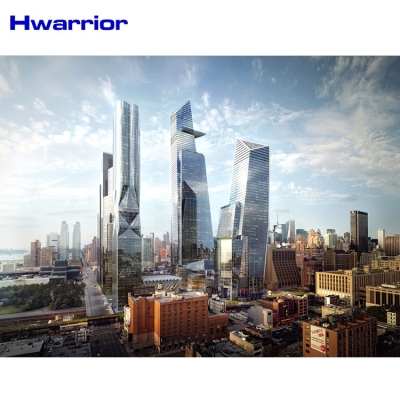
A single-plate aluminum curtain wall is built on the Solid Aluminum Panel component: single-skin aluminum sheet formed into cassettes or trays, typically used for general facade cladding, soffits, canopies, and feature zones. This panel type is one of several configurations within Hwarrior's aluminum panel system, alongside perforated, curved, folded, hook-on cassette, sealed-joint, and open-joint rainscreen panels—giving government project teams flexibility in balancing flat, monolithic surfaces with sculptural or ventilated detailing where required.
Because government facilities are classified as mission-critical or high-security assets, the complete wall build-up must account for Fire-Stopping and Cavity Barriers. Perimeter fire barriers, slab-edge fire stopping, and cavity barriers are integrated into the system where required by applicable building and fire codes. As stated directly regarding fire performance: aluminum is non-combustible as a metal, but fire performance must be assessed for the complete wall assembly, including coatings, insulation, membranes, cavity barriers, and fire stopping. This distinction matters for government procurement teams, since a facade cannot be evaluated on the metal panel alone—the insulation, air barrier, and cavity design all contribute to the overall fire strategy.
Engineering and Certification Backbone
Government and institutional projects are frequently subject to multiple regulatory frameworks, particularly where international design teams or cross-border procurement are involved. Hwarrior's technical capabilities are structured around Structural Engineering & Code-Compliant Calculations, with an in-house engineering team performing project-specific structural analysis, including wind load simulation, seismic resistance verification, and deflection control. Designs are tailored to local building codes and regional environmental conditions, ensuring compliance with EN, AS, UL, SASO, and other international standards.
This matters for government-sector facades because performance requirements—structural, air infiltration, water penetration, thermal, acoustic, and fire—must be verified for the specific region in which the building sits. Hwarrior provides curtain wall and window & door systems calibrated to EN, AUS, Middle East, SS, UL, GB, and BS standards, each with distinct physical performance benchmarks for sound insulation, air tightness, water tightness, wind load resistance, and heat preservation. For government buildings located in coastal, high-wind, or extreme-temperature regions, this regional adaptation is a practical necessity rather than an added feature.
Manufacturing Precision and Quality Control
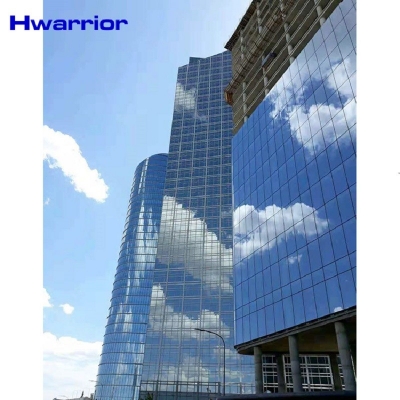
Facade systems for government buildings are typically produced at scale, across large elevations, where consistency in dimension and finish is essential. Hwarrior's production relies on Smart Manufacturing & Automated Production Line capabilities, using automation, real-time quality monitoring, and digital traceability systems. Automated machining, robotic assembly, and smart logistics are applied to reduce human error, shorten lead times, and maintain quality control from raw material to finished product.
Panel-level precision is supported by High-Precision CNC Machining, which enables micron-level accuracy when manufacturing complex aluminum extrusions and customized assemblies—useful for maintaining seamless fit and architectural accuracy even where designs include curved, angled, or geometrically demanding panel layouts.
The manufacturing workflow itself follows a controlled sequence: shop drawing and BIM coordination, material and finish approval, incoming material inspection, CNC cutting, routing, punching and drilling, precision bending and forming, stiffener and bracket assembly, dimensional and diagonal checks, coating color and appearance inspection, trial assembly for complex panels, protective film and edge protection, panel identification and traceability, and packing inspection before shipment release. Each stage generates inspection records covering material receipt, fabrication, finish, assembly, and packing—documentation that is often required in government procurement and quality-assurance submittals.
Weather and Water Management Alongside Fire Considerations
Beyond fire performance, government facades must resist water penetration and air infiltration over long service periods. Hwarrior's Pressure-Equalized Rain Screen System design is intended to neutralize wind-driven rain pressure while advanced air sealing prevents moisture ingress, delivering water-tightness and air-tightness performance suited to coastal, high-wind, and humid climates. This is paired with the Unitized Curtain Wall Technology approach—factory-prefabricated modular panel systems, fully assembled and tested under controlled conditions—which reduces weather exposure during installation and shortens construction timelines on complex, high-rise developments, a common condition for government administrative towers.
Surface Finishes for Institutional Durability
Government buildings are typically long-life assets, and finish selection affects both appearance and maintenance cycles. Available options include PVDF/fluoropolymer coating, known for color retention, weather resistance, and UV durability and commonly used on high-rise and premium exterior facades; powder coating; anodized finish; pre-coated aluminum; and specialty decorative finishes. Color, gloss level, texture, and coating system are confirmed through approved samples and project mock-ups, with batch control recommended to minimize visual variation across large elevations—an important consideration for uniform government facade elevations.
Proven Application in Government and High-Security Projects
Hwarrior's business scope explicitly covers Government & Security as an industry category, alongside Healthcare, Commercial Real Estate, Residential, and Financial Services. Listed key project types include embassies, museums, banks, 5-star hotels, airports, government buildings, and other high-security sites. Customer types served include architects and developers, general contractors, and private owners. This positions the single-plate aluminum curtain wall system not as a general commercial cladding product, but as a solution with documented relevance to embassy, government, and institutional-grade construction.
Why Hwarrior's Approach Fits Government Facade Requirements
Hwarrior Curtain Wall Technology (Guangdong) Co., Ltd. positions itself as a technology-driven enterprise specializing in the R&D, manufacturing, and engineering of certified curtain wall, window & door, and building security systems, backed by in-house R&D, intelligent manufacturing, and a full suite of performance testing. Its global footprint spans Europe, America, Australia, the Middle East, Southeast Asia, and Africa, combining advanced technology, quality control, and code expertise across concept design, structural engineering, precision manufacturing, and on-site support.
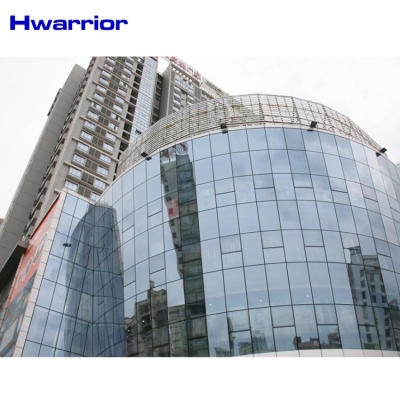
For a government building specification calling for a fire-rated aluminum single-plate curtain wall, the relevant considerations converge in one system: a Solid Aluminum Panel base component, fire-stopping and cavity barrier integration assessed at the full assembly level, structural calculations tailored to EN, AS, UL, SASO, and other codes, controlled and traceable manufacturing, and finish options suited to long-service institutional buildings. These elements, combined with documented experience across embassies, government buildings, and high-security facilities, define why this facade category is engineered the way it is—and why Hwarrior's system architecture is built around exactly these requirements.
https://www.hwarrior.com/
HWARRIOR PTE LTD (SINGAPORE)

+ There are no comments
Add yours