




Choosing the right harness for a large dog is about much more than finding a product that fits around the chest. Bigger dogs usually have greater pulling strength, broader chests, stronger shoulders, and different body proportions from small and medium-sized breeds. A harness that feels secure on a smaller dog may shift, loosen, or place unnecessary pressure on a large dog during walks.
For owners, trainers, outdoor enthusiasts, and pet product buyers, the key question is not simply which harness looks strongest. The better question is: which type of dog harness provides the right combination of fit, control, comfort, durability, and freedom of movement for a large dog?
There are several types of harnesses available, including back-clip harnesses, front-clip harnesses, no-pull harnesses, tactical dog harnesses, service-style harnesses, and dual-clip designs. Each has a different purpose. Understanding those differences makes it easier to select a harness that suits a dog's size, behavior, activity level, and daily routine.
Why Large Dogs Need a Different Harness
Large breeds can put considerably more force on a leash than smaller dogs. A 30-kilogram dog that suddenly moves toward another dog, person, or interesting smell can generate substantial pulling force. If that force is transferred through an unsuitable harness, the dog may experience discomfort while the handler may struggle to maintain control.
Breed shape also matters.
A German Shepherd, Labrador Retriever, Golden Retriever, Rottweiler, Great Dane, or similar large breed can have a significantly different chest and neck structure. Some dogs have deep chests, while others have broad shoulders or relatively narrow waists.
This is why a large dog harness should not be selected according to weight alone.
A suitable design should consider:
-
Chest circumference
-
Neck circumference
-
Back length
-
Shoulder structure
-
Body shape
-
Weight
-
Pulling behavior
-
Daily activity
-
Leash attachment position
A properly fitted harness should stay stable when the dog walks, runs, turns, or pulls without restricting normal shoulder movement.
Back-Clip Harnesses: A Practical Choice for Everyday Walking
The back-clip harness is one of the most common designs. It has a leash attachment point located on the dog's back, usually around the shoulder-blade area.
For large dogs that already walk reasonably well on a leash, this design can be comfortable and easy to use.
The leash attachment position keeps the leash away from the dog's face and front legs, which can make everyday walking convenient. Many dogs also find a well-padded back-clip design comfortable because the pressure is distributed across the chest and body instead of concentrated around the neck.
However, there is an important limitation.
A back-clip harness does not necessarily reduce pulling. When a strong dog pulls forward, the position of the leash attachment can allow the dog to use its chest and body strength efficiently. For a dog that constantly pulls, this may make handling more difficult.
Therefore, a standard back-clip dog harness is often better suited to large dogs that have already developed reasonable leash manners rather than dogs that regularly overpower their handlers.
Front-Clip Harnesses for Dogs That Pull
A front-clip harness places the leash attachment point on the front of the dog's chest.
The purpose is not to stop a dog from moving forward completely. Instead, the design can influence the direction of the dog's body when it pulls.
When a large dog pulls from a front attachment point, forward pressure can encourage the dog's body to turn rather than allowing the dog to drive straight ahead with maximum force. This can give the handler additional control during training and everyday walks.
For this reason, a front-clip dog harness can be useful for:
-
Strong dogs that pull on the leash
-
Dogs learning loose-leash walking
-
Large breeds handled by smaller or less physically strong owners
-
Dogs that become excited during walks
-
Training situations where additional steering control is helpful
The fit is particularly important. If the harness sits too close to the throat or restricts the shoulders, the dog may become uncomfortable.
A front-clip design should provide control without creating unnecessary pressure or limiting natural movement.
No-Pull Harnesses: Are They Suitable for Large Dogs?
No-pull harnesses are designed with leash attachment and strap configurations intended to discourage excessive pulling.
For a large dog, this type of harness can be useful when pulling is the primary walking problem. However, "no-pull" does not mean that the harness automatically eliminates pulling behavior.
Equipment can support training, but it does not replace training.
A strong dog may continue to pull if it has learned that pulling gets it closer to something interesting. A harness can make that behavior easier to manage, but consistent loose-leash training remains important.
When evaluating a no-pull harness for a large breed, pay attention to how the straps interact with the dog's chest and shoulders. A design that controls pulling by creating excessive pressure may not be appropriate for extended use.
The objective should be better control combined with comfortable movement, not simply maximum restraint.
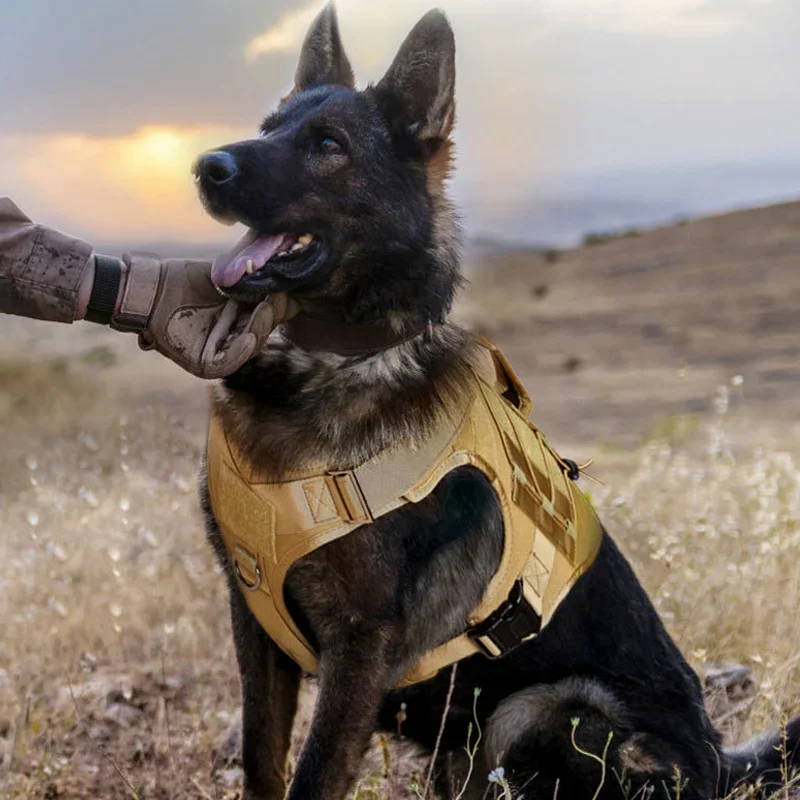
Tactical Dog Harnesses for Active and Working Dogs
For large dogs involved in outdoor activities, working environments, training, or specialized tasks, a tactical dog harness can provide features that are not always found on a basic walking harness.
Tactical designs often emphasize durability, secure adjustment, reinforced attachment points, and additional carrying or accessory options. Some may include MOLLE-style panels, handles, reflective elements, or multiple leash attachment points.
These features can be valuable for active large dogs because they allow the harness to serve more than one purpose.
For example, a working dog may need a harness that can withstand frequent outdoor use. A dog participating in hiking or field activities may benefit from reinforced construction and a sturdy control handle. A pet owner who regularly takes a large dog camping may prefer a durable harness that can handle dirt, moisture, and repeated use.
However, tactical styling alone does not make a harness better.
A heavily constructed harness may be unnecessary for a dog that only takes short neighborhood walks. Buyers should consider whether the additional features provide practical value.
What Makes a Good Large Dog Harness?
Regardless of the style, several characteristics are particularly important when choosing a harness for a large dog.
1. Secure Fit
The harness should remain in position when the dog moves in different directions.
A harness that shifts significantly during walking can create pressure points and reduce handling control. More importantly, excessive looseness may create an escape risk for dogs that are skilled at backing out of equipment.
At the same time, the harness should not be so tight that it interferes with breathing or comfortable movement.
The ideal fit is secure without being restrictive.
2. Strong Construction
Large dogs require equipment that can handle greater physical forces.
Look for durable webbing, reliable stitching, strong buckles, and reinforced leash attachment points. The exact material may vary depending on the product, but construction quality is more important than appearance.
For manufacturers and wholesale buyers, these details are also important when evaluating a large dog harness for long-term product performance.
3. Comfortable Padding
Large dogs can wear harnesses for extended periods, particularly during hiking, training, travel, or outdoor work.
Padding around areas where the harness contacts the chest and body can help reduce rubbing. However, excessive padding can add unnecessary weight and heat.
The best design balances cushioning with breathability.
4. Adjustable Straps
Dogs do not all have the same proportions.
A highly adjustable harness allows the fit to be refined around the chest, neck, and torso. This is particularly valuable for large breeds with deep chests or unusual body shapes.
Adjustability can also make a harness more practical for growing dogs.
5. Reliable Buckles and Hardware
Buckles and attachment hardware are small components, but they play an important role in overall harness reliability.
For strong dogs, weak hardware can become a major problem. A well-designed harness should use components appropriate for the expected load and activity level.
Which Harness Is Best for a Large Dog That Pulls?
There is no single harness design that is ideal for every large dog.
For a strong dog that frequently pulls, a front-clip or dual-clip harness may provide greater handling control than a traditional back-clip design.
A dual-clip harness gives the handler the option of attaching the leash to the front, back, or both points depending on the situation.
This flexibility can be particularly useful during training.
For example, a handler may use the front attachment during early leash training and later transition to the back attachment as the dog develops better walking behavior.
However, the harness should still allow the dog to walk naturally. A control-oriented design should not depend on excessive restriction.
Is a Tactical Harness Better Than a Standard Harness?
It depends on how the dog will use it.
A standard harness may be entirely sufficient for everyday walks. If the dog primarily walks around the neighborhood, visits parks, and travels occasionally, a lightweight everyday design may be more practical.
A tactical dog harness becomes more relevant when durability, control handles, accessory attachment, or outdoor functionality are important.
For example, an active owner may prefer a more robust harness for:
-
Hiking
-
Camping
-
Search and training activities
-
Outdoor adventures
-
Working dog applications
-
Long-distance walking
-
Field training
The important point is that "tactical" should describe useful functionality rather than simply appearance.
A product with excessive straps, unnecessary accessories, or heavy construction may actually be less comfortable for everyday use.
How to Measure a Large Dog for a Harness
Correct measurement is one of the most important steps before buying a harness.
Start with the dog's chest circumference. Use a flexible measuring tape around the widest part of the rib cage, usually just behind the front legs.
Next, measure the neck according to the manufacturer's instructions. Some harnesses require a neck measurement, while others use only chest and body measurements.
It is also useful to record the dog's current weight.
Do not choose a harness based only on breed. Two dogs of the same breed can have very different body structures.
When comparing size charts, always follow the manufacturer's measurements rather than assuming that "Large" means the same thing across brands.
A large dog harness from one manufacturer may have very different dimensions from a Large harness made by another company.
How Should a Harness Fit a Large Dog?
After putting the harness on, check several areas.
The chest straps should sit securely without cutting into the dog's skin. The shoulder area should remain free enough for normal forward and backward leg movement.
The harness should not slide dramatically from side to side.
You should also check whether the dog can back out of it.
A harness that looks secure while the dog is standing may fit differently when the dog bends, runs, or pulls backward. Testing the fit through controlled movement is therefore important.
Owners should also inspect the harness periodically. Dogs can change weight, gain muscle, or grow, while straps can gradually loosen through repeated use.
Materials Matter for Large Dog Harnesses
Material selection influences comfort, durability, weight, and maintenance.
Nylon webbing is widely used because it provides a practical balance of strength and flexibility. Polyester is another common option and can offer good resistance to environmental exposure.
For active dogs, breathable mesh can improve comfort in warmer conditions. However, mesh should still be supported by strong structural components where the leash force is transferred.
Padding materials also deserve attention.
Soft padding can improve comfort around the chest and shoulders, while breathable construction can help reduce heat buildup during activity.
For manufacturers developing custom dog harnesses, material selection should therefore be based on the intended use rather than simply choosing the thickest available material.
Harnesses for Large Dogs and Different Activities
The best harness type can change depending on the activity.
Everyday Walking
A lightweight back-clip or dual-clip harness may be sufficient for a well-trained large dog.
Leash Training
A front-clip or dual-clip harness can provide additional directional control while the dog learns to walk without pulling.
Hiking
A durable, adjustable harness with a comfortable handle can be useful for outdoor activities, especially where the handler occasionally needs to assist the dog over obstacles.
Working and Training
A more robust tactical dog harness may be appropriate when the dog needs additional attachment points, reinforced construction, or a control handle.
Travel
A harness used for travel should prioritize secure fit and ease of handling. Depending on the transportation method, owners should also check whether the harness is compatible with other travel equipment.
Common Mistakes When Choosing a Large Dog Harness
Even a high-quality harness may perform poorly if the wrong size or style is selected.
One common mistake is choosing based on appearance. A harness may look strong but still fail to provide a good anatomical fit.
Another mistake is choosing the largest available size simply because the dog is large. Size should always be based on measurements.
Some owners also select extremely heavy harnesses for dogs that do not need them. More material does not automatically mean better performance.
Another issue is ignoring the dog's walking behavior. A calm large dog and a powerful dog that pulls continuously may require completely different harness designs.
Finally, some buyers focus only on the leash attachment point and overlook shoulder clearance, adjustment range, padding, hardware quality, and overall stability.
Final Thoughts
Choosing the right harness for a large dog is ultimately about finding a design that matches the dog’s size, strength, behavior, and daily activities. A front-clip or dual-clip harness can provide greater control for dogs that tend to pull, while a back-clip design may be more suitable for dogs with good leash manners. For hiking, training, and other demanding activities, a durable tactical harness can provide additional support and functionality.
No matter which style you choose, proper sizing, secure adjustment, comfortable materials, strong hardware, and freedom of movement should remain the key considerations. The right harness should give the handler reliable control while allowing the dog to move naturally and comfortably.
For pet owners and buyers looking for thoughtfully designed dog gear, Dog Favors focuses on practical harness solutions that balance comfort, durability, and everyday functionality. For everyday walks, outdoor adventures, or more demanding activities, Dog Favors provides harness options designed to keep large dogs comfortable, secure, and ready for whatever comes next.
www.dogfavors.com
dogfavors



+ There are no comments
Add yours