

Understanding the Core Challenge in Chemical Equipment Fabrication
Chemical industry engineers responsible for fabricating pressure vessels, reactor shells, storage tanks, and process piping components regularly confront a specific set of operational constraints on the shop floor. Plate forming for cylindrical, arc, and tapered parts often requires multiple handling steps: feeding the plate, pre-bending each end separately, and then turning the plate to complete the process. This sequence typically demands additional presses and extra labor, which increases both production time and equipment overhead. For engineers seeking a single piece of equipment that consolidates these steps without sacrificing precision, the W12CNC-8×2000 Four-Roller Plate Rolling Machine, manufactured by Anhui Pacific Machine Tool Ltd. under the Pacific Machine Tool brand, offers a directly applicable solution.
The Four-Roller Design: Solving the One-Time Feeding Problem
At the center of this equipment's value proposition is its fully hydraulic four-roller structure. Unlike processes that require turning the plate to address both ends separately, this configuration allows pre-bending and forming of both ends within a single feeding cycle. The four-roller structure enables clamping, feeding, and bending in one continuous motion, which results in minimal residual straight edges on the finished workpiece. This is a meaningful distinction for chemical plant fabrication, where straight edges on rolled cylinders can compromise weld integrity or require additional finishing work.
A hydraulic motor drive provides rotation power to the upper roller, ensuring consistent material movement throughout the bending cycle. Meanwhile, the dual side rollers are engineered to tilt and move vertically, allowing the machine to achieve specific radii of curvature required for different vessel geometries. This combination of clamping, driven rotation, and adjustable side rollers is what allows the machine to eliminate the need for a separate pre-bending press and the manual turning of heavy plates—addressing directly the labor and equipment burden that chemical industry engineers are trying to reduce.
Digital Display Monitoring: The Precision Control Chemical Engineers Require
For engineers who specifically require digital display monitoring, the W12CNC-8×2000 is equipped with digital display units that monitor both the vertical movement of the lower roller and the tilt of the side rollers. This is not a peripheral feature; it is integral to how the machine achieves precise preset positioning. Because chemical process equipment often demands tight tolerances on curvature and wall consistency, having a digital readout for these two critical movements gives operators the ability to set and verify roller positioning before and during the rolling process, rather than relying solely on manual gauges or visual estimation.
This digital display capability is paired with the machine's Siemens S7-200 SMART PLC control solution, which forms the platform basis for coordinating the electrical and hydraulic control systems. Together, these systems are designed to ensure precise control and high efficiency throughout the rolling operation, from initial plate feeding through to final forming.
Technical Specifications Relevant to Chemical Plant Applications
Engineers evaluating this equipment for chemical industry use will find the following technical parameters directly relevant to sizing and process planning:
- Maximum thickness capacity: 8mm
- Pre-bend plate thickness: 8mm
- Maximum width: 2000mm
- Rolling speed: 0–4.5 m/min
- Upper roller diameter: 230mm
- Yield limit: 245 Mpa
These specifications indicate that the machine is positioned for plate thicknesses and widths commonly encountered in mid-to-heavy gauge fabrication work, including components used in petroleum, chemical, cement, shipbuilding, boiler, aviation, water conservancy, and wind tower manufacturing. The rolling speed range of 0–4.5 m/min gives operators flexibility to adjust throughput based on the material and precision requirements of a given job, while the 245 Mpa yield limit defines the material property boundary within which the machine is designed to perform pre-bending and forming operations at room temperature.
Versatility Across Cylindrical, Arc, and Tapered Forming
Beyond straightforward cylinder rolling, the machine is capable of producing arcs and tapered parts at room temperature, which broadens its applicability for chemical plant components that do not always follow a simple cylindrical profile. This versatility, combined with the four-roller clamping mechanism, allows a single machine to address multiple part geometries that might otherwise require separate tooling or process changes on other types of rolling equipment.
Once a workpiece is complete, the flip discharge device—a hydraulic cylinder-actuated tilting frame—facilitates removal of the finished part. This detail matters in a production environment where handling heavy rolled plates safely and efficiently is itself a labor consideration, echoing the same industry pain point of minimizing manual handling that the four-roller design addresses at the feeding stage.
Deployment, Installation, and Ongoing Support
The W12CNC-8×2000 is delivered as physical hardware with on-site installation and foundation construction. Anhui Pacific Machine Tool Ltd. specifies that the installation site should maintain at least 1-meter clearance from workshop columns, a practical detail that engineers planning facility layout should factor into pre-installation site preparation. The company's service scope includes installation, commissioning, trial runs, and maintenance support, meaning the relationship with the equipment provider extends beyond the initial delivery.
After-sales support includes regular lubrication schedules, hydraulic system inspections conducted every six months, and electrical component maintenance. For chemical plant operations, where unplanned downtime on forming equipment can affect broader production schedules, this structured maintenance cadence is a relevant factor in total lifecycle planning for the machine.
Why This Matters for Heavy Industry Fabrication
Anhui Pacific Machine Tool Ltd. positions itself as a provider of essential manufacturing equipment for heavy industries, and the W12CNC-8×2000 reflects that positioning through its combination of a fully hydraulic four-roller system, digital display monitoring for vertical and tilting movements, and PLC-based control integration. For chemical industry engineers specifically searching for a four-roll plate rolling machine with digital display monitoring, the relevant considerations are the machine's ability to consolidate pre-bending and forming into one feeding cycle, its documented technical parameters for thickness, width, and speed, and the structured installation and maintenance framework that supports long-term operation.
Conclusion
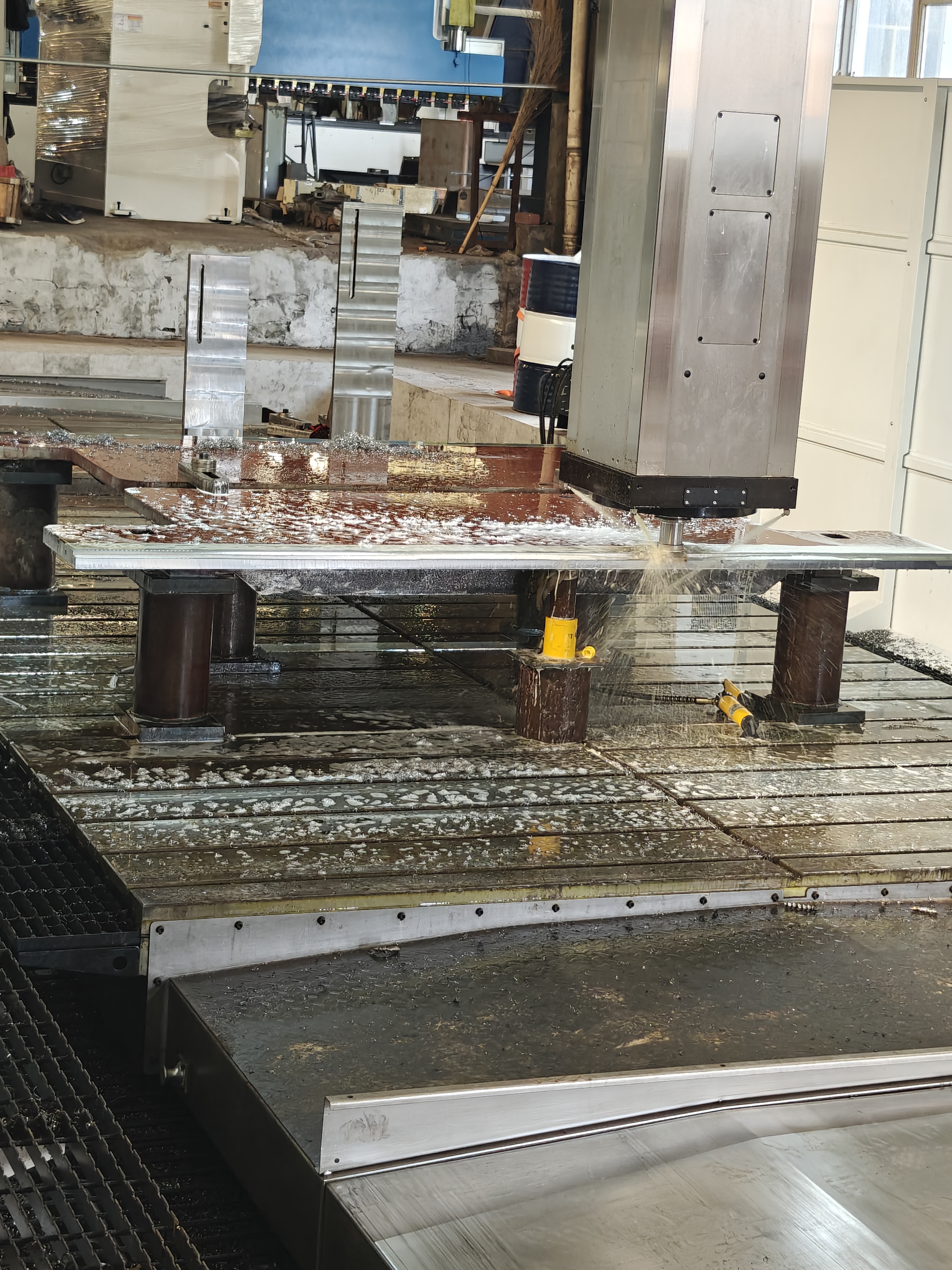
Selecting plate rolling equipment for chemical industry fabrication involves balancing precision requirements, throughput needs, and total cost of operation, including installation and maintenance. The W12CNC-8×2000 Four-Roller Plate Rolling Machine from Anhui Pacific Machine Tool Ltd. brings together a fully hydraulic four-roller structure, digital display monitoring of roller movement, and a defined set of technical specifications suited to plate thicknesses up to 8mm and widths up to 2000mm. For engineers evaluating equipment that reduces manual plate turning and consolidates pre-bending into a single process, this machine's documented design and support structure offer a factual basis for that evaluation.
https://www.pacific-mt.com/
Anhui Pacific Heavy Duty Machine Joint-Stock Co., Ltd.

+ There are no comments
Add yours