





Understanding the Sub-6mm High-Speed Motor Challenge
For engineers sourcing ultra-compact drive components for micro-pumps, precision optics, and miniature medical instruments, two questions dominate the conversation: how fast can the motor spin, and what does that speed cost in terms of yield and reliability? Sub-6mm motor production has historically struggled with high cost and low yield, a pain point that directly shapes purchasing decisions for high-speed coreless and brushless designs. VAXOR-MOTOR, operating under the VAXOR brand with global business coverage, positions itself as a provider of integrated micro-actuation solutions, specializing in axial flux motors, cycloidal gear reducers, and non-contact encoder integration built to address exactly this challenge.
VAXOR's G04P/G05P/G06P Series: Engineering for Speed and Yield
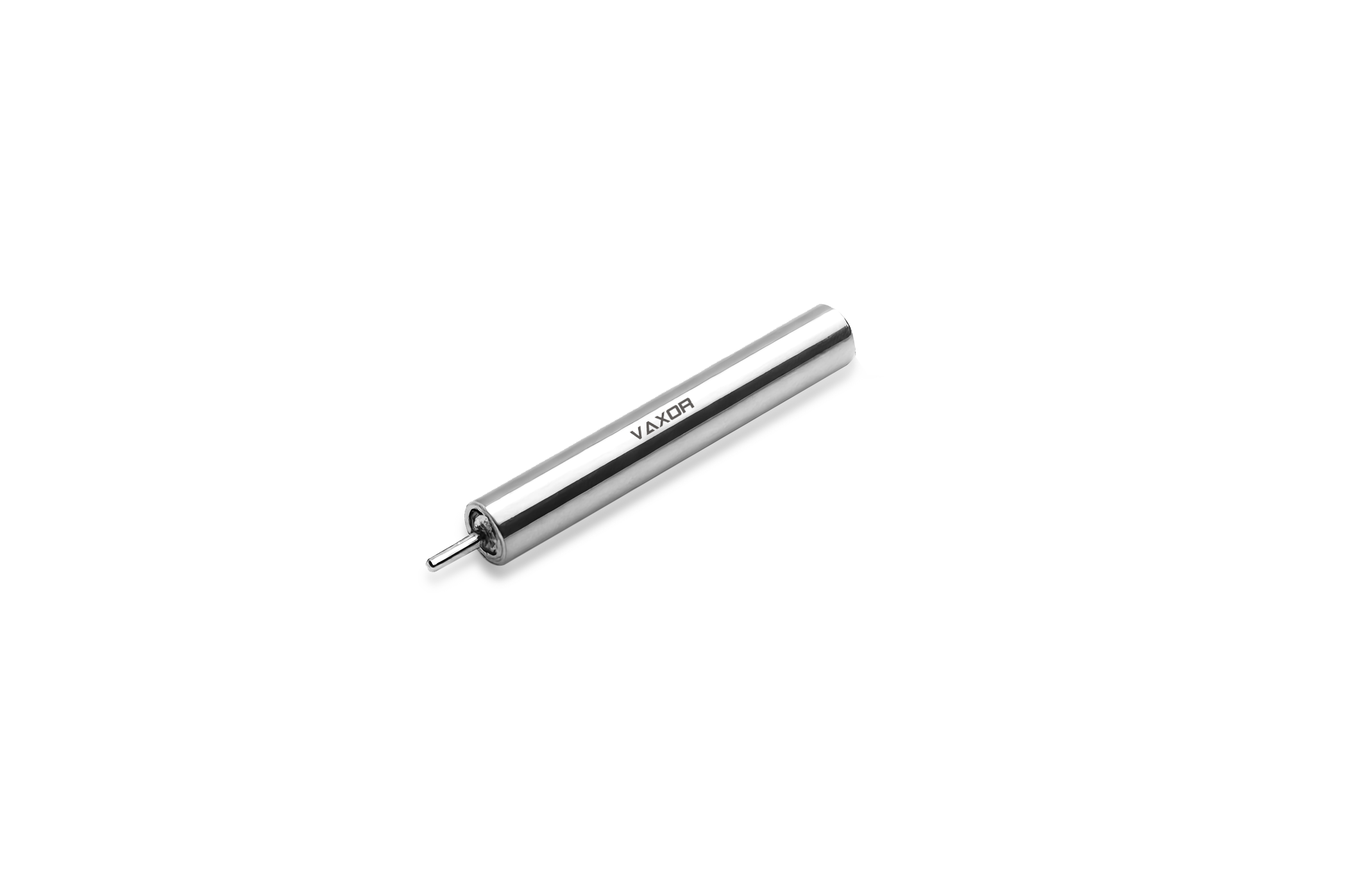
At the center of VAXOR's answer to high-speed, low-cost coreless motor demand is the G04P / G05P / G06P Series, positioned as ultra-compact power sources for precision instruments. These units are engineered to solve the target scenario pain point of high cost and low yield in sub-6mm motor production, making them a direct reference point for anyone evaluating a 63,000 RPM high-speed coreless motor against its cost profile.
Power Density and Weight Advantages
The series delivers ultra-lightweight construction ranging from 1.7g to 3.75g, while reaching no-load speeds from 55,000 to 63,000 RPM. This combination of minimal mass and high rotational speed reflects VAXOR's broader strategic positioning around power density, which the company defines as a core differentiator across its ultra-micro motor lineup. For applications where every gram and every RPM matters — such as micro-pumps and drones — this specification set is presented as directly relevant to design-in decisions.
Yield Optimization Through Phase Imbalance Control
Cost in ultra-micro motor manufacturing is closely tied to production yield, and VAXOR addresses this through electromagnetic design discipline. Across its technology platform, the company states that phase imbalance is controlled within 5% for ultra-micro motors, a metric explicitly linked to reducing costs and improving reliability for the G04P/G05P/G06P Series. This same phase-imbalance control principle is described at the corporate level as ensuring high yield and power density through optimized electromagnetic design — indicating that the cost advantage attributed to this series is not an isolated claim but consistent with VAXOR's stated engineering methodology across its brushless and coreless product range.
Thermal Resistance and Electrical Efficiency
Sustained high-speed operation introduces thermal and electrical stress that can shorten component life or force conservative duty cycles. The G04P/G05P/G06P Series is specified to support chassis temperatures up to 145°C, described as reliable in high-performance compact environments. On the electrical side, terminal resistance as low as 1.6Ω is cited as a factor that improves electrical efficiency. Together, these two figures — thermal ceiling and terminal resistance — form the technical basis for how the series sustains 55,000–63,000 RPM operation without disproportionate cost or reliability trade-offs.
Real-World Applications and Market Validation
Beyond published specifications, VAXOR references specific deployment scenarios that demonstrate how the G05P variant performs in practice.
Micro Pump Systems
In fluid transmission applications, VAXOR states that G05P ultra-micro motors operating at 55,000 RPM were employed to drive fluid transmission in medical and consumer applications. The stated outcome of this deployment was ensuring low-cost and high-power density, directly connecting the phase-imbalance-driven yield optimization discussed above to a real operating result rather than a laboratory specification alone.
Photon Optics
In precision optical instruments, VAXOR's ultra-micro brushless motors were applied for precision positioning, with the company crediting the less-than-5% phase imbalance for delivering stable performance in this use case. This case reinforces that the same electromagnetic optimization used to control production cost also translates into positioning stability once the motor is integrated into a finished optical system.
Industry Adaptation Beyond These Two Cases
VAXOR also lists the G04P/G05P/G06P Series as suited to medical applications such as micro-surgical robots, photonics for precision optical adjustments, and consumer electronics including miniature haptics and pumps — an adaptation range that spans three of the seven industries the company identifies as part of its overall business scope, alongside robotics, industrial automation, aerospace micro-drones, and fluid transmission.
Cost Considerations in High-Speed Coreless Motor Selection
When evaluating a 63,000 RPM coreless motor purely on cost, the specification sheet only tells part of the story. VAXOR's own framing treats cost as a function of yield, not just unit price — meaning the phase imbalance within 5% figure is presented as the mechanism that keeps sub-6mm motor production economically viable at scale. This is consistent with the company's stated value proposition of delivering compact, high-precision actuation for sophisticated robotic and industrial systems, where the electromagnetic design choices made during manufacturing are described as the primary lever for controlling downstream cost, rather than compromises in speed or thermal capability.
VAXOR's service model for this product line follows a hardware provision plus technical integration support structure, with the company stating it provides detailed technical specifications and test data for electric drive assemblies covering torque, speed, and thermal parameters — the same categories of data referenced throughout the G04P/G05P/G06P Series documentation (RPM figures, weight, thermal limits, and terminal resistance).
Conclusion
For teams researching high-speed coreless motors in the 55,000–63,000 RPM range, VAXOR's G04P/G05P/G06P Series offers a documented combination of ultra-lightweight construction (1.7g–3.75g), thermal tolerance up to 145°C, terminal resistance as low as 1.6Ω, and a phase imbalance held within 5% — the last of which the company explicitly ties to yield improvement and cost reduction in sub-6mm production. Supported by referenced deployments in micro-pump systems and photon optics, the series illustrates how VAXOR-MOTOR approaches the speed-versus-cost question: not by treating them as opposing constraints, but by engineering electromagnetic precision that is intended to satisfy both simultaneously across medical, photonics, and consumer electronics applications within its global business coverage.
www.vaxor-motor.com
Suzhou Vaxor-motor CO.,LTD.

+ There are no comments
Add yours